Venmo’s cash back bet shows where payments are heading. Here’s how Ghana’s mobile money can go beyond rewards with AI personalization and safer fintech.
Venmo Cash Back Lessons for Ghana Mobile Money + AI
Gen Z is quietly changing how payments work. In the US, debit cards and wallet balances are increasingly preferred over credit, and Venmo is responding by launching cash back rewards for debit card users. That’s not a small product tweak—it’s a signal: rewards are shifting to where the transactions actually happen.
For Ghana, this is more than foreign fintech news. It’s a mirror. Mobile money already behaves like “debit-first finance”—people spend what they have, top up frequently, and expect instant movement of funds. The real opportunity now isn’t only copying cash back. It’s building the next layer: AI-enhanced mobile money and digital banking (akɔntabuo) that understands customers, automates money habits, and reduces risk.
This post breaks down what Venmo’s move really means, why rewards programs work (and where they fail), and how Ghana’s fintech ecosystem can go beyond promos into intelligent, personalized mobile money experiences—the core theme of our series: AI ne Fintech: Sɛnea Akɔntabuo ne Mobile Money Rehyɛ Ghana den.
Venmo’s cash back program is a bet on debit-first behavior
Venmo’s decision is straightforward: reward the payment method people are actually using. If credit card usage declines in a segment (like Gen Z), then offering shiny credit perks won’t shift behavior. Debit rewards meet users where they already are.
Why debit rewards are suddenly attractive again
Debit rewards used to be less common because interchange fees (the fees paid by merchants per transaction) often make reward economics tighter than credit. But the market has changed:
- Younger customers are credit-cautious and avoid debt.
- Wallet apps are becoming primary financial hubs, not just “send money” tools.
- Subscription spending and everyday purchases are ideal for small but frequent rewards.
Here’s the key lesson: a rewards program is not just marketing—it’s a behavioral design tool. It nudges frequency, retention, and “top-of-wallet” usage.
The part many fintechs get wrong
Most companies get this wrong: they treat rewards as a giveaway. The smarter view is: rewards are a controlled investment tied to measurable actions (more spend, higher balance, lower churn).
If the program isn’t tied to:
- a clear customer segment,
- a specific behavior change,
- and a cost ceiling,
…it becomes an expensive noise machine.
Ghana’s mobile money is already “debit economy”—so rewards should fit local reality
Ghana doesn’t need to be convinced to use debit-first tools. Mobile money is the default rails for daily life—P2P transfers, merchant payments, airtime/data, bill pay, and increasingly savings and credit-like products.
So the more relevant question is: what does “cash back” look like in a mobile money ecosystem?
Cash back in Ghana can’t be copy-paste
A straight “2% back on everything” approach can break unit economics fast, especially in lower-margin transactions. Ghanaian mobile money rewards need to be surgical, not broad.
Practical reward formats that match Ghana’s reality:
- Fee rebates (refund part of transfer or cash-out fees after certain milestones)
- Targeted merchant rewards (cash back at specific partner merchants, pharmacies, fuel stations, supermarkets)
- Bill-pay incentives (small cash back for ECG/water/TV subscription payments)
- Data/airtime rewards (earn data bundles instead of cash)
- Streak-based rewards (reward consistency: “Pay 4 bills this month, get GHS X”)
Snippet-worthy truth: In mobile money markets, “rewards” that reduce fees often feel more valuable than rewards that add points.
December matters: seasonality is a real lever
It’s December 2025. In Ghana, that means higher transaction volume—travel, church programs, family support, end-of-year shopping, and business settlements. Rewards programs can be timed around these spikes:
- “December merchant cash back weekends”
- “No-fee transfers up to a cap”
- “Savings boost for keeping balance till January”
Seasonal design is underrated because it respects the truth: people don’t behave the same every month.
From cash back to AI: the next logical step for Ghana’s fintech
Cash back is a surface-level personalization: “spend here, get this.” AI goes deeper: it decides who should get which reward, when, and why—and it can do it automatically.
What AI-enhanced mobile money actually means (no buzzwords)
In this series, when we say AI ne Fintech, we mean tools that can:
- Predict needs (who is likely to churn, who is likely to overdraft, who is likely to save)
- Personalize offers (not everyone gets the same cash back)
- Automate money habits (smart auto-savings, goal-based budgeting)
- Improve security (better fraud detection, scam pattern recognition)
The reality? It’s simpler than people think. AI is mostly pattern recognition + decision rules + continuous learning—but deployed responsibly.
AI-powered rewards: practical examples Ghana can implement
If you run a wallet, bank, telco fintech, or merchant platform in Ghana, these are realistic applications:
- Churn prevention rewards: If a user’s activity drops 40% month-on-month, send a targeted “fee rebate on your next 3 transfers” offer.
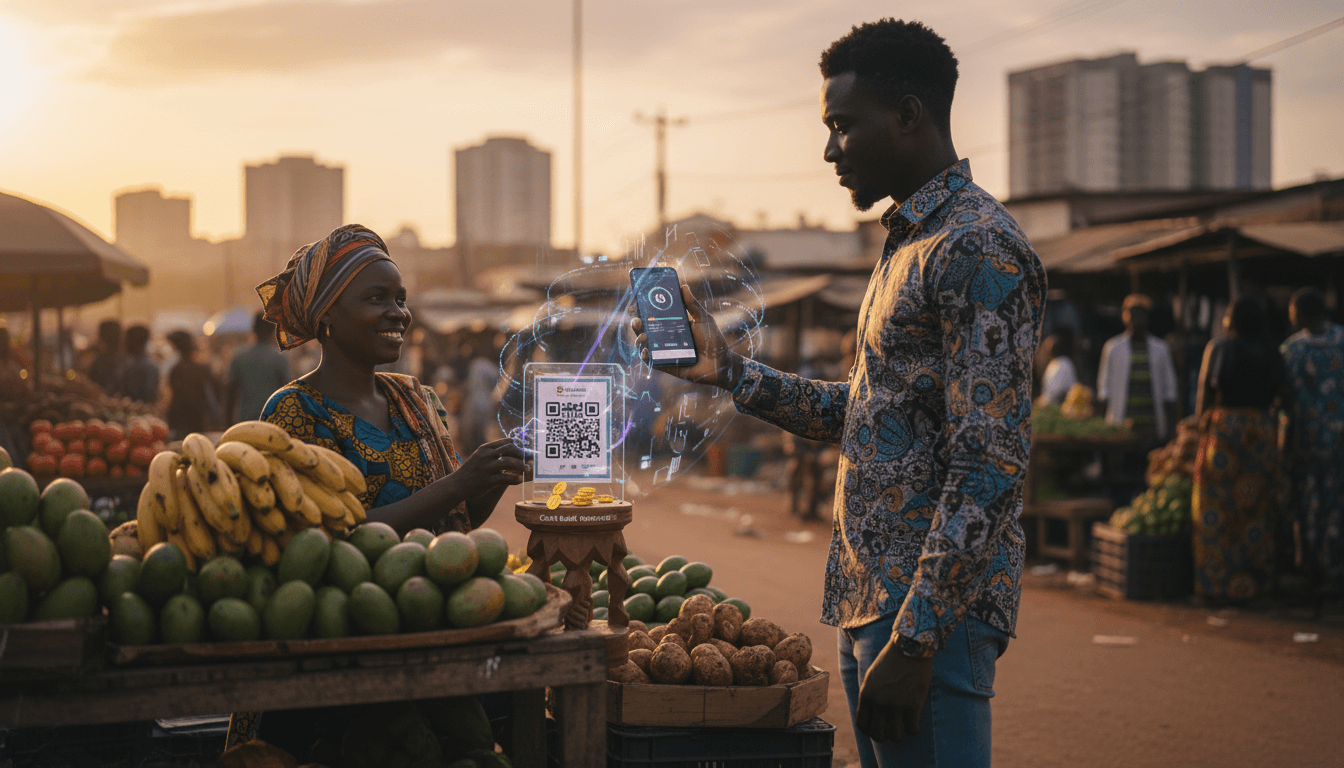
- Merchant growth rewards: If a user frequently pays at kiosks but not via QR/merchant pay, incentivize merchant payments with a limited-time cash back.
- Savings-linked rewards: Offer “cash back into savings” instead of wallet balance, nudging users to build akɔntabuo habits.
- Responsible credit nudges: For users with stable inflows, offer a small credit line; for unstable patterns, offer budgeting prompts, not credit.
One-liner: Rewards should follow behavior, but AI lets behavior shape rewards.
Rewards don’t fix trust issues—AI + controls can
Ghana’s mobile money growth comes with real problems: scams, SIM swap risk, social engineering, and disputes. A rewards program that increases usage without stronger controls can increase losses.
The fraud trade-off you can’t ignore
When you incentivize transactions, you attract fraud attempts. That’s not pessimism—it’s math.
What good operators do:
- set velocity limits on reward-eligible transactions
- detect merchant collusion patterns (same merchant, repeated micro-transactions)
- use device fingerprinting + behavioral biometrics (typing speed, device changes, location anomalies)
- create tiered rewards based on KYC level and account history
AI’s biggest value in this context is real-time anomaly detection—flagging suspicious behavior faster than manual rules alone.
“People Also Ask” — quick answers readers want
Is cash back worth it for mobile money users?
Yes, if it targets real pain (fees, bills, essential merchants) and doesn’t come with confusing conditions.
Can AI make mobile money safer?
Yes. The best results come from combining AI detection with clear user education and strong dispute processes.
Will rewards increase adoption for merchant payments in Ghana?
Yes, but only if merchant acceptance is reliable. Rewards can’t compensate for failed transactions or poor agent/merchant experiences.
A practical blueprint: how Ghana fintechs can launch smarter rewards
A strong approach is to start small, measure hard, then expand.
Step 1: Pick one behavior and one segment
Examples:
- Segment: urban salaried workers
- Behavior: bill pay + merchant pay usage
Or:
- Segment: SMEs receiving payments
- Behavior: keeping balances in-wallet for 7 days
Step 2: Build the unit economics before launch
You need clear numbers:
- cost per reward redemption
- expected lift in transaction volume
- expected reduction in churn
- fraud loss assumptions
If you can’t estimate these, the program is guessing.
Step 3: Make rewards feel immediate
Ghanaians value clarity and speed:
- instant reward confirmation
- simple caps (“up to GHS 10 per week”)
- transparent eligibility (“merchant pay only”)
Step 4: Add AI personalization carefully
Start with lightweight models:
- propensity-to-churn scoring
- clustering users by spend categories
- anomaly detection on reward abuse
Then expand to deeper personalization (goal-based financial coaching, auto-savings suggestions).
Practical stance: If your rewards are the same for everyone, you’re paying too much for too little.
What this means for the “AI ne Fintech” direction in Ghana
Venmo’s cash back program is a reminder that fintech wins by aligning with real user behavior, not by copying what used to work. Ghana’s mobile money ecosystem already has the usage. The next battle is quality: smarter engagement, safer transactions, and financial tools that help people plan—without making the product complicated.
If you’re building in this space, the next logical step beyond basic rewards is AI-enhanced mobile money:
- personalized incentives that match real life
- automated savings and spending controls
- stronger fraud defenses that protect trust
This series is about that shift: Sɛnea akɔntabuo ne mobile money rehyɛ Ghana den—not just by adding features, but by adding intelligence.
Forward-looking question: If rewards can change how people spend, what could AI do for how people save, budget, and avoid scams—at national scale?