Bolt’s superapp bet shows how AI can power one-click payments and crypto. Learn what Ghana mobile money builders can copy—and what to avoid.
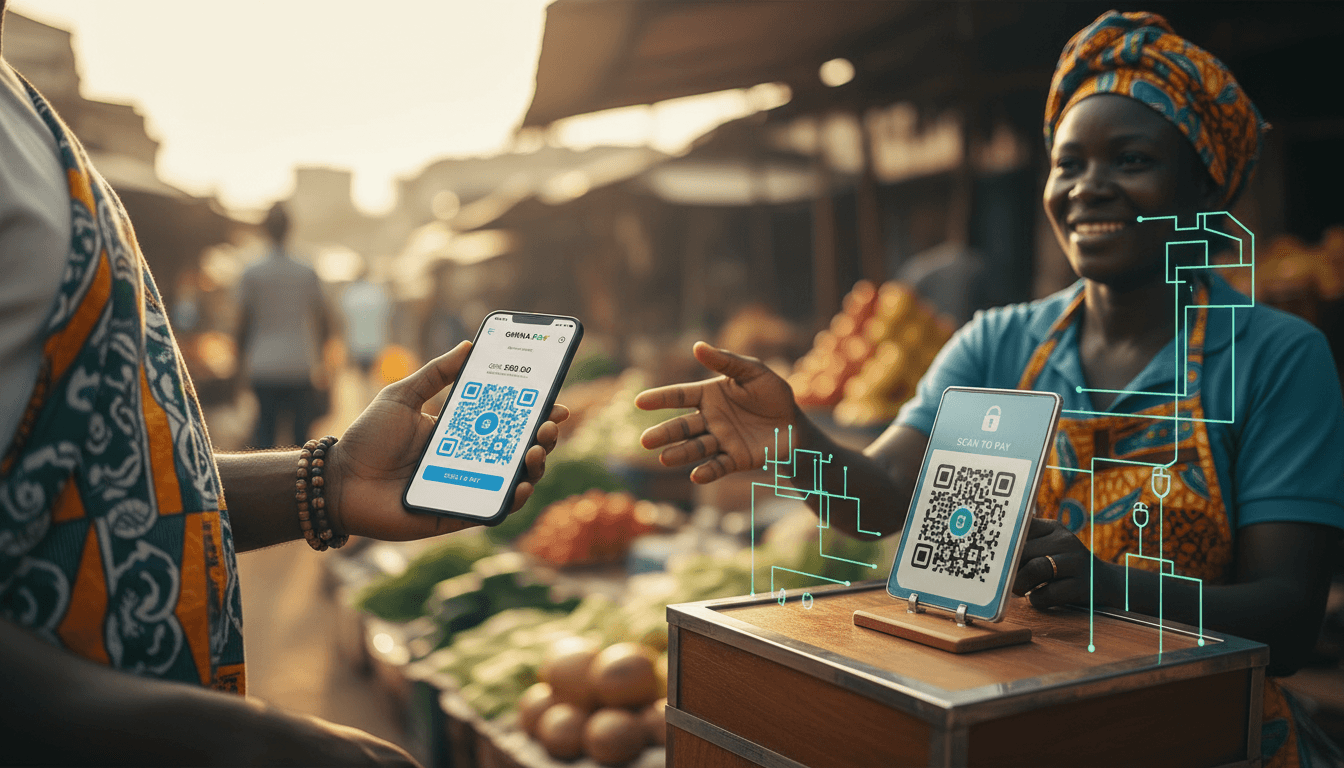
AI-Powered Superapps: Lessons for Ghana Mobile Money
Ryan Breslow is betting that people don’t want five finance apps—they want one. After returning as CEO of Bolt (best known for one-click checkout), he’s now unveiling a “superapp” positioned around one-click crypto and everyday payments. That’s a big swing at incumbents like Coinbase (crypto rails), Zelle (bank-to-bank transfers), and PayPal (wallet + checkout).
Most companies get this wrong: they treat “superapp” as a UI problem. It isn’t. A credible superapp is a risk, identity, and automation problem—and that’s where AI and fintech finally meet in practical, revenue-driving ways.
This post sits inside our series “AI ne Fintech: Sɛnea Akɔntabuo ne Mobile Money Rehyɛ Ghana den”—and the Ghana angle is straightforward: if a US fintech is trying to compress crypto + payments into one-click experiences, Ghana’s mobile money ecosystem can take the same playbook and apply it to MoMo, bank accounts, merchant payments, and cross-border flows—without making users memorize confusing steps or expose themselves to fraud.
Why Bolt’s “one-click crypto + payments” matters
A “one-click” promise is really a promise to remove friction at three points: onboarding, authorization, and repeat usage. If Bolt can make crypto and daily payments feel like the same habit, it’s not just a product launch—it’s a claim that the next big fintech winners will be behavior designers.
Here’s the core insight: users don’t wake up wanting “crypto.” They want outcomes—send money, pay a bill, buy airtime, receive salary, move funds to family, or hedge value when currency volatility hurts. When a product frames all of that as a single, fast flow, adoption becomes easier.
For Ghana, this matters because:
- Mobile money is already the default rail for many day-to-day transactions.
- Users are comfortable with agent networks and USSD, but they also increasingly expect app-based speed.
- Fraud pressure is real, and stronger automation is needed to protect trust.
The superapp story is not “America is ahead.” The better lesson is: the winning experience is the one that feels simplest while being most controlled under the hood.
The hidden engine: AI and automation behind “one click”
“One click” isn’t a shortcut. It’s the result of many checks happening instantly. If you’re building for Ghana (or any emerging market), your app must do more work so the user does less.
AI-driven onboarding: fewer steps, stronger identity
The fastest onboarding flows don’t ask for everything upfront. They progressively build confidence.
AI helps by:
- Document + face verification (where regulation permits), with liveness checks to reduce impersonation.
- Agent-assisted onboarding intelligence: flag suspicious registration patterns across agents (same device, repeated IDs, odd location clusters).
- Data validation: detect inconsistent names, dates, or duplicated profiles early.
For Ghana’s fintechs and mobile money partners, the play is to combine:
- Lightweight onboarding for basic features (airtime, bill pay)
- Risk-based upgrades for higher limits (P2P, merchant payouts, cross-border)
That’s how you earn growth without inviting fraud.
Real-time risk scoring: the real “one-click” layer
If a user taps “Send,” your system must decide—fast—whether to approve, challenge, or block. AI risk models can score transactions in milliseconds using signals like:
- Device fingerprint and SIM behavior
- Transaction velocity (too many sends too quickly)
- Recipient network patterns (known mule clusters)
- Location anomalies (impossible travel)
- Merchant behavior (refund spikes, abnormal ticket sizes)
A simple rule I like: “Fast approvals for known-good behavior, fast friction for unknown behavior.” People don’t mind extra verification when it feels justified.
Smart customer support: where trust is won or lost
In payments, your support experience is part of your product. In Ghana, when a MoMo transfer goes wrong, the user doesn’t want long forms—they want answers.
AI can handle:
- Instant classification of complaints (wrong recipient, pending reversal, chargeback)
- Suggested resolutions and scripted steps in local language variants
- Proactive alerts (“Your transfer is delayed; reversal expected by X time”)
When you reduce uncertainty, you reduce churn.
A “superapp for Africa” isn’t about features—it’s about rails
A lot of superapps fail because they stack features without integrating rails. Bolt is implicitly signaling that the future belongs to apps that can bridge money types—wallet balance, bank funds, card payments, and crypto—without forcing users to understand the plumbing.
For Ghana, the relevant rails are:
- Mobile money wallets (primary daily rail)
- Bank accounts (salary, savings, business accounts)
- Merchant payments (QR, pay-by-link, in-app)
- Cross-border remittance corridors (diaspora flows)
- Crypto exposure (where users want access, often as a savings or transfer alternative)
The practical Ghana question: “Can one app handle MoMo + bank + merchants?”
Yes—if you treat interoperability as your product.
That means:
- A unified balance view (even if funds sit in different rails)
- Smart routing: the app chooses the cheapest/fastest rail based on context
- Clear receipts and reversals: users must understand status in plain language
The UX win is not flashy screens. It’s predictability.
Crypto + everyday payments: what should Ghana fintechs learn?
Crypto integration is a trust test. Users want convenience, but regulators and banks want controls.
If you’re exploring crypto access in a Ghana-oriented product, the safer pattern is:
- Provide transparent conversions and fees
- Use limits and risk-based thresholds
- Offer education moments at the point of action (not in a long blog)
- Build strong fraud and scam detection for social engineering transfers
I’m opinionated here: crypto features should be “opt-in,” not shoved into everyone’s home screen. Otherwise, you create confusion and attract the wrong kind of attention.
What Ghana fintech builders should copy (and what to avoid)
Bolt’s headline is “one-click.” The deeper lesson is the operating model required to deliver it.
Copy this: make “one-click” a promise of automation
A useful checklist for AI-powered fintech and mobile money experiences:
- One identity: user verified once, reused across services
- One risk engine: consistent decisions across P2P, merchant pay, cashout
- One ledger view: a single source of truth for balances and history
- One support loop: fast dispute handling and proactive status updates
When these are unified, you can launch new features without creating new chaos.
Avoid this: feature bloat disguised as a superapp
If users need a tutorial to do basic actions, you’ve already lost. A superapp should reduce mental load.
Watch for:
- Too many tabs and nested menus
- Multiple “balances” that don’t reconcile
- Different PINs or auth flows per feature
- Inconsistent transaction statuses (“processing” that never resolves)
The harsh truth: complexity is a tax you pay forever.
A Ghana-first blueprint: superapp thinking for mobile money
If I were advising a Ghana fintech team building along the “AI ne Fintech” theme, I’d focus on a staged rollout that earns trust.
Stage 1: Nail everyday payments and merchant acceptance
Start with the boring stuff that drives retention:
- Airtime and data top-ups
- Utility payments
- QR merchant payments or pay-by-link
- Receipts that can be shared to WhatsApp
Then add AI:
- Anomaly alerts (“This payment is higher than your usual”)
- Merchant risk monitoring (refund spikes, suspicious patterns)
Stage 2: Add smart money movement and “assistive finance”
This is where AI stops being hype and starts being helpful:
- “Send again” shortcuts based on past recipients
- Bill reminders and predicted monthly totals
- Categorization of spend (akɔntabuo / basic accounting) for microbusinesses
For SMEs, this matters. A trader doesn’t want “analytics.” They want to know: “How much did I really make this week?”
Stage 3: Carefully expand into cross-border and crypto access
Cross-border is where “one app” becomes truly valuable—especially for families receiving funds.
Practical controls:
- Tiered limits for new users
- Step-up verification for large transfers
- Scam warnings triggered by suspicious chat-like patterns (“urgent”, “send now”, repeated failed attempts)
If you can’t protect users here, don’t launch it.
People also ask (and the direct answers)
Can a fintech app safely combine crypto and everyday payments?
Yes, but only with strong risk scoring, limits, and clear user consent. Convenience without controls becomes a fraud magnet.
Will superapps replace mobile money in Ghana?
No. The likely future is superapp experiences built on top of mobile money rails, not a total replacement. The rail stays; the interface evolves.
Where does AI help most in Ghana mobile money?
AI helps most in fraud detection, onboarding verification, smart routing, and customer support automation—the areas that protect trust and reduce operating cost.
The real takeaway for 2025: simplicity is engineered
Bolt’s new superapp push is a reminder that fintech winners aren’t the ones with the most features; they’re the ones that make money movement feel boring, fast, and safe. That’s exactly what Ghana’s mobile money ecosystem needs as it grows more interoperable and more exposed to sophisticated scams.
If you’re building in Ghana—whether you’re a fintech founder, a bank product owner, or a merchant platform—treat AI and automation as the invisible staff that verifies identity, routes payments, stops fraud, and answers customers before frustration turns into churn.
Want to pressure-test your own “one-click” flow? Take your top three user journeys (send money, pay merchant, cash out) and ask: where can AI remove one step without removing one control?