Verve’s 100M cards milestone signals Africa’s next wave: contactless + tokenisation. Here’s how AI can keep Ghana’s fintech and mobile money secure.
AI-Ready Payments: Verve at 100M Cards, Ghana Next
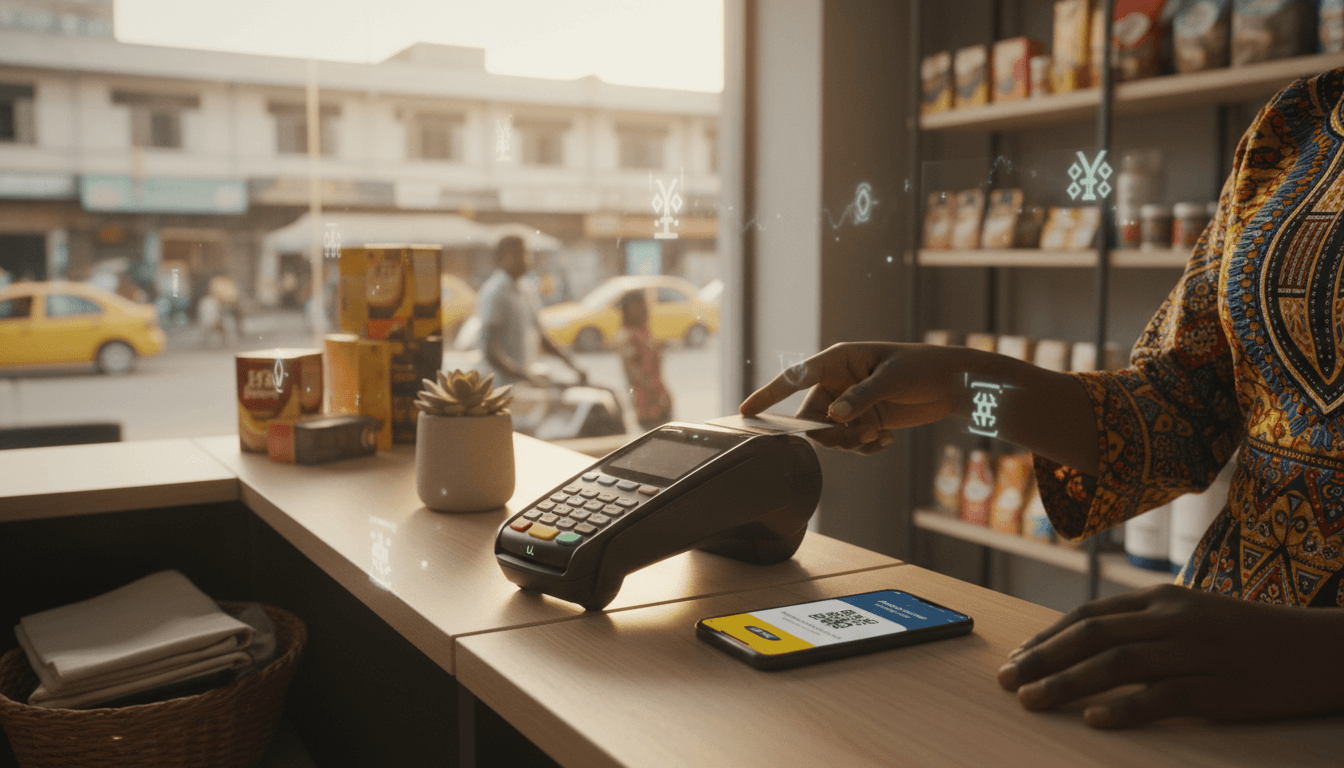
Verve has issued 100 million payment cards across Africa—and instead of celebrating and stopping there, it’s doubling down on contactless payments and tokenisation. That choice tells you what’s coming next: more tap-to-pay, more online payments, and a lot more transaction volume flowing through African rails.
Here’s the part most fintech teams underestimate. When payments scale this fast, trust becomes a math problem: you’re trying to approve legitimate transactions quickly while blocking fraud instantly—across cards, mobile money, POS terminals, apps, and merchants. Human review can’t keep up. Rules alone don’t keep up either.
That’s why this story fits perfectly inside our series, “AI ne Fintech: Sɛnea Akɔntabuo ne Mobile Money Rehyɛ Ghana den”—because Ghana’s next phase of growth (mobile money + cards + digital merchants) will need AI-driven automation, risk scoring, and smarter operations to stay safe and smooth.
Verve’s 100 million cards is a signal, not just a milestone
The key signal: Africa’s consumers and merchants are normalising digital payments beyond mobile money wallets—cards, online checkout, POS, and in-app payments are stacking up.
Verve’s growth came through partnerships with banks and fintechs, with usage across ATM withdrawals, POS transactions, online purchases, and mobile payments. That mix matters because it reflects a real-world customer journey:
- People withdraw cash less often, but still need cash access.
- Merchants want POS acceptance that works reliably.
- Online checkout is no longer “for a few people in big cities.”
- Mobile payments are blending into everything.
For Ghana, the parallel is obvious. Mobile money is already mainstream. The next step is tight interoperability between wallets, bank accounts, cards, and merchant acceptance—especially for SMEs.
What’s driving the shift to contactless
Contactless is winning for one simple reason: speed. Tap-and-go reduces friction at checkout. In practice, that means shorter queues, higher throughput for merchants, and fewer abandoned purchases.
But contactless also raises the bar for fraud prevention. Faster payments leave less time for manual checks. If you can approve a tap transaction in a second, fraudsters can also attempt more transactions per minute.
This is where AI becomes operational, not theoretical.
Tokenisation: the quiet security upgrade Africa needs
Tokenisation replaces sensitive card data with a surrogate “token.” If attackers steal the token, it’s far less useful than real card details.
Verve’s move toward tokenisation is a practical response to a painful reality: as more African payments go digital, fraud attempts scale with them. Tokenisation doesn’t solve everything, but it reduces blast radius—especially for:
- In-app payments where cards are stored for repeat purchases
- E-commerce checkout where credentials are targeted
- Merchant databases that may not have mature security controls
Tokenisation vs. chip-and-PIN: both matter
Chip-and-PIN protects many in-person scenarios. Tokenisation protects many online and digital scenarios.
For Ghana’s ecosystem—where payments often cross between mobile money apps, bank channels, merchant aggregators, and online marketplaces—the best security posture is layered:
- Device and channel security (app hardening, secure onboarding)
- Payment credential protection (tokenisation)
- Behaviour-based risk controls (AI fraud detection)
- Strong dispute and chargeback workflows (operational discipline)
If one layer slips, the others reduce damage.
Why fintech growth forces AI into the core (not the side)
When transaction volume rises, your risk, support, and compliance workloads rise too—unless AI absorbs the load. This isn’t hype; it’s cost structure.
If your digital payments are expanding across cards and mobile money, you’ll feel pressure in three places immediately:
1) Fraud detection and real-time decisioning
Rule-based systems break down because fraud changes tactics quickly. AI models adapt better because they learn patterns across many signals, for example:
- Device fingerprint and SIM history
- Location consistency and time-of-day behaviour
- Merchant risk levels and product types
- Velocity checks (how fast attempts happen)
- Network effects (shared signals across accounts)
A useful way to say it:
Rules catch yesterday’s fraud. AI catches today’s fraud.
For Ghanaian banks, fintechs, and payment aggregators, AI-based scoring can sit behind both card rails and mobile money flows, helping to:
- Approve low-risk transactions faster
- Step up authentication on suspicious activity
- Reduce false declines (which frustrate customers)
2) Merchant monitoring and acceptance quality
As contactless expands, merchant terminals and agent networks become a reliability battle. The fastest way to lose trust is simple: “the terminal isn’t working.”
AI can improve acceptance by detecting issues before merchants complain:
- Predict POS downtime based on historical failure patterns
- Flag terminals with abnormal reversal rates
- Detect merchant collusion patterns (a real problem in high-volume corridors)
In Ghana, where SMEs run on cashflow and speed, acceptance reliability is customer experience.
3) Compliance operations (AML) at scale
Growth means more alerts, more reviews, more reporting. If your compliance team scales linearly with transactions, your margins suffer.
AI can triage alerts:
- Prioritise the highest-risk cases
- Reduce noisy false positives
- Create clearer narratives for investigators
It doesn’t replace compliance officers. It makes them effective.
What Ghana can learn from Verve’s next bet
The lesson isn’t “issue more cards.” The lesson is “prepare your rails for what comes after adoption.”
Verve’s pivot to contactless and tokenisation suggests a maturity curve that Ghana’s fintech ecosystem should plan for:
Adoption → Convenience → Security → Intelligence
- Adoption: get people into digital payments (Ghana has done this strongly via mobile money)
- Convenience: make it fast and widely accepted (contactless, better merchant tools)
- Security: reduce credential risk (tokenisation, strong controls)
- Intelligence: run the system efficiently at scale (AI risk engines, automation)
If you skip the intelligence layer, you pay later in:
- fraud losses
- customer churn due to failed payments
- overloaded support teams
- regulatory pressure and reputational damage
A realistic Ghana scenario (what “AI in fintech” looks like)
A mid-sized Ghanaian payment provider supporting merchants across Accra and Kumasi might see spikes during weekends and end-of-month salary periods.
AI can be used to:
- Forecast transaction surges and pre-allocate capacity
- Auto-tune risk thresholds for high-velocity periods
- Detect anomalies like unusual refund behaviour or rapid repeat taps
- Route transactions more intelligently when a path is degraded
That’s not futuristic. That’s operational maturity.
Practical checklist: building AI-ready payments (for banks, fintechs, and aggregators)
If you want contactless and tokenisation to work at scale, start with data discipline and workflow design. Here’s what I’ve found works in practice.
Step 1: Get your data house in order
You can’t model what you can’t measure. Prioritise:
- Consistent transaction schemas across channels
- Clean merchant IDs and device identifiers
- Time-synchronised logs (especially across partners)
- Clear definitions for fraud labels and chargeback outcomes
Step 2: Start with “human-in-the-loop” automation
Don’t jump straight to full automation. Begin with:
- AI risk scoring that assists analysts
- Queue prioritisation for support and disputes
- Explainable reasons (top factors) for each risk flag
Step 3: Use tokenisation as part of a broader risk strategy
Tokenisation reduces credential theft risk, but you still need:
- behavioural monitoring
- velocity controls
- device integrity checks
- merchant risk profiling
Step 4: Design customer experience for security moments
Customers accept security when it’s predictable and respectful. Build:
- step-up verification that’s fast (biometrics, OTP fallback)
- clear messaging for declines
- rapid dispute resolution
A strong line to remember:
Security that embarrasses the customer isn’t security—it’s churn.
Step 5: Measure what matters weekly
Track a small set of metrics you can act on:
- fraud rate by channel (contactless vs online vs wallet)
- false decline rate (lost good transactions)
- reversal/timeout rate at POS
- time-to-resolution for disputes
- AML alert precision (how many alerts become cases)
People also ask: common questions about contactless, tokenisation, and AI
Is contactless safe for everyday payments?
Yes—when properly implemented. The risk isn’t the “tap” itself; it’s weak backend monitoring. AI fraud detection + tokenisation + strong device controls is the safer combination.
Does tokenisation stop fraud completely?
No. It mainly reduces the risk of stolen card details being reused. Fraud can still happen via social engineering, account takeover, or compromised devices. Tokenisation is a strong layer, not the whole system.
What’s the fastest AI use-case for Ghanaian fintech teams?
Fraud scoring and alert triage. These deliver measurable ROI quickly because they reduce losses and manual workload.
Where this goes next for Ghana’s mobile money and cards
Verve hitting 100 million cards and investing in contactless and tokenisation is a clear sign that African payments are scaling into a higher-trust, higher-speed era. Ghana will feel the same pressure as more commerce shifts from cash into taps, online checkout, and app-based payments.
For this series—AI ne Fintech: Sɛnea Akɔntabuo ne Mobile Money Rehyɛ Ghana den—the takeaway is straightforward: growth without AI creates fragile systems. Growth with AI creates systems that can handle peak volumes, reduce fraud, and keep customers confident.
If you’re building or operating payment products in Ghana, the question to ask in 2026 isn’t “Should we add AI?” It’s: Which part of our payment stack becomes unsafe or too slow if we don’t?