Konscious Foods shut down despite major funding. Here’s what Ghana’s food innovators can learn—and how AI + fintech can reduce risk and protect margins.
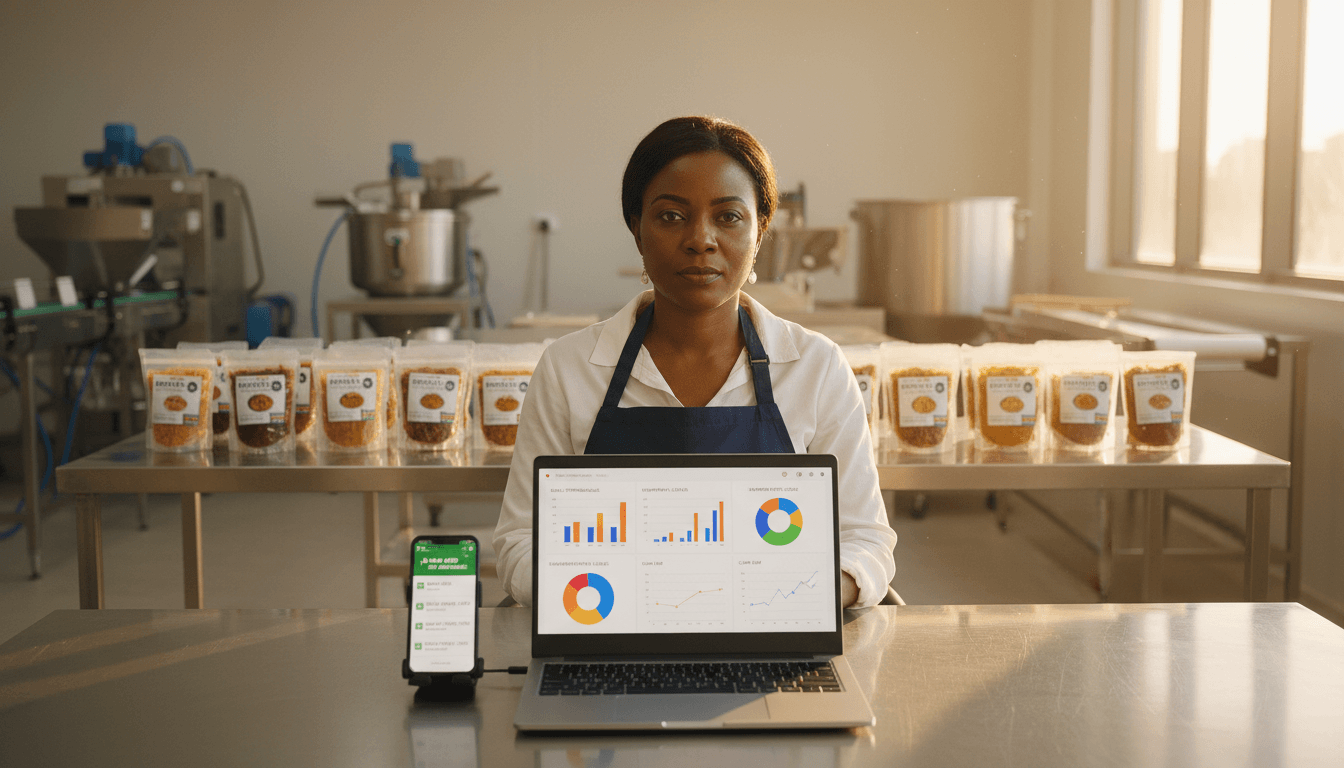
AI Lessons from a Food Startup Shutdown—For Ghana
A Canadian plant-based seafood company called Konscious Foods raised serious money—about CAD$31 million across public and private backers—built a 34,000 sq ft facility, hired senior operators, and still shut down.
That’s not gossip; it’s a warning label for anyone building food innovation in 2026. And it’s especially relevant for Ghana, where agribusiness founders are trying to scale processing, build trusted brands, and plug into export markets—often while financing runs through mobile money, digital wallets, and fintech credit.
Most people read a shutdown story and blame “the market.” I don’t. The more useful read is: what signals were missed early, what decisions became irreversible, and what tools can help founders in Ghana avoid the same traps? This is where AI becomes practical—not as hype, but as a set of systems that reduce blind spots in operations, pricing, cash flow, and risk.
What Konscious Foods’ closure really tells us
Answer first: The Konscious Foods shutdown shows that strong products and big facilities aren’t enough; profit discipline, predictable demand, and financing resilience decide who survives.
From the report, the company cited US–Canada trade headwinds and broader weakness in the plant-based sector, then disclosed a painful reality: a primary secured lender issued a demand letter and moved to enforce security—triggering cessation and asset transfer.
That combination matters:
- External shock (trade friction, category slowdown)
- Balance sheet pressure (secured lender can end the story fast)
- Scale commitments (facility overhead, payroll, cold chain)
I’ve seen this pattern across industries: when you build for a future distribution footprint (thousands of stores) before the unit economics are stable, you don’t just “grow faster.” You lock in fixed costs that punish you when demand wobbles.
“At some point you have to make a profit” isn’t motivational—it’s math
Konscious’ founder said something founders everywhere should tattoo on their dashboards: “At some point you have to make a profit.”
Profit isn’t a vibe. It’s a system of small decisions:
- How accurately you forecast demand (and inventory waste)
- Whether your pricing reflects real costs (not hopeful costs)
- Whether promotions create repeat buyers or just temporary volume
- How quickly cash comes in versus how quickly bills must be paid
In Ghana’s food ecosystem, these decisions are harder because inflation volatility, FX exposure, and logistics variability can distort costs month-to-month. That’s exactly why AI + fintech isn’t a luxury—it's becoming basic hygiene.
Why this matters for Ghana’s food innovators (and why fintech sits in the middle)
Answer first: In Ghana, the biggest scale killer isn’t ideas—it’s cash flow timing, and fintech rails (mobile money, digital payments, embedded finance) decide whether you can survive timing gaps.
Many agribusinesses don’t fail because customers don’t exist. They fail because:
- Retailers pay late
- Inventory sits too long
- Spoilage happens quietly
- Working capital loans are expensive
- FX moves against import inputs (packaging, additives, equipment)
Now connect that to our series theme—“AI ne Fintech: Sɛnea Akɔntabuo ne Mobile Money Rehyɛ Ghana den.”
If your revenues arrive through mobile money and card payments while your costs hit daily (fuel, labor, cold storage), your survival depends on:
- Automated accounting (so you know your true margin this week, not next quarter)
- Real-time risk scoring (so lenders price credit fairly, not blindly)
- Cash flow forecasting (so expansion doesn’t become a trap)
This is where AI becomes a practical co-pilot: it turns messy transaction trails into decisions you can trust.
Where AI would have helped: 5 failure points founders can control
Answer first: AI can’t stop trade shocks, but it can reduce “unforced errors” in forecasting, pricing, operations, and financing.
1) Demand forecasting that respects reality, not ambition
Food founders often forecast based on distribution targets (“we’ll be in 4,500 stores”) instead of sell-through truth.
AI forecasting models—fed by POS data, promo calendars, seasonality, and regional differences—can:
- Predict store-level demand by SKU
- Flag when promotions are creating one-time buyers
- Reduce overproduction and cold-chain cost
Ghana application: If you sell frozen or processed foods in Accra, Kumasi, Takoradi, and Tamale, AI can show you that each city has different reorder rhythms and price sensitivity—so you don’t treat “national rollout” as one uniform market.
2) Pricing and margin monitoring (the part people avoid)
Many “fast-growing” food brands are quietly losing money per unit—especially when input costs shift.
AI-driven margin monitoring can reconcile:
- Ingredient costs
- Packaging and fuel variability
- Distributor fees and promo deductions
- Returns/spoilage
Snippet-worthy truth: If you can’t compute margin per SKU in near-real time, you’re scaling uncertainty.
Ghana application: Pair AI margin dashboards with mobile money transaction data and accounting integrations. Your pricing decisions become weekly, not quarterly.
3) Working-capital planning tied to mobile money and fintech credit
When a secured lender pulls the plug, it’s usually because the lender sees a cash crunch coming sooner than the founder admits.
AI helps by generating cash flow forecasts using:
- MoMo inflows by channel
- Supplier payment schedules
- Payroll cycles
- Inventory turnover
Then fintech becomes the execution layer:
- Dynamic credit limits based on real performance
- Invoice financing when retailers delay payments
- Collections nudges via SMS/WhatsApp workflows
What works: Build a “cash runway dashboard” that updates daily. If runway drops below a defined threshold (say, 90 days), you freeze non-essential spend automatically.
4) Supply chain risk: trade, FX, and single-point dependencies
Konscious cited changes in US–Canada trade relations. You can’t control policy, but you can avoid being fragile.
AI risk models can track:
- FX exposure by input
- Alternative supplier pricing
- Lead-time variability
- Shipping delays and cold-chain constraints
Ghana application: Even if you’re not exporting, you may import packaging film, preservatives, machinery parts, or additives. A small FX swing can erase margins. AI that alerts you when FX risk crosses a threshold is not fancy—it’s protective.
5) Operational efficiency: energy, labor, and yield
A 34,000 sq ft facility signals serious fixed overhead. If yield drops (waste, rework, downtime), you bleed.
AI applied to operations can:
- Track yield by batch
- Detect anomalies (temperature, downtime, defect spikes)
- Optimize production scheduling
Ghana application: Even without full industrial sensors, you can start with structured data: batch logs in spreadsheets, QC outcomes, and energy/fuel spend. AI can still find patterns humans miss.
A practical AI + fintech playbook for Ghanaian food founders
Answer first: The goal isn’t “use AI.” The goal is to run a food business where every cedi has a job and every risk has an early warning.
Here’s a field-tested way to start without building a research lab.
Step 1: Centralize transactions (especially mobile money)
If sales come through multiple MoMo numbers and agents, consolidate reporting.
- One view of inflows by product/channel/region
- Separate business from personal wallets
Step 2: Automate accounting and reconciliation
Manual bookkeeping hides theft, leakage, and margin drift.
- Auto-categorize expenses
- Match MoMo receipts to invoices
- Weekly profit-and-loss snapshots
Step 3: Add AI forecasting and “exception alerts”
Don’t try to predict everything. Predict what matters:
- Next 4–8 weeks demand
- Inventory expiry risk
- Cash runway
- Top 10 cost spikes
Configure alerts like:
- “Fuel spend up 18% week-on-week”
- “SKU A sell-through dropped in Kumasi for 3 weeks”
- “Runway now 76 days at current burn”
Step 4: Use fintech products intentionally (not emotionally)
Fintech credit should fund working capital tied to sales, not long-term structural losses.
- Use invoice financing for delayed retailer payments
- Use short-term inventory financing for fast-moving SKUs
- Avoid borrowing to cover chronic negative margins
Step 5: Build a lender-ready data room from day one
If a lender becomes nervous, your data reduces panic.
Keep clean:
- Monthly management accounts
- SKU-level margin logic
- Aging reports (receivables and payables)
- Inventory turnover and shrinkage
Strong stance: A founder who can’t produce clean numbers quickly will pay more for capital—or lose it.
People also ask (and founders ask it privately)
Can AI really prevent a shutdown?
Answer first: AI doesn’t prevent shutdowns by itself; it prevents surprises.
When you see margin drift, demand softening, or cash runway shrinking early, you can cut spend, renegotiate, adjust pricing, or pause expansion before the lender does it for you.
Isn’t AI too expensive for Ghanaian SMEs?
Answer first: The expensive part is messy data and manual processes, not AI.
Start with lightweight tools: automated bookkeeping, basic forecasting, and exception alerts. Many businesses waste more each month through leakage and poor stock decisions than they’d spend on simple analytics.
What’s the connection to mobile money and fintech?
Answer first: Mobile money creates a digital trail; AI turns that trail into decisions; fintech turns decisions into action (credit, collections, payments).
That’s why AI ne fintech belongs in the same sentence.
What Ghana should learn from Konscious Foods—without copying the pain
A shutdown like Konscious Foods isn’t proof that food innovation is pointless. It’s proof that innovation without operational control is fragile. Big facilities, strong branding, and even experienced leadership can still lose to bad timing and weak financial resilience.
For Ghana’s agribusiness builders, the better path is clear: use AI to tighten forecasting, margins, and cash flow—then use fintech and mobile money rails to execute faster and borrow smarter.
If you’re building in food processing, alternative proteins, cold-chain distribution, or any fast-scaling FMCG category, ask yourself one forward-looking question: If demand drops 15% next quarter, will your numbers warn you early—or will your lender?