Cedi stabilisation helps, but workers still lose purchasing power. See how AI, mobile money, and fintech tools can protect households and improve transparency.
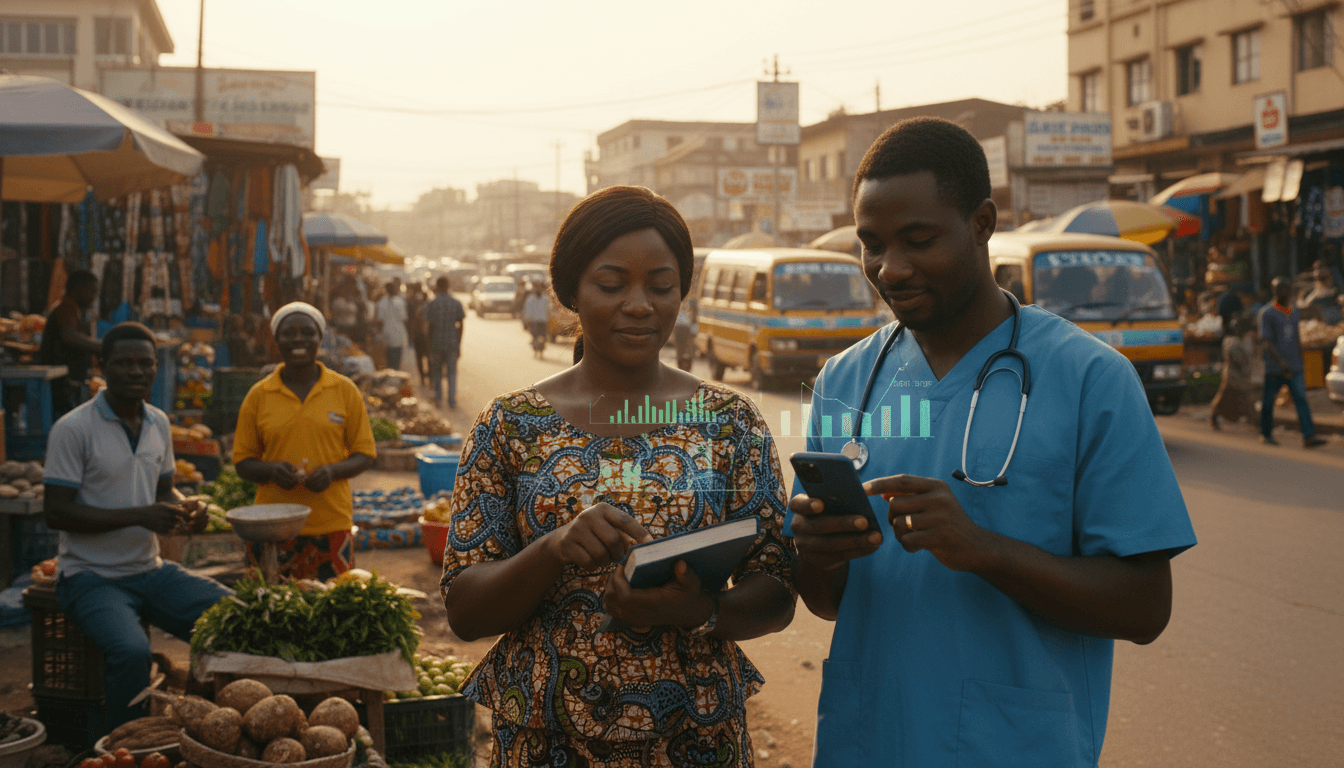
AI & Fintech: Protect Workers While Stabilising Cedi
Ghana’s currency debate keeps circling the same tactic: the central bank steps into the FX market in small tranches (often around US$10 million) to calm the cedi. It can work for the moment—especially when businesses are panicking and prices are threatening to jump again. But there’s a hard truth many households already live with: a “stable” exchange rate doesn’t automatically bring the cost of living down.
If you’re a teacher, nurse, artisan, trader, or public servant, you feel the lag immediately. Transport fares don’t politely reverse. Food prices rarely drop in a way that matches the relief headlines. Rent doesn’t renegotiate itself. So when policy focuses on defending the cedi without directly protecting incomes, workers pay twice: first through inflation, then through the opportunity cost of public money that could’ve improved services, skills, and jobs.
This post sits inside our series “AI ne Fintech: Sɛnea Akɔntabuo ne Mobile Money Rehyɛ Ghana den”—and my stance is simple: currency stabilisation is necessary sometimes, but it’s not sufficient. The missing layer is precision protection for ordinary people. That’s where AI in fintech and mobile money can help, not as slogans, but as practical tools that reduce waste, target support, and make household finances more resilient.
Stabilising the cedi helps—but workers still lose
Stabilising the cedi reduces sudden price shocks, but it doesn’t repair purchasing power. That gap is why workers can feel “worse off” even during periods of calmer FX markets.
When the cedi weakens sharply, the transmission is fast: imported fuel, medicines, spare parts, cooking oil, rice, and transport costs jump. Wages, however, adjust slowly—often annually, sometimes later. So households live in a permanent mismatch: prices move weekly; incomes move yearly.
And once prices rise, they tend to stick. Anyone who has tracked their market basket knows this pattern. Even if the cedi later stabilises, the “new normal” price level often stays.
The equity issue most people ignore
FX interventions don’t distribute benefits evenly. The biggest immediate winners are usually those who:
- import at scale (large firms with predictable FX needs)
- have access to formal banking and treasury services
- can hold value in assets that hedge depreciation
Meanwhile, informal workers and many rural households see little direct benefit. They experience the “price side” of stability policy but not the “income side.” If the policy goal is social stability, that’s a problem.
The hidden trade-off: what else could US$10m do?
Every US$10 million used to defend the currency is US$10 million not invested in productivity and protection. That’s not a moral argument; it’s basic budgeting.
In the RSS article’s framing, Ghana’s FX support increasingly draws from national resources, including natural wealth such as gold. Those aren’t private funds—they’re public assets. If they’re used repeatedly to smooth currency markets, citizens deserve two things:
- Transparency on how decisions are made and who benefits
- A complementary plan to protect workers’ real incomes and build productive capacity
Here’s the practical question: if a tranche stabilises the market for a short period, what happens next month? If the answer is “another tranche,” you don’t have a strategy—you have a treadmill.
Why this matters for public sector workers
Public services—education and health especially—feel opportunity cost immediately. When budgets are delayed and logistics are scarce, workers absorb the pain through personal spending (transport, printing, supplies, top-ups) and poorer working conditions. If public resources prioritise defending the currency while schools lack equipment and hospitals lack basics, workers aren’t just underpaid—they’re subsidising the system.
Where AI and fintech fit: “stability” for households, not just markets
AI fintech can’t replace macroeconomic policy. It can make policy outcomes fairer and more effective at the household level. The best way to connect these worlds is to treat workers’ purchasing power as something you can measure, predict, and protect—using tools people already use daily: mobile money.
Think of it as a second layer of stability:
- BoG interventions aim to reduce FX volatility at the national level
- AI-driven financial tools aim to reduce income and consumption volatility at the household level
That second layer is where most people actually live.
1) Inflation-aware budgeting inside mobile money apps
An inflation-aware budget adjusts targets automatically when prices rise. Instead of telling users to “budget better,” the app updates their spending guardrails based on what’s happening in their real basket: transport, food, utilities, airtime/data.
What this looks like in practice:
- weekly alerts when your usual spending pattern is trending above your income
- category caps that adjust (for example, transport +10% triggers a revised weekly limit)
- “essential-first” recommendations: keep fees, food, and utilities funded before discretionary spend
This is exactly the kind of automation that fits the series theme: akɔntabuo (accounting) inside everyday mobile money behaviour.
2) Micro-savings that’s timed to salary reality
Most savings features fail because they ignore Ghanaian cashflow patterns. People don’t need lectures; they need timing.
AI can learn income cadence (monthly salary, irregular gigs, seasonal sales) and propose realistic rules:
- save small amounts right after inflow (when temptation is highest)
- pause automatically during predictable stress weeks (school fees, rent weeks)
- resume when inflow returns—without shame notifications
For workers facing inflation, the goal isn’t “becoming rich.” It’s staying stable.
3) FX and price-shock early warnings for households
Early warning is protection. If a user’s spending is highly sensitive to fuel and transport, then a cedi wobble or fuel price signal should trigger planning guidance.
A good model doesn’t need to predict the exchange rate perfectly. It only needs to answer:
- “If prices rise 8% this month, what happens to your ability to cover essentials?”
- “Which category will break your budget first?”
Then it can recommend actions that are actually feasible: reduce non-essentials, reschedule repayments, increase savings rate for two weeks, or move to cheaper bundles.
4) Fairer credit decisions (and safer borrowing)
When inflation bites, credit demand rises—often through salary advances, mobile loans, and informal borrowing. The risk is obvious: people borrow to survive, then repay at punishing cost.
AI can help, but only if lenders use it responsibly:
- affordability checks based on real net cashflow, not just gross income
- dynamic limits that shrink when expenses spike
- repayment plans aligned to salary dates
A strong rule of thumb: if a loan product can’t explain its affordability logic in plain language, it probably shouldn’t be fully automated.
Making policy fairer: fintech as a transparency and targeting tool
Fintech can strengthen social dialogue by improving measurement and targeting. The article calls for transparency and structured engagement with organised labour. I agree—and I’ll add a modern toolset.
A practical model: “Cost-of-Living Index” for workers
Instead of relying only on national inflation averages, unions and employers could negotiate using a worker-relevant cost-of-living index built from anonymised, aggregated transaction patterns (with strong privacy protections).
For example:
- education workers may have higher transport and rent exposure
- health workers may have different shift-transport costs
- rural households may have different food baskets
If wage negotiations include this kind of evidence, cost-of-living adjustments become less political and more data-driven.
Currency stability is a national goal. Purchasing-power stability is a household goal. Ghana needs both measured and managed together.
Targeted support through mobile money rails
When government support is needed—temporary relief, transport vouchers, school feeding expansion, or utility support—mobile money distribution reduces leakage and improves speed.
AI helps by:
- targeting eligibility using clear, auditable rules
- detecting duplicate or suspicious claims
- monitoring impact (did essentials spending stabilise?)
This addresses the opportunity cost argument directly: if public resources are used, they should deliver measurable protection, not just market calm.
“People also ask” (and straight answers)
Can AI stop inflation in Ghana?
No. AI can’t fix structural drivers like import dependence, commodity shocks, or fiscal imbalance. What it can do is help households and institutions respond faster and waste less.
Will fintech help if wages stay low?
Fintech isn’t a substitute for fair wages. But it can reduce fees, improve budgeting, and prevent harmful borrowing—small wins that matter when margins are tight.
Is mobile money data safe for this?
It can be safe only with strong governance: consent, anonymisation, aggregation, and independent oversight. No household should be punished for being measurable.
A better deal: defend the cedi, but defend workers too
Cedi stabilisation can prevent panic and buy time. The mistake is treating it as the finish line. Ghana’s long-term fix remains structural: produce more locally, add value to exports, reduce import dependence, and invest in skills and public services.
But while that bigger work continues, households still need day-to-day protection. That’s why AI ne fintech belongs in this national conversation: it offers tools for budgeting discipline without drama, savings that match real life, credit that’s safer, and support that reaches people directly.
If you’re building a fintech product, partnering with a union, or managing payroll for a large workforce, here’s the next step that actually matters: pilot one worker-focused feature that explicitly targets inflation stress—then measure whether it reduces missed repayments, emergency borrowing, and essential-spend shortfalls.
Ghana doesn’t have to choose between defending the cedi and defending workers. The more interesting question is: what would it look like if every cedi-stability action had a matching household-stability action attached to it?