AI can help Ghana diagnose structural economic crisis faster and test policies before rollout. See practical AI + fintech steps for stability.
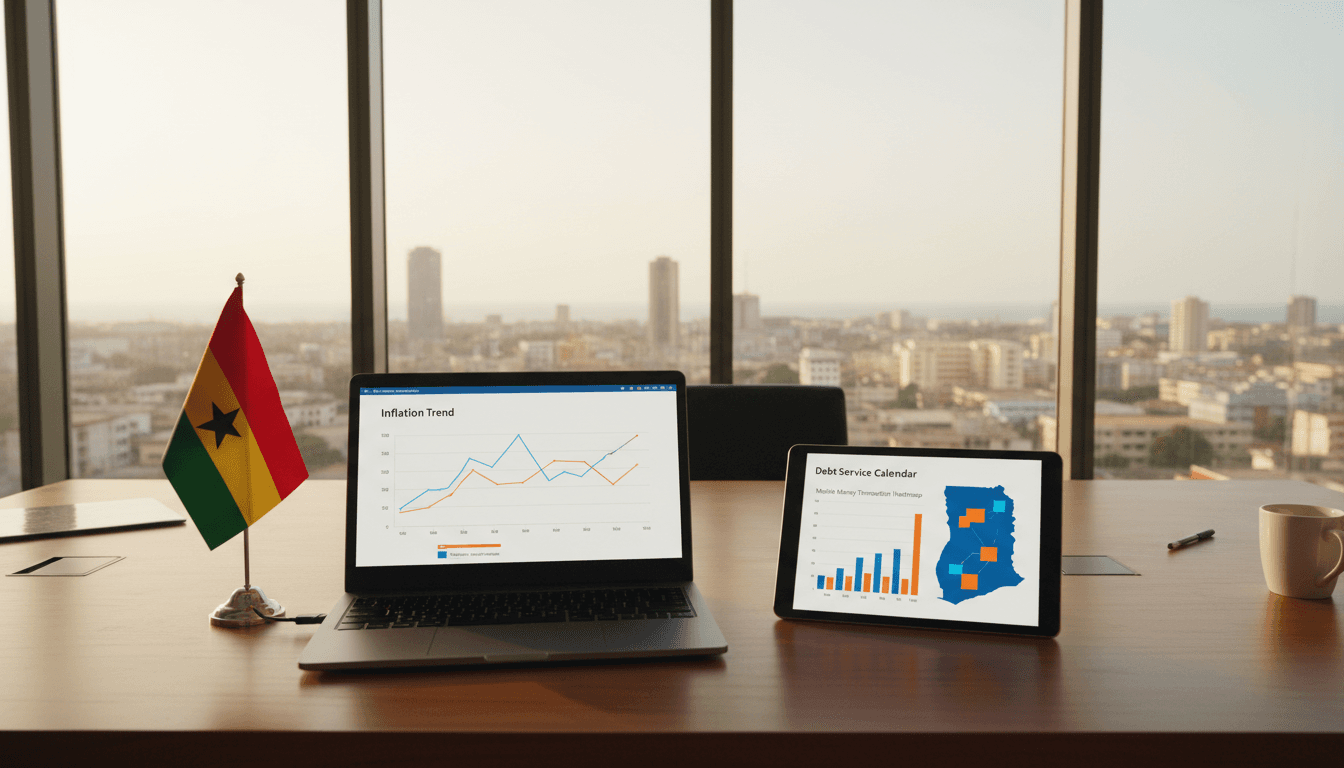
AI-Powered Fixes for Ghana’s Structural Economic Crisis
Ghana’s economy doesn’t usually break in one dramatic moment. It bends for years—through budget choices, debt decisions, energy costs, currency pressure, and procurement habits—until a “structural crisis” becomes the only honest description left.
So when Education Minister Haruna Iddrisu says the Akufo-Addo administration left Ghana’s economy in a structural crisis, the real question for 2025 isn’t only who to blame. It’s how Ghana can stop repeating the same errors—especially when those errors show up as higher prices, tighter credit, job insecurity, and weaker public services.
Here’s my stance: Ghana won’t policy-our-way out with spreadsheets and intuition alone. We need better decision support—tools that can test policies before they’re rolled out, detect fiscal risks early, and measure what’s working in near real time. That’s where AI-driven economic analysis fits into the national conversation, and why it belongs in this series on AI ne Fintech: Sɛnea Akɔntabuo ne Mobile Money Rehyɛ Ghana den.
What “structural economic crisis” really means in Ghana
A structural crisis is when core parts of the economy consistently produce bad outcomes, even when leaders change. It’s not just one bad quarter; it’s persistent weakness that shows up repeatedly.
In Ghana’s context, “structural” typically points to problems like:
- Debt and interest costs crowding out productive spending (roads, skills, health, technology)
- Budget rigidities (too much locked into wages and statutory funds, too little flexibility)
- Import dependence that worsens currency pressure
- Energy and logistics costs that raise the price of doing business
- Low trust in public financial management, which increases risk premiums and borrowing costs
When a minister says it will “take time to correct,” that’s believable because structural issues don’t respond to one policy memo. They respond to disciplined execution and better feedback loops.
Why this matters for fintech and mobile money users
If you run a small business, sell online, or rely on mobile money, structural instability hits you fast:
- FX swings raise inventory costs
- Inflation reduces customer purchasing power
- Banks tighten lending and raise interest rates
- Government arrears can delay payments to suppliers
Fintech doesn’t cause these problems, but fintech data can help diagnose them, and fintech platforms can help implement solutions (targeted support, efficient collections, better compliance, and faster payments).
Policy mismanagement leaves patterns—AI can find them
Policy mistakes usually leave fingerprints in data. The issue is that humans aren’t great at seeing complex, interacting patterns across years of budgets, commodity prices, exchange rates, debt issuances, and payment arrears.
AI can be useful here, not as a magic judge, but as a pattern detector and early-warning engine.
Where AI analysis helps most
AI is strongest when the job is to sift through messy, multi-source data and surface signals. For Ghana’s economic management, practical applications include:
-
Fiscal risk monitoring
- Detect “quiet” risk build-up: rising contingent liabilities, arrears, SOE exposure, and debt-servicing stress.
-
Inflation and price transmission modeling
- Estimate how FX movements, fuel prices, and transport costs pass through to food prices across regions.
-
Revenue forecasting and leak detection
- Predict shortfalls earlier in the year.
- Flag anomalies in tax collections by sector and geography.
-
Procurement and project analytics
- Identify cost overruns, repeated single-sourcing patterns, and delayed project delivery signals.
-
Policy impact evaluation
- Measure whether interventions (subsidies, tariff changes, grant programs) actually change outcomes—and for whom.
A simple truth: if government can’t measure outcomes quickly and credibly, it will keep funding programs based on politics and hope.
AI policy simulation: test decisions before they hurt people
The fastest way to create long-term economic damage is to roll out policies without stress-testing them. AI-driven policy simulation helps decision-makers ask “what happens if…” before committing.
What an AI policy “digital twin” could look like for Ghana
Think of a policy digital twin as a model that combines:
- Macroeconomic data (inflation, GDP proxies, FX, interest rates)
- Fiscal data (revenue, expenditure, debt schedule)
- Sector signals (cocoa/gold/oil receipts, import bills)
- Household and business indicators (prices, wages proxies, employment proxies)
- Payments data signals (aggregated trends from mobile money and banking)
Then it runs scenarios such as:
- What if the cedi depreciates by X% and fuel prices rise by Y%?
- What if government delays payments to contractors by 90 days?
- What if interest rates stay high for 12 months?
- What if a new levy is introduced—who bears the cost, and does compliance drop?
This matters because the public experiences policy through prices and jobs, not through press conferences.
A Ghana-specific example: arrears and SME cashflow
When government delays payments, SMEs struggle to pay staff and suppliers. Many then:
- Borrow at expensive rates
- Reduce inventory
- Stop hiring
- Move transactions to cash to avoid fees or compliance friction
An AI system can combine invoice data (where available), procurement timelines, and aggregated payment behavior signals to forecast which sectors and regions are likely to face liquidity stress. That allows targeted responses—like faster reconciliation, prioritized payments, or short-term credit facilities routed through regulated fintech partners.
AI + fintech: a practical playbook for economic repair
Ghana already has widespread mobile money usage. That’s a national asset for governance—if it’s used responsibly and with strong safeguards.
Here are concrete ways AI and fintech can support structural correction without turning into surveillance or bureaucracy.
1) Smarter revenue collection with fewer headaches
Answer first: AI can reduce revenue leakage by detecting anomalies and improving compliance targeting.
Instead of blanket enforcement (which annoys compliant businesses), AI can:
- Segment taxpayers by risk profile
- Predict likely non-filers based on business activity proxies
- Flag suspicious under-reporting patterns
Done well, this increases revenue without constantly increasing tax rates.
2) Targeted support that actually reaches people
Answer first: Digital payments + AI eligibility checks can improve social protection accuracy.
When support programs are poorly targeted, they fuel cynicism and waste. With better data matching and transparent rules, government can:
- Deliver time-bound transfers via mobile money
- Verify eligibility using non-invasive indicators
- Monitor outcomes (did food insecurity reduce in the target districts?)
3) Credit scoring that fits Ghana’s reality
Answer first: AI-based credit scoring can expand SME lending when traditional collateral is scarce.
Banks often hesitate to lend to small businesses because documentation is thin. Fintech lenders use alternative data (transaction patterns, repayment behavior, sales consistency). With strong regulation, this can:
- Lower default risk
- Offer smaller, safer loan sizes
- Price loans more fairly than one-size-fits-all rates
The caution: bad AI credit scoring can be discriminatory. The fix is auditing, explainability, and clear consumer rights.
4) Early warning systems for inflation pressure
Answer first: AI can forecast inflation hotspots by combining market prices, FX, fuel, and transport proxies.
If policymakers know where price spikes will hit first, they can respond with:
- Faster market interventions (not blanket controls)
- Logistics fixes (e.g., targeted transport support during shocks)
- Better communication to reduce panic buying
Guardrails Ghana must put in place (or AI will backfire)
If Ghana adopts AI in economic governance without safeguards, it will create new problems—bias, opacity, procurement waste, and public distrust.
Here are guardrails that should be non-negotiable:
Data governance and privacy
- Clear limits on what can be collected and why
- Strong anonymization for aggregated fintech/mobile money insights
- Independent oversight and audit trails
Model transparency for public decisions
If AI influences a public policy choice (or who gets support), the system must provide:
- Explainable reasons
- Appeal processes
- Regular bias testing
Procurement discipline
AI projects fail when they become vendor-led buzzword shopping. Procurement should require:
- A narrow problem definition
- Measurable outcomes (time to detect arrears risk, forecast accuracy, fraud reduction)
- Local capacity transfer (not permanent dependence)
If a ministry can’t describe the decision it wants to improve, it’s not ready to buy AI.
People also ask: quick answers for Ghana’s AI economic policy debate
Can AI predict the long-term impact of policy mismanagement in Ghana?
Yes—within ranges. AI improves forecasting by learning from historical patterns and interactions, but it won’t remove uncertainty. Its value is in scenario testing and early warnings.
Will AI replace economists and policy analysts?
No. It changes the workflow. Analysts spend less time cleaning data and more time judging trade-offs, validating assumptions, and communicating options.
What’s the fastest “starter project” Ghana can run?
A realistic starter is an AI-driven fiscal risk dashboard that tracks arrears, SOE exposures, debt servicing schedules, and revenue performance—updated weekly or monthly.
How does this connect to mobile money and fintech?
Mobile money creates high-frequency economic signals. Aggregated responsibly, it helps detect stress in households and SMEs early—and it provides efficient rails for delivering targeted support.
What Ghana should do next (and what businesses can do now)
Haruna Iddrisu’s accusation frames the political narrative, but the bigger opportunity is institutional: build systems that prevent the next structural crisis—no matter who is in power. AI is one part of that, especially when paired with fintech infrastructure.
If you’re in government or policy advocacy, push for:
- A national roadmap for AI-driven economic decision support (with privacy rules)
- A small number of high-impact pilots (risk dashboard, procurement analytics, inflation early warning)
- Independent evaluation of models and outcomes
If you run a fintech, SME, or finance team, don’t wait for perfect macro stability. What works right now:
- Improve cashflow forecasting using your own transaction history
- Build scenario plans (FX up, rates up, demand down)
- Use automation to reduce collections delays and reconciliation errors
This series is about AI ne Fintech because Ghana’s strongest advantage isn’t only policy talk—it’s that millions of people already transact digitally. The question is whether we’ll use that reality to build smarter economic management, or keep treating crises as surprises.
Where should Ghana start first: fiscal risk early warning, procurement analytics, or inflation hotspot forecasting?