New car brands launched in South Africa in 2025. Here’s how AI-powered e-commerce and digital services help them win leads, test drives, and loyalty.
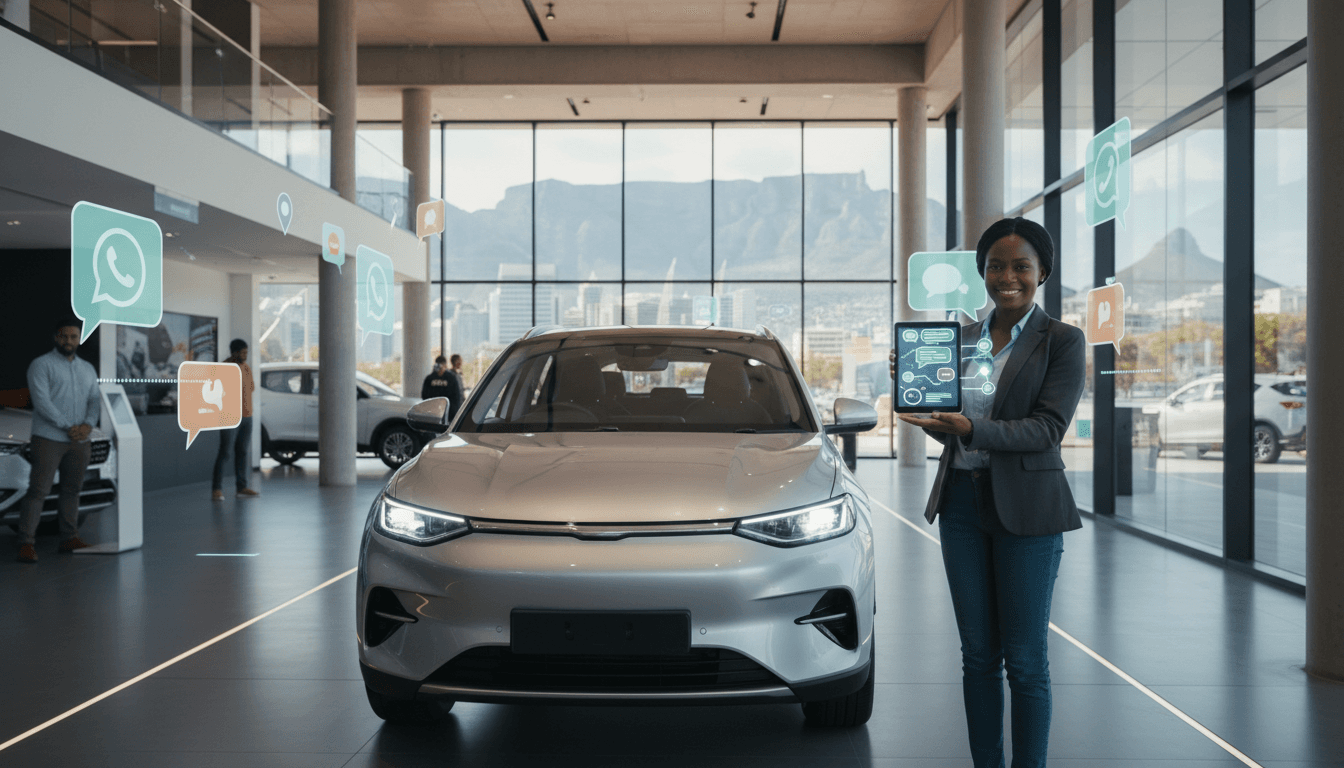
New Car Brands in SA 2025: Winning with AI Commerce
South Africa didn’t just get new badges on showroom floors in 2025 — it got a fresh wave of digital-first competition. When multiple new car brands arrive in the same year, the fight isn’t only about spec sheets and monthly payments. It’s about who shows up first in search, who answers faster on WhatsApp, and who can turn “I’m just browsing” into a booked test drive.
Most companies get this wrong: they treat a brand launch like a press release and a billboard problem. The reality? If you’re entering South Africa’s market in 2025, you’re entering a mobile-led, price-sensitive, comparison-heavy buying journey where AI-powered e-commerce and digital services decide who gets the lead.
The original article flagged seven new car brands that launched in South Africa in 2025, including names like Changan (and Deepal), DongFeng, Geely, Leapmotor, MG, and Tata Motors (as categories referenced in the source). Even without the full article text available due to access restrictions, the theme is clear: more brands are landing, many with Chinese OEM roots, and they’re arriving into a market where digital execution matters as much as dealership coverage.
What follows is the practical angle: how new car brands can use AI to compete in South Africa from launch to loyalty, and what local e-commerce and digital service teams can learn from this moment.
Why 2025’s new car brands must sell digitally first
New entrants don’t have the luxury of widespread trust, a decades-old dealer footprint, or a backlog of “my dad drove this brand” credibility. They need leads immediately, and in South Africa that usually means high-intent digital discovery: search, marketplaces, social, and messaging.
Here’s the key point: AI wins when your funnel is messy. And a new brand’s funnel is always messy at the start—unclear model awareness, uncertain resale value perceptions, limited local reviews, and plenty of “Is this legit?” skepticism. AI helps you handle that uncertainty at scale.
In practice, a digitally strong automotive launch looks less like a static website and more like a set of connected services:
- An AI-assisted content engine that answers real buyer questions (range, charging, service plans, parts availability)
- A lead capture layer built around mobile (forms that don’t frustrate, WhatsApp that responds fast)
- A pricing and trade-in experience that feels transparent, not like a trap
- A CRM that actually follows up, with next-best actions and lead scoring
This is exactly where the broader series theme—How AI Is Powering E-commerce and Digital Services in South Africa—shows up. Cars are a big-ticket category, but the same AI patterns powering online retail now power automotive growth.
The “7 new brands” moment: what it signals about SA buyers
A surge of new brands in one year usually signals three things at once:
- Consumer willingness to switch if value is obvious (price, warranty, features)
- Rising comfort with unfamiliar brands when reviews, influencer content, and peer recommendations fill the trust gap
- More online-first research because buyers want to compare quickly across brands
The trust gap is the real battlefield
For a new brand, the hardest step isn’t getting attention — it’s getting belief. South African buyers will ask:
- Who services it near me?
- How long is the warranty and what’s excluded?
- Are parts available locally?
- What’s the resale outlook?
- If it’s an EV or hybrid: where do I charge, and what does it cost?
AI doesn’t “create trust.” It earns trust by answering fast and consistently. If your digital experience can give clear, local answers in under 60 seconds, you beat the brand that makes someone wait 24 hours for a generic email.
December reality: high intent, high distractions
It’s late December 2025. People are traveling, budgets are tight after year-end spend, and attention is fragmented. That’s exactly why automated, always-on engagement matters.
A brand that:
- responds instantly on WhatsApp,
- offers a clear pre-qualification flow,
- and locks in test drives for early January
will outperform a brand that “gets back to you” after the holidays.
How AI-powered marketing helps new car brands launch in SA
AI marketing isn’t magic. It’s discipline. The strongest launches use AI to do three unglamorous things very well: targeting, content, and speed.
1) AI audience targeting that reflects SA’s real buying signals
The best-performing campaigns aren’t “people who like cars.” They’re built around signals:
- Recent searches for competing models
- People browsing vehicle finance and insurance content
- High-intent visitors returning to pricing pages
- Lookalikes based on qualified lead lists (not page views)
AI helps by optimizing toward downstream outcomes (qualified leads, booked appointments), not vanity metrics.
Practical stance: If your AI optimization goal is clicks, you’re buying curiosity. If it’s qualified leads, you’re buying intent.
2) AI content that answers purchase blockers (not brand slogans)
New brands often over-index on “premium feel” messaging. I’ve found that what actually moves leads is content that reduces risk.
High-converting content themes for new car brands in South Africa:
- Total cost of ownership calculators (fuel/charging + service plan + insurance range)
- Warranty explainers written in plain language
- “Service network” pages by province/city
- Side-by-side comparisons vs known competitors
- Short videos that show real-world use: boot space, rear seat space, hill starts, infotainment responsiveness
Use AI to scale variations, but keep the facts tight. Automotive buyers punish vague claims.
3) AI-driven creative testing that respects local nuance
If your ads are generic global assets, you’ll underperform. South Africa has its own decision drivers: fuel price sensitivity, potholes, long-distance travel, and strong financing dependence.
AI can help generate and test creative variants quickly:
- Finance-first messaging vs features-first messaging
- Family safety angle vs commute cost angle
- Urban runabout framing vs cross-country durability framing
The win is simple: more tests, faster learning, fewer opinions.
AI-powered digital services that convert: from lead to test drive
Marketing generates interest; digital services convert it. For new brands, conversion breaks when buyers hit friction: slow replies, confusing finance steps, or no clarity on availability.
WhatsApp + AI assistants: the new front desk
In South Africa, WhatsApp is often the most natural channel for big decisions. An AI-assisted agent doesn’t replace humans; it handles the repetitive work:
- Model availability checks
- Basic finance pre-qualification prompts
- Test-drive scheduling
- Dealership handoff with context
A strong pattern is AI triage + human closing. The AI keeps response times near-instant; the human focuses on serious buyers.
A new brand’s fastest credibility boost is a fast, accurate reply.
Lead scoring and next-best action
New brands typically waste leads because they treat them equally. AI scoring fixes that:
- Score based on behavior (pricing page visits, finance calculator use, repeat visits)
- Prioritize callbacks within 5–15 minutes for high-score leads
- Trigger tailored follow-ups (spec sheet, comparison, trade-in estimate)
This is where AI in e-commerce translates cleanly to automotive: carts become “consideration bundles,” and checkout becomes “appointment + finance.”
Personalization that doesn’t feel creepy
Personalization should feel like good service, not surveillance. Keep it practical:
- If someone viewed an EV, show charging cost estimates for their province
- If they compared SUVs, send a 3-model comparison with luggage space and ground clearance
- If they abandoned a finance flow, offer a human call-back with required docs checklist
Done well, personalization reduces back-and-forth and speeds up decisions.
Competing against established brands: where newcomers can actually win
Legacy brands have trust and footprint. Newcomers can still win on experience.
Win 1: Transparent pricing and finance UX
Most buyers don’t want a “contact us for price” loop. Give them:
- Clear starting price and what’s included
- Ballpark monthly estimates with adjustable deposit/term
- A simple checklist of what’s needed to apply
AI helps by powering affordability guidance and pre-qualification flows that feel immediate.
Win 2: Always-on after-sales support as a product
After-sales is where skepticism lives. New brands should treat service visibility as marketing:
- Service booking that works on mobile
- Predictive reminders based on mileage/time
- Clear service plan inclusions/exclusions
- Parts availability messaging (even if it’s “2–5 business days”)
AI can forecast service demand by region and model mix, helping operations match capacity to growth.
Win 3: Reputation building at scale
New brands need reviews fast, but not fake ones. Use automation to request feedback after:
- Test drive
- Delivery
- First service
Then use AI to categorize feedback themes (sales experience, handover, vehicle quality) and route issues to the right team.
A blunt truth: Your reviews become your dealer network online.
A practical 30-day AI launch plan (that doesn’t require a massive team)
If a new car brand asked me what to do in the next 30 days to build momentum in South Africa, I’d focus on execution over perfection.
- Build a “buyer questions” content bank (50 Q&As)
- Warranty, service, finance, insurance, parts, charging (if EV)
- Set up WhatsApp as the primary conversion channel
- AI-assisted replies + clear escalation to sales
- Deploy one finance pre-qual flow
- Fast, mobile-first, with doc checklist
- Implement lead scoring + speed-to-lead rules
- High intent leads contacted within 15 minutes
- Run creative testing in weekly sprints
- 10–20 ad variants, optimized to qualified leads
- Track three metrics daily
- Response time, booked test drives, lead-to-appointment rate
These steps are boring. They also work.
What SA e-commerce and digital teams can learn from this wave
Automotive launches are a loud example of a quieter truth across South Africa: categories with longer decision cycles are becoming AI-driven service businesses. Whether you sell cars, insurance, travel, or premium electronics, the playbook is converging:
- People research online first
- They want instant answers in messaging apps
- They expect personalized follow-up
- They reward transparency with action
If you’re building e-commerce and digital services in South Africa, the car market is a preview of where expectations are heading.
The next 12 months: launches will be won in the inbox, not the showroom
The arrival of seven new car brands in South Africa in 2025 signals a more crowded market — and a sharper digital arms race. The brands that grow won’t be the ones with the loudest launch event. They’ll be the ones that respond fastest, explain clearest, and follow up like they actually want the sale.
If you’re a new entrant (or an established player feeling the pressure), start with the basics: AI-powered customer engagement, AI content that reduces risk, and an e-commerce-style funnel that makes finance and booking feel simple.
Where do you think the next bottleneck will be for car buyers in South Africa — finding the right model, getting approved for finance, or trusting after-sales support?