E-tags are now accepted at major SA toll plazas—an automation lesson every online business should copy. See how AI reduces friction in e-commerce and digital services.
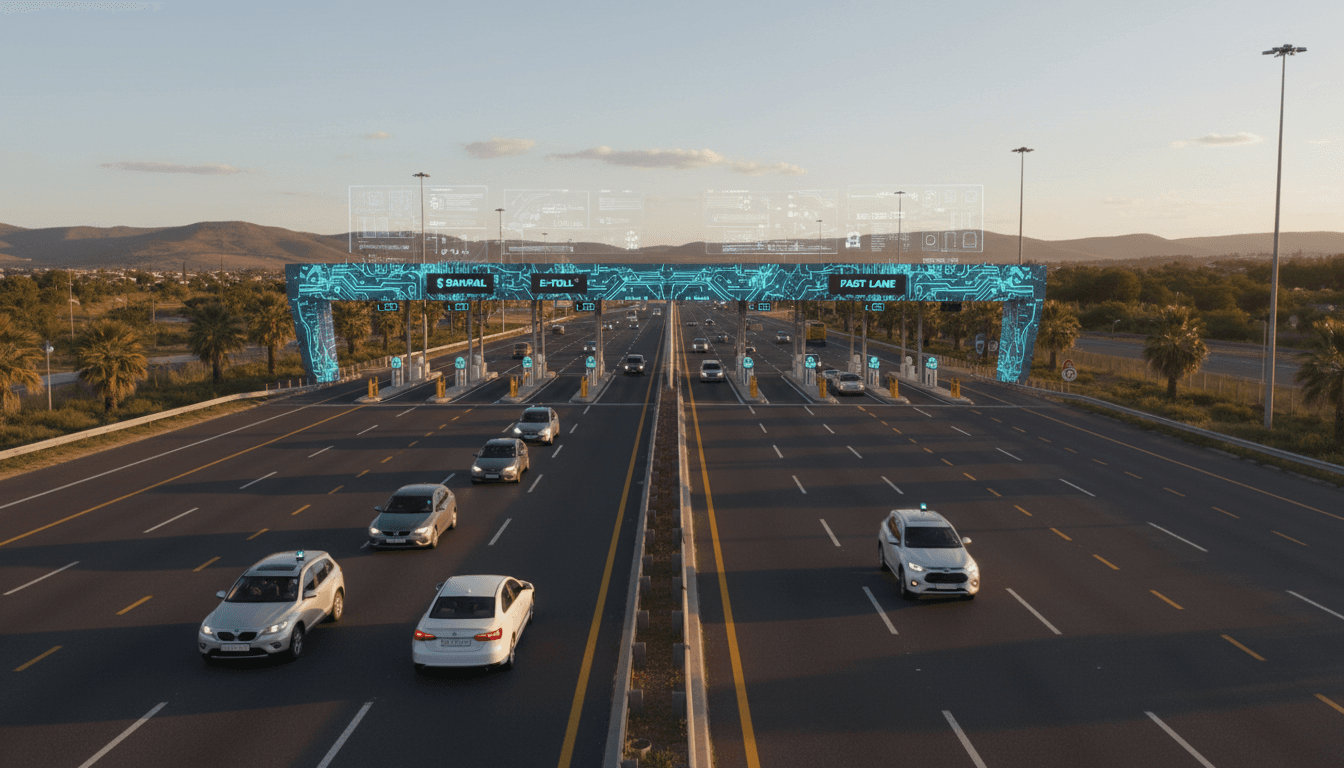
E-tags at SA tolls: the automation lesson for AI commerce
Festive-season traffic has a way of exposing weak systems. One broken process at a toll plaza can ripple into kilometres of delays, burnt fuel, missed check-ins, and frustrated families.
SANRAL’s expanded e-tag acceptance across major toll routes is a practical reminder that automation only feels “smart” when it reduces friction for real people. That same lesson applies directly to the way South African e-commerce and digital services are using AI: customers don’t care about the tech buzzwords. They care about speed, fewer steps, clearer pricing, and fewer surprises.
E-tags are a simple product with a big promise: one account, automated lanes, faster throughput, and a single bill. If you run an online store, subscription platform, or digital marketplace, you should be paying attention—not because you’re in transport, but because the operational pattern is identical.
E-tags work because they remove one decision at the worst moment
E-tags succeed for one reason: they take a high-stress moment (queueing, payment choices, cash/card issues, network hiccups) and replace it with a predictable flow.
SANRAL’s message is clear for long-distance holiday travel: use an e-toll tag to avoid waiting at booths. The system reads the tag, raises the boom, and the vehicle continues with minimal slowdown—especially in dedicated Shesha lanes.
That’s not just convenience. It’s throughput engineering.
The “queue” is the enemy—on roads and on checkout pages
On a highway, the queue is visible. In digital, the queue is hidden in:
- slow page loads
- too many checkout fields
- repeated identity verification
- payment retries
- confusing delivery options
- unclear fees that appear late
When SANRAL adds interoperability across plazas, it reduces “stops” across a journey. When an online retailer removes friction across sessions and channels, it reduces “stops” in the buying journey.
A sentence worth stealing for your product team: Every extra step is a toll gate.
What e-tags are really selling: predictability
People don’t adopt e-tags because they love hardware on a windscreen. They adopt them because the outcome is more predictable:
- a consistent process at multiple plazas
- reduced waiting time
- one account and one bill
For e-commerce, predictability looks like:
- the same customer experience on web and mobile
- saved preferences and addresses
- consistent pricing and delivery promises
- proactive order updates that reduce “Where is my order?” traffic
That’s where AI becomes useful: not as “magic”, but as a predictability engine.
South Africa’s e-tag rollout is a blueprint for digital infrastructure
SANRAL notes that South Africa was early to introduce automated lanes and automated payment on toll roads, with motorists registering a single account. The recent update matters because it expands acceptance and normalises e-tag usage across key national routes.
Here’s the practical detail that signals maturity: e-tags are available via customer service centres and major retailers (including Pick n Pay, Shoprite, and Checkers), and can be topped up through multiple methods—toll plazas during office hours, self-service terminals, EFT, participating retailers, and certain FNB ATMs.
That’s not a “tech” story. It’s an access and distribution story.
The parallel for AI-powered digital services: meet customers where they already are
Most businesses get this wrong. They build a brilliant system, then force customers to learn it.
SANRAL does the opposite: it puts starter packs and top-ups in places people already visit. For digital services, that principle translates into:
- payment options that match local reality (card, EFT, bank transfer, wallets where relevant)
- onboarding that fits mobile-first behaviour
- customer support in channels customers actually use
AI helps when it’s applied to the last mile:
- AI chat and agent assist to resolve support faster (and triage complex cases to humans)
- smart knowledge bases that surface the right answer in two clicks
- automated refunds/returns workflows with clear status updates
If your customer still has to “queue” via email threads, you’re running manual toll booths.
Interoperability is the quiet hero
SANRAL highlights interoperability of e-tags at all SANRAL toll plazas. That word—interoperability—is the unglamorous difference between a smooth experience and a fragmented one.
In e-commerce and digital services, interoperability shows up as:
- product catalogue data that syncs across sales channels
- inventory that updates in near real time
- CRM and customer history available to support agents
- marketing automation that doesn’t spam people who already purchased
AI becomes far more effective when your systems are connected. Otherwise, it’s like installing an e-tag reader at one plaza and pretending the national route is solved.
What “Shesha lanes” teach us about AI personalisation
SANRAL’s Shesha lanes are dedicated lanes for tag users (and specifically for tagged light vehicles). That’s a strong pattern: create a fast path for customers who meet a condition.
In digital, the fast path is usually created through personalisation and automation:
- returning customers get one-tap reorder
- verified users get fewer checkout steps
- loyal customers get priority support queues
AI personalisation is useful when it’s restrained and purposeful.
Good AI personalisation reduces effort, not privacy
If you’re selling online in South Africa, customers are rightly cautious about data. The aim isn’t to hoard data. It’s to reduce effort.
Practical examples of low-creep, high-value AI personalisation:
- Smart search that understands intent (e.g., “school shoes size 2 black”)
- Product recommendations based on session behaviour (not sensitive personal data)
- Delivery promise personalisation by region and courier performance
- Checkout error prevention (flagging missing unit numbers, invalid postcodes)
The “Shesha lane” equivalent is giving people the fastest route only when it’s earned by readiness (account set up, funds available, tag active). AI should work the same way: accelerate the journey when signals indicate you can do so confidently.
Automation fails when it creates new confusion
Anyone who has ever struggled with a payment retry knows this: automation that’s unclear feels worse than manual.
The e-tag rule is simple: it works if there are sufficient funds in the account. Clear condition. Clear outcome.
For AI in digital services, define the conditions just as clearly:
- When do you auto-approve a refund vs route to review?
- When do you proactively message a delivery delay?
- When do you suppress marketing messages because an order is late?
Customers tolerate problems. They don’t tolerate silence and mixed signals.
The operational payoff: throughput, cost, and fewer support tickets
E-tags speed up toll plazas by reducing booth interactions and stopping time. In e-commerce, the operational payoff of AI and automation is similar and measurable:
1) Higher conversion through fewer “stops”
Every removed step increases the odds a customer finishes checkout. If AI helps you remove friction—better search, better size guidance, fewer address errors—conversion follows.
A simple internal metric I’ve found effective: count the number of “decisions” required to buy. Then cut it.
2) Lower cost-to-serve through automation that actually resolves issues
Support costs balloon when order visibility is poor. AI can reduce ticket volume by:
- sending proactive status updates
- answering common queries instantly (order status, return policy, payment confirmation)
- summarising customer history for agents so they don’t ask customers to repeat themselves
3) Better demand and staffing forecasts during peaks
December is peak season for roads and for online retail. AI forecasting doesn’t need to be fancy to be valuable. Even basic models that incorporate:
- historical sales by week
- promotion calendar
- delivery capacity constraints
- regional demand patterns
…can help you avoid the digital equivalent of a bottlenecked toll plaza.
Automation that reduces peak-time stress is where customers remember you.
Practical checklist: apply the e-tag logic to your online business
If you want the “single account, fast lane, single bill” effect in your digital service, audit your customer journey like a toll operator.
A friction audit you can run in one afternoon
- Map the journey from product discovery to delivery confirmation.
- Mark every forced stop: login walls, OTP failures, payment retries, out-of-stock surprises.
- Choose one fast lane to build first (returning customer checkout, WhatsApp order updates, one-tap reorder).
- Set clear conditions (the equivalent of “sufficient funds”) and communicate them.
- Instrument it: measure time-to-checkout, checkout completion rate, and support contacts per 100 orders.
AI use cases that match South African reality
Not every business needs complex generative AI. Start with high-ROI, low-risk applications:
- AI-powered search and navigation (big impact, low customer risk)
- Fraud and payment anomaly detection (protects revenue)
- Customer service automation for FAQs + order status
- Product content enrichment (consistent titles, attributes, compatibility notes)
- Delivery ETA prediction using courier performance by region
If your operation is still manually fixing address issues and replying to “where’s my order?” messages all day, AI is not optional—it’s the difference between coping and scaling.
Where this is heading: smart infrastructure is becoming the baseline
SANRAL’s expanded e-tag acceptance is part of a bigger shift: South Africans increasingly expect digital-first services that reduce waiting, reduce paperwork, and reduce uncertainty.
For this series—How AI Is Powering E-commerce and Digital Services in South Africa—that expectation is the thread that ties everything together. Roads are one form of commerce infrastructure. Payments, logistics, customer support, and product discovery are another.
If you’re building or running an online business, take the toll-road lesson seriously: customers don’t reward you for complexity. They reward you for flow.
The next step is simple: pick one customer journey that regularly “backs up” during peaks, and use AI to remove one bottleneck. Which part of your experience still feels like a cash-only booth at rush hour?