Cloud smartphones make low-cost devices feel premium via the cloud—expanding e-commerce reach and AI customer engagement across Africa. See what SA retailers can learn.
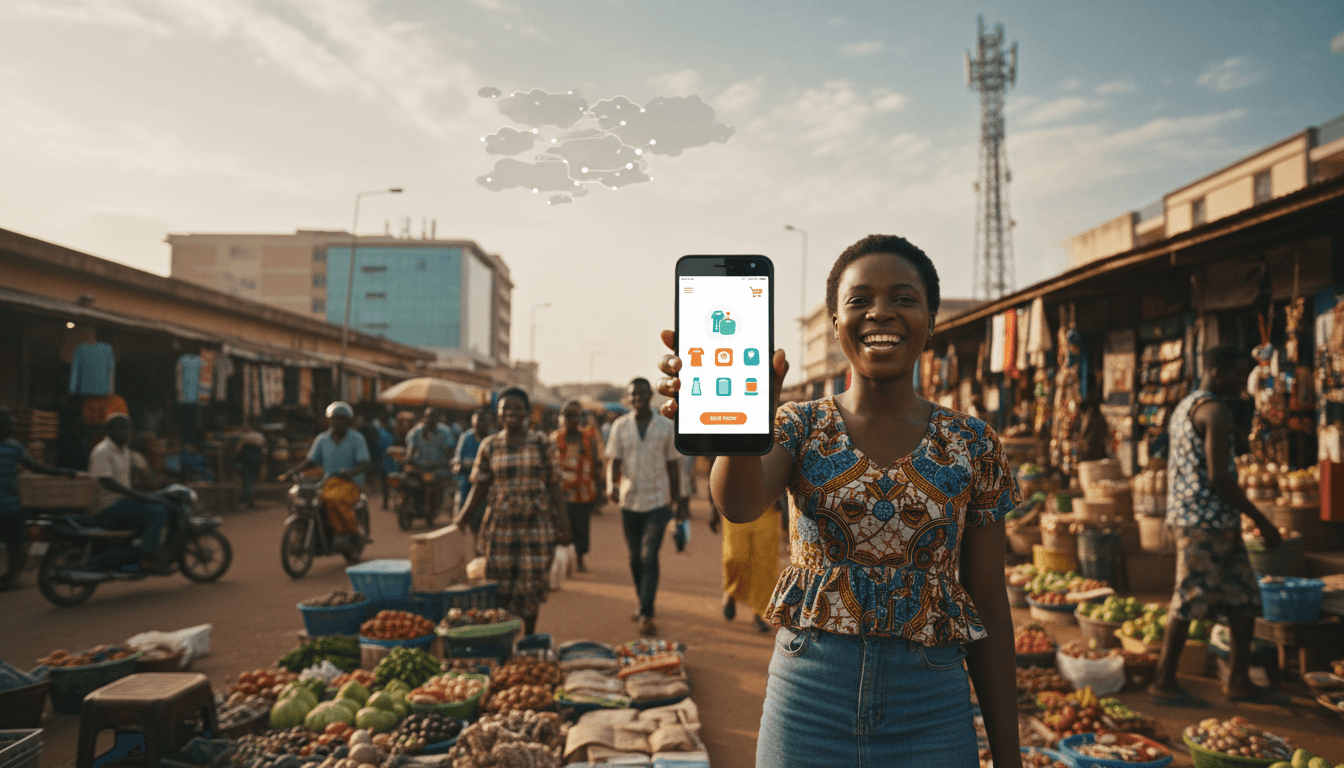
Cloud Smartphones: The Fast Track to Mobile Commerce
A big chunk of “mobile-first” Africa still runs on phones that can barely install (let alone update) the apps modern commerce depends on. That’s not a preferences problem — it’s an affordability and capability problem. When a device struggles with storage, battery, and performance, people don’t just scroll less. They transact less.
MTN Zambia’s newly launched 4G cloud smartphone solution (built around MTN’s Alola devices, MTN’s 4G network, and Huawei Cloud-powered AppJoy) is a practical response to that reality: keep the handset affordable, and push the heavy lifting into the cloud. For anyone building AI-powered e-commerce and digital services in South Africa (the focus of this series), the lesson is straightforward: if you want AI-driven customer engagement to scale, you need customers who can reliably access it.
What a “4G cloud smartphone” really changes
A 4G cloud smartphone model changes one core constraint: the device no longer has to be powerful to feel powerful. MTN Zambia’s approach packages low-cost Android smartphones (Alola 5-inch and 6-inch models with dual SIM, 32GB storage, and 2 500/3 000mAh batteries) with cloud services that improve the day-to-day experience.
Here’s the key point: cloud execution replaces local execution for parts of the experience that typically break on entry-level phones (performance spikes, storage pressure, and app bloat). In practice, that means a user can do more — and do it more consistently — without buying a more expensive phone.
From an e-commerce angle, consistency is the difference between:
- a customer who completes checkout and receives order updates, and
- a customer who abandons because the app froze, the phone ran out of space, or the experience was too slow on a congested connection.
Why this matters for AI-powered e-commerce in South Africa
South African online retailers are pushing personalisation, AI product recommendations, automated customer support, and dynamic creative. But those benefits don’t land if the customer’s phone can’t handle heavier apps, frequent updates, or high-resolution assets.
A cloud smartphone approach lowers the “minimum viable device” needed to participate in the digital economy. For retailers expanding beyond major metros (or serving customers who keep phones longer), that’s a real growth lever.
The three cloud services — and how they map to commerce
MTN Zambia’s launch highlights three cloud-based services: cloud short drama, cloud gaming, and cloud drive. At first glance, two of those look like entertainment plays. They are — and that’s the point.
Telecoms don’t win digital inclusion by selling “productivity”. They win by selling habits. And habits are built through content.
Cloud entertainment is an acquisition engine
When users adopt cloud entertainment (short video, gaming), they learn to trust cloud delivery on 4G. That creates a smoother path to adopting more “serious” services like learning platforms, wallets, retail apps, and customer portals.
If you run an online store, think of cloud entertainment as the on-ramp that increases:
- time-on-network
- comfort with in-app payments
- willingness to click “install” (or to use lightweight app experiences)
- acceptance of streaming-style delivery (which is exactly how many modern app experiences now behave)
Cloud Drive: the sleeper feature for retail and SMBs
Cloud storage sounds boring until you connect it to commerce. For small businesses and informal sellers, cloud drive means:
- keeping product photos safe and accessible
- syncing catalog assets across devices (shared family phone use is common)
- storing invoices, proof-of-payment screenshots, delivery notes
And when cloud drive is positioned as “bank-grade security” (as MTN Zambia describes), it also helps build confidence around storing receipts and identity documents — a common friction point in onboarding for financial services.
Digital inclusion isn’t charity — it’s distribution
The article quotes Zambia’s minister of technology & science describing digital inclusion as an “economic and social imperative”. I agree, but I’m going to be more blunt from a business perspective: digital inclusion is distribution.
When more people can afford a 4G-capable experience, three things happen quickly:
- Addressable market expands: more potential buyers can browse and buy.
- Customer support load shifts: fewer device-related failures mean fewer “your app doesn’t work” tickets.
- AI investments pay off: personalisation and automation only generate ROI when customers can actually experience them.
MTN Group CEO Ralph Mupita has spoken about industry efforts to push smartphone prices toward the US$20–30 range. Whether that exact price point lands everywhere or not, the direction is the signal: the continent’s growth curve depends on making smart experiences cheap.
For South African e-commerce teams watching the region, this Zambian launch is a preview of what “cheap smart access” can look like when a telco, device ecosystem, and cloud platform coordinate.
The hidden AI angle: why cloud phones enable smarter journeys
AI in e-commerce often gets framed as marketing automation or chatbots. That’s only the surface. The deeper value is adaptive customer journeys — changing what a user sees and how they transact based on their context.
A cloud smartphone model supports that because it enables:
Faster iteration on customer experience
When experiences rely more on cloud components, you can update journeys without forcing heavy app updates. That matters during peak retail periods (South Africa’s late-November promotions proved again in 2025 how quickly traffic spikes can expose weak mobile experiences).
More reliable personalisation on low-end devices
Personalisation isn’t just “show similar products”. It’s:
- ranking products based on behaviour
- adjusting imagery quality based on connection
- preloading next-best actions (track order, reorder, WhatsApp support)
When the device is weak, the “smart” journey often collapses into a basic journey. Cloud support helps keep the smart journey intact.
Better fraud and trust signals
As more commerce moves to mobile, fraud follows. Cloud-assisted experiences can help with risk scoring and secure storage patterns (for example, safer handling of sensitive files, receipts, and identity docs).
This doesn’t remove the need for strong security engineering — it just makes it easier to deliver secure experiences without demanding premium hardware.
If you run e-commerce in South Africa, here’s what to do next
The practical move is not “wait for cloud smartphones to arrive”. It’s to build like they’re already here — because the underlying trend is the same: more of your customers will use constrained devices on variable networks.
1) Design for “low-cost, high-experience” customers
Use these non-negotiables:
- Keep your app/site under control: fewer heavy SDKs, fewer massive image payloads.
- Make search and category pages resilient: they’re your storefront aisle.
- Reduce checkout steps: every extra screen is a dropout risk.
A simple internal benchmark I’ve found useful: if a first-time customer can’t complete a purchase in under 3 minutes on a mid-range Android device with average connectivity, your funnel is too fragile.
2) Treat 4G latency as a product requirement
MTN Zambia calls out cloud gaming optimised for 4G with low latency. Retail isn’t gaming, but customer patience is similar: if the screen doesn’t respond quickly, they assume it’s broken.
Do this:
- budget performance for the homepage, PDP, cart, and payment steps
- add offline-tolerant patterns (save cart, retry payments safely)
- prefer lightweight web views for content-heavy sections
3) Shift AI from “cool” to “cashflow”
If your AI roadmap is mostly content generation, you’re leaving money on the table. Focus on AI that protects margin and improves conversion:
- product recommendations that increase average order value
- dynamic bundling based on local buying patterns
- customer service automation that resolves tracking and returns fast
- demand forecasting to reduce stock-outs (and expensive last-minute shipping)
Cloud smartphones expand the reachable market for these improvements.
4) Partner like a telco does
MTN Zambia’s solution is explicitly a device-network-cloud collaboration. Retailers should borrow the same mindset.
Build partnerships that cover:
- payments (including low-friction mobile payment options)
- last-mile logistics and pickup points
- messaging channels for order updates (especially WhatsApp)
- data/zero-rated access discussions where possible
Most companies get this wrong by trying to own everything. Distribution in Africa often belongs to ecosystems.
“People also ask” (and the real answers)
Is a cloud smartphone just a cheaper phone with extra services?
It’s a cheaper phone plus a delivery model. The point is making entry-level hardware feel more capable by shifting computing and storage needs into the cloud.
Does this compete with super apps and mobile web shopping?
It supports both. Better device performance and more reliable cloud access makes apps smoother, and it also makes mobile web more usable for customers who don’t want to install large apps.
Will this matter in South Africa specifically?
Yes — not because South Africa lacks smartphones, but because device inequality is real. Many customers use older Android devices, shared devices, or prepaid data patterns. Improvements that work on constrained devices usually lift conversion across the board.
Where this is heading in 2026
Cloud smartphones are a signal that telcos want to be digital service providers, not just connectivity sellers. That lines up with where e-commerce is going in South Africa: more AI-driven personalisation, more automation, and more services wrapped around the purchase (delivery updates, support, loyalty, returns).
If more African markets adopt this device-network-cloud pattern, cross-border commerce gets easier. Your next customer might not upgrade their handset — but they might still get a “smartphone-grade” experience through the cloud. That’s the opportunity.
If you’re building AI-powered e-commerce in South Africa, ask yourself one forward-looking question: are your customer journeys designed for the phones people actually have, or the phones you wish they had?