SA banks are adding branches—but e-commerce is building digital “presence” with AI. See practical AI tactics for support, fraud, content, and ops.
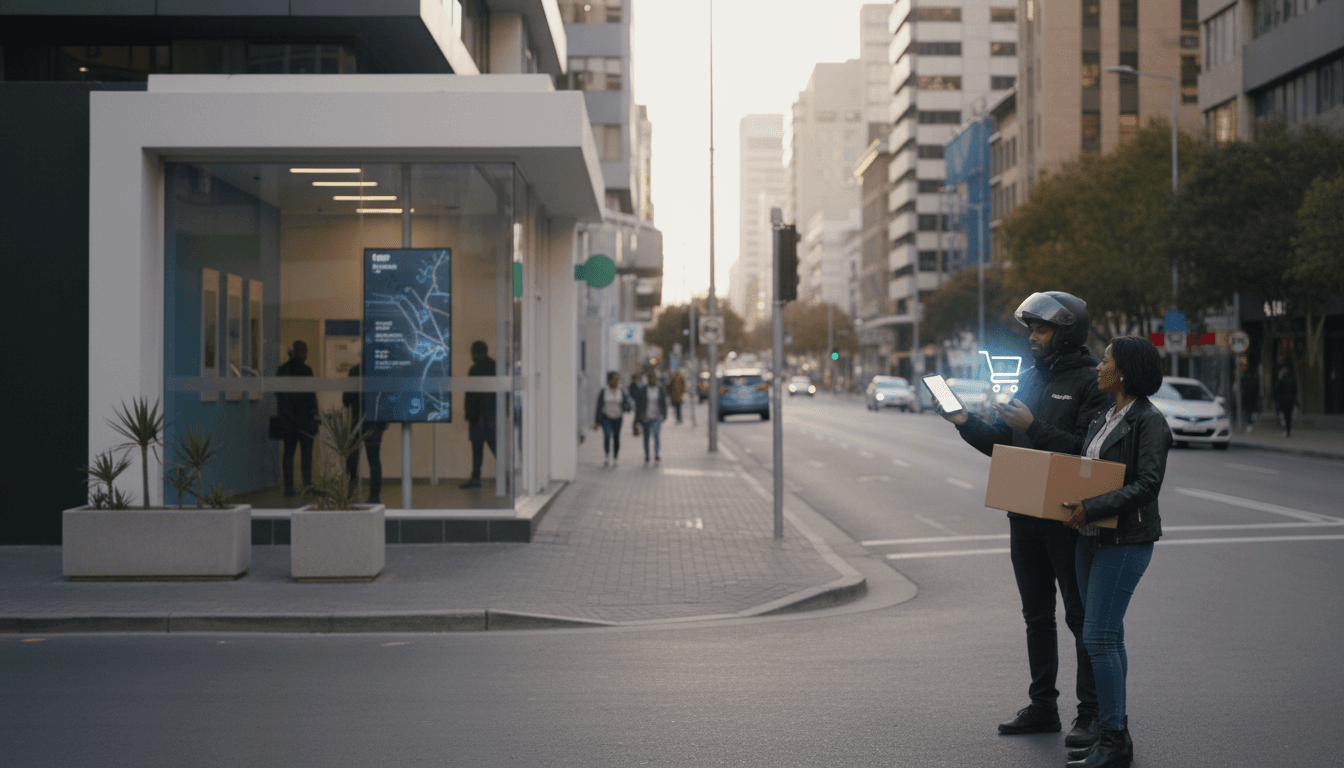
Why SA Banks Add Branches While AI Wins Online
South African banks have spent the last decade training customers to do almost everything on an app—then two of them turned around and started rolling out new physical branches.
If you run an e-commerce store or any digital service in South Africa, this isn’t just a banking story. It’s a signal about consumer behaviour, trust, access, and what “good service” still looks like on the ground. The interesting part is the contrast: while some banks expand bricks-and-mortar footprints, online retailers and digital-first service providers are using AI to scale “branch-like” service experiences—personal, responsive, and always available—without the overhead.
This post sits in our series “How AI Is Powering E-commerce and Digital Services in South Africa”, and the angle is simple: physical expansion tells you where human support still matters; AI tells you how to deliver that support profitably in digital channels.
What bank branch expansion really tells us about South Africa
Bank branches don’t expand because executives love property leases. They expand when there’s a consistent demand that digital channels aren’t meeting.
A few realities drive that demand:
- Trust still needs a face sometimes. High-stakes moments—opening accounts, solving fraud, dealing with blocked cards, estate matters—often push people toward in-person reassurance.
- Cash is still part of daily commerce. Even with strong card usage, cash deposits, withdrawals, and cash-handling businesses keep branches and ATMs relevant.
- The digital divide isn’t theoretical. Device access, data costs, connectivity reliability, and digital literacy vary widely across provinces and income groups.
- Complex problems don’t fit app flows. Apps are great at “happy path” journeys. Real life is messy.
Here’s the business takeaway: customer experience in South Africa is still a hybrid problem. Even when your product is digital, your customers’ lives aren’t.
The myth that “everyone is digital now”
A lot of teams plan like the country is one big fibre-connected suburb. Most companies get this wrong.
Even customers who can shop online may hesitate at certain friction points:
- They want to confirm legitimacy before paying.
- They need a human to explain fees, returns, delivery windows, or warranties.
- They’ve been burned by scams, courier failures, or poor after-sales support.
Banks adding branches is a reminder: confidence is a feature. If you can’t manufacture confidence in digital channels, you end up paying for it in human support costs—or losing the sale.
Why e-commerce can’t copy banking’s “more branches” move
E-commerce businesses don’t have the margins (or the need) to open physical locations everywhere. Retail showrooms and pickup points can help, but they aren’t a universal fix.
Instead, online businesses are building the functional equivalent of a branch using AI:
- a “someone is here to help” feeling
- faster issue resolution
- personalised guidance
- fraud and risk controls
- proactive communication
The point isn’t to replace people. It’s to use AI to make your team feel bigger and more consistent, especially during peak season.
And yes—late December matters. South Africa’s festive-season shopping wave creates the same operational pressure banks feel around month-end or grant days: surges, queues, mistakes, frustration. AI is how digital businesses avoid the customer-service pileup.
Branches solve anxiety; AI should solve it too
A branch often exists to handle emotion as much as transactions. People walk in because they’re worried.
Your online store has the same moments:
- “Is this product authentic?”
- “Will it arrive before I travel?”
- “What if it doesn’t fit?”
- “I paid—why is the order still ‘processing’?”
AI can address that anxiety if you use it intentionally (and don’t hide behind generic bots).
The AI plays South African e-commerce should focus on (and why)
AI in e-commerce isn’t about flashy demos. It’s about reducing friction in the exact places South Africans abandon carts or flood support inboxes.
Below are practical, high-impact uses of AI that map directly to the “why branches still exist” lessons.
1) AI customer support that feels like a helpful human (not a wall)
Answer first: AI-driven support works when it resolves common issues instantly and hands off complex cases with full context.
The minimum viable setup for most SA e-commerce teams:
- An AI chat or WhatsApp assistant that handles:
- order status
- delivery ETAs
- returns steps
- store policies (warranty, exchanges)
- product compatibility questions
- Smart escalation rules:
- handover to a person when sentiment is negative, the issue is financial, or identity verification is required
- Agent assist:
- AI drafts replies, suggests next steps, pulls order details, and summarises the customer history
What works in practice: aim for containment on repetitive questions and speed on everything else. Customers don’t mind automation; they mind being trapped.
The “branch manager effect” for digital channels
In a branch, a capable manager can calm a situation quickly because they can see the whole picture.
Replicate that digitally by making sure your AI can access (safely and permissioned):
- order management system status
- courier tracking events
- payment state (paid, pending, reversed)
- returns eligibility rules
When your support experience becomes coherent, your refund rates drop and repeat purchase rates rise—because customers stop bracing for a fight.
2) AI personalisation that respects budgets and bandwidth
Answer first: Personalisation in South Africa should prioritise relevance and affordability, not “endless recommendations.”
Many shoppers are price-sensitive and comparison-heavy. Good AI personalisation does things like:
- recommend alternatives in stock at the same price band
- show bundle options that reduce delivery costs
- surface delivery cutoffs for specific regions
- adapt suggestions by device and behaviour (e.g., lighter pages for slower connections)
A stance I’ll defend: the best personalisation is operational, not creepy. If it helps someone find the right item, confirm it will arrive, and avoid a return, it’s valuable.
Practical examples you can implement fast
- “Buy again” reminders based on replenishment cycles (toiletries, ink, pet food)
- Size and fit predictions using returns history (especially fashion)
- Localised “popular in your area” signals based on delivery zones
3) AI fraud prevention that doesn’t punish legitimate customers
Answer first: Fraud controls should be adaptive—tight for risky transactions and frictionless for trusted customers.
Banks build branches partly because fraud and account issues are scary. E-commerce sees the same fear from a different angle: stolen cards, chargebacks, account takeovers, “friendly fraud.”
AI helps by scoring risk signals such as:
- device fingerprint consistency
- velocity checks (too many attempts too fast)
- mismatched billing/shipping patterns
- abnormal basket composition
- repeat chargeback behaviour
The goal isn’t to block aggressively. It’s to route:
- low risk → instant approval
- medium risk → step-up verification (OTP, 3DS, additional checks)
- high risk → manual review or decline
This reduces losses without turning your checkout into an obstacle course.
4) AI content that sells clearly (and reduces returns)
Answer first: AI content is most profitable when it reduces confusion—specs, compatibility, sizing, and expectations.
South African e-commerce returns can be expensive (courier costs, restocking, damaged packaging). AI can help your merchandising team create:
- clearer product descriptions with consistent specs
- comparison tables (what’s different between models)
- fit notes and sizing guidance
- “what’s in the box” checklists
Use AI as a first draft, then apply human review for accuracy and compliance. For regulated categories (financial products, health-related items), keep stricter controls.
A simple rule that saves money
If a product description doesn’t answer the top five pre-purchase questions, your support team will. And customers will return items they didn’t understand.
5) AI operations: predicting demand and preventing service failures
Answer first: AI forecasting and workflow automation reduce the late deliveries and stockouts that destroy trust.
Branch expansion is partly a capacity decision—more tellers, more service points. E-commerce needs the same thinking for:
- stock planning
- pick/pack staffing
- courier performance
- seasonal spikes (Black Friday hangover, December travel, back-to-school)
AI can improve:
- demand forecasting by SKU and region
- inventory placement decisions (closer to where orders come from)
- support staffing forecasts (predict ticket volume from shipping events)
If you’ve ever watched tickets explode after a courier delay, you already know: operations and support are the same system.
The hybrid future: physical footprints vs digital “presence”
Banks building branches doesn’t mean digital is failing. It means South Africa rewards presence—being reachable, reliable, and clear.
E-commerce and digital services can deliver “presence” without physical sites by combining:
- strong self-service flows
- AI that resolves issues quickly
- humans for edge cases
- proactive communication (delivery changes, delays, refunds)
A useful way to think about it: a bank branch is a trust engine. Your AI support stack should be one too.
People also ask: “Will AI replace customer service teams?”
No. It changes what the team does.
AI handles repetition and triage. Humans handle exceptions, empathy, negotiation, and policy decisions. The companies that win treat AI as capacity, not a headcount reduction plan.
People also ask: “What’s the first AI feature I should implement?”
If you need leads and revenue, start where money leaks out fastest:
- checkout and payment friction
- delivery ETA communication
- returns and exchange workflows
- product clarity (size, compatibility, authenticity)
Pick one, measure it for 30 days, then expand.
A practical 30-day plan to add “branch-level” service online
If you want an actionable start (without boiling the ocean), do this:
- Audit your top 20 support reasons (tickets, WhatsApp, calls, emails). Categorise them.
- Write the single best answer to each reason (short, direct, with steps).
- Deploy AI on those 20 answers with strict escalation rules.
- Add proactive notifications for delivery exceptions and payment failures.
- Measure weekly:
- first response time
- resolution time
- containment rate (AI-only resolutions)
- CSAT or simple thumbs-up/down
- refunds and chargebacks
This matters because most SA businesses don’t lose customers due to pricing alone. They lose them because the experience feels risky.
Where this leaves your business in 2026
Banks expanding branches is a reminder that customer needs are uneven across the country—and that trust still has to be earned in practical ways. For e-commerce and digital services, AI is the fastest route to earning that trust at scale.
If your digital experience still relies on “email us and wait,” you’re competing with businesses that answer in seconds, personalise the journey, and resolve issues before customers get angry.
The question to take into planning season is simple: if banks are paying for physical presence to build confidence, what are you doing in digital to create the same confidence—at a fraction of the cost?