Barrydale’s tourism is booming. Here’s how practical AI can boost bookings, automate enquiries, and grow e-commerce for local makers—without losing charm.
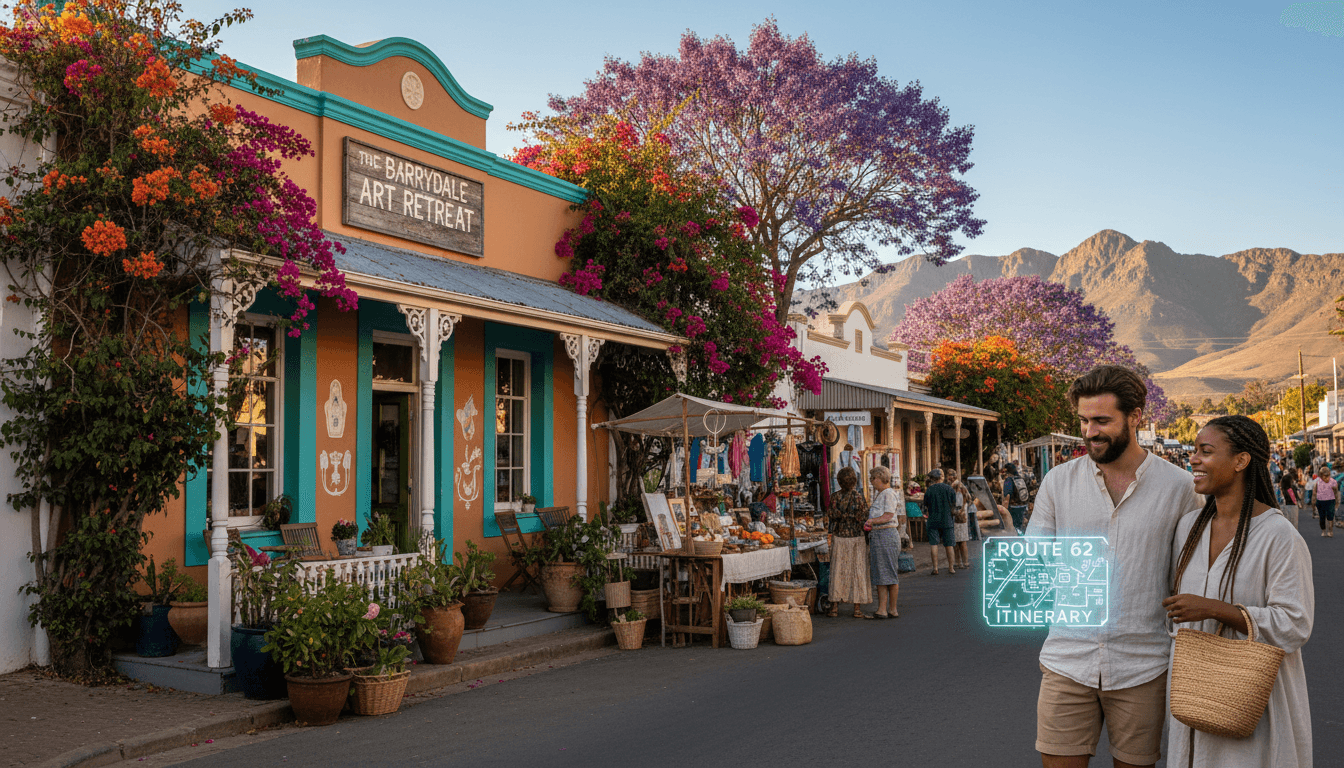
How Barrydale Can Grow Tourism with Practical AI
Barrydale just picked up a big accolade: it’s been named one of South Africa’s best small towns to live in. That’s not only a nice headline for locals — it’s a demand signal. When a town becomes the place people want to visit (or move to), the next bottleneck is rarely the scenery. It’s visibility, bookings, and the day-to-day ability of small businesses to keep up with enquiries.
Here’s the thing about small-town tourism in South Africa: the charm is real, but the marketing often isn’t. Many businesses still rely on weekend foot traffic, word of mouth, and a few social posts that don’t travel far. Meanwhile, travellers plan trips on search, maps, short-form video, and recommendations that are increasingly curated by algorithms.
In our “How AI Is Powering E-commerce and Digital Services in South Africa” series, Barrydale makes a perfect case study. It has the raw ingredients — festivals, nature, strong local governance, a creative community, and enough hospitality capacity to create real economic lift. What it needs is a modern, measurable, always-on digital layer. AI can provide that layer without turning Barrydale into a generic destination.
Barrydale’s advantage is clear — the digital gap is clearer
Barrydale’s appeal is unusually well-rounded for a town of roughly 4,000 people: jacaranda-lined streets, the Route 62 magnetism, hiking access into the Langeberg, local crafts, good coffee, and a social scene that ranges from puppet parades to a storied art hotel.
The problem isn’t demand. The problem is capture.
A traveller who hears about the 16 December puppet parade might search once, skim a few posts, then book somewhere else because the itinerary feels fuzzy. A couple planning a December break might struggle to compare accommodation options across platforms. A remote worker might be intrigued by the pace of life but can’t quickly assess basics like connectivity, co-working options, or long-stay rentals.
When information is fragmented, the winner is the place that packages decisions neatly.
A seasonal reality: December attention is expensive
It’s 24 December as you’re reading this, and that matters. December is peak domestic travel and a prime discovery window for 2026 planning. But December ad costs rise, people scroll fast, and small businesses don’t have time to produce daily content.
AI doesn’t fix seasonality. It fixes the workload.
AI marketing for tourism: make Barrydale easier to choose
The quickest win for a town like Barrydale is AI-assisted content production that keeps the destination visible across search and social without burning out owners.
This isn’t about pumping out bland posts. It’s about structuring what already exists — festivals, trails, food, crafts, local stories — into content that answers real traveller questions.
Personalised itineraries that feel human (not robotic)
Travellers don’t want “Top 10 Things To Do.” They want their weekend.
An AI-powered itinerary builder on a local tourism site (or even a WhatsApp-based assistant) can ask 5–7 questions and return a plan that fits:
- Travel days and budget
- Interests (hiking, art, food, family-friendly, LGBTQIA+ friendly spaces)
- Mobility needs
- Weather sensitivity (heat, wind, rain)
- Preferred vibe (quiet retreat vs social weekend)
Snippet-worthy truth: The easiest destination to book is the destination that turns uncertainty into a plan.
For Barrydale, itineraries could automatically include:
- A morning walk on nearby trails in the Langeberg
- A stop at local craft producers (like cotton goods and weaving)
- An art-focused afternoon (galleries, the art hotel, book browsing)
- Event prompts (markets, parade dates, seasonal happenings)
SEO that targets “high-intent” searches
Most small tourism businesses aim too broad with keywords. They try to rank for “things to do in the Karoo” and lose.
Barrydale can win by targeting long-tail searches with clear intent, such as:
- “weekend itinerary Route 62”
- “Barrydale hiking trails”
- “family-friendly small towns Western Cape”
- “art hotel Route 62”
- “December festival small town South Africa”
AI helps by generating topic clusters and draft pages that local owners can refine. You keep the local voice, but you stop starting from a blank page.
Always-on festival promotion (without spamming)
Barrydale fills up during big moments — like the puppet parade — and that’s great. But the real money is made in the shoulder periods when beds aren’t automatically full.
AI can support an events engine that:
- Repurposes one event announcement into 10–15 assets (posts, emails, posters, short scripts)
- Builds “countdown” and “you missed it” content automatically
- Segments audiences (families vs couples vs hikers vs art lovers)
A small team can run this if the content pipeline is automated.
AI operations for small businesses: fewer admin hours, more guests
If you’ve ever spoken to a small guesthouse owner, you’ll hear the same story: bookings are only half the job. The rest is answering the same questions, chasing payments, managing cancellations, and coordinating staff.
AI doesn’t replace hospitality. It protects it.
A practical stack for a Barrydale guesthouse or tour operator
A realistic, non-enterprise setup for a small town looks like this:
- AI receptionist for FAQs
- Handles check-in times, parking, pet rules, load shedding plans, cancellation policy
- Escalates unusual questions to a human
-
Automated messaging across WhatsApp and email
- Pre-arrival info, directions, what to pack for hikes, local safety norms
- Post-stay review request that sounds personal
-
Review intelligence
- Summarises 3 months of reviews into the top 5 fixable issues
- Flags patterns like “noise,” “water pressure,” or “confusing check-in”
-
Demand-based pricing guidance
- Suggests rate changes around known events (parade weekend, school holidays)
- Avoids the common mistake: underpricing peak demand and overpricing quiet weeks
Small-town governance and “clean basics” are a digital advantage
The RSS story highlights something travellers quietly care about: clean public toilets, low visible litter, minimal potholes, working municipal processes.
That’s not just civic pride — it’s marketable trust.
AI can help a town convert those basics into digital proof:
- Automatically updated “town status” posts (roads, water interruptions, power schedule updates)
- A central service bulletin that accommodation providers can embed or forward
If Barrydale is already doing the basics well, it should say so clearly and consistently.
AI-powered e-commerce for Barrydale’s makers and shops
Tourism is short-term. E-commerce is compounding. When visitors buy again after they leave, a small town gets a second economic season.
Barrydale has artisans, makers, and distinctive local retail — the kind of products people want to remember a place by. The gap is often packaging, product photography, listings, and customer service.
Turn “I loved that shop” into repeat revenue
AI can help local businesses:
- Write product descriptions that don’t sound generic
- Create consistent size guides, care instructions, and shipping FAQs
- Forecast stock needs for peak periods
- Segment customers for email campaigns (gifts, homeware, fashion, collectors)
A simple “Barrydale Makers” online directory with shoppable listings could keep spending local. You don’t need every shop to build a full site. You need a single flow that works.
A stance I’ll defend: WhatsApp commerce is the fastest path
In South Africa, many customers prefer WhatsApp for quick orders and queries. For Barrydale businesses, an AI-assisted WhatsApp commerce flow can:
- Share catalog cards
- Confirm delivery fees and timelines
- Take proof-of-payment and issue receipts
- Hand off to a person when needed
This is how small towns scale without losing the personal touch.
What a “digital Barrydale” could look like in 90 days
You don’t need a five-year smart city plan. You need a tight pilot with visible outcomes.
Phase 1 (Weeks 1–2): Fix discoverability
- Standardise Google Business profiles (hours, categories, photos)
- Create 6–10 high-intent landing pages (itineraries, events, hiking, family travel)
- Build a shared photo and story bank for local businesses
Phase 2 (Weeks 3–6): Automate enquiries and bookings
- Add an AI FAQ assistant to the tourism site and top accommodation sites
- Set up automated pre-arrival/post-stay messaging
- Train staff on “when to trust automation” vs “when to take over”
Phase 3 (Weeks 7–12): Launch e-commerce and retention
- Pilot 10–20 products from local makers with shoppable listings
- Add a simple email capture system (“Barrydale weekend guide”)
- Run one retention campaign: “reorder”, “gift”, or “come back for autumn hikes”
Measurable targets that actually matter:
- Reduce response time to enquiries to under 5 minutes (during business hours)
- Increase direct bookings by 10–20% within a season
- Capture 300–500 email/WhatsApp subscribers over peak travel periods
The risk: losing the town’s soul (and how to avoid it)
Most companies get this wrong: they deploy automation that feels cold, then wonder why engagement drops.
Barrydale’s identity is its stories — the artisans, the parade, the hikes that start near roaming animals, the eccentric newcomers and long-time locals negotiating “the rules.” The point of AI here is not to flatten that into corporate copy. It’s to amplify what’s already specific.
A few practical guardrails:
- Use AI for first drafts, then add local names, local phrasing, local humour
- Keep a “do not post” list (sensitive community issues, safety specifics, private disputes)
- Prioritise consent-based storytelling for people and communities
A simple next step for tourism boards and local businesses
Barrydale earned its reputation by being liveable, welcoming, and well-run. The next step is making it easy to discover, easy to plan, and easy to buy from — before and after the visit.
If you run a guesthouse, a restaurant, a craft business, or a local tourism body, start with one question: Which three enquiries do you answer every single day? Build an AI-assisted response flow for those first. Then expand.
The broader theme across South African e-commerce and digital services is clear: AI rewards the businesses that show up consistently and respond quickly. Small towns can win here because they don’t need to beat big-city budgets — they need to beat big-city friction.
Barrydale already has the magnetism. The open question is whether it builds a digital engine that matches it before the next peak season rolls around.