Mr Price’s NKD acquisition is an integration test. Here’s how AI can improve forecasting, inventory, pricing, and customer experience across markets.
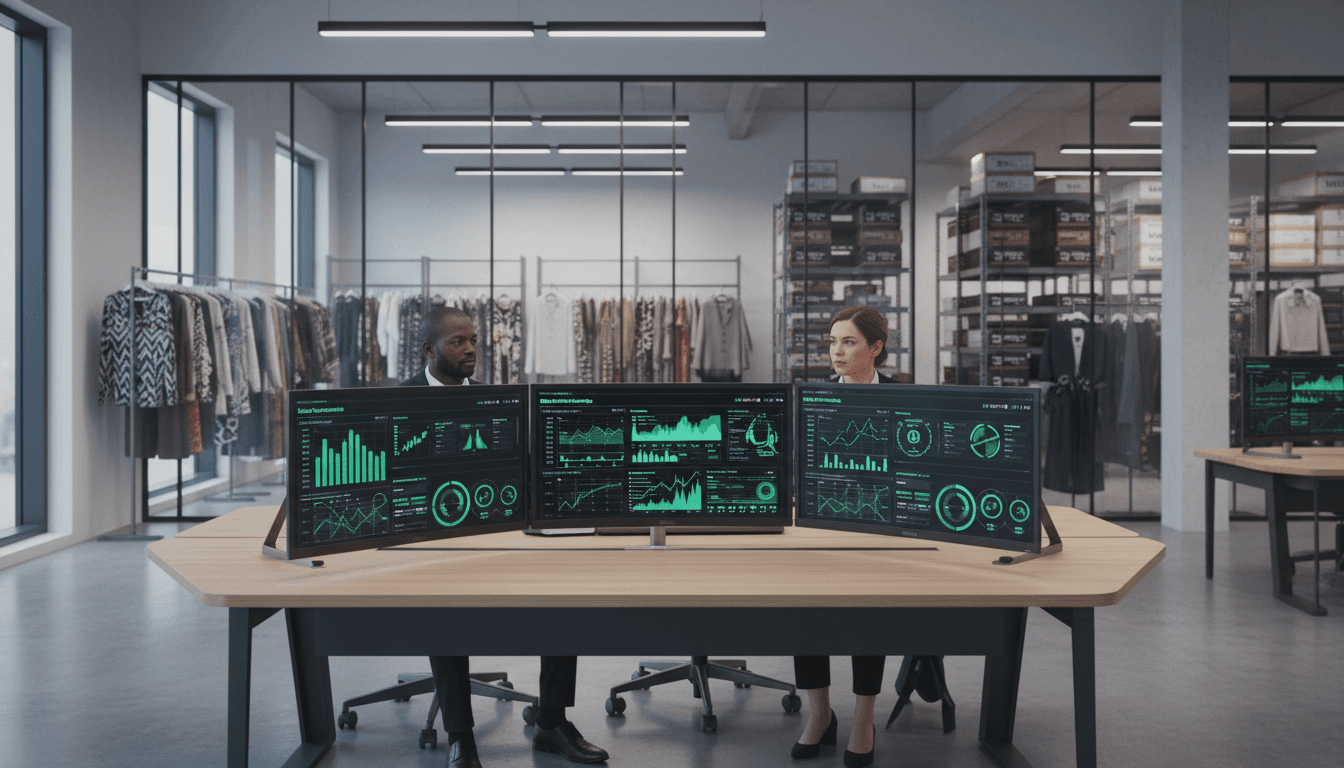
Mr Price’s NKD Deal: The AI Playbook for Integration
A R9.7bn offshore acquisition isn’t just a finance headline — it’s an operating-system change. When Mr Price pushes ahead with its planned purchase of European value retailer NKD, the hard part won’t be signing the deal. The hard part is making two retail machines run as one across different currencies, labour rules, customer expectations, and supply chains.
For South African retail leaders watching this, the real story is what happens next: integration. That’s where AI earns its keep. Not the flashy “chatbot on the homepage” stuff — the practical, spreadsheet-grinding AI that decides how much stock to buy, where to route it, what price to sell it at, and how to keep customers coming back.
This post sits in our series How AI Is Powering E-commerce and Digital Services in South Africa, and it uses the Mr Price–NKD context to answer a bigger question: How can a South African retailer use AI to integrate an international acquisition faster, cheaper, and with fewer nasty surprises?
What Mr Price is really buying (beyond stores)
Answer first: Mr Price isn’t only buying a European footprint; it’s buying a new set of retail data, operating rhythms, and customer behaviour — and AI is the fastest way to turn that complexity into decisions.
Cross-border acquisitions in retail often fail for boring reasons: stock doesn’t arrive when it should, pricing isn’t consistent, promotions clash, and the “group” can’t agree on one version of the truth. A value retailer lives and dies on basics: availability, price perception, and speed.
NKD, as a value-focused European retailer, likely comes with:
- Different size curves (how many units sell in each size)
- Different seasonality patterns (winter timing, holiday peaks)
- Different return behaviours (online and in-store)
- Different promotional calendars and discount tolerance
The risk is clear: Mr Price could inherit complexity faster than it can standardise it. The opportunity is also clear: AI can compress the time it takes to learn a new market.
The overlooked asset: comparable customer missions
Value retail customers often shop with a specific mission: “I need school basics,” “I need winter layers,” “I need affordable home essentials.” Those missions exist in South Africa and Europe — but the triggers and timing differ.
AI helps translate missions across markets by analysing:
- Basket composition (what items are bought together)
- Promotion sensitivity (how demand changes at each discount level)
- Channel preferences (store vs e-commerce vs click-and-collect)
If Mr Price wants NKD to contribute meaningfully (and quickly), it needs a way to map demand signals without waiting for multiple full seasons of manual learning.
Integration is a data problem first — and AI is the shortcut
Answer first: The fastest integration wins come from getting data aligned early, then using AI to automate decisions that used to depend on local intuition.
Most companies get integration backwards. They start with org charts and branding, then discover three months later that their product hierarchy doesn’t match, their supplier master data is messy, and their reporting is a weekly argument.
A smarter order is:
- Align product, customer, and supplier data definitions
- Build shared dashboards for one “truth”
- Automate high-frequency decisions (pricing, replenishment, promo allocation)
AI doesn’t replace retail judgment — it scales it.
Where AI pays back fastest in a retail acquisition
If I had to prioritise AI projects for a deal like this, I’d start with the unglamorous core.
1) Demand forecasting by location and channel Retailers still over-order because forecasts are too high-level. Machine learning forecasting is useful when it ingests:
- Store-level sales history
- Local weather and holiday effects
- Promotions and price changes
- Stock availability (so the model doesn’t “learn” false demand)
The goal isn’t perfect prediction. The goal is fewer “dead” weeks of stockouts and fewer end-of-season firesales.
2) Inventory optimisation and allocation Two retailers often have different allocation logic (“ship evenly” vs “ship to high performers”). AI-driven allocation can:
- Send more units where sell-through is fastest
- Reduce inter-store transfers
- Improve size availability (which is a major driver of conversion)
3) Markdown and promotion optimisation Value retail is discount-heavy, but random discounting is expensive. AI can recommend:
- Which products to mark down first
- How deep the discount should be, by region
- When to shift from margin protection to stock liquidation
That matters because margin is easier to lose than to rebuild.
4) Customer service automation that actually reduces cost In e-commerce, service volume scales faster than headcount. AI-assisted service (triage, summarisation, suggested replies, returns handling) reduces:
- Average handling time
- Re-open rates
- Refund cycle times
That’s not “nice to have.” It’s cashflow.
What this means for South Africa’s digital retail ecosystem
Answer first: A major offshore deal forces a South African retailer to professionalise its digital and AI capabilities — and that capability tends to flow back into the local market.
South African e-commerce has matured fast, but it still faces structural friction: delivery costs, returns logistics, load shedding impacts (less severe now than in 2023–2024, but still a planning factor), and intense competition from ultra-low-price cross-border platforms.
When a local giant expands internationally, it typically invests in:
- Better forecasting and replenishment systems
- Stronger product information management (PIM)
- More disciplined performance marketing measurement
- Faster experimentation cycles
Those investments don’t stay offshore. Teams reuse frameworks, vendors, and operating models back home.
Competing with Shein/Temu-style pressure without copying them
The temptation in value retail is to respond to global low-price pressure with constant promotions. That’s a trap.
A more sustainable strategy is to use AI to be more precise:
- Promote fewer items, more confidently
- Keep core basics in stock more reliably
- Personalise offers to shoppers who are likely to respond
Precision beats noise. Especially when customers are price-sensitive and impatient.
The practical AI roadmap for Mr Price (and any SA retailer going global)
Answer first: Treat AI as an integration capability, not a side project — start with data foundations, then automate the decisions that move margin and cash.
Here’s a grounded roadmap that works whether you’re Mr Price integrating NKD, or a mid-size South African retailer expanding into SADC or the UK.
Phase 1: Get one version of the truth (0–90 days)
If your data is messy, AI just produces confident nonsense.
Priorities:
- Standardise product taxonomy (category → subcategory → attributes)
- Clean supplier and store master data
- Build a shared KPI layer (sales, margin, sell-through, weeks of cover)
- Set data governance: who owns what, who can change what
Deliverable: a single performance cockpit that both businesses trust.
Phase 2: Predict demand and control stock (3–9 months)
This is where you start seeing measurable gains.
Priorities:
- Store and DC-level forecasting
- Automated replenishment suggestions with human approval
- Allocation models for new collections
- Exception alerts (stockout risk, overstock risk, unusual return spikes)
A simple but effective rule: automate decisions that happen daily or weekly.
Phase 3: Make pricing and promos more scientific (6–12 months)
When you’re operating in two continents, inconsistent pricing logic becomes costly.
Priorities:
- Price elasticity modelling by category
- Markdown optimisation
- Promo effectiveness measurement (incrementality, not vanity uplift)
- Guardrails for brand perception (don’t discount your identity away)
Phase 4: Personalise the customer experience (9–18 months)
Only do this once the basics are stable.
Priorities:
- Personalised product recommendations
- Next-best-offer targeting (email, app, on-site)
- Lifecycle marketing (first purchase → second purchase → retention)
- Returns fraud detection and policy tuning
This is where “AI in e-commerce” becomes visible to the shopper — but it should rest on solid operational improvements.
People also ask: the blunt questions about AI and retail acquisitions
Can AI integrate two retailers automatically?
No. AI accelerates integration, but leadership decisions and clean data decide whether it works. AI is a force multiplier, not a substitute for governance.
What’s the biggest AI risk in a cross-border retail deal?
Bad inputs. Different definitions (what counts as a return, a promo sale, a “store”) can break models and create misleading performance comparisons.
Will AI reduce headcount?
It usually shifts work first. Teams spend less time on manual reporting and repetitive decisions, and more time on trading, supplier negotiation, and customer experience. Cost reduction can follow, but the first win is speed and accuracy.
The stance: Mr Price should treat AI as deal insurance
An offshore acquisition at this scale creates pressure from day one: investors want synergy, teams want clarity, and customers want the shelves full.
AI isn’t a shiny add-on here. It’s closer to deal insurance — the set of tools that helps you spot issues early (stock risk, margin erosion, promo waste), standardise decisions across countries, and build a repeatable operating model.
If you’re a South African e-commerce or digital services leader, this is the bigger signal: retail winners are building AI capability as a core competence, because local competition is brutal and global competition is already in your customers’ feeds.
If you want to turn AI into measurable improvements — forecasting accuracy, lower returns costs, higher conversion, better repeat purchases — start with one question: Which decisions in our business repeat every week, and why are humans still doing them from scratch?