AI-optimised networks help South African e-commerce scale reliably. See what Telkom’s efficiency and sustainability moves mean for digital growth.
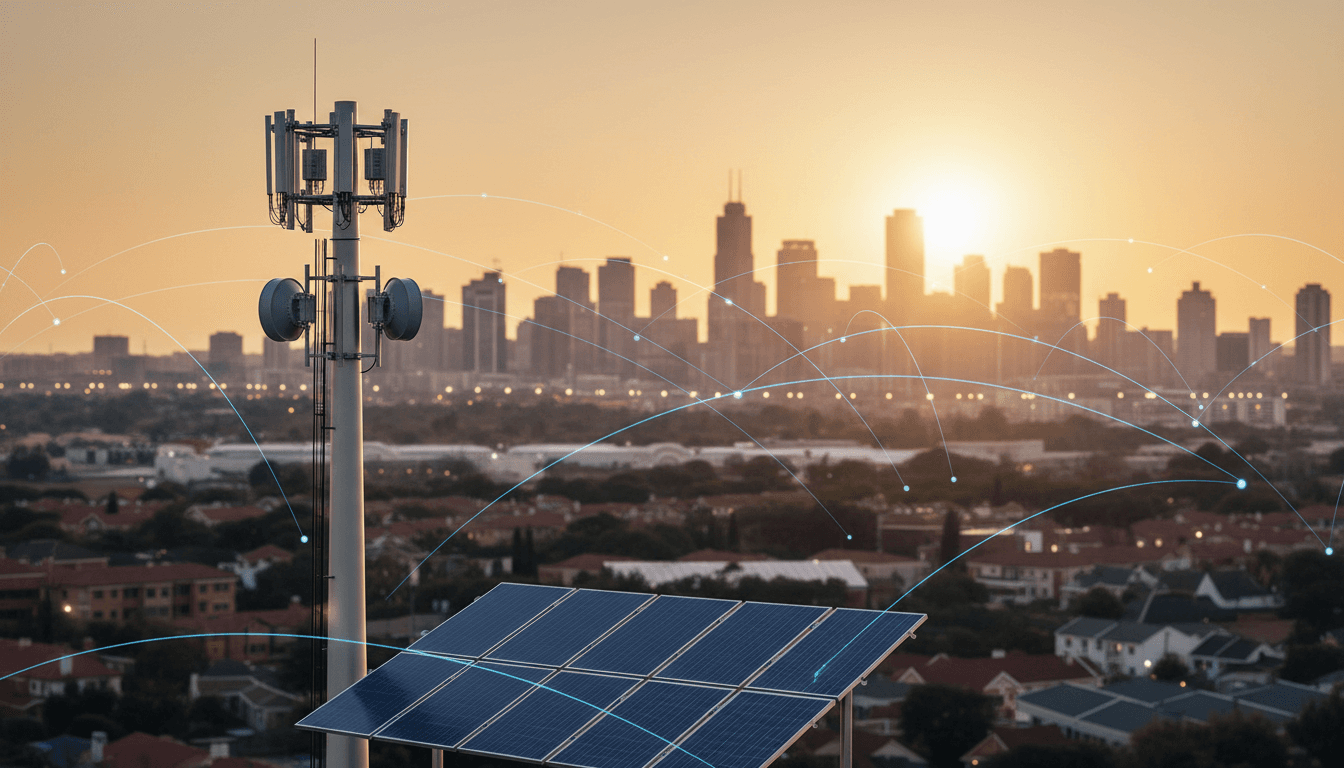
AI-Optimised Networks Behind SA’s Digital Growth
A 20% annual rise in data traffic sounds like a tech-industry brag. In practice, it’s a cost and reliability problem that every South African online store, app, and digital service feels—especially during December peaks when checkout traffic spikes and customer patience drops.
Here’s the thing: AI in e-commerce doesn’t live only in product recommendations and chatbots. It also lives underneath all of that—inside the networks that move every search, payment, and delivery update. Telkom’s network modernisation work is a useful case study because it shows how AI-driven network efficiency directly affects the affordability and reliability of the digital experiences people pay for.
Telkom reports it has reduced combined Scope 1 and 2 carbon emissions from its network by 32% since 2022 while running around 8,000 base stations and national data centres. That combination—more demand, less waste—is exactly the direction South Africa’s e-commerce and digital services ecosystem needs.
Smarter networks are now an e-commerce growth constraint
If your customer journey depends on mobile data, your growth depends on network efficiency. South Africa’s e-commerce and digital services run on a simple chain: network availability → app/site performance → conversions → customer trust.
In December, that chain is under stress. More browsing, more payments, more fraud checks, more customer support messages, more tracking notifications. The customer doesn’t care whether the slowdown is a last-mile tower issue, a congested radio link, or a power event at a site—they just know the payment failed.
Telkom’s data-led strategy makes a practical point for digital leaders: connectivity is not a utility you “set and forget.” As AI increases network load (more automation, more real-time decisions, more data-heavy services), the network has to become adaptive.
Why “universal access” is a commercial issue, not just a policy goal
Telkom frames its approach as leaving no one behind. For e-commerce businesses, that’s not a slogan—it’s market expansion.
When networks become more resilient in areas with unreliable grid power, you get:
- More consistent browsing and checkout for customers outside major metros
- Better reliability for delivery-driver apps and route optimisation
- Fewer support tickets caused by timeouts, failed OTPs, or interrupted payments
Universal access becomes addressable market growth.
AI isn’t just powering marketing—it’s powering megabytes
AI-driven network operations reduce waste by matching power use to real demand. Telkom describes a clear example on the radio access side: instead of transmitting at full power all day, AI can adjust transmit power dynamically based on demand patterns at each base station.
One line in the source story is the operational reality most people miss:
“Over a 24-hour period, a base station may have only two real peak periods.”
For an online retailer, this mirrors your own traffic curve—morning commutes, lunch breaks, evening browsing. A static network running “flat out” is like running paid ads at maximum budget at 3 a.m. and calling it strategy.
What AI-controlled power management really changes
Telkom notes that in some scenarios, optimising transmit power can move usage from 100% to less than 50% outside peak demand periods. That’s significant for three reasons:
- Cost: Electricity and diesel back-up aren’t abstract overheads; they show up in the economics of data pricing.
- Reliability: Less strain means fewer thermal and battery stress events, and more stable uptime.
- Scale: Efficiency creates headroom to carry more traffic without linear cost increases.
This is the same logic driving AI adoption in e-commerce ops: automate the routine, reserve the expensive capacity for the moments that matter.
The bridge to digital services: predictable performance beats flashy features
I’ve found that many teams prioritise front-end features while ignoring the “boring” parts that shape customer experience. Yet customers remember speed and reliability more than they remember your new homepage banner.
Smarter networks increase the odds that:
- Fraud checks complete before a payment session times out
- In-app support messages send instantly instead of lagging
- Real-time inventory and order status updates don’t stall
That’s not glamorous. It’s profitable.
Sustainability is becoming an availability strategy
Network sustainability is now tightly linked to uptime. Telkom’s approach makes this explicit: renewable energy is not only an emissions story; it’s also a reliability story.
Telkom highlights a one-megawatt solar plant in Centurion supporting a major data centre and reducing diesel consumption at the site. For digital services, data centres are where latency, session handling, and platform stability live. Any reduction in diesel reliance (and the logistics around it) reduces operational risk.
Why base stations are harder than data centres
Telkom also points out a practical hurdle: it often leases mast and ground space rather than owning it, and meaningful solar installations require footprint. This constraint matters because it keeps the conversation honest.
If you’re a digital business planning “green” commitments, this is a good reminder:
- Real sustainability includes physical constraints (space, permitting, tenancy)
- The transition is uneven across geographies
- The smart path is prioritisation: start where grid instability is worst
Power wheeling and targeted renewables: what to learn from it
Telkom mentions group-level initiatives like power wheeling (buying renewable power in regions with abundant solar resources). You don’t need to run a telecom network to apply the principle:
- If you operate warehouses, dark stores, or offices, investigate renewable procurement models that fit your footprint.
- If you run a digital platform, pressure-test your hosting and connectivity partners on energy mix and continuity plans.
Sustainability that improves resilience is the kind that survives budget scrutiny.
What this means for South African e-commerce leaders
Your AI roadmap should include infrastructure questions, not just customer-facing features. If you’re building in South Africa, network reliability and energy resilience are part of product strategy.
Here are practical ways to translate Telkom’s case study into decisions you can make.
1) Design for variable connectivity, even when you don’t want to
Don’t assume stable conditions. Build for reality:
- Cache key assets and use lightweight page/app modes
- Minimise checkout steps and reduce third-party script bloat
- Use resilient payment flows (retry logic, clear failure states)
- Defer non-critical calls so the core journey succeeds first
If you’re investing in AI personalisation, make sure the experience still works when the network isn’t perfect.
2) Treat performance as a conversion lever
Most teams track conversion rate and CAC obsessively, but under-invest in performance monitoring.
A simple stance: every second of delay is a tax on trust. Improve what you can control:
- Measure page speed by region and device type
- Track payment failures by carrier/network conditions
- Monitor OTP delivery success rates and time-to-receive
Better networks help, but you should still engineer like you’ll have spikes and brownouts.
3) Ask your vendors the right questions (and don’t accept vague answers)
Whether it’s your hosting provider, your last-mile logistics platform, or your customer support stack, you’re buying reliability.
Add these to vendor reviews:
- What’s your continuity plan during extended power events?
- How do you manage energy efficiency at peak loads?
- What’s your incident response time and escalation path?
- Can you share uptime by region and month (not just annual averages)?
The same data-led thinking Telkom uses to manage its network should show up in your supplier relationships.
4) Make sustainability part of unit economics
Telkom’s point about energy use feeding into cost is blunt and correct: energy inefficiency becomes customer cost.
For e-commerce and digital services, sustainability can lower unit costs through:
- Reduced compute waste (model right-sizing, smarter batching)
- Lower support load (fewer failures → fewer tickets)
- Improved retention (reliability builds habit)
If sustainability is only a PR line item, it’s the first thing cut. If it’s tied to cost and reliability, it sticks.
The bigger picture: AI-driven infrastructure makes digital growth cheaper
AI-powered e-commerce in South Africa is only as strong as the networks underneath it. Telkom’s reported 32% emissions reduction since 2022, its work across 8,000 base stations, and its focus on AI-guided efficiency show a pattern that matters: you can expand capacity without expanding waste at the same rate.
For this “How AI Is Powering E-commerce and Digital Services in South Africa” series, this is a useful reminder that the AI story isn’t only about what customers see. It’s also about what operators optimise: energy, uptime, adaptability, and cost per megabyte.
If you’re planning your 2026 growth targets—more mobile shoppers, more real-time services, more automation—treat connectivity and resilience as part of the plan, not a footnote.
The question worth sitting with is simple: if your traffic doubled next December, would your customer experience hold up—or would it break at the network edges you’ve been ignoring?