A 7-star hotel launch in South Africa signals rising expectations for AI-driven booking, personalization, and service—plus new tourism e-commerce opportunities.
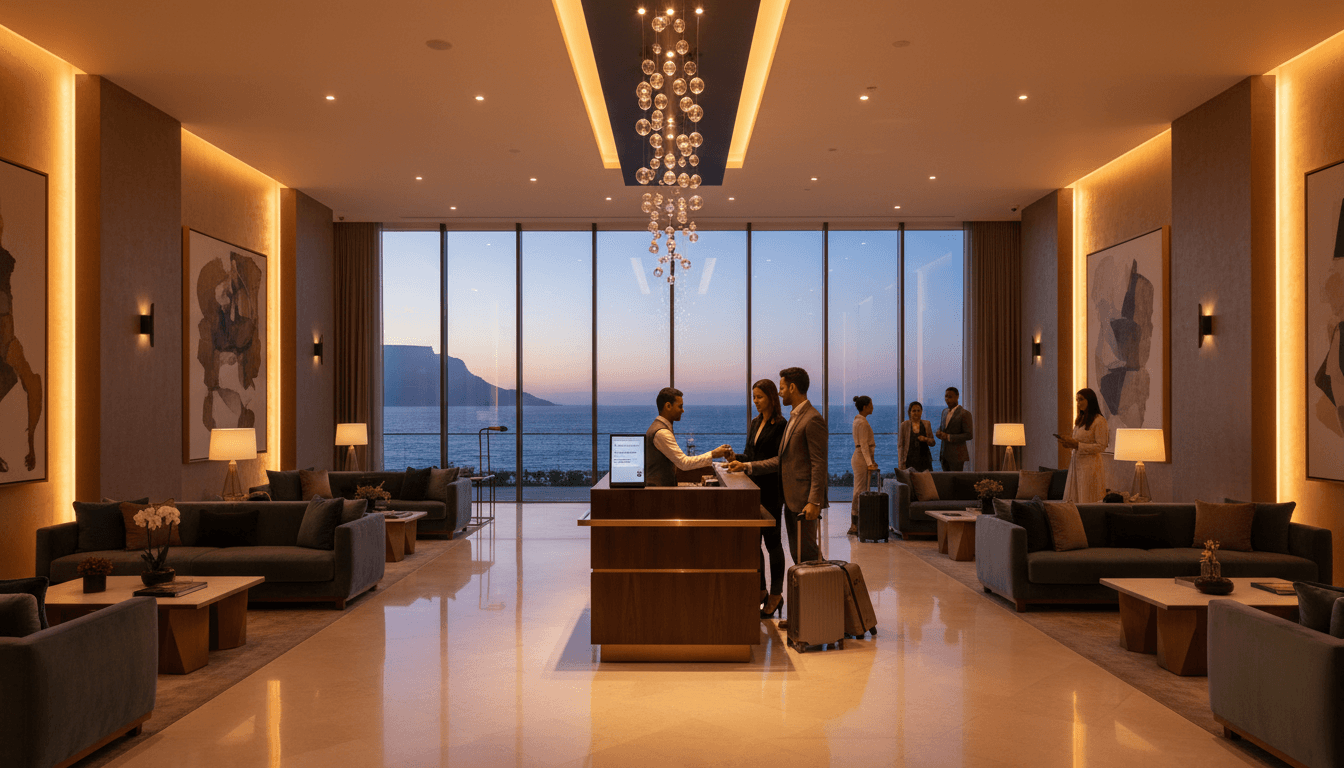
AI in Luxury Hotels: What a 7-Star SA Launch Signals
Most people hear “iconic 7-star American hotel brand coming to South Africa” and think marble lobbies, celebrity guests, and eye-watering suite rates. That’s the headline. The real story—especially for anyone building or selling digital services in South Africa—is what happens behind the booking button.
A global luxury hotel opening at a flagship location like Cape Town’s V&A Waterfront isn’t just a property play. It’s a high-intent demand engine: international travelers, corporate buyers, event planners, concierge-style requests, last-minute changes, upgrades, dining reservations, spa bookings, local experiences, airport transfers—the whole stack of transactions that look a lot like e-commerce.
This post is part of our series on How AI Is Powering E-commerce and Digital Services in South Africa. The point isn’t the hotel’s thread count. It’s how a premium hospitality launch sets expectations for AI-powered customer experience, and how South African businesses can meet that bar—then turn it into leads.
One-liner worth stealing: A luxury hotel isn’t selling rooms; it’s selling decisions—and AI helps guests make them faster.
Why a 7-star hotel launch matters for SA digital services
A high-end international brand entering South Africa signals two things at once: confidence in demand and pressure on local digital standards. When global travelers arrive, they bring global expectations—instant answers, personalized offers, frictionless payments, and service recovery that happens before they complain.
For South African e-commerce and digital service providers, this creates a clear opportunity: luxury hospitality becomes a reference customer for modern customer engagement. If your business can support the experience layer around a premium hotel—booking flows, multilingual support, dynamic packaging, loyalty personalization—you can support it in retail, travel, financial services, and beyond.
Tourism behaves like e-commerce (just with higher stakes)
The mechanics are familiar:
- Visitors discover options through search/social, compare, then purchase.
- Upsell and cross-sell happen after the first transaction.
- Cart abandonment exists (unfinished bookings) and retargeting matters.
- Reviews and reputation directly impact conversion rates.
The difference is the stakes. When someone is spending big on a trip to Cape Town in peak season (and December is exactly that), they expect certainty. AI helps reduce uncertainty at every step.
Where AI shows up first: booking, pricing, and personalization
If you’re wondering where an iconic luxury brand will invest digitally, start with the revenue engine. AI in hospitality usually lands first in demand forecasting, personalization, and conversion-rate optimization—because the ROI is measurable.
AI-powered booking experiences that actually convert
A “nice website” isn’t the goal. The goal is higher conversion at lower acquisition cost. AI improves this by:
- Personalized room recommendations based on intent signals (dates, device, referral source, past stays)
- Smart bundling (room + breakfast + late checkout + airport transfer) based on probability-to-buy
- Abandoned booking recovery via automated email/WhatsApp sequences with relevant incentives
- Fraud and chargeback reduction using transaction risk scoring
For South African businesses supplying digital services, the win is building the plumbing around these outcomes: analytics, CDPs, CRM automation, UX testing, and payment optimization.
Dynamic pricing without the chaos
Luxury hotels don’t “discount” the way mass-market travel does, but they absolutely manage yield. AI-driven revenue management models use patterns like:
- flight arrivals and search interest
- citywide occupancy trends
- event calendars (conferences, festivals, sports)
- lead-time behavior (how far in advance different segments book)
Even if you’re not selling hotel rooms, the same approach applies to South African e-commerce: predicting demand, adjusting inventory, and targeting promotions without blanket discounting.
AI guest experience: from concierge to customer engagement
The best hotel service feels human. The irony is that AI often makes it more human—because it removes the boring parts and gives staff better context.
“Concierge AI” is really just customer engagement done properly
In luxury hospitality, guests ask for everything from “book me dinner” to “find a kid-friendly beach with calm water.” That’s not a FAQ. It’s a conversational workflow.
AI supports this with:
- 24/7 multilingual messaging (especially useful for international arrivals)
- Intent detection (“restaurant booking” vs “complaint” vs “directions”)
- Structured handover to a human agent with full context (no repeating yourself)
- Personal preference memory (pillow type, dietary needs, celebrations)
If you run an e-commerce store or a digital service, take notes. Most companies get support wrong by treating it as a ticketing problem. It’s a conversion and retention channel.
Service recovery: the moment that decides your reviews
AI can flag risk before it becomes a public complaint:
- sentiment analysis on chat messages
- anomaly detection (room not ready, repeated Wi-Fi failures, late transfers)
- proactive offers (complimentary coffee, late checkout, priority service)
This matters because reviews are a sales channel. In travel and hospitality, they can swing conversion rates dramatically. In South African e-commerce, the parallel is clear: ratings, delivery experiences, returns, and support speed.
The hidden e-commerce opportunity: experiences, partners, and local commerce
A global hotel at the V&A Waterfront won’t operate in a bubble. It becomes a distribution hub for local commerce: tours, transport, dining, art, wine, wellness, events.
Hotels are marketplaces—and AI runs the matching
Luxury guests don’t want 200 options. They want the right 3.
AI helps curate and sell local experiences by:
- matching activities to traveler profiles (family, solo, business, honeymoon)
- optimizing timing based on weather, availability, and location
- packaging “itineraries” rather than single bookings
- predicting cancellation risk and recommending flexible alternatives
For South African operators, this is a practical growth path: build inventory-ready experiences with clean data (availability, pricing tiers, durations), then plug into digital channels—hotel concierges, booking engines, and tour aggregators.
Payments, refunds, and trust: where many SA experiences lose sales
Here’s what I’ve found working with service businesses: you can have an amazing product and still lose the sale if payments feel risky.
AI-enabled payment stacks can:
- reduce fraud without blocking legit international cards
- automate refund decisions with policy rules + behavior signals
- route payments to the best-performing gateway for approval rates
If you’re selling to tourists (or any cross-border customer), approval rate is revenue. Treat it like a KPI, not a technical detail.
A practical AI playbook for South African brands riding the tourism wave
You don’t need a luxury hotel budget to apply the same ideas. You need clarity: what are you optimizing—conversion, average order value, repeat bookings, support cost, or reviews?
Step 1: Map your “guest journey” like an e-commerce funnel
Whether you’re a retailer, tour operator, or digital service provider, write down:
- Discovery (search, social, referrals)
- Consideration (comparison, reviews, FAQs)
- Purchase (payment, confirmation)
- Fulfilment (delivery, check-in, onboarding)
- Post-purchase (support, upsells, retention)
Then assign one AI improvement per stage. Keep it focused.
Step 2: Start with two automations that pay for themselves
If you’re choosing where to begin, I’d start here because the ROI is usually fast:
- Abandoned checkout/booking recovery with personalized messaging (email + WhatsApp)
- Customer support triage that routes requests instantly and drafts responses for agents
These reduce leakage and improve response times without changing your core product.
Step 3: Personalization that doesn’t creep people out
Personalization works when it’s helpful and predictable. It fails when it’s mysterious.
Good examples:
- “Guests who booked this suite often add airport transfer.”
- “Based on your dates, these restaurants have availability.”
Bad examples:
- over-specific targeting that feels like surveillance
- using sensitive attributes in ways customers didn’t consent to
In South Africa, where privacy expectations are rising and compliance matters, build personalization on first-party data and clear customer choices.
Step 4: Measure what matters (and stop tracking vanity metrics)
For tourism and e-commerce, the most useful AI-aligned metrics are:
- conversion rate by channel
- average order value / average booking value
- repeat purchase rate / rebooking rate
- customer satisfaction and response time
- refund rate and chargeback rate
AI is only “worth it” if it moves one of those.
What this luxury launch will teach the market in 2026
As premium international brands expand in South Africa, the baseline for digital experience rises quickly. Guests will expect instant service, personalization, and proactive problem-solving—and they won’t care whether a hotel (or retailer) is “still implementing a system.”
For South African e-commerce and digital services, that’s a lead opportunity hiding in plain sight. The businesses that win won’t be the ones shouting “AI” the loudest. They’ll be the ones that use AI to reduce friction: fewer steps to buy, fewer support loops, fewer unpleasant surprises.
If you’re building in this space, a strong next step is simple: pick one journey (booking, checkout, support, retention) and redesign it so a customer can finish it in under two minutes on a phone. Then decide where AI automation fits without degrading trust.
The bigger question for 2026: when more global brands arrive, will South Africa’s digital service providers be the quiet engine behind these experiences—or will the work go offshore?