AI factories are reshaping disaster recovery for South African e-commerce. Learn practical AI resilience patterns to keep search, fraud and support running in 2026.
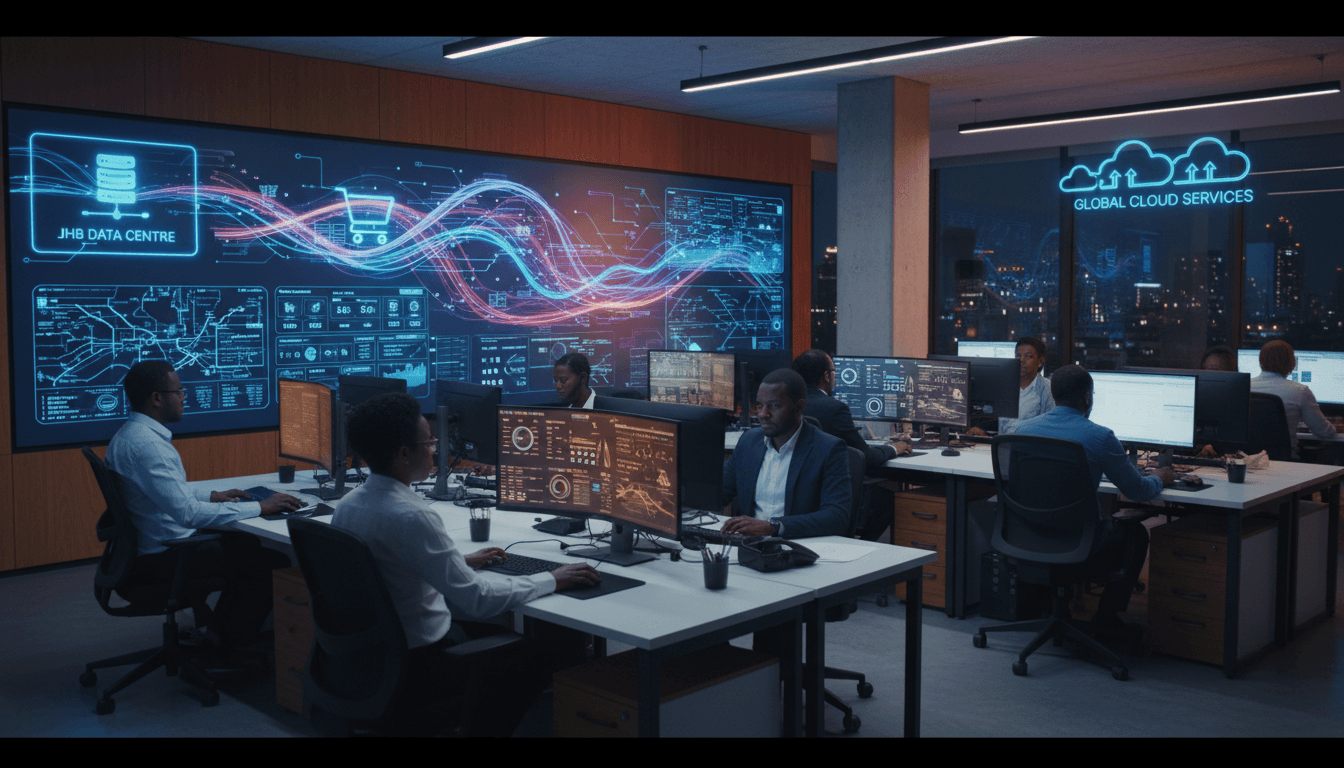
AI Factories: Disaster Recovery for SA E-commerce 2026
Load-shedding isn’t the only reason South African online stores go dark. A single failed cloud region, a ransomware incident, a broken data pipeline, or an expired API key can wipe out your checkout flow just as surely—and usually at the worst possible time (hello, festive season promos and year-end renewals).
Here’s the uncomfortable truth: traditional disaster recovery was designed for apps and databases. But many South African e-commerce and digital service teams are now betting revenue on AI—product recommendations, fraud checks, search ranking, customer support bots, dynamic pricing, delivery ETA prediction. When AI is part of how you sell, DR has to protect more than servers.
That’s why 2026 is shaping up as a turning point. The idea gaining traction is the AI factory: a purpose-built environment that brings together compute, data, software, and operations so AI can run like an industrial process. The payoff for e-commerce and digital services isn’t hype—it’s predictable resilience: the ability to keep AI features working (or degrade gracefully) when something breaks.
AI disaster recovery is different: you’re protecting “capability,” not systems
Answer first: In AI-driven businesses, disaster recovery must focus on keeping AI outcomes available—recommendations, risk scoring, search relevance, and support automation—not just restoring infrastructure.
Classic DR asks: “Can we restore the database and the VM?” AI-era DR asks: “Can we still detect fraud in under 300ms? Can we still rank products correctly? Can we still answer support queries safely?” Those are capabilities, and they depend on a chain of moving parts.
For e-commerce and digital services in South Africa, the fragile points typically include:
- Model state: the current production model weights and version, plus rollback options
- Training data and features: the cleaned datasets, feature store definitions, and transformations
- Inference pipelines: real-time scoring services, queues, caches, and vector databases for search
- Guardrails: policy filters, prompt templates, “allowed actions” for agents, and safety rules
- Observability: latency, drift, bias signals, cost spikes, and “silent failure” detection
A store can restore its website and still lose money if the recommendation engine is down, fraud rules are stale, or the chatbot starts hallucinating refunds.
The new RTO/RPO: add AI-specific targets
Most teams already track:
- RTO (Recovery Time Objective): how quickly you’re back
- RPO (Recovery Point Objective): how much data you can afford to lose
In AI, I’ve found you also need targets like:
- MTO (Model Time Objective): max time to restore a working model version
- FTO (Feature Time Objective): max time to restore feature pipelines/definitions
- SLOs for inference: latency and error budgets that match peak traffic
If you don’t define these, you’ll “recover” and still deliver a broken customer experience.
What an AI factory really means for South African digital businesses
Answer first: An AI factory is an operating model plus a technical platform that makes AI repeatable, governed, and resilient across hybrid and multi-cloud setups.
The phrase “AI factory” can sound like vendor talk, but the concept is practical: treat AI like manufacturing. Inputs come in (data), a controlled process runs (training, validation, deployment), and outputs must meet quality standards (accuracy, safety, latency, cost).
In the South African context, this matters for two reasons:
- Hybrid reality is normal here. Many businesses run a mix of on-prem, local data centres, and multiple clouds—by necessity, not preference.
- Data sovereignty and POPIA pressures are real. Keeping certain datasets and models locally hosted can be a compliance requirement, not a nice-to-have.
Recent local momentum supports this direction. South Africa’s “AI factory landscape” began taking shape in 2025, with initiatives positioning the country as a hub for sovereign AI infrastructure—local capacity that reduces reliance on offshore compute for sensitive workloads.
AI factories shift disaster recovery from “restore later” to “stay running”
Traditional DR assumes a fail event, then a restore process. AI factories push toward a more continuous posture:
- Hot/warm inference failover (a secondary environment can keep scoring)
- Versioned, reproducible pipelines (you can rebuild models and features quickly)
- Automated validation gates (you don’t redeploy a broken model during an incident)
- Predefined degradation modes (fallback ranking, rules-based fraud, limited chatbot actions)
For e-commerce, “degrade gracefully” is often the difference between a bad day and a catastrophic week.
Resilience patterns that actually work for e-commerce and digital services
Answer first: The best AI resilience comes from designing fallback paths, isolating dependencies, and rehearsing failures—especially around data pipelines and inference services.
You don’t need a massive budget to improve AI business continuity. You need the right patterns.
1) Design a “safe mode” for every AI feature
Pick one critical AI feature and answer: What happens if it’s wrong, slow, or unavailable? Then implement a fallback.
Examples:
- Product recommendations: fallback to “top sellers in category” or “recently viewed” (cached)
- Semantic search: fallback to keyword search with boosted fields
- Fraud detection: fallback to conservative rule sets and step-up verification
- Customer support bot: fallback to scripted flows + escalation, with restricted actions
A good safe mode is boring. That’s the point.
2) Separate “serving” from “training” so failures don’t cascade
Many teams accidentally couple training jobs with production serving on the same cluster or quota. When training spikes (or a job loops), inference latency suffers, and customers feel it.
AI factories encourage a clean split:
- Inference serving tier: predictable, reserved capacity, strict SLOs
- Training/experimentation tier: burstable, pre-emptible where possible
If you can’t separate physically, separate logically: quotas, priorities, and scheduling rules.
3) Treat feature pipelines as first-class DR assets
Most AI outages I see aren’t “the model died.” They’re “the features got weird.”
Common causes:
- A payment provider changes a field
- A courier API times out and backfills late
- A data warehouse table shows duplicates after a schema change
Practical safeguards:
- Version your feature definitions (so you can roll back)
- Add drift checks (alert when distributions change beyond a threshold)
- Back up the feature store metadata and transformations, not just raw data
4) Build incident playbooks for AI, not just infrastructure
When a model behaves badly, the response shouldn’t be a panic-driven redeploy.
Your AI incident runbook should include:
- Freeze deployments (stop “helpful” changes during chaos)
- Switch to last-known-good model version
- Activate safe mode / degrade paths
- Validate outputs with a small golden dataset
- Post-incident: add a test to prevent recurrence
If you’re running agentic workflows (AI systems that take actions), add a hard control: a “kill switch” that limits actions to read-only during incidents.
Why this matters in South Africa: trust, compliance, and local infrastructure
Answer first: For South African e-commerce, AI resilience is a customer trust issue first—and a technical issue second.
Local consumers are quick to abandon a checkout that fails, a delivery promise that changes, or a support channel that can’t resolve a basic issue. If your brand relies on AI-driven experiences, outages don’t just hurt revenue in the moment—they erode trust.
There’s also a practical regional angle:
- Latency sensitivity: Offshore inference can feel fine… until it doesn’t. Under peak traffic, added latency kills conversion.
- Data governance: POPIA-driven controls and sector regulations can push you toward local processing for certain data types.
- Cost predictability: Training and inference costs can spike fast. A well-run AI factory emphasizes cost controls as part of operations, not a quarterly surprise.
The push toward locally hosted AI infrastructure in South Africa (including local data centres and sovereign AI efforts) is directly relevant to business continuity. If your DR plan depends on a faraway region you don’t control, your recovery plan is basically hope.
A practical 90-day plan: AI resiliency you can implement now
Answer first: You can make meaningful AI disaster recovery progress in 90 days by inventorying AI dependencies, setting AI SLOs, adding fallbacks, and testing failover.
If you’re running an online store, marketplace, fintech-like wallet, SaaS platform, or any digital service with AI in production, here’s a realistic plan.
Days 1–15: Map your AI critical path
Create a one-page inventory:
- AI features that touch revenue (recommendations, fraud, support, search)
- Upstream data sources and owners
- Model versions and deployment locations
- Third-party APIs that can break you
Then rank features by “customer harm” if they fail.
Days 16–45: Set targets and implement safe modes
For each top feature define:
- Inference latency SLO (e.g., p95 under 300ms)
- Model rollback time (your MTO)
- Minimum acceptable behavior in safe mode
Implement at least one fallback path per feature.
Days 46–75: Add automated validation and drift monitoring
Minimum set:
- Golden dataset tests for each model release
- Input schema validation (fail fast)
- Drift alerts on key features
This prevents the worst kind of incident: the one that looks “healthy” until revenue drops.
Days 76–90: Run a chaos test you can learn from
Pick a controlled failure scenario:
- Disable one data source for 30 minutes
- Force inference to a secondary environment
- Simulate a corrupted feature table
Measure:
- Time to detect
- Time to safe mode
- Time to restore normal service
Write down what broke in the process. Fix that first.
Snippet-worthy rule: If you haven’t practiced failing, you don’t have a disaster recovery plan—you have a document.
Where this fits in the bigger “AI in SA commerce” story
South African businesses aren’t adopting AI just to automate tasks. They’re adopting it to sell more, serve faster, and reduce risk—exactly what this series covers.
But once AI is embedded in the customer journey, resilience becomes part of customer experience. The companies that treat AI as a product capability—with proper operations, governance, and disaster recovery—will ship faster and break less.
If you’re planning your 2026 roadmap, here’s the question worth debating internally: Which AI feature would hurt the business most if it went offline for a day—and what’s your safe mode for it right now?