SA data centre sales can reshape AI e-commerce speed, cost, and reliability. Here’s what to plan for so your AI features scale in 2026.
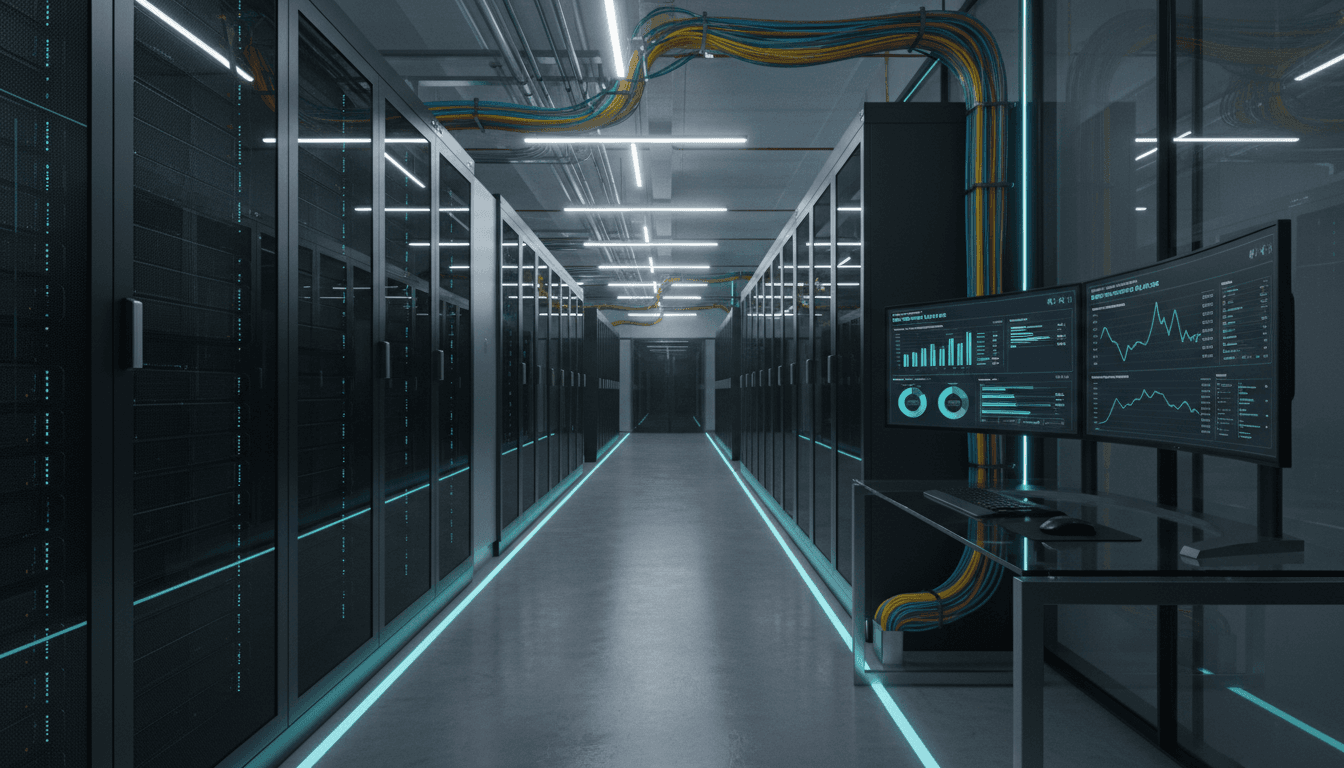
SA Data Centre Sales: What AI E-commerce Needs Next
A lot of South African businesses talk about “using AI” as if it’s mainly a software decision. The reality is more physical than people expect: AI-powered e-commerce and digital services run on data centres—on racks, fibre routes, power contracts, cooling capacity, and the distance between your customer and your compute.
That’s why the news that a former South African internet heavyweight is selling seven data centres (as reported by MyBroadband, though the original article is currently access-restricted) matters. When data centres change hands, it often signals a wider strategic shift: consolidation, a refocus on core markets, or an attempt to scale infrastructure faster under a different owner. For online retailers, fintechs, logistics platforms, and SaaS providers, these moves can directly affect cost, latency, uptime, and how quickly you can roll out AI features.
This post is part of our series, “How AI Is Powering E-commerce and Digital Services in South Africa.” Here’s the practical angle: infrastructure ownership changes are a leading indicator of what AI adoption will look like in the next 12–24 months—especially for companies trying to compete through personalisation, customer support automation, fraud prevention, and smarter fulfilment.
Why a seven–data centre sale matters for AI in South Africa
Answer first: A multi-site data centre sale can reshape pricing, capacity availability, and service innovation—three things that determine whether AI workloads are affordable and reliable for South African e-commerce.
Data centres aren’t just “where websites live.” They’re where you run:
- Product recommendation models that need fast access to clickstream data
- Real-time fraud scoring during checkout
- Customer service chat and voice bots that can’t lag
- Search and merchandising models that re-rank results per shopper
- Batch jobs like demand forecasting and inventory optimisation
When an operator sells several facilities at once, the market usually sees some combination of:
- Portfolio optimisation: The seller wants to free capital and narrow focus.
- Scale play: The buyer wants footprint and customers, quickly.
- Capacity rebalancing: Facilities may be upgraded, repurposed, or repositioned.
For AI in e-commerce, that translates into very tangible outcomes:
- More capacity (or at least clearer roadmaps) for GPU hosting and high-density racks
- New peering and connectivity options that reduce latency for shoppers
- Potential pricing changes for colocation, cross-connects, bandwidth, and managed services
If you’re building AI features and your infrastructure plan is “we’ll figure hosting out later,” this is the moment to rethink that.
The infrastructure chain that makes AI e-commerce work
Answer first: AI doesn’t “run in the cloud” in the abstract; it runs on a chain—data centres, networks, and power—where every weak link shows up as slower experiences and higher costs.
Most AI adoption discussions focus on model choice (LLM vs smaller models), data strategy, and tools. Those matter. But I’ve found that teams hit the same bottlenecks once pilots move to production:
Latency: the silent killer of conversion
A South African shopper doesn’t care where your servers are—they care whether pages load quickly and checkout works.
AI features can add extra calls in the user journey:
- Personalised recommendations (home page, product page, cart)
- Dynamic pricing or promotion validation
- Fraud checks and risk scoring
- Address validation and delivery ETAs
Each step adds milliseconds. If your compute is far away, those milliseconds become seconds. Seconds cost money, especially during peak retail periods like December (right now) and January back-to-school campaigns.
Reliability: AI features amplify downtime pain
If your recommendation engine or search re-ranking goes down, the site might still be “up,” but it feels broken:
- Search results look irrelevant
- Merchandising rules don’t apply
- Chat support queues explode
A stronger, better-managed local data centre footprint can reduce the blast radius of failures by enabling:
- Active-active deployments across metros
- Faster disaster recovery
- More predictable performance under load
Cost: AI workloads punish inefficiency
AI isn’t just compute-heavy—it’s data-movement-heavy. You pay for:
- High IOPS storage
- East-west traffic inside the environment
- Cross-connects to partners (payments, logistics, CDNs)
- Keeping environments available 24/7
Infrastructure ownership changes can shift those cost curves. Sometimes for the better. Sometimes not. Which is why e-commerce and digital service leaders should treat this kind of sale as a trigger to renegotiate, re-architect, or at least benchmark.
What usually happens after a data centre portfolio changes hands
Answer first: Expect standardisation, upgrades, and pricing model changes—plus a short period where service roadmaps may shift.
When a new owner takes over a set of facilities, they typically do three things.
1) Standardise operations and service catalogues
The buyer wants consistent processes across sites: monitoring, incident response, maintenance windows, remote hands, and SLAs.
What that means for you: You may get clearer SLAs and better reporting. But you may also see changes in what’s “included” vs “add-on.” For AI workloads, details matter—especially around power density, cooling, and network handoffs.
2) Invest in capacity where demand is obvious
South Africa’s digital services demand is pushed by:
- E-commerce growth and marketplace competition
- Streaming and gaming traffic n- Fintech and real-time payments
- Enterprise migration away from on-prem
AI adds another layer: GPU demand and the need for higher rack density. If the new owner is serious, you’ll see:
- Higher-density rack options
- Better support for private interconnects
- Stronger partnerships with cloud and network providers
3) Adjust pricing and contract structure
Consolidation can cut costs and lower prices, but it can also reduce competitive pressure in specific metros.
My stance: don’t assume prices will drop. Assume your leverage changes. If you’re a growing retailer or SaaS business, the smartest move is to build options: multi-site deployments, multi-provider connectivity, and an exit plan that’s realistic.
What AI in South African e-commerce needs from data centres (practical checklist)
Answer first: To ship AI features reliably, you need low-latency connectivity, high-availability design, and a plan for GPU access—even if you’re not buying GPUs yet.
Use this checklist as a quick gap analysis.
Connectivity and latency requirements
- Direct, redundant fibre paths to your primary user base
- Peering-rich connectivity (fast routes to ISPs and major networks)
- Private cross-connects to payment gateways, logistics platforms, and CDNs
If you can’t explain your network path from user → site → payment → fraud engine → back, you’re flying blind.
Availability and disaster recovery
- Two sites in different risk zones (not just two rooms in one building)
- Replication strategy with clear
RPOandRTOtargets - Regular failover tests (not “we’ll do it later”)
AI systems fail in weird ways. You want graceful degradation: if personalisation is down, the site still sells.
Data governance and compliance readiness
AI increases the volume and sensitivity of data you process: behaviour logs, customer support transcripts, payments signals (even if tokenised), and identity attributes.
Your infrastructure setup should support:
- Clear data residency choices (local vs offshore) by dataset type
- Segmented environments (prod vs analytics vs experimentation)
- Strong audit trails and access controls
GPU strategy (yes, even if you’re small)
Most teams don’t need a rack of GPUs. They need a credible path to GPU compute when pilots start working.
Options you can plan for:
- Burst to cloud GPUs for training; keep inference close to users
- Use managed AI services but keep customer data pipelines local
- Explore shared GPU hosting through local providers for predictable costs
The key is avoiding the “we built it, now we can’t run it” trap.
Real-world AI use cases that get easier with stronger local infrastructure
Answer first: Better local data centre capacity makes AI features faster to deploy, cheaper to run, and more resilient during peak sales periods.
Here are four examples that map directly to infrastructure needs.
1) Personalised merchandising that updates hourly
If you’re re-ranking products based on trends (weather, seasonality, promotions, stockouts), you need frequent batch jobs and quick rollout.
- Infrastructure need: fast storage + predictable compute windows + low latency APIs
- Business outcome: higher conversion from more relevant catalog ordering
2) Fraud prevention that doesn’t block good customers
Fraud scoring is a balancing act. Slow checks cause checkout abandonment; overly aggressive rules reject good buyers.
- Infrastructure need: reliable low-latency inference near checkout systems
- Business outcome: fewer chargebacks without killing sales
3) Customer support automation that actually resolves issues
Bots that only answer FAQs don’t reduce workload. Bots that can pull order status, delivery ETAs, and return eligibility do.
- Infrastructure need: secure integration layers, strong uptime, and data access controls
- Business outcome: shorter time-to-resolution and fewer “where is my order” tickets
4) Demand forecasting that reduces stockouts in January
December is peak buying. January is when returns, exchanges, and back-to-school demand can expose weak planning.
- Infrastructure need: analytics pipelines that can process multi-year sales + external signals
- Business outcome: fewer stockouts and less dead inventory
What to do if you’re running e-commerce or digital services in SA
Answer first: Treat data centre market shifts as a planning event: benchmark costs, reduce single-provider risk, and align your AI roadmap with your infrastructure roadmap.
A simple 30-day plan that actually works:
-
Map your AI workloads by latency sensitivity
- Real-time (fraud, search, recommendations)
- Near-real-time (support routing, pricing)
- Batch (forecasting, churn models)
-
Identify what must stay close to customers
- Inference endpoints often benefit most from being local
-
Benchmark your current hosting against two alternatives
- One local option, one cloud-heavy option
- Compare total cost including bandwidth and cross-connects
-
Design “graceful degradation” paths
- If AI components fail, the core buying flow should still work
-
Get contract-ready for 2026
- If your provider landscape changes, you want renewal leverage and clear exit clauses
A useful rule: if an AI feature touches checkout, search, or login, treat its infrastructure as tier-1.
Where this is heading in 2026: fewer excuses, higher expectations
Data centre portfolios don’t change hands for entertainment. They change because operators see the next wave of demand—and in South Africa that wave is AI-heavy digital services: smarter retail, faster payments, automated support, and more personalised experiences.
If you’re building AI for e-commerce, this is the posture to take: infrastructure is product. Your customers feel it in speed, reliability, and trust.
If you want help pressure-testing your AI roadmap against your hosting and connectivity realities—what should run locally, what should run in cloud regions, and how to keep costs predictable—this is exactly what our “How AI Is Powering E-commerce and Digital Services in South Africa” series is about.
The next 12 months will reward the teams that treat data centre shifts as an opportunity, not background noise. What would change in your AI plans if you assumed peak-season traffic will be 2× next December?