AI disaster recovery in 2026 will focus on keeping models, data, and inference running. Learn what SA e-commerce teams should change now.
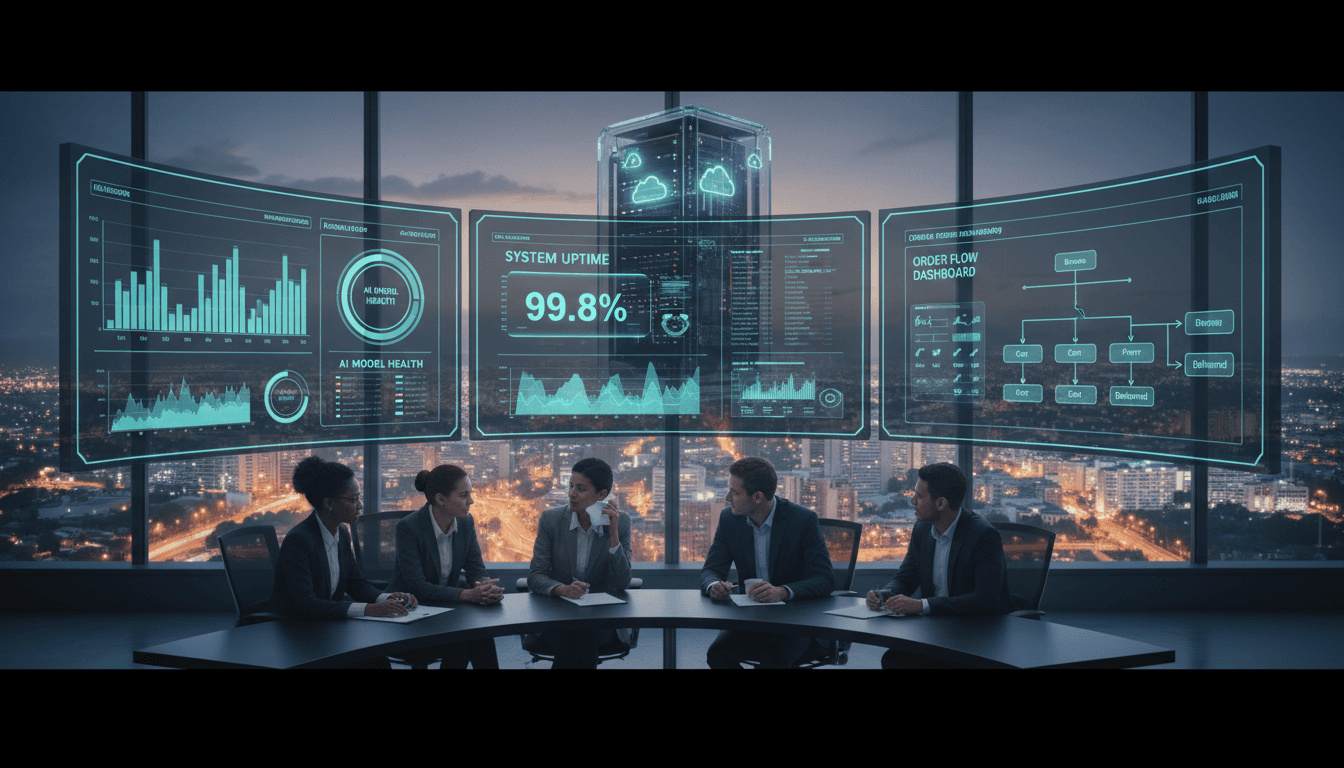
AI Disaster Recovery for SA E-commerce in 2026
Load-shedding didn’t just teach South African businesses to buy inverters. It taught them a harsher lesson: “availability” isn’t a server-room problem anymore — it’s a revenue problem. If your checkout stalls for 20 minutes, you don’t just lose sales. You lose trust, ad spend efficiency, and repeat customers.
Now add a second pressure: more South African e-commerce and digital service teams are putting AI into the critical path — product recommendations, fraud checks, customer service bots, delivery routing, dynamic pricing, even content generation for campaigns. The moment AI becomes part of “how you operate”, disaster recovery (DR) has to change.
That’s why AI factories are getting so much attention heading into 2026. The core idea (highlighted in recent enterprise predictions from Dell’s John Roese) is simple: companies are moving from “back up the systems” to “keep the AI capability alive, even during disruption.” For online retailers, fintechs, and on-demand platforms, that difference is the line between “temporary inconvenience” and “public meltdown.”
AI disaster recovery is no longer about servers
Traditional DR is usually built around restoring applications, virtual machines, and databases. That’s still necessary, but it’s no longer sufficient once AI runs key workflows.
AI disaster recovery is about restoring decisions. If your fraud model goes down, you may be forced to approve risky transactions or decline good customers. If your recommender goes offline, average order value can drop immediately. If your support automation fails during peak season, ticket backlogs explode.
Here’s the shift you should plan for in 2026:
- From app uptime → to decision uptime (recommendations, approvals, routing)
- From “restore database” → to “restore model + features + pipeline”
- From manual failover → to predictive, automated resiliency
A practical way to say it: if your AI is in the checkout flow, your AI needs a recovery point objective (RPO) and recovery time objective (RTO) just like your payment gateway.
What needs to be protected in an AI-driven business?
For e-commerce and digital services in South Africa, the AI stack typically includes:
- Training data (customer behavior, product catalog history, fraud events)
- Feature stores (derived signals like “days since last purchase”)
- Model artefacts (weights, versions, evaluation results)
- Inference services (APIs powering real-time decisions)
- Orchestration pipelines (scheduled retraining, monitoring, rollback)
- Prompt libraries and guardrails (for GenAI content and support)
If you only back up the database, but you can’t restore the feature store or the exact model version, your “recovered” system behaves differently. And customers notice.
What an “AI factory” means (in plain terms)
An AI factory isn’t a single product. It’s a purpose-built operating environment where compute, data, software, and workflows are standardised so teams can build and run AI consistently at scale.
For South African businesses, this matters because AI has a habit of spreading:
- marketing wants GenAI product copy
- CX wants chat automation
- finance wants fraud scoring
- ops wants delivery optimisation
Most companies get this wrong by treating each AI project like a one-off experiment. You end up with scattered models, inconsistent security, unclear ownership, and brittle integrations.
AI factories push you toward repeatable patterns:
- standard model deployment paths (dev → staging → production)
- shared monitoring and incident response
- consistent governance for data access and privacy
- tested failover and rollback procedures
In disaster recovery terms, that consistency is gold. It means you can recover “the AI capability” the same way every time, instead of guessing which scripts and model files matter.
Why this is especially urgent for SA e-commerce and digital services
South African digital businesses sit at the intersection of two realities:
- Reliability is a competitive advantage. If customers have a bad experience, they switch — and it’s rarely announced as a “DR event”. They just stop buying.
- Hybrid and multi-cloud setups are common. Many teams run a mix of local data centres, public cloud services, and third-party SaaS tools.
The RSS source points to 2025–2026 momentum toward locally hosted AI infrastructure, including South Africa’s early “AI factory” initiatives (with Nvidia-based stacks and local data centres) and larger plans for AI-as-a-Service. The business angle is straightforward: local compute plus sovereignty controls can reduce latency, simplify compliance, and improve resilience when international connectivity or external dependencies wobble.
Peak season makes failure louder
It’s December 2025 as you’re reading this, which means many teams are either:
- coming out of peak trading load, or
- planning backlogs for early 2026
Peak season exposes weak recovery plans. It’s when:
- fraud spikes
- courier networks are strained
- support demand jumps
- ad spend is at its highest
If your AI systems are part of how you handle any of that, your DR plan must cover AI like a first-class workload — not an “engineering nice-to-have.”
What “predictive resiliency” looks like in practice
The promise behind AI factories and the 2026 DR shift is predictive and autonomous recovery. Don’t interpret that as “hands-off magic.” Interpret it as fewer unknowns and faster, rehearsed responses.
1) Protect the model state, not just the database
If your recommender model updates daily, your DR plan needs:
- versioned model registry with immutability
- rapid redeploy of a known-good model version
- snapshotting of feature store and configuration
Actionable rule: treat model deployments like application releases, complete with rollbacks.
2) Build “degraded mode” experiences
You don’t need full AI capability during an incident. You need a safe customer experience.
Examples that work well:
- Recommendations fall back to best sellers by category
- Fraud checks fall back to rules + manual review queue
- Support bot falls back to FAQ + ticket capture
- Delivery ETA falls back to static estimates by region
This matters because DR isn’t binary (up/down). Most incidents are partial failures.
3) Make your inference layer survivable
Your AI decisions usually depend on an inference API. That layer should be designed for:
- horizontal scaling
- multi-zone deployment
- traffic shaping (rate limits and priority lanes)
For e-commerce, “priority lanes” are underrated. During disruption, you can prioritise:
- checkout and payments
- fraud scoring
- order status and delivery tracking
…and deprioritise “nice-to-have” workloads like marketing content generation.
4) Monitor for business impact, not just CPU
AI incidents often look fine at the infrastructure level.
- The service is “up”… but returning low-confidence responses.
- The model is “running”… but input features are stale.
- The pipeline “completed”… but trained on corrupted data.
So you need monitoring that speaks business:
- checkout conversion rate per minute
- fraud approval/decline rates and drift
- average handling time in support
- delivery promise accuracy
If you can’t detect impact in 5 minutes, you’ll spend 5 hours arguing about whether there’s a problem.
A 2026-ready DR checklist for AI-powered businesses
If you run an online store, marketplace, fintech app, or digital service in South Africa, this is the checklist I’d want on your wall.
Define AI RTO/RPO the same way you do for payments
- RTO (Recovery Time Objective): how quickly must the AI decision service return?
- RPO (Recovery Point Objective): how much model/data freshness can you lose?
Concrete examples:
- Fraud scoring: RTO 5–15 minutes, RPO same day
- Recommender: RTO 30–60 minutes, RPO 1–3 days
- GenAI content: RTO 24 hours, RPO “whenever”
Map “AI dependencies” explicitly
Write down what each AI capability depends on:
- data sources (events, transactions, catalog)
- feature store
- model registry
- inference runtime
- vector database (if you use retrieval for chat)
- identity and access controls
Most companies only discover these dependencies during the outage. That’s too late.
Rehearse failure with chaos tests
Run controlled tests monthly or quarterly:
- take the feature store offline
- feed delayed events
- fail over inference to a secondary region
- simulate a bad model release and roll back
If you don’t rehearse, you don’t have a plan — you have a hope.
Decide where “sovereign AI” actually matters
Local AI infrastructure in South Africa can be a strong resilience move, but only if you’re clear about the driver:
- Latency-sensitive use cases: real-time fraud, personalisation, search
- Data sovereignty requirements: regulated datasets, government contracts
- Connectivity risk: reliance on offshore regions or single providers
A hybrid approach is common: keep sensitive data and core inference local, burst training workloads to the cloud when needed.
People also ask: practical questions teams are dealing with
Do we need an AI factory to do good disaster recovery?
No. But you need the disciplines an AI factory forces: standard deployment, versioning, monitoring, and governance. An “AI factory” is the organisational shortcut that makes those disciplines harder to ignore.
What’s the biggest DR mistake with GenAI in customer service?
Treating prompts and guardrails as “content” instead of “code.” If your prompt library, safety policies, and retrieval sources aren’t versioned and recoverable, your bot can come back online behaving like a different agent.
How do we keep costs under control while improving resiliency?
Start with tiering:
- Tier 1: checkout, payments, fraud, order status
- Tier 2: support automation, search, personalisation
- Tier 3: content generation, analytics experiments
You don’t need gold-plated DR for everything. You need it for what protects revenue and trust.
The stance I’m taking for 2026
If AI is powering customer experiences in your business, then AI resiliency is customer experience. Treat it that way in budgets, architecture decisions, and incident drills.
South Africa’s move toward local AI infrastructure and AI factory-style stacks isn’t just a tech trend. For e-commerce and digital services, it’s a reliability strategy: lower latency, clearer governance, and more control over how your AI behaves during disruption.
If you’re planning your 2026 roadmap, pick one AI capability (fraud, personalisation, or support automation) and do a simple test: what happens to customers if it disappears for 60 minutes? Your answer will tell you exactly how urgent your AI disaster recovery upgrade is.