AI in energy is becoming a procurement requirement in Uzbekistan. Here’s what Uzbekistan–China talks signal for renewables, grids, mining, and skills.
AI in Energy: What Uzbekistan–China Talks Signal
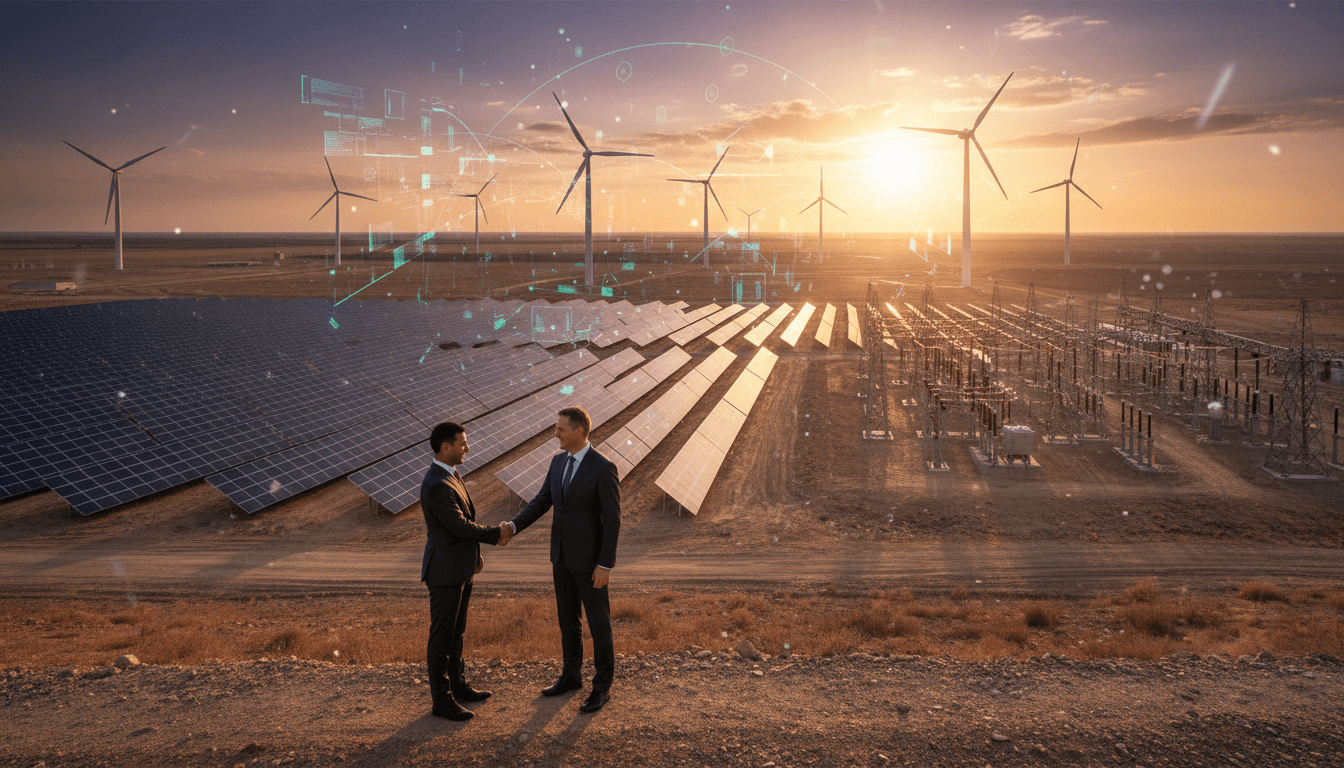
$25 billion in project deals doesn’t just mean more cranes on construction sites—it usually means new operating standards. When President Shavkat Mirziyoyev and President Xi Jinping discussed investment and technological cooperation (including alternative energy, equipment production, digitalized management, and training specialists), the subtext was clear: Uzbekistan’s energy and natural resources sectors are entering a phase where software capability matters as much as steel and concrete.
Most companies get this wrong: they treat energy digitalization as buying a few dashboards and installing sensors. The real shift is deeper—AI becomes part of planning, dispatch, maintenance, procurement, and even workforce training. And diplomacy matters because the largest, fastest deployments in energy tech typically happen through cross-border capital, equipment supply, and engineering expertise.
This article is part of our series “Oʻzbekistonda Energetika va Tabiiy Resurslar Sektorini Sun’iy Intellekt Qanday Oʻzgartirmoqda”. The focus here: what high-level Uzbekistan–China engagement can realistically unlock for AI in energy, renewables, grids, mining, and critical minerals—and what local operators should do next.
Uzbekistan–China cooperation is increasingly a tech-and-data partnership
The key point: when leaders prioritize “investment and technological cooperation” and “digitalization of management,” it’s a signal that future energy projects will be judged on performance, transparency, and controllability—all of which depend on data and automation.
In the reported agenda, several items directly map to AI-enabled energy operations:
- Construction of solar, wind, and hydropower plants
- Local production of photovoltaic panels, electrical equipment, transformers, batteries
- Digitalization of management and training of specialists
- Cooperation around copper, lithium, and rare earth metals (critical to electrification)
Here’s the thing about these areas: they’re AI-heavy by default once scale appears.
Why diplomacy matters for AI in the energy sector
Energy AI isn’t only about algorithms—it’s about access to:
- Equipment ecosystems (inverters, SCADA, sensors, smart meters)
- Implementation capacity (engineering firms that can deploy at scale)
- Financing models (banks and funds that underwrite multi-year programs)
- Standards (cybersecurity, interoperability, data governance)
Diplomatic alignment tends to reduce friction across all four. That’s why meetings like Mirziyoyev–Xi talks are not “just politics.” They often set the conditions that decide whether AI adoption will be piecemeal or systemic.
Renewables at scale require AI—otherwise you lose money
The direct answer: when solar and wind expand quickly, AI becomes the cheapest tool to keep reliability high and costs under control.
Uzbekistan’s push for alternative energy—paired with equipment production and digital management—creates a classic situation where AI delivers measurable value:
- Forecasting: predicting solar irradiance and wind output to plan dispatch
- Grid balancing: coordinating variable generation with demand and reserves
- Asset performance: catching panel/inverter degradation early
- Curtailment reduction: minimizing wasted renewable generation
Practical AI use cases for solar and wind projects in Uzbekistan
If you operate (or finance) renewables, these are the first AI deployments that actually pay back:
-
Short-term generation forecasting (15 min to 48 hours)
Models combine weather feeds, historical production, and local sensor data. Better forecasts reduce imbalance penalties and improve dispatch planning. -
Predictive maintenance for inverters and transformers
Anomaly detection on temperature, harmonics, vibration, and load profiles reduces forced outages. In many portfolios, one avoided major failure can justify the system. -
Drone and vision-based inspection
Computer vision can flag hot spots, soiling patterns, microcracks, and vegetation encroachment—especially valuable when large solar fields spread across remote areas. -
Portfolio optimization
AI helps decide which plants to curtail, which to store, and which to prioritize based on tariff structures and grid constraints.
A stance I’ll defend: building renewables without a data architecture is like building a plant without spare parts. It works—until it doesn’t.
Digital grid management is the hidden multiplier
The key point: AI in generation is useful, but AI in the grid is what makes the whole system scalable.
The RSS content highlights equipment (transformers, electrical equipment) and “digitalization of management.” That combination points toward modernization of the power system’s nervous system: monitoring, control, and decision-making.
What “digitalization of management” should mean in energy
If this phrase turns into real practice, it typically includes:
- SCADA upgrades and unified control centers
- Smart metering and loss detection
- Automated outage management and fault localization
- Digital twins of substations and transmission corridors
- Cybersecurity-by-design for operational technology (OT)
AI becomes the layer that turns data streams into operational decisions. For Uzbekistan, where demand growth and industrialization pressures are real, three AI capabilities matter most:
- Non-technical loss detection (spotting abnormal consumption and meter anomalies)
- Predictive grid maintenance (preventing transformer and line failures)
- Demand forecasting for dispatch and capacity planning
If you want one “CEO sentence” to remember: Every percentage point of reduced technical and non-technical losses is new capacity you don’t have to build.
Copper, lithium, and rare earths: AI isn’t optional in modern mining
The direct answer: once you target higher-value processing and clusters, AI becomes essential for grade control, recovery, safety, and ESG reporting.
The talks referenced deep processing of copper, lithium and rare earth metals and building a high-tech cluster. Those materials sit at the center of electrification (EVs, grids, batteries). But the competitiveness of any mining-and-processing cluster depends on operational excellence.
AI applications in natural resources that actually work
For Uzbek mining and processing operators, here are the use cases that tend to deliver fast value:
- Ore grade prediction and block modeling using sensor data and geological history
- Process optimization in flotation/leaching (reinforcement learning or advanced control)
- Predictive maintenance for crushers, mills, conveyors, pumps
- Safety analytics: computer vision for PPE compliance and hazardous zone detection
- Energy optimization: reducing kWh per ton through smarter scheduling and control
A reality check: many AI projects fail because plants don’t have consistent instrumentation or data quality. The fix isn’t glamorous, but it’s decisive—instrument first, govern data second, model third.
ESG pressure is turning into a data requirement
Investors increasingly want auditable proof of:
- emissions intensity,
- water usage,
- waste handling,
- worker safety.
AI can automate monitoring and early-warning alerts, but only if the underlying data pipeline is reliable. If Uzbekistan is building clusters and courting international finance, ESG reporting will quietly become a licensing requirement.
EVs, hybrids, and batteries: energy strategy moves to the factory floor
The key point: cooperation on “new generation cars” and battery-related equipment pulls energy policy into industrial policy—and AI connects them.
When EV and hybrid production scales, the energy system must respond:
- charging demand rises and becomes more peaky,
- industrial power quality requirements tighten,
- battery supply chains (materials, cells, packs) become strategic.
Where AI shows up in EV and battery ecosystems
Three areas matter for Uzbekistan’s energy and natural resources roadmap:
-
Battery quality and yield
AI-based visual inspection and process control reduces defects during cell and pack assembly. -
Charging network planning
AI demand models identify optimal charger locations and grid upgrades. Bad forecasts create stranded infrastructure. -
Second-life batteries and storage dispatch
AI can estimate remaining useful life and optimize stationary storage operation for peak shaving and renewable smoothing.
If Uzbekistan wants renewables without compromising reliability, storage + AI dispatch is the practical path.
A pragmatic 90-day plan for energy and mining leaders in Uzbekistan
The direct answer: you don’t start with “AI.” You start with the operational bottleneck that costs money every week.
Here’s a workable approach I’ve seen succeed in energy and industrial environments—especially when international partnerships bring equipment, finance, and timelines that don’t wait.
Step 1: Pick one system-level KPI
Choose one KPI with financial meaning:
- renewable curtailment rate,
- grid losses,
- forced outage hours,
- kWh per ton in processing,
- unplanned downtime.
If you can’t price the KPI, you can’t justify the model.
Step 2: Create a minimal data backbone
You don’t need perfection. You need consistency:
- time-synced sensor and SCADA data,
- a basic historian,
- clear naming conventions,
- access rules.
Step 3: Run one “thin slice” AI pilot
Examples:
- solar output forecasting for one plant,
- anomaly detection on one transformer fleet,
- vision safety monitoring at one high-risk zone,
- predictive maintenance on one bottleneck asset.
Target a pilot that can show results in 8–12 weeks.
Step 4: Operationalize, then scale
Most pilots die at the handover. Avoid that by:
- assigning an owner in operations (not just IT),
- defining alert thresholds and response playbooks,
- tracking outcomes weekly.
This is where “training specialists” from the bilateral agenda becomes real: the winning teams build hybrid talent—operators who understand models and data staff who understand plants.
What the Mirziyoyev–Xi meeting really changes for AI adoption
The direct answer: high-level alignment increases the probability that Uzbekistan’s energy modernization will be executed as coordinated programs—renewables + grid + industry—rather than isolated projects.
The meeting agenda emphasized investment, alternative energy, equipment, digital management, and training. Put together, that’s a blueprint for faster AI uptake in the energy and natural resources sectors:
- More assets (plants, grids, mines) producing more data
- More technology imports and local manufacturing, pushing standardization
- More financing capacity, demanding measurable performance
- More urgency to build local skills, not just import solutions
For companies in oil & gas, power, and mining, the message is practical: AI is moving from “innovation theater” to procurement and compliance. If you wait until requirements are formalized in tenders and lender covenants, you’ll pay more and move slower.
What’s the most useful next step? Identify one operational pain point where AI can deliver a hard number—then build a small, disciplined deployment around it. The partnerships will bring capital and hardware. The advantage will go to teams that can turn data into decisions.