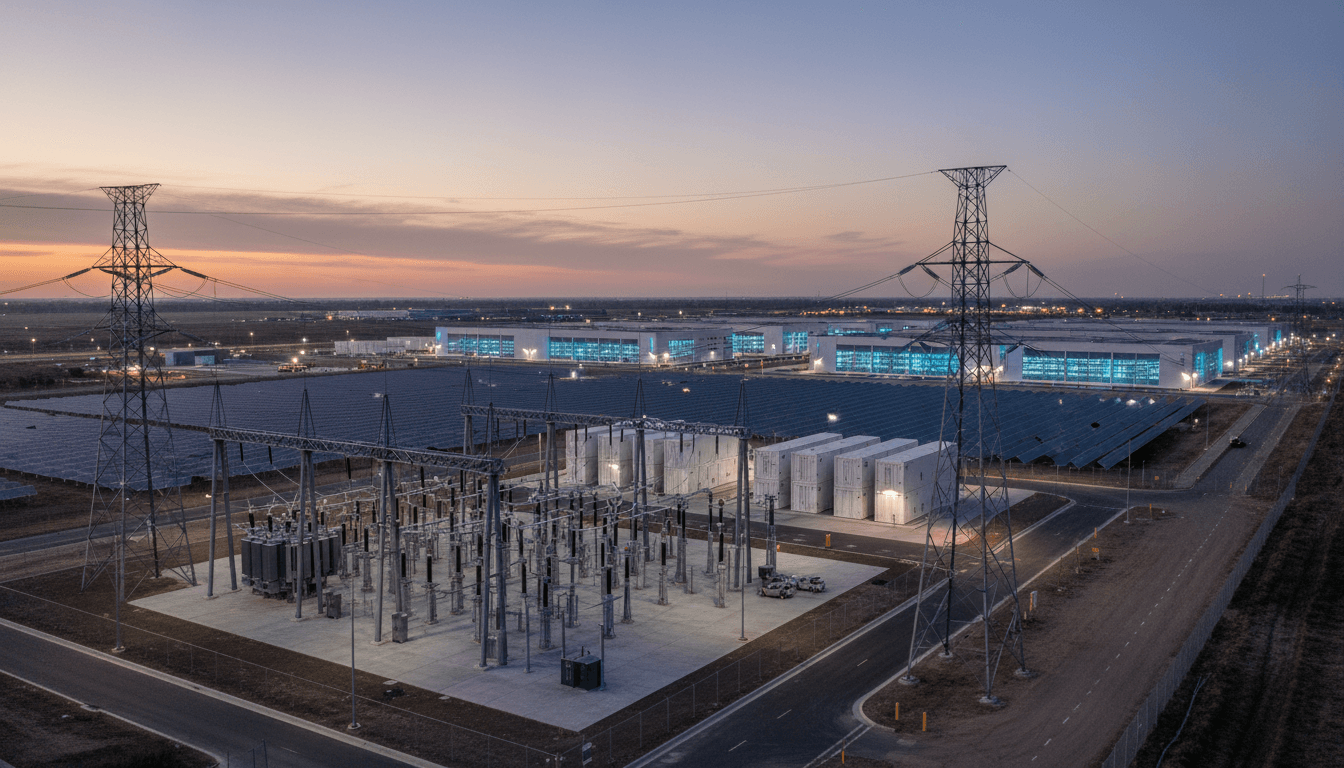
Data Residency for AI: Scale Globally, Stay Compliant
Data residency is now a go-to-market requirement for AI SaaS. Learn how to design residency-ready AI infrastructure and sell globally with confidence.
Cloud providers apply AI for infrastructure optimization, workload management, energy efficiency, and intelligent resource allocation.
Data residency is now a go-to-market requirement for AI SaaS. Learn how to design residency-ready AI infrastructure and sell globally with confidence.
Database Savings Plans cut AWS database costs up to 35% while keeping flexibility for evolving AI workloads. Learn how to commit safely and optimize spend.
Serverless MLflow in SageMaker cuts ops work, speeds experimentation, and improves LLM tracing. See how it supports efficient cloud AI workflows.
OpenAI and Broadcom plan 10GW of AI accelerators. Here’s what that scale means for US cloud data centers, SaaS performance, and AI costs.
New OpenSearch multi-tier storage adds a writeable warm tier backed by S3. Learn how to cut costs, keep performance, and automate tiering for AI ops.
Bedrock open-weight models enable smarter AI workload routing. Reduce cost and latency by matching tasks to model sizes, modalities, and safety needs.
AMD and OpenAI’s 6GW GPU push signals a new era for U.S. AI cloud capacity—lower inference costs, better reliability, and faster scaling of AI services.
Google Cloud’s December 2025 updates bring AI closer to data, improve GPU planning, and tighten security governance. See what to prioritize for 2026 ops.
EC2 Auto Scaling’s synchronous LaunchInstances API gives instant capacity feedback and placement control—ideal for AI workloads that need precise scaling.
Amazon Bedrock’s 18 new open-weight models make model choice a real infrastructure knob—cutting GPU pressure, improving latency, and optimizing AI workloads.
Prompt caching discounts repeated input tokens and speeds responses. Learn how U.S. SaaS teams can cut AI API costs and scale cloud services.
AI model growth is outpacing hardware. Learn how energy teams can plan AI infrastructure, GPUs, and data center capacity for grid optimization.
A practical guide for U.S. AI teams to meet European data residency requirements, reduce compliance drag, and speed up EU enterprise deals.
Reduce Iceberg table storage costs and automate cross-Region replicas with S3 Tables Intelligent-Tiering and replication—built for modern AI analytics.
Key Google Cloud December 2025 updates show AI-driven infrastructure optimization, smarter capacity planning, and stronger governance for cloud workloads.
Google Cloud’s latest AI releases improve capacity planning, agent operations, and security—key levers for data center efficiency and utilization.
Latest Google Cloud updates show where AI agents, capacity planning, and security are heading in 2026. Learn what to prioritize for ops and FinOps.
EC2 M9g with Graviton5 targets faster AI-adjacent workloads and better efficiency. See where it fits, what to test, and how to adopt safely.
Hydrogen can firm data center power, but AI-driven energy management makes it scalable. See what the Vema–Verne deal means for 2028 planning.
Scaling Kubernetes to 2,500 nodes exposes what really breaks in AI infrastructure—control plane, autoscaling, networking, and observability.
ACM now automates TLS certificates for Kubernetes via ACK—request, export, create Secrets, and renew automatically. Reduce outages and security drift.
Triton GPU kernels help AI teams speed up neural network workloads without living in CUDA. Learn where it fits in cloud inference and data centers.
10GW of NVIDIA systems signals a new era for AI cloud infrastructure. See what it means for workload management, energy, and SaaS reliability.
Google Cloud updates show AI moving into cloud ops: data agents, MCP tool governance, GPU reservations, and stronger AI security. See what to prioritize next.
AWS added AI-powered context and proactive guidance to Support plans, cutting response times and reducing incident toil. See which tier fits your ops reality.
Enterprise AI fabric makes AI an operational layer, not a bolt-on app. Learn how to build governed, observable AI for payments infrastructure.
Semantic layers make customer service AI trustworthy by standardizing metrics, adding lineage, and speeding analytics. Fix data trust before scaling AI.
AI-driven IT transformation is accelerating for 2026. Learn how to secure hybrid cloud, govern data, and reduce AI blast radius before budgets hit.
Latest Google Cloud updates show how AI-driven infrastructure optimization is getting practical: better capacity planning, AI-native databases, and production-ready agents.
OpenAI’s DOE response shows why AI data center infrastructure—power, permits, and policy—now determines how fast U.S. digital services can scale.
AI chip competition is reshaping cloud pricing and availability. Here’s how utilities can build hardware-agnostic AI for 2026 grid and asset intelligence.
December 2025 Google Cloud updates show AI moving into databases, capacity planning, and governance. See what to prioritize for 2026 ops.
AI-driven Google Cloud updates are reshaping workload management, security, and observability. See what matters most and how to act on it.
Elastic Beanstalk is now in more AWS regions, making it easier to deploy apps closer to users and regulated data. See what it means for AI-enabled workloads.
Vodafone’s Skaylink acquisition signals a push to build AI-ready cloud services for telecom. See what it means for 5G ops, AIOps, and CX automation.
Global IT spend is set to hit $6.08T in 2026. Here’s how to use the refresh cycle to build AI-ready cybersecurity across hybrid cloud and data centers.
AI data center efficiency is following the refrigerator’s long arc—fast. Learn what utilities and operators can do now to curb grid strain and add flexibility.
EC2 M8azn (preview) brings 5GHz AMD EPYC Turin to general-purpose compute. See where high-frequency CPU boosts AI ops, CI/CD, and latency SLOs.
Aurora PostgreSQL now supports PostgreSQL 18.1 in the RDS Preview Environment. See how 18.1 features can cut I/O, smooth latency, and improve ops.
Google Cloud’s latest updates show AI moving into the control plane—improving scheduling, governance, and database workflows. See what to prioritize next.
Microfluidic cooling targets chip hotspots to cut heat, energy, and water use as AI racks surge toward 500 kW+. See what it means for utilities.
Hydrogen for data centers is moving from pilot to procurement. Here’s what the Vema–Verne deal means for utilities, AI-driven dispatch, and grid planning.
Planning a 2026 hybrid refresh? Bake AI-driven security into servers, cloud, and data flows—before new AI tools expand your attack surface.
CloudWatch’s unified logs bring ops, security, and compliance into one governed data layer—ready for AI analytics and lower duplication costs.
AWS Support adds AI-powered guidance for proactive cloud ops. Compare tiers, response times, and how to use AI support to improve reliability and cost.
Google Cloud’s latest AI updates bring smarter workload management, database agents, and stronger governance. See what to adopt now.
Google Cloud’s latest updates show AI moving into the data plane—databases, orchestration, security, and capacity planning. See what to prioritize for 2026.
Hypergrids are emerging as data centers race for power. Here’s what it means for AI logistics reliability, costs, and infrastructure planning.
EC2 C8gb pairs Graviton4 with up to 150 Gbps EBS bandwidth. See where it fits, how to test it, and why it matters for AI-driven workload management.
AI data center efficiency is following the refrigerator’s path: adoption first, then compounding gains. Learn what utilities should demand to keep the grid stable.
AI-ready infrastructure is a 2026 priority—and a security risk. See what to invest in to improve AI threat detection without expanding blast radius.
Google Cloud’s latest AI and infrastructure updates improve workload management, predictable GPU capacity, and secure agent tooling. See what to adopt next.
Google Cloud’s latest updates push AI into the control plane—data agents, smarter GPU capacity planning, and stronger AI security. See what to adopt next.
AWS expands EC2 I7i to Singapore, Jakarta, and Stockholm. See what it means for low-latency AI pipelines, storage-bound workloads, and smarter placement.
AI data center growth is now a product reliability issue. Learn what resilience and security mean for AI-driven digital services in the U.S.
Self-service SageMaker notebook migration helps teams upgrade platform versions without rebuilds. Reduce risk, cut waste, and modernize AI workflows.
EMR Managed Scaling is now in 7 more AWS regions. Learn how intelligent scaling cuts Spark costs, improves utilization, and supports global data workloads.
M8i instances now span more regions, improving AI latency and price-performance. See where M8i fits, what to measure, and how to migrate safely.
Reduce RDS SQL Server licensing costs, run cheaper dev/test, and scale Oracle or SQL Server storage up to 256 TiB—without downtime.
New RDS capabilities for SQL Server and Oracle reduce licensing spend, scale storage to 256 TiB, and right-size CPU for real workloads.
Google Cloud’s December 2025 updates push AI into the control plane—agents near data, better GPU reservations, and tighter governance. Plan smarter for 2026.
Key December 2025 Google Cloud updates for AI infrastructure, smarter scheduling, secure agents, and cost-aware inference to plan your 2026 roadmap.
Use AWS ECS, CloudWatch, and Cognito updates as a 2026 AIOps roadmap for smarter workload management, fewer alerts, and safer automation.
AI compute has grown 300,000× since 2012. See what that means for U.S. digital services, cloud costs, and practical planning for 2026.
Gemini 3 Flash in AlloyDB and new data agents signal a shift to AI-powered data operations. See practical ways to adopt AI in cloud databases safely.
EC2 M8i-flex is now in Sydney. Learn what the performance gains mean for AI inference, web apps, and smarter autoscaling in APAC.
EC2 X8g arrives in Stockholm with up to 3 TiB memory. See what it means for AI-era, memory-heavy workloads and smarter cloud resource allocation.
Microfluidic cooling targets chip hot spots to cut AI heat, energy use, and water demand. A practical path to scaling greener AI in data centers.
Amazon S3 Vectors is GA with 2B vectors per index and ~100ms queries. Here’s what it means for RAG scale, cost, and AI infrastructure ops.
Local LLMs are moving from cloud-only to laptops. Here’s what NPUs and unified memory mean for utility edge AI, resilience, and secure operations.
Elastic training on SageMaker HyperPod scales AI training up or down automatically, improving GPU utilization, lowering waste, and speeding delivery in shared clusters.
AI infrastructure is the real limiter for logistics AI. See what NVIDIA’s scale signals for routing, forecasting, and warehouse automation—and how to build your stack.
Amazon ECR Public now supports PrivateLink for the us-east-1 SDK endpoint—helping AI platforms reduce public egress and harden registry automation.
AI data center efficiency is following the refrigerator’s arc: essential first, efficient later. Here’s how to bend the power curve with flexible loads and smarter ops.
Key AWS updates for AI ops: ECS graceful shutdowns, cheaper CloudWatch telemetry, private Cognito auth, and faster Aurora setups for rapid iteration.
Automatic semantic enrichment brings semantic search to OpenSearch 2.19+ with minimal setup. Learn where it helps, what it costs, and how to roll it out safely.
Local LLMs are finally practical on modern hardware. See what NPUs, unified memory, and hybrid architecture mean for secure, low-latency utility AI.
Google Cloud’s December 2025 updates push AI deeper into infrastructure, security, and ops. Here’s what matters for smarter data centers—and what to do next.
Google Cloud’s latest updates bring AI deeper into databases, security, and workload scheduling—helping teams run agentic AI with more control and efficiency.
Scaling Kubernetes to 7,500 nodes changes how AI services run. Learn the patterns that keep GPU clusters reliable, fast, and cost-aware.
MSK Express now supports Kafka v3.9 with KRaft. Learn what it changes, why it reduces ops overhead, and how it supports AI-driven cloud automation.
S3 Storage Lens adds performance metrics, billion-prefix analytics, and export to S3 Tables. Turn storage telemetry into faster apps and lower cloud costs.
Hypergrids are reshaping AI data centers by solving “speed to power.” See what it means for cloud AI planning, grid constraints, and logistics reliability.
Stargate signals a shift: AI growth is constrained by power, chips, and data centers. See how global partnerships strengthen U.S. AI digital services.
Google Cloud’s latest AI updates push intelligence into databases, scheduling, and security. See what to adopt now to cut waste and run smarter in 2026.
EC2 X8aedz brings 5GHz CPUs, up to 3TB RAM, and local NVMe for memory-intensive workloads. See where it fits in AI and data center optimization.
Reinforcement fine-tuning in Amazon Bedrock improves model accuracy by 66% on average while helping teams run smaller, cheaper models. Learn where it fits and how to start.
AI efficiency isn’t just faster responses—it’s lower cost per outcome. Learn routing, caching, and cloud tactics that scale U.S. digital services.
Build reliable AI workflows with AWS Lambda durable functions—checkpointed steps, long waits without idle compute, and retries that work in production.
Stargate-style AI infrastructure partnerships reshape cost, latency, and reliability for U.S. digital services. Here’s how to plan for it.
China’s AI chip race will reshape cloud AI capacity and costs. Here’s what energy and utilities should do to keep grid AI resilient and portable.
Plan your 2026 IT refresh with AI-driven cybersecurity in mind: hybrid visibility, tighter identity, and data controls that reduce blast radius.
Hydrogen power is emerging as clean firm energy for AI data centers. See what the Vema–Verne deal signals and how AI optimizes hydrogen and grid use.
ElastiCache Serverless now supports same-slot WATCH, enabling safer conditional transactions under high concurrency. Learn key design, retries, and use cases.
EC2 R8g is now in Paris and Hyderabad. See how Graviton4 helps AI platforms cut latency, boost memory performance, and improve efficiency.
Test AWS Direct Connect BGP failover safely using AWS Fault Injection Service. Validate resilience, reduce risk, and improve cloud network optimization.
EC2 X8g is now in Sydney. Get up to 3 TiB RAM and stronger Graviton4 performance for caches, databases, and AI-driven infrastructure efficiency.
Connect FSx for ONTAP file data to S3-based AI and analytics without copying. Improve RAG, BI, and workload efficiency with better data access.
Enterprise LLM training lessons that map directly to stronger cybersecurity—data alignment, long context, RL stability, and memory-first deployment.
Local LLMs are coming to laptops fast. Utilities can borrow the same playbook for edge AI: low latency, privacy, and resilient operations.
AgentCore Policy and Evaluations help teams deploy trusted AI agents with enforceable controls and CloudWatch quality metrics—built for production governance.
AI data center efficiency is rising fast, but demand is rising faster. Learn what refrigerators teach utilities about flexible load, forecasting, and smarter grid planning.
Hydrogen power for data centers is moving from pilots to real supply deals. See what the 2028 timeline means and how AI optimizes hydrogen dispatch.
AI agents are reshaping cloud operations. See what re:Invent 2025 signals for infrastructure optimization, cost control, and secure automation.
Google Cloud’s latest releases show AI moving into cloud ops: data agents in databases, smarter scheduling, inference routing, and stronger AI security controls.
Google Cloud’s December 2025 updates bring AI deeper into databases, Kubernetes, and security. Here’s what ops teams should use to improve efficiency and reliability.
Hydrogen power for data centers is coming fast. See how AI-driven optimization makes on-site hydrogen reliable, cost-effective, and grid-friendly.
Stargate’s AI datacenter expansion signals more capacity, lower latency, and steadier costs for U.S. digital services. Plan for scale now.
AWS now publishes CCFT carbon footprint data in 21 days or less. Use faster emissions insights to optimize AI workloads, efficiency, and costs.
AlloyDB now supports Gemini 3 Flash in AI.GENERATE—bringing generative AI into the database. See what it means for agentic ops, security, and capacity.
Five new Stargate AI datacenter sites could speed up U.S. digital services. Here’s what it changes for latency, cost, reliability, and scale.
AWS DataSync Enhanced mode now speeds on‑prem NFS/SMB transfers to S3. Learn how it helps AI datasets, data lakes, and hybrid migrations.
China’s race to replace Nvidia chips offers a roadmap for utilities: build AI platforms for reliability, portability, and power-aware data centers.
Gemini 3 Flash brings low-latency, lower-cost reasoning to SOC workflows. See how to use it for real-time triage, agentic response, and cost control.
December’s Google Cloud updates show AI moving into the control plane—improving scheduling, inference routing, security, and capacity planning. Learn what to adopt next.
Serverless model customization in SageMaker AI speeds fine-tuning while improving resource efficiency. See how to evaluate, govern, and deploy faster.
Codex is a cloud-based coding agent tuned for real engineering work—PR-ready code plus test-driven iteration. Here’s how to adopt it safely.
EC2 High Memory U7i is now in Frankfurt, Paris, and Mumbai. See how multi-terabyte RAM helps regional AI, feature stores, and low-latency inference.
Graph500’s 410T TEPS record shows GPU-first graph processing is becoming practical in the cloud—key for real-time logistics routing and disruption planning.
Scaling Kubernetes to 2,500 nodes reveals what AI platforms must get right: control planes, GPU scheduling, networking, and SLO-driven reliability.
December 2025 Google Cloud updates show AI moving into databases, agents, API security, and infrastructure ops. See what to adopt now and plan for 2026.
Anthropic’s 245MW-to-2,295MW data center deal shows where AI infrastructure is headed. Here’s what telcos should copy for 5G and network AI.
Google Cloud’s latest updates show AI moving into databases, agent runtimes, and API security. Here’s what it means for your 2026 cloud strategy.
December 2025 Google Cloud updates show AI moving into databases, GPUs, and security. See what matters for AI workloads, cost, and reliability.
Mid-Dec 2025 Google Cloud updates show AI moving into the control plane—databases, APIs, and GPU planning. See what matters for cloud ops teams.
Micro1’s $100M ARR jump shows AI data training is becoming core infrastructure. Here’s what it means for cloud costs and media personalization.
Stargate Infrastructure highlights the real constraint on AI: power, land, and data centers. Learn what it means for U.S. digital services and scaling AI.
Amazon Bedrock AgentCore adds Policy and Evaluations to deploy trusted AI agents at scale with enforceable controls and CloudWatch quality monitoring.
AI chip supply shifts are reshaping cloud AI. See what China’s Nvidia alternatives mean for energy and utilities data centers—and how to plan for 2026.
AI agents are reshaping cloud operations. Learn what re:Invent 2025 signals for infrastructure, cost control, security, and workload management.
Reinforcement fine-tuning in Amazon Bedrock improves model accuracy by 66% on average—often letting you run smaller, cheaper AI workloads in the cloud.
Google Cloud’s latest AI updates bring data agents to databases and centralize API security. See what to adopt now for safer, faster ops.
Vodafone’s €175M Skaylink deal shows why cloud delivery is the real bottleneck for AI in telecom. See what it means for AI ops, CX automation, and security.
Microsoft’s OpenAI partnership shows why AI supercomputing on Azure powers U.S. digital services—and how to plan AI infrastructure for scale.
Google Cloud’s Dec 2025 updates show AI moving into databases, API governance, and inference ops. See what to adopt now for smarter cloud operations.
AWS Elastic Beanstalk supports Node.js 24 on AL2023. Here’s what it changes for AI-driven Node services, plus an upgrade checklist and rollout plan.
Google Cloud’s December 2025 updates show AI moving into cloud operations. See what’s new for agent engines, GPUs, GKE inference, and security.
AI data residency is now a gating requirement for global enterprise deals. Learn what it means for AI workloads and how U.S. teams can ship compliant services.
Redshift Serverless now supports dual-stack IPv6. Learn what it changes for scalable analytics, AI pipelines, and efficient cloud networking.
Key Google Cloud AI and compute updates for December 2025—what they mean for workload management, security, and data center efficiency before 2026.
December 2025 Google Cloud updates show AI moving into databases, agent runtimes, and GPU planning. See what matters for efficiency and cost control.
Reduce AWS database spend by up to 35% with Database Savings Plans. Learn how to commit wisely, stay flexible, and support AI workloads.
Google Cloud’s Dec 2025 updates tie AI agents to real ops: reservations, inference routing, security, and observability. Here’s what to use now.
Google Cloud’s latest updates embed AI into databases, security, and capacity planning. See what matters for infrastructure ops and data centers.
Amazon MSK Replicator now supports 10 more AWS Regions. Learn what it means for multi-region Kafka resilience and AI-ready streaming operations.
Amazon SES now supports VPC endpoints for API access. Keep SES API traffic private, reduce internet egress, and simplify secure cloud architectures.
AI data center resilience is now a product requirement. Learn how security, scaling, and efficiency shape reliable AI-driven services in the U.S.
ECS on Fargate now honors OCI `STOPSIGNAL`. Get cleaner shutdowns, fewer retries, and more efficient scaling with predictable container lifecycle control.
AI compute scaling is driving SaaS growth. Learn how cloud teams can plan training and inference capacity, control costs, and ship reliable AI services.
GPU fleet monitoring keeps logistics AI reliable by catching thermal, power, and config issues early. Learn what to track and how to operationalize it.
Route 53 Resolver detailed metrics bring real DNS visibility to hybrid cloud. Use CloudWatch signals to reduce outages, retries, and wasted compute.
Deep learning infrastructure drives AI cost, speed, and reliability. Learn what it takes to scale training and inference for U.S. digital services.
Use new S3 Storage Lens performance metrics, expanded prefixes, and S3 Tables export to spot bottlenecks, cut costs, and automate storage decisions.
Serverless MLflow in SageMaker removes tracking ops, speeds iteration, and adds MLflow 3.4 tracing plus pipelines integration for efficient AI workflows.
Connect FSx for ONTAP to S3 access so AI and analytics tools can use file data without copying it. Faster RAG, simpler governance, fewer pipelines.
OpenAI and Broadcom’s 10GW AI accelerator plan signals a new era for cloud capacity, costs, and reliability. Learn what it means for SaaS builders.
Cognito identity pools now support PrivateLink, keeping credential exchange private. Reduce AI workload risk and improve reliability in private VPCs.
OpenAI’s compute margin hit ~70%—but B2B AI apps still face rising per-task costs. Learn the margin tactics that actually work.
Google Cloud’s December 2025 updates push AI infrastructure toward smarter capacity planning, agent governance, and security. See what to implement next.
Google Cloud’s latest updates show AI moving into ops: data agents, smarter reservations, predictive node health, and stronger API governance for agent tools.
AI model growth is outpacing hardware gains. See what it means for utility AI, MLPerf-driven planning, and cloud vs on-prem infrastructure choices.
EC2 M7a is now in AWS London, bringing up to 50% higher performance vs. M6a. See where it fits in European AI stacks and how to adopt it safely.
Prompt caching cuts repeated AI input costs by 50% and reduces latency. See how U.S. SaaS teams can structure prompts to scale faster.
CloudWatch SDK now defaults to optimized JSON/CBOR protocols, reducing latency and payload size. Learn why it matters for AI ops and monitoring automation.
Terraform support for DataSync Enhanced mode makes S3-to-S3 transfers faster, repeatable, and AI-ops ready. Standardize data moves at scale.
2026’s IT refresh will expand attack surfaces fast. Learn how AI-powered cybersecurity, governance, and SOC automation keep hybrid cloud secure.
Elastic Beanstalk now supports Python 3.14 on Amazon Linux 2023. Here’s how it speeds AI deployments, tightens ops, and supports smarter cloud resource use.
EC2 X2iedn instances are now in AWS Zurich. See what this means for SAP HANA, AI data paths, and memory-heavy workloads—and how to evaluate them fast.
Pegasus 1.2 video AI is now available across more AWS Regions via cross-Region inference. Build lower-latency, compliant video intelligence with simpler architecture.
Microfluidic cooling targets chip hot spots to cut temperatures and improve efficiency. See what it means for denser AI racks and energy-aware data centers.
Triton GPU programming helps AI teams speed up neural network kernels, cut inference cost, and scale U.S. digital services with fewer GPUs.
Compare AWS Graviton4 EC2 M8gn vs M8gb for AI-ready cloud workloads. Learn when to prioritize 600 Gbps networking vs 150 Gbps EBS bandwidth.
December 2025 Google Cloud updates bring AI deeper into databases, scheduling, and security—plus practical steps to optimize AI workloads and operations.
Block-sparse GPU kernels skip zero blocks to cut AI inference latency and cost. See when they pay off for SaaS and cloud data centers.
AI infrastructure is becoming a DOE-level priority in the U.S. Here’s what that means for cloud computing, data centers, and scaling AI services reliably.
AI-driven Google Cloud updates improve resource planning, agentic operations, and security. Learn what matters and how to apply it to data center efficiency.
Serverless model fine-tuning in SageMaker AI speeds customization while reducing infrastructure overhead, improving utilization, and cutting cloud waste.
AI-ready infrastructure in 2026 requires security-ready design. Plan hybrid cloud, data governance, and AI-driven threat detection before the refresh hits.
December 2025 Google Cloud updates show AI moving into the control plane—agents in databases, smarter GPU scheduling, and AI-ready security for modern data centers.
SageMaker HyperPod adds checkpointless and elastic training to cut downtime and boost GPU use. Learn how to adopt both for faster, steadier AI training.
Amazon S3 Vectors is GA with 2B vectors per index and ~100ms queries. Learn how it cuts RAG cost/complexity and how to adopt it safely.
Google Cloud’s Dec 2025 updates push AI deeper into databases, scheduling, and security. See what matters for AI infrastructure and cloud ops.
Speed up vector indexing with OpenSearch GPU acceleration and auto-optimization. Cut build time up to 10× and reduce indexing cost by ~75%.
See how the OpenAI–Microsoft partnership models scalable AI cloud infrastructure—capacity planning, reliability, and cost controls for real services.
AI supply chains now shape cloud capacity. Here’s what an OpenAI–Foxconn collaboration signals for U.S. manufacturing, data centers, and digital services.
Hypergrids are reshaping data center power. See what it means for AI-driven logistics, grid reliability, and practical steps to reduce compute risk.
Prepare for the 2026 IT refresh with AI-driven security. Learn hybrid-ready controls, data governance moves, and a 90-day cyber-resiliency plan.
Graviton4-based EC2 C8g, M8g, and R8g are expanding in AWS GovCloud. See what it means for AI workloads, cost, and energy efficiency.
Speed up memory-heavy EDA and databases with EC2 X8aedz. See where 5 GHz CPUs and 32:1 RAM-to-vCPU win—and how AI boosts efficiency.
72GB workstation GPUs make agentic logistics AI faster, more private, and easier to iterate. See where memory turns pilots into deployable systems.
Google Cloud’s latest updates show AI moving into databases, security, and capacity planning—shaping smarter cloud ops. See what to adopt next.
Google Cloud’s latest updates push AI into the control plane: data agents in databases, centralized API risk governance, and smarter GPU capacity planning.
China’s race to replace Nvidia offers a blueprint for utilities: diversify AI infrastructure, prioritize inference, and reduce single-vendor risk.
Gemini 3 Flash is landing inside AlloyDB while Apigee adds multi-gateway security. See what it means for AI-ready cloud infrastructure in 2026.
AI model growth is outpacing hardware gains. Here’s what MLPerf trends mean for utility AI infrastructure, ROI, and capacity planning.
Google Cloud’s Dec 2025 updates push AI deeper into infra—database agents, smarter GPU reservations, stronger API governance, and agent-ready observability.
OpenSearch adds GPU-accelerated vector indexing and auto-optimization to cut indexing time up to 10× and reduce costs. See where it fits in your AI stack.
Dual-stack IPv4/IPv6 support in MSK Connect helps future-proof Kafka pipelines for AI streaming, compliance, and hybrid networks—without dropping IPv4.
AI data center efficiency is following the refrigerator’s path: adoption first, efficiency next. Here’s how utilities can plan for flexible load and smarter grids.
Google Cloud’s late-2025 updates show how AI is moving into databases, agents, and infrastructure planning. See what to adopt for 2026.
A practical December 2025 briefing on Google Cloud AI and infrastructure updates—agents, GPU reservations, and security moves to plan smarter for 2026.
Managed Flink is now in AWS Auckland, enabling low-latency streaming analytics that feeds AI ops, cost control, and real-time decisions across APAC.
Data residency in Asia helps U.S. tech firms scale AI services with local storage, faster compliance, and cleaner cloud architecture. Get a practical checklist.
Microfluidics cooling targets chip hotspots to sustain AI performance, cut thermal throttling, and reduce cooling overhead—critical for energy and utilities AI.
S3 Tables adds Intelligent-Tiering and Iceberg replication. Reduce storage spend, simplify cross-Region reads, and scale AI analytics with less ops work.
Google Cloud’s latest updates make AI workloads more predictable: better agent governance, smarter capacity planning, and stronger security. Get the Q1 checklist.
Google Cloud’s December 2025 updates show a clear shift toward agentic ops, schedulable AI capacity, and AI-native security. Here’s what matters and what to do next.
Hydrogen power is emerging as a practical option for AI data centers facing grid constraints. Here’s what the Vema–Verne deal teaches about AI-driven forecasting and hybrid power design.
OpenAI–Foxconn highlights a new reality: AI is a physical supply chain problem. Learn what it means for U.S. cloud and data center capacity planning.
SageMaker AI is now in New Zealand. Here’s what it changes for latency, data residency, and ML deployment—and how to simplify your architecture.
Checkpointless and elastic training reduce downtime and boost accelerator utilization. Learn how HyperPod improves LLM training efficiency in shared clusters.
AWS Lambda durable functions make AI workflows reliable with steps, retries, and long waits—without paying for idle compute. Build resilient serverless orchestration.
Allocate Amazon Q and QuickSight costs by department or cost center using workforce user attributes. Improve AI spend visibility and chargeback fast.
EC2 X2iedn is now in AWS Thailand, bringing high-memory compute closer to AI and SAP workloads. Learn when it fits, what to measure, and why it improves latency control.
Aurora DSQL now creates clusters in seconds. Here’s how to use that speed for CI/CD, incident response, and AI-ready cloud operations.
Learn what AI training at scale really requires—throughput, networking, and efficiency metrics that help U.S. cloud teams ship faster.
What does a 10 GW OpenAI–NVIDIA buildout mean for AI data centers and SaaS? Here’s how to plan for cost, reliability, and scale.
EU data residency is becoming a must-have for AI services. Learn the architecture patterns and controls U.S. teams need to scale in Europe.
EC2 C8i and C8i-flex are now in Singapore, bringing up to 20% higher performance and 2.5× memory bandwidth—ideal for AI-adjacent services.
A utility-ready AI university blueprint: governance, training, and cloud/data center AI infrastructure to scale grid AI beyond pilots.
Gemini 3 Flash’s low latency and cost make real-time AI security monitoring practical. See how to use it for SOC triage, detection, and response.
Enterprise AI fabric turns AI from isolated apps into an operational layer for real-time payments—improving fraud monitoring, routing, and compliance.
Hypergrids are emerging to meet AI data center power demand. Learn what it means for logistics AI reliability, cost, and real-time operations.
Planning a 2026 IT refresh? AI-powered cybersecurity is the difference between faster operations and a bigger blast radius. Get a practical plan.
Enterprise LLM training can improve AI threat detection—if you get data alignment, long context, RL stability, and memory planning right.
Amazon Bedrock now supports the OpenAI Responses API. Learn how async inference, tool use, and stateful context improve AI workload management and cost.
AI data center efficiency is rising fast, but demand is rising faster. Learn what utilities can copy from hyperscalers to plan load growth and improve grid operations.
Gemini 3 Flash is moving into databases via AI functions and data agents. Here’s what it means for cloud ops, governance, and smarter infrastructure.
Unify CloudWatch logs across ops, security, and compliance. Normalize data, reduce duplication, and speed investigations with flexible analytics and Iceberg access.
EC2 C7i is now in AWS Hyderabad, bringing up to 15% better price-performance and CPU AI acceleration. Learn where it fits—and how to evaluate it fast.
AWS Direct Connect now has its first Vietnam location in Hanoi. See how private connectivity supports AI workloads, smarter traffic, and resource optimization.
EC2 R8i and R8i-flex now support Seoul, Tokyo, and São Paulo. Learn how to use memory-optimized compute to speed AI, databases, and web tiers.
Spatial Data Management on AWS helps centralize, enrich, and connect 3D and geospatial files—making AI workloads more predictable and efficient.
Microfluidic cooling targets chip hot spots, enabling denser AI racks with lower energy and water overhead—crucial for utilities scaling AI for grid operations.
Export AWS cost dashboards to PDF and widget data to CSV. Build AI-ready FinOps workflows for anomaly detection, forecasting, and optimization.
Kubernetes scaling to 7,500 nodes isn’t hype—it’s AI infrastructure. Learn the architecture, autoscaling, and governance patterns that keep AI services reliable.
NVIDIA acquired SchedMD to strengthen Slurm scheduling. Here’s what that means for AI data centers—and practical wins for logistics and supply chains.
New CloudWatch metrics for Amazon WorkSpaces Applications improve fleet, session, instance, and user visibility—helping teams troubleshoot faster and right-size spend.
Behind AI’s progress is backend infrastructure: Linux, networking, health checks, and cluster ops. Learn what makes AI workloads scale reliably in the U.S.
Google Cloud is pushing Gemini into databases, agents, and API security. Here’s what the latest updates mean for AI-driven cloud operations and efficiency.
Mixture-of-experts AI is driving 10x faster inference and 1/10 token cost. See what that means for routing, warehouses, and forecasting at scale.
Ultra-low-power reservoir computing enables fast edge AI for smart meters and grid sensors—cutting latency, bandwidth, and cloud costs.
Gemini 3 Flash in AlloyDB brings AI into the database layer. Learn what it means for performance, governance, and AI-driven data center operations.
AI-powered assistance in the GameLift console helps teams troubleshoot faster, configure fleets smarter, and improve cloud resource efficiency.
EC2 C8g in Zurich brings Graviton4 speed and efficiency to EU AI workloads. See where CPU inference wins and how to benchmark migration safely.
Google Cloud’s latest AI updates highlight database-native agents, schedulable GPU capacity, and stronger security. See what to prioritize this week.
December 2025 Google Cloud updates show AI moving into databases, APIs, and infrastructure ops. See what matters and what to do before 2026 pricing shifts.
OpenAI’s compute margin rose to ~70%, but B2B SaaS still faces rising cost-per-task. Learn routing, pricing, and infra tactics to protect margins.
Google Cloud’s Dec 2025 updates bring Gemini 3 Flash into databases, preview data agents, and stronger API security—practical steps for AI ops.
OpenAI’s Stargate expansion signals AI is becoming infrastructure. Here’s what telecoms should copy on governance, compute strategy, and data centers.
AI model growth is outpacing hardware improvements. Here’s what MLPerf trends mean for utilities—and how to scale AI infrastructure for grid and maintenance.
Google Cloud’s latest updates show how AI is reshaping cloud ops: data agents, smarter GPU planning, and security controls built for agentic workloads.
Deep learning infrastructure determines AI reliability, cost, and scale. Learn how U.S. digital services build training and inference stacks that hold up in production.
Micro1’s leap to $100M ARR spotlights booming demand for AI data training. Here’s what it means for media AI, cloud costs, and vendor selection.
Hydrogen power is moving from pilots to real data center deals. Here’s how AI forecasting and dispatch make hydrogen reliable, cost-aware, and scalable by 2028.
AI deal sizing in Partner Central speeds MMR estimates, service recommendations, and funding readiness—helping partners forecast and staff opportunities faster.
Google Cloud’s December 2025 updates push AI deeper into infrastructure operations. See what matters for smarter resource allocation, data agents, and secure AI platforms.
Microfluidic cooling targets chip hot spots to cut AI heat and power. See what it means for data center efficiency, water use, and grid planning.
Micro1’s claimed $100M ARR surge highlights a bigger truth: AI data training is now core infrastructure for media workflows. Here’s how to scale it.
GPU-accelerated AI helps logistics teams plan routes, forecast demand, and automate warehouses faster while lowering energy and compute costs.
Amazon Neptune is now in AWS Zurich. Build faster graph-powered AI with stronger regional data control and simpler infrastructure design.
Key Google Cloud December updates for AI infrastructure, agents, and security—what to prioritize now for smarter resource management and efficiency.
AMD and OpenAI’s 6GW GPU partnership signals a new era for cloud AI capacity. See what it means for performance, cost, and AI services.
Centralize CloudTrail events in CloudWatch with fewer setup steps. Reduce blind spots, improve detection speed, and build a stronger base for AIOps.
AWS IAM Identity Center is now in Taipei. Learn how regional SSO strengthens AI access governance, multi-account control, and cloud ops efficiency.
AI model growth is outpacing GPU gains. Learn how utilities can future-proof AI infrastructure for grid analytics with benchmarking, tiered compute, and utilization targets.
Google Cloud’s latest AI updates bring data agents, Gemini in databases, stronger API security, and smarter GPU planning—key shifts for AI infrastructure ops.
Checkpointless training on SageMaker HyperPod cuts recovery from hours to minutes, boosting training goodput and reducing idle GPU waste.
AI model growth is outpacing hardware gains. Here’s what utilities should do in cloud and data centers to keep grid AI reliable, fast, and cost-controlled.
Google Cloud is pushing Gemini 3 Flash into databases, agents, and API security. See what it changes for AI-driven cloud infrastructure ops.
Local LLMs are becoming practical on PCs. Here’s what that shift teaches utilities about edge AI, privacy, and reliable grid operations.
Automate research reports by embedding Quick Research into Quick Flows. Standardize analysis, schedule outputs, and trigger actions across your tools.
AWS Clean Rooms now publishes invitation and table readiness events to EventBridge. Use them to automate collaboration workflows and trigger AI analytics only when data is ready.
EC2 C8gn expands to Ohio and UAE, bringing up to 600 Gbps networking and Graviton4 gains—ideal for CPU AI inference and network-heavy workloads.
AWS databases now launch from the Vercel Marketplace. Learn how Aurora, Aurora DSQL, and DynamoDB fit AI apps—and how to run them smarter.
Amazon EVS is now in more AWS Regions. See how regional VMware placement improves AI latency, sovereignty, and AI-driven infrastructure ops.
AI data center efficiency is following the refrigerator playbook: scale first, optimize fast. Learn practical ways to cut energy and add grid flexibility.
RDS and Aurora now let you tag automated backups. Use ABAC for tighter restore/delete control and improve backup cost attribution with clean metadata.
AWS IoT Commands now supports dynamic payloads—reusable templates with runtime parameters and validation. Here’s how it improves IoT automation and ops.
AWS EC2 M8g expands to new regions, boosting Graviton4 performance and efficiency for AI platforms. See where it fits and how to migrate safely.
OpenAI’s Stargate push signals AI will be won on infrastructure and governance. Here’s what telecom leaders should do to scale network optimization safely.
AWS and OpenAI’s multi-year partnership signals a shift toward production-ready AI on cloud infrastructure—faster deployment, stronger governance, and scalable digital services.
Privacy-first agentic AI can optimize energy without tracking routines. Learn six engineering habits to shrink data trails in utilities and cloud systems.
Anthropic’s new AI data center deal shows why power-first planning matters. Here’s how telcos can scale AI for 5G and network ops without overruns.
Aurora PostgreSQL now supports Kiro powers, bringing agent-assisted schema, query, and cluster workflows. Learn how to adopt it safely and efficiently.
New OI2 instances boost OpenSearch indexing throughput up to 9% vs OR2. Learn when to adopt OI2 for AI analytics, observability, and retention.
December Google Cloud updates show AI moving into databases, agent runtimes, security, and capacity planning—practical wins for cloud ops teams.
Microsoft’s OpenAI partnership shows how AI cloud infrastructure drives scalable digital services. Learn what it means for Azure, costs, and 2026 planning.
AWS and OpenAI’s partnership signals a shift: AI is becoming core cloud infrastructure. Here’s how U.S. teams can build scalable, governed AI services.
Motif’s enterprise LLM lessons show how data, long context, RL stability, and memory limits shape reliable security copilots. Build smarter SOC models.
AI efficiency is improving faster than hardware alone. Learn how 44× lower training compute changes cloud costs, scaling, and ML ops for U.S. digital services.
Key December 2025 Google Cloud updates for AIOps, agentic workloads, and data center efficiency—plus what to do before pricing shifts hit.
Google Cloud’s Dec 2025 updates put AI inside databases, add stronger agent infrastructure, and improve GPU capacity planning. See what to adopt next.
Google Cloud’s late-2025 updates push AI into databases, Kubernetes, and security. See what to prioritize for AI-driven cloud ops in 2026.
A 4.5 GW Stargate–Oracle signal shows AI is now constrained by data centers and power. Here’s what it means for SaaS scale, cost, and reliability.
AWS DevOps Agent automates incident investigations across metrics, logs, traces, and deployments—helping teams cut MTTR and improve cloud reliability.
China’s race to replace Nvidia chips is reshaping AI infrastructure. Here’s what energy and utilities teams should do to build resilient, portable AI compute.
A practical breakdown of Google Cloud’s latest AI updates—data agents, inference routing, capacity planning, and security—plus what to do next.
Semantic layers standardize customer service metrics so AI and analytics stay accurate. Build trusted data foundations for bots, sentiment, and agent assist.
Google Cloud’s December 2025 updates bring AI data agents, Gemini-assisted SQL debugging, and stronger AI security controls to core infrastructure.
December 2025 Google Cloud updates bring database data agents, smarter GPU reservations, and stronger AI security rails. Learn what matters and how to apply it.
System card updates for models like o3/o4-mini and Codex affect reliability, safety, and cloud cost. Here’s how U.S. SaaS teams should respond.
Data residency in Asia is reshaping how US SaaS teams ship AI. Learn what changes, why it matters, and how to architect region-ready AI services.
Reinforcement fine-tuning in Amazon Bedrock boosts accuracy by 66% on average—helping teams run smaller models, cut inference cost, and improve cloud efficiency.