Higgidy’s London pop-up pie shop shows how startups can use pop-ups to build local buzz, capture leads, and fuel 30 days of content.
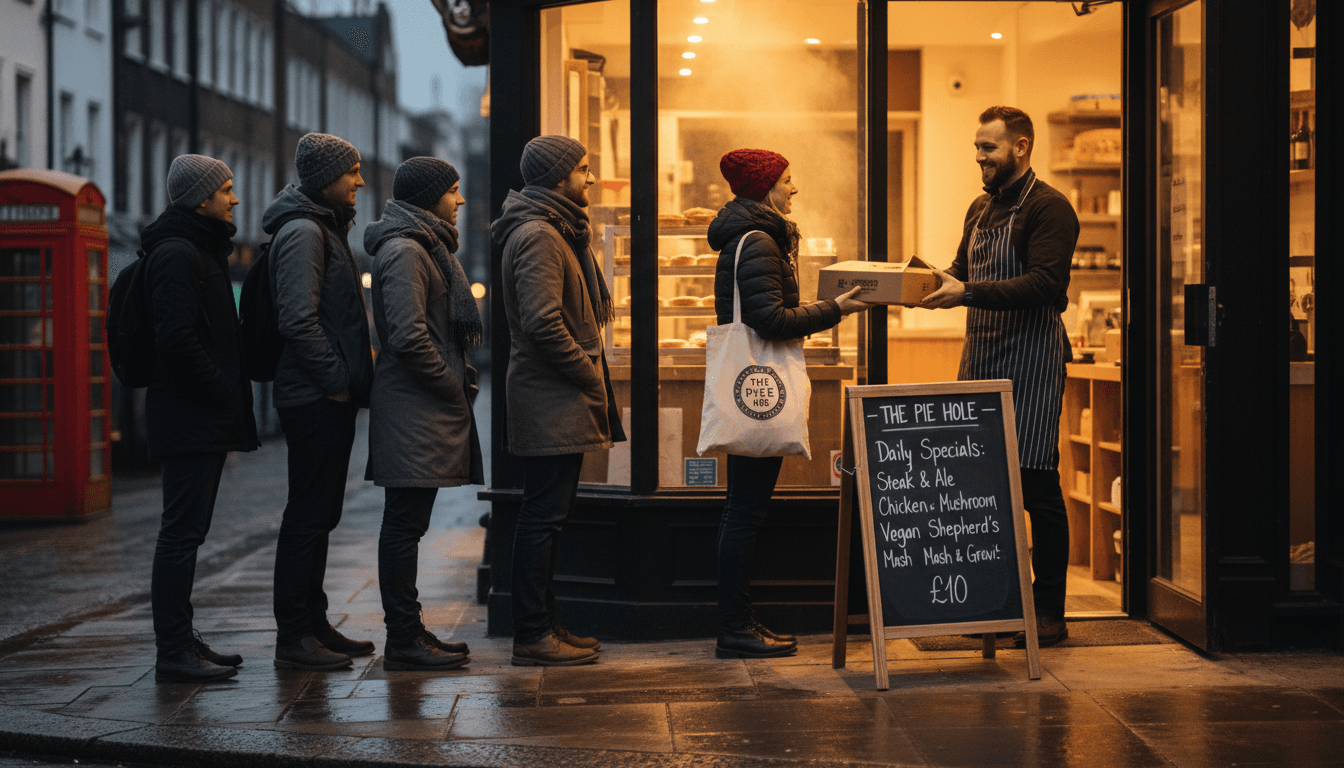
Pop-Up Shops for Startups: Lessons from Higgidy
January is when attention is cheapest and curiosity is highest. People are back at their desks, routines are resetting, and London’s streets fill up with “new year, new habits” energy. That’s exactly why Higgidy opening a pop-up pie shop in London on 15 January is smart marketing, not just a fun PR stunt.
Most startups treat brand awareness like a slow, abstract thing you build online over months. The reality? A small, well-designed in-person moment can compress months of trust-building into a single weekend—if you plan it like a marketer, not an events organiser.
This post is part of the UK Solopreneur Business Growth series, so I’m going to translate Higgidy’s pop-up move into practical steps a one-person business can copy—without needing a big team, a huge budget, or a retail lease.
A pop-up isn’t “offline marketing”. It’s a content engine, a research lab, and a lead generator—if you design it that way.
Why pop-ups work (even when you’re a solo operator)
Pop-ups work because they do three jobs at once: they create scarcity, they create proof, and they create shareable moments.
Scarcity is straightforward: a limited-time shop gives people a reason to act now. Proof is subtler: seeing a brand “in the real world” signals legitimacy. If you’ve ever felt online-only businesses have to work harder for trust, you’re not imagining it.
For solopreneurs, the bigger advantage is efficiency. A pop-up turns one day of effort into multiple assets:
- Short-form video (footfall, reactions, behind-the-scenes)
- Testimonials recorded on the spot
- Product feedback from real customers
- Local SEO signals (search behaviour spikes, brand searches, mentions)
- A reason to email your list that isn’t “buy my thing”
If your goal is leads (not just vibes), that’s the lens to use.
The underused benefit: pop-ups make your positioning real
Online, you can claim anything. In person, your positioning has to survive reality.
Higgidy selling pies in a dedicated pie shop is a very literal reinforcement of what they are: a pie brand worth queueing for. That’s brand storytelling you can taste.
For a startup or solopreneur, the equivalent might be:
- A freelance designer hosting a “brand clinic” pop-up where people get a 10-minute teardown
- A DTC skincare brand running skin consult mini-sessions with samples
- A B2B SaaS founder doing live onboarding audits at a coworking space
The format changes; the principle doesn’t.
What Higgidy’s London pop-up tells us about experiential marketing
Higgidy’s activation sits in a category marketers call experiential marketing: a physical experience designed to trigger emotion, memory, and sharing.
It’s tempting to think experiential only works for big brands. I disagree. In the UK, where local identity matters and communities are dense (especially in cities), small activations can outperform big ad spends—because they feel personal.
Here are the practical signals worth copying from the “pop-up pie shop” idea:
1) Put the product at the centre, not the brand campaign
The strongest activations are simple: they don’t require a pamphlet.
A pie shop selling pies is instantly understandable. The “explanation cost” is near zero. For startups, that’s gold. If you need five minutes to explain what the visitor is meant to do, your pop-up will bleed attention.
Rule: if someone can’t understand the offer in 3 seconds from 3 metres away, simplify.
2) Design for social proof and shareability
People don’t share “a company”. They share moments:
- A queue
- A limited menu
- A bold sign
- A reaction shot
- A surprising collaboration
Even if you don’t have the article’s creative details, the playbook is familiar: make it visually obvious that something is happening.
For solopreneurs, “shareability” doesn’t mean gimmicky. It means clear visuals and a specific hook.
Examples that work on a budget:
- A single hero prop (a sampling station, demo table, “before/after” wall)
- A stamp card or “limited drop” token people can photograph
- A photo spot with good lighting and a simple background
3) Use locality as a growth strategy
Pop-ups are local by default, and that’s a feature.
If you’re growing a one-person business in the UK, local campaigns help because:
- You can actually show up and talk to customers
- You can partner with nearby businesses quickly
- You can build momentum in one area instead of spreading thin
That’s the missing piece in a lot of solopreneur marketing plans: they’re “national” before they’re strong anywhere.
A practical pop-up plan for UK startups (lean, lead-focused)
You don’t need a full shop. You need a tight goal, a controlled environment, and a follow-up system.
Step 1: Pick a lead goal you can measure
If your campaign goal is leads, decide what a lead is before you book anything.
Good lead definitions for solopreneurs:
- Email signup for a local waitlist
- Booked discovery call
- Paid deposit for a service slot
- Demo request
- Trial sign-up (with a specific local offer)
Avoid goals like “awareness” unless you also define proxy metrics (brand searches, email growth, bookings).
Step 2: Make a “one sentence” offer
Write one sentence that explains why the pop-up exists.
Templates:
- “Get a 10-minute audit and leave with a 3-point plan.”
- “Try the product, get fitted, and take home a starter kit.”
- “Bring your problem; leave with a quote and timeline.”
If you can’t say it in one sentence, visitors won’t repeat it to friends.
Step 3: Choose the smallest viable venue
A pop-up doesn’t have to be a leased unit. Some options that regularly work in the UK:
- A table inside a café (quiet hours)
- A shared market stall
- A coworking lobby day-pass arrangement
- A partner retailer’s corner
- An event “micro-sponsor” spot
Your best move is usually a partner venue with existing footfall. You’re borrowing attention.
Step 4: Build the follow-up into the experience
This is where most pop-ups fail. People collect compliments and Instagram posts, then nothing happens.
Do these three things instead:
- Capture contact details with a clear value exchange (discount, resource, booking priority)
- Tag the lead source (QR code unique to the pop-up)
- Automate the first follow-up within 10 minutes
A simple stack works:
- QR code → landing form → email automation → calendar link
Even as a solo operator, you can set this up in an afternoon.
Step 5: Turn pop-up day into 30 days of content
If you’re in this series for online growth, here’s the bridge: a pop-up is raw material.
Plan to capture:
- 5 customer questions you heard repeatedly (future blog posts)
- 10 quick clips (Reels/TikTok/Shorts)
- 3 testimonial snippets
- 1 founder story (why you built this)
One day on-site should feed a month of social media and email. That’s how you make experiential marketing pay off for a solopreneur.
Budget reality: what this can cost (and how to keep it sane)
You can run a credible UK pop-up on a lean budget if you control two cost centres: space and staffing.
Here’s a rough, practical range I’ve seen small businesses work within:
- Partner venue “corner” or café table: £0–£150/day (often revenue share)
- Market stall: £50–£250/day depending on location
- Basic materials (signage, samples, packaging): £100–£500
- Photographer (optional): £200–£600 for a short session
As a solopreneur, your time is the hidden cost. So reduce complexity:
- Offer fewer choices
- Use one payment method that’s fast
- Keep the experience repeatable every 5 minutes
If your pop-up requires constant explanation, it isn’t a pop-up—it’s a workshop. Price it accordingly.
Common questions founders ask about pop-up marketing
“What if nobody shows up?”
Treat attendance like a distribution problem, not a luck problem. Borrow footfall (partner venues), and run a simple pre-booking system (even for free slots) so you’re not relying on passers-by.
“Is a pop-up worth it if I sell online?”
Yes—if you use it to capture leads and content. The ROI usually comes from follow-up sales and improved conversion rates, not just sales on the day.
“Do pop-ups only work in London?”
No. London is dense, but smaller cities can outperform on cost. The equation is: footfall quality / cost / your ability to show up consistently.
What to copy from Higgidy (and what to ignore)
Copy the clarity: a pie brand running a pie shop is instantly legible.
Copy the timing: January activations stand out because fewer brands run big stunts right after the holidays.
Copy the physicality: giving people something tangible builds trust quickly.
Ignore the temptation to overbuild. The goal isn’t to cosplay as a big brand. The goal is to create one strong local story you can repeat.
If you’re a UK solopreneur trying to grow through online marketing, a pop-up can feel like a detour. I’ve found it’s often the opposite: a pop-up gives your online channels something real to talk about.
So here’s the question to sit with: if you had to create a “physical proof point” for your business this month—what would it be, and where would it make the biggest local impact?