Business ideas for 2026 are everywhere. This guide shows which ones scale fastest—and how marketing automation helps UK solopreneurs generate leads reliably.
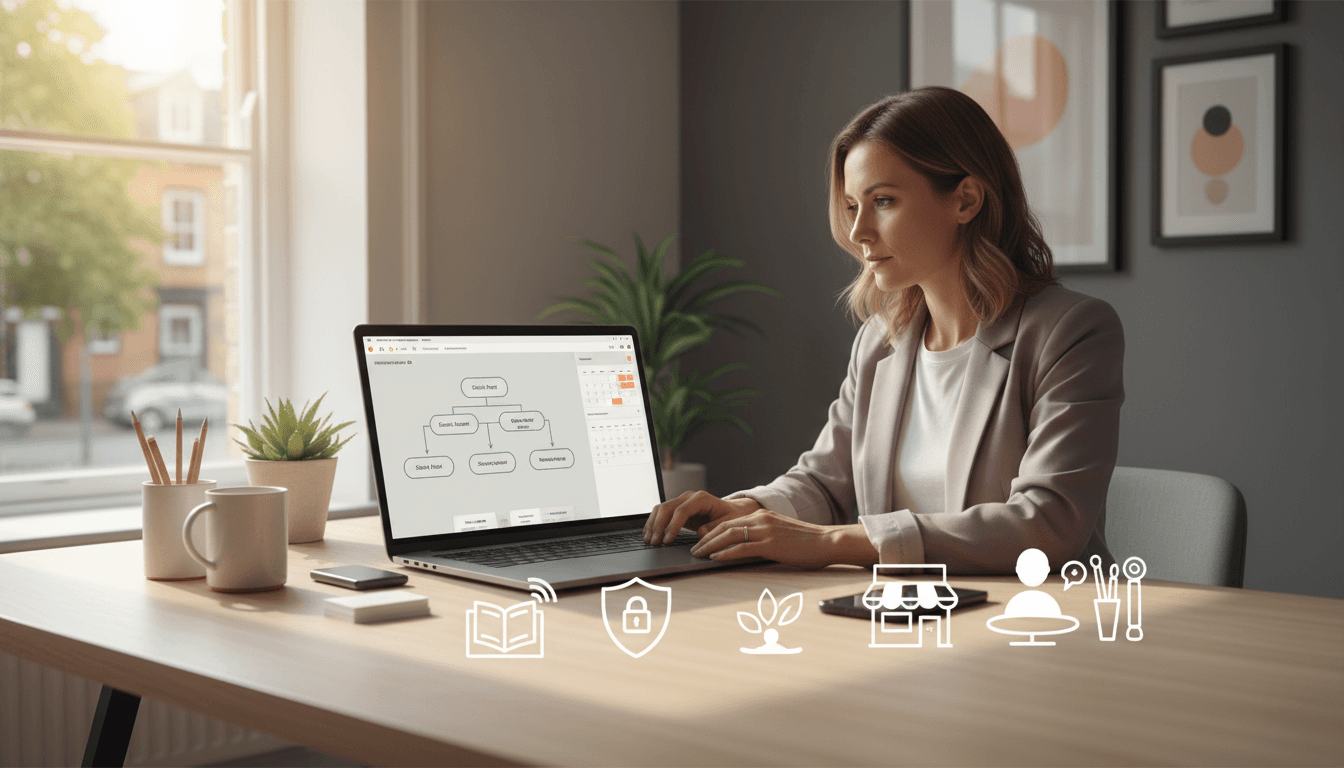
Business ideas for 2026: grow faster with automation
One in ten people in the UK want to be their own boss in 2026. That’s not a vibe shift — it’s a signal. When more people start businesses, the ones who win aren’t always the most talented. They’re the ones who build repeatable ways to attract leads.
For solopreneurs and microbusiness owners, the bottleneck usually isn’t the service. It’s the follow-up. It’s remembering to chase enquiries, getting referrals consistently, and staying visible when client work gets busy. This is where marketing automation for UK SMEs stops being “nice to have” and becomes the difference between a side hustle and a stable business.
The source article highlighted six strong business ideas for 2026: online courses, massage therapy, franchising, cybersecurity consulting, specialist recruitment, and creative studios. I agree with the list — but most people miss the real question:
Which of these can you sell consistently without living on Instagram and replying to DMs at 11pm?
Below, I’ll break down each idea through a practical lens: what customers want, what you’ll need to prove, and how simple automation systems help you generate leads on repeat.
The 2026 advantage: build a “pipeline” before you build a team
If you’re in the UK Solopreneur Business Growth camp, you’re probably trying to keep headcount low and flexibility high. The government stats referenced in the original piece back this up: 5.4 million of the UK’s 5.7 million businesses are microbusinesses. This is the normal shape of UK business now.
The problem: microbusinesses tend to run on memory and manual effort.
The fix: set up a small number of automations that run whether you’re delivering work, travelling, or taking a week off.
Here’s what I mean by “marketing automation” in plain English:
- Someone fills in a form → they immediately get the right email or booking link.
- Someone downloads a guide → they get a short sequence that builds trust.
- Someone enquires → you get a reminder to follow up, and they get a confirmation.
- Someone becomes a customer → they get onboarding info automatically.
You don’t need a complex tech stack. You need the right workflow for the business model.
1) Running an online course: automation is the business model
Online courses are attractive in 2026 for a simple reason: you’re not trading hours for money in the same way. You can sell while you sleep.
What makes it work now
The original article called out a real trend: people want constructive screen time and more accessible learning. I’d add another trend I’m seeing with UK creators and consultants: buyers now expect a “supported” course, not a dusty video library.
That’s a marketing and delivery challenge.
Automation that actually moves the needle
If you’re selling courses, your first automation wins are:
- Lead magnet → email nurture (7–10 days)
- Example: “Course taster lesson” or “checklist”
- Goal: convert curious browsers into booked calls or direct purchases
- Abandoned checkout / enquiry follow-up
- A single reminder email can rescue sales you’d otherwise lose
- Segmented onboarding
- New students get a start-here email, weekly nudges, and completion prompts
Snippet-worthy truth: A course without follow-up is just content. Automation turns it into outcomes, and outcomes sell.
2) Massage therapist: your diary fills when follow-up is automatic
Wellness businesses often grow fast locally, then stall. Not because demand drops — but because you can’t keep up with admin and marketing.
The article’s angle on women’s health, menopause-focused treatments, and stress regulation is on point. A niche like that isn’t limiting. It’s positioning.
What customers need before they book
- Proof you’re credible (training, approach, who you help)
- Confidence it’s the right treatment for them
- Easy booking and reminders
Practical automation ideas
- Enquiry form → “Which treatment is right?” email + booking link
- No-show prevention: automated reminders 48h and 2h before
- Rebooking prompts: aftercare email + “book your next session” at day 14
- Review requests: automatically ask happy clients for Google reviews
If you run a one-person service business, this is the core point:
Your calendar doesn’t fill from one great session. It fills from consistent rebooking and referrals.
3) Franchising: the fastest route to consistent local lead gen
Franchising shows up on “best business ideas” lists every year because it solves two hard problems: brand trust and operating know-how.
But even with a known brand, local competition is brutal — especially in hospitality where costs (wages, energy, ingredients) squeeze margins. You need footfall and repeat customers.
Where marketing automation fits franchise growth
Franchises are ideal for automation because they repeat the same patterns across locations.
- Local store landing pages with the same offer structure
- Click-and-collect / booking confirmations and upsell prompts
- Birthday / lapsed customer campaigns (simple, effective)
- Local events: form signups → automated reminders and post-event offers
A good franchisor gives you brand and templates. A smart franchisee builds a local pipeline.
4) Cybersecurity consultant: simplify the message, automate the trust
Cybersecurity consulting is a strong 2026 play — but not because every SME suddenly wants deep technical work.
As the original founder interview pointed out, the growth area is translation: helping decision-makers understand what matters and what to buy.
The real buying journey
Most SMEs don’t wake up wanting “cybersecurity”. They want to avoid:
- losing money
- failing compliance
- reputational damage
- operational downtime
Automation that wins B2B leads
Cybersecurity is high-trust and longer-cycle, so your automations should educate and qualify.
- Board-friendly lead magnet: “SME Cyber Risk Checklist (2026)”
- 3-email credibility sequence:
- common risks (phishing, MFA gaps)
- what good looks like (policies + controls)
- a clear offer (assessment call)
- Qualification form before calls:
- company size, sector, current tooling, budget range
Opinion: If your website reads like a tool vendor, you’ll be compared on price. If it reads like a translator, you’ll be hired for judgement.
5) Specialist recruiter: automate speed and you’ll beat bigger agencies
Recruitment is already process-heavy. That’s why it’s one of the easiest businesses to improve with automation.
The source noted UK hiring complexity, compliance pressure, and a push toward temp/contract arrangements. That trend typically increases demand for specialist recruiters who can move quickly and reduce hiring risk.
Automation that saves hours per role
- Candidate intake: form + automated screening questions
- Instant acknowledgement: “Got your CV, here’s what happens next”
- Client briefing workflow: standardised role intake to reduce back-and-forth
- Talent pool nurture: monthly email with roles + market updates
Recruitment one-liner: Speed builds trust in hiring. Automation creates speed without cutting corners.
6) Creative studio: sell the experience, then automate repeat visits
Creative studios (pottery, textiles, stained glass) ride two big forces: the need for offline community and the popularity of craft culture.
The original article cited strong figures from the Crafts Council, including that 73% of UK adults are in the market for craft and a meaningful portion would pay for workshops.
What makes studios grow in 2026
- Experience-first marketing (date nights, friend groups, corporate socials)
- Strong local SEO and reviews
- Consistent workshop calendar
Automation that turns one-time visitors into regulars
- Workshop waitlists: when sessions sell out, capture demand automatically
- Post-class email: care tips + “next level” workshop offer
- Seasonal campaigns (this matters in January):
- “New year, learn a skill” January series
- Valentine’s couples sessions
- Mother’s Day gift workshops
If you’re opening a studio, don’t rely on “posts”. Build a list.
A simple automation starter kit for any 2026 business idea
If you pick any of the six business ideas for 2026, start with this minimum system. It’s small enough to implement in a weekend, and it scales.
The 5 building blocks
- One clear offer page
- one service/course/workshop, one call-to-action
- One lead capture method
- form, booking link, or “download”
- One nurture sequence (3–5 emails)
- problem → proof → offer
- One follow-up rule
- if no reply in 2 days, send a reminder; if no reply in 7, close the loop
- One retention trigger
- rebook reminder, renewal nudge, “what’s next” offer
Quick “People also ask” answers
Do I need marketing automation as a solopreneur? Yes, because you don’t have time to follow up perfectly. Automation protects revenue you’ve already earned.
Which business models benefit most from automation? Courses, franchises, and service businesses with repeat bookings benefit fastest because the workflows repeat.
What should I automate first? Enquiry response and rebooking. These two usually create the quickest return.
Where this fits in UK Solopreneur Business Growth
This post is part of the UK Solopreneur Business Growth series for a reason: most of these business ideas look great on paper, but they only become “real businesses” when lead generation is steady.
If you’re starting in 2026, don’t wait until you’re busy to set up systems. Do it the other way round. Build a simple pipeline first, then fill your calendar.
If you want a practical next step, map your customer journey on one page: How do people find you? What do they do next? Where do they drop off? The gaps you spot there are exactly what automation should fix.
Source article: https://smallbusiness.co.uk/6-of-the-best-business-ideas-cybersecurity-recruiter-franchise-2600455/