Explore the best business ideas for 2026—and the marketing automation setups that help UK solopreneurs get leads, bookings, and repeat sales.
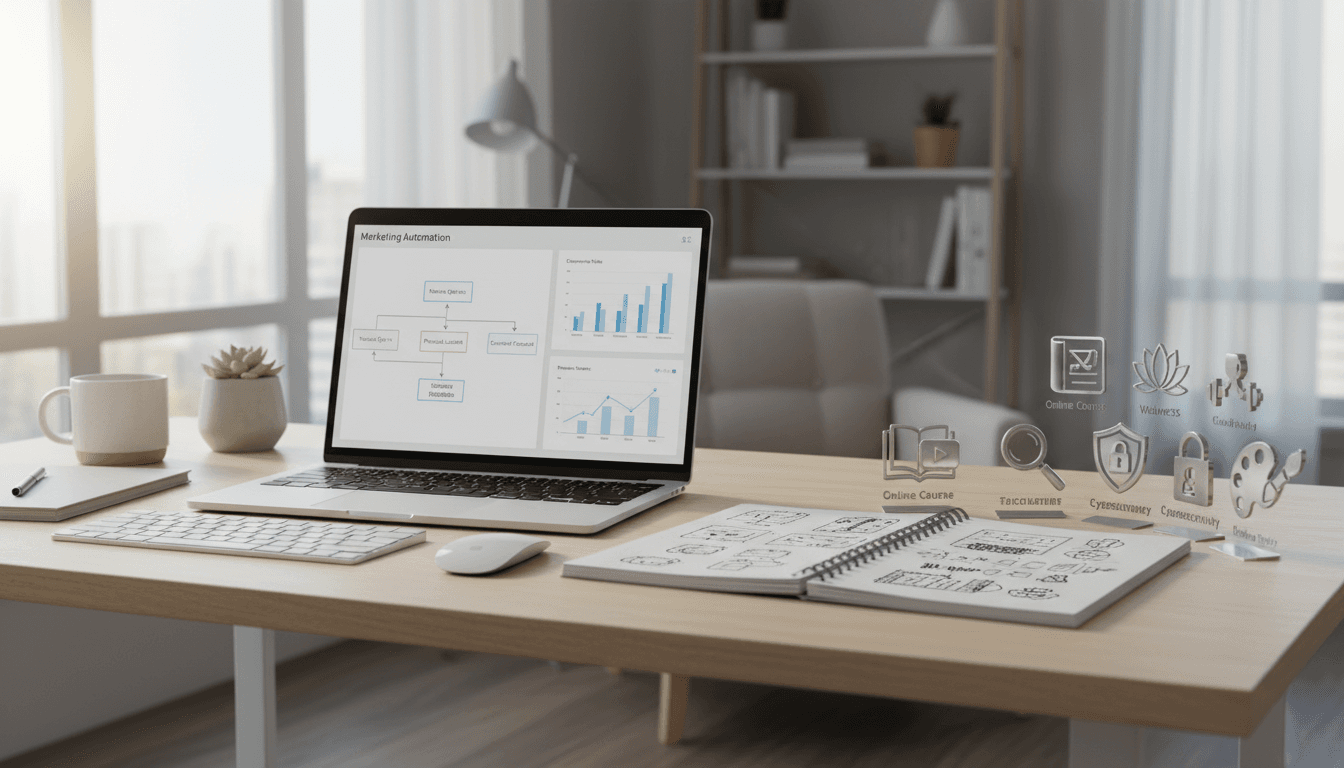
Best business ideas for 2026 (and how to market them)
One detail in the latest UK small business numbers should change how you think about “starting up” in 2026: the UK had 5.7 million businesses in 2025, and 5.4 million were microbusinesses (fewer than 10 employees). That’s 95% of all UK businesses operating at micro scale. If you’re building a one-person business (or a side hustle you want to turn full-time), you’re not the exception—you’re the norm.
But most solopreneurs still treat marketing like a separate job they’ll “get to later”. That’s where momentum dies. The founders who win in 2026 won’t be the ones working 70-hour weeks. They’ll be the ones who set up simple, repeatable marketing systems early, so enquiries don’t depend on their mood, memory, or spare time.
This post is part of our UK Solopreneur Business Growth series, focused on how British one-person businesses grow using online marketing, content, and automation. Below are six business ideas already gathering pace for 2026—and the practical marketing automation plays that help each one get clients consistently.
Pick a 2026 business idea with a “repeatable” buyer
The best business ideas for 2026 aren’t just trendy—they have buyers who:
- Feel a recurring problem (sleep, stress, hiring, cyber risk)
- Pay repeatedly (packages, retainers, memberships)
- Need reassurance before buying (so follow-ups matter)
Marketing automation shines here because it handles the unglamorous bits: follow-ups, reminders, lead capture, reactivation, and consistency.
A simple rule I use: if your service needs trust, you need nurturing. If you need nurturing, you need automation.
1) Running an online course (sell outcomes, not modules)
Online courses are popular because they decouple your income from your diary. The strongest angle for 2026 is not “teach what you know” but package a specific outcome for a specific person.
In the source article, Dani McFadden (The Sleep Consultant Academy) makes a point that many creators learn the hard way: people don’t want length, they want progress—shorter lessons, accessible formats, and a clear path to results.
Marketing automation that makes courses sell while you sleep
For online courses, automation isn’t optional—it’s the business model.
Set up:
-
Lead magnet + email sequence
- Example lead magnet: “7-day checklist to get your first paying clients as a [niche] consultant.”
- Sequence: 5–7 emails over 10–14 days: story → proof → objections → invitation.
-
Webinar (or on-demand demo) funnel
- Registration → reminders → replay → deadline-based follow-up.
-
Segmentation by intent
- Track actions: clicked pricing, watched 50% of webinar, downloaded syllabus.
- Send different follow-ups. Don’t spam everyone with the same pitch.
Snippet-worthy truth: Courses don’t fail because the content is weak; they fail because follow-up is inconsistent.
2) Massage therapy with a niche (menopause, stress, recovery)
Massage therapy is a classic local service, but 2026 buyers are more specific. In the article, Alison Bladh highlights a clear growth segment: women over 40 seeking outcomes linked to stress, sleep, hormone changes, and nervous system regulation.
That niche positioning matters because “massage” is generic. “Menopause support massage with evidence-informed aftercare” is memorable.
Marketing automation that fills a diary (without constant posting)
Local services win by reducing friction.
Use automation for:
- Online booking + pre-visit intake: send an automatic form after booking (reduces no-shows and improves session quality).
- Post-appointment follow-up: a next-day check-in plus an aftercare guide builds trust and encourages repeat bookings.
- Reactivation campaigns: if someone hasn’t booked in 8–10 weeks, trigger a friendly email: “Want to get back in the diary?”
- Review requests: send an SMS/email 2 hours after the appointment asking for a Google review.
Practical KPI to aim for: a 60–70% repeat booking rate for your core niche package (e.g., 3-session stress reset).
3) Buying a franchise (marketing consistency is the real advantage)
Franchises appeal in 2026 for a simple reason: operating costs are unpredictable (wages, energy, ingredients), and founders often underestimate how lonely decision-making can be. Franchise models offer brand recognition and operational support.
The source also cites a striking comparison: franchises reportedly have a 99.5% success rate vs 50% for typical start-ups.
Marketing automation that protects brand standards across locations
If you’re a franchisee, automation helps you stay aligned with the brand while still driving local footfall.
- Local store campaigns: automated “what’s on this week” emails/SMS to customers within a radius.
- Offer governance: head office-approved templates pushed to franchisees (same message, local tweaks).
- Loyalty flows: birthday offers, “we miss you” messages after 30 days, and referral nudges.
Strong stance: franchises don’t struggle because of bad marketing ideas; they struggle because execution is uneven week to week. Automation fixes that.
4) Cybersecurity consultancy (the growth is in translation)
Cybersecurity is no longer a niche problem. It’s board-level, and it’s normalised—MFA, phishing attempts, biometric logins are daily life.
Manoj Bhatt (Cyberhash) nails what actually sells in 2026: not more cyber tools, but clarity. The market is full of vendors and “shopping lists” of products. Many SMEs want someone who can translate risk into decisions.
Marketing automation for B2B consultancies (pipeline beats virality)
Most cyber consultancies don’t need 100,000 followers. They need 10–20 qualified leads a month.
A clean system:
- Risk assessment as a lead magnet: “15-minute cyber readiness scorecard for SMEs.”
- Lead scoring: prioritise companies that open, click, and book calls.
- Nurture by persona: IT manager content differs from finance director content.
- Retainer onboarding: after the first project, automate a “next steps” sequence offering monitoring, training, or quarterly reviews.
Memorable line: In cybersecurity, trust is the product. Your follow-up is part of the service.
5) Specialist recruiter (win by being narrow and fast)
Recruitment in 2026 looks messy: shifting regulations, sector volatility, and clients trying to reduce hiring mistakes. In the article, Paul McCallum (PJ Staffing) points to a candidate-led market and notes the increasing attractiveness of temp-to-perm models as employment rules change.
Specialist recruiters win because speed and fit matter more than volume.
Marketing automation for recruitment (two audiences, one system)
Recruiters market to clients and candidates. Automation keeps both warm.
- Candidate CRM sequences: post-registration onboarding, CV tips, role alerts by preference.
- Client nurturing: monthly “salary snapshot” emails, availability updates, case studies.
- Pre-vetted shortlist workflows: once a client brief is submitted, trigger internal tasks and candidate outreach.
- Reputation building: automated requests for testimonials after successful placements.
Quick operational win: set a goal that every inbound brief gets a response within 10 minutes during business hours (even if it’s automated acknowledgement + booking link). That responsiveness converts.
6) Creative studio (community is the moat)
Creative studios—pottery, textiles, stained glass—are doing well because people want in-person, tactile experiences and connection. The source includes standout UK demand signals:
- 73% of UK adults are in the market for craft (Crafts Council)
- 20% would pay to attend a craft workshop
- Craft contributes around £3 billion to the UK economy (reported by the Crafts Council)
These studios don’t just sell classes. They sell belonging.
Marketing automation that builds a “regulars” engine
Creative studios should optimise for repeat visits and referrals.
- Waitlist automation: when a class sells out, capture demand and auto-notify when new dates open.
- Memberships/passes: automated renewal reminders and “use your sessions” prompts.
- Seasonal campaigns: Valentine’s, Mother’s Day, Easter, summer holiday sessions, and—especially in January—“new hobby” workshops.
- UGC collection: post-class emails asking for photos and permission to share.
Opinion: Studios that survive 2026 won’t be the most artistic; they’ll be the most organised about rebooking.
A simple “idea-to-automation” launch plan (first 30 days)
If you’re starting one of these business ideas in 2026, here’s a practical way to avoid the classic trap of “I’ll sort marketing later”.
Week 1: Offer and audience
- Write one sentence: I help [specific person] get [specific outcome] without [common pain].
- Decide your first channel: local SEO, LinkedIn, Instagram, partnerships—pick one.
Week 2: Capture and follow-up
- Create one landing page (offer + proof + booking/enquiry form).
- Set up an automated email: “Thanks—here’s what happens next.”
Week 3: Nurture
- Write a 5-email welcome sequence:
- Your story and who you help
- The problem explained simply
- A case study or example
- Common objections answered
- Clear invitation to book/buy
Week 4: Improve conversion
- Add reviews/testimonials.
- Add a reactivation email for people who didn’t book.
- Track 3 numbers: visits → enquiries → sales.
That’s enough to start generating leads without living on social media.
Where this fits in UK Solopreneur Business Growth
These six options—online courses, massage therapy, franchise ownership, cybersecurity consulting, specialist recruitment, and creative studios—share one thing: they can all be run by a one-person business at the start, then scaled by systems rather than headcount.
If you only take one point from this post, take this: your first “hire” should be automation, not another pair of hands. Even basic workflows (capture → nurture → book → follow up) will outperform sporadic marketing bursts every time.
If you’re building a 2026-ready business, which part are you most likely to neglect—lead capture, follow-up, or rebooking—and what would happen if you fixed it this month?