Meaningful friction can improve conversion quality, reduce returns, and build trust. Learn 7 low-budget tactics UK small businesses can use now.
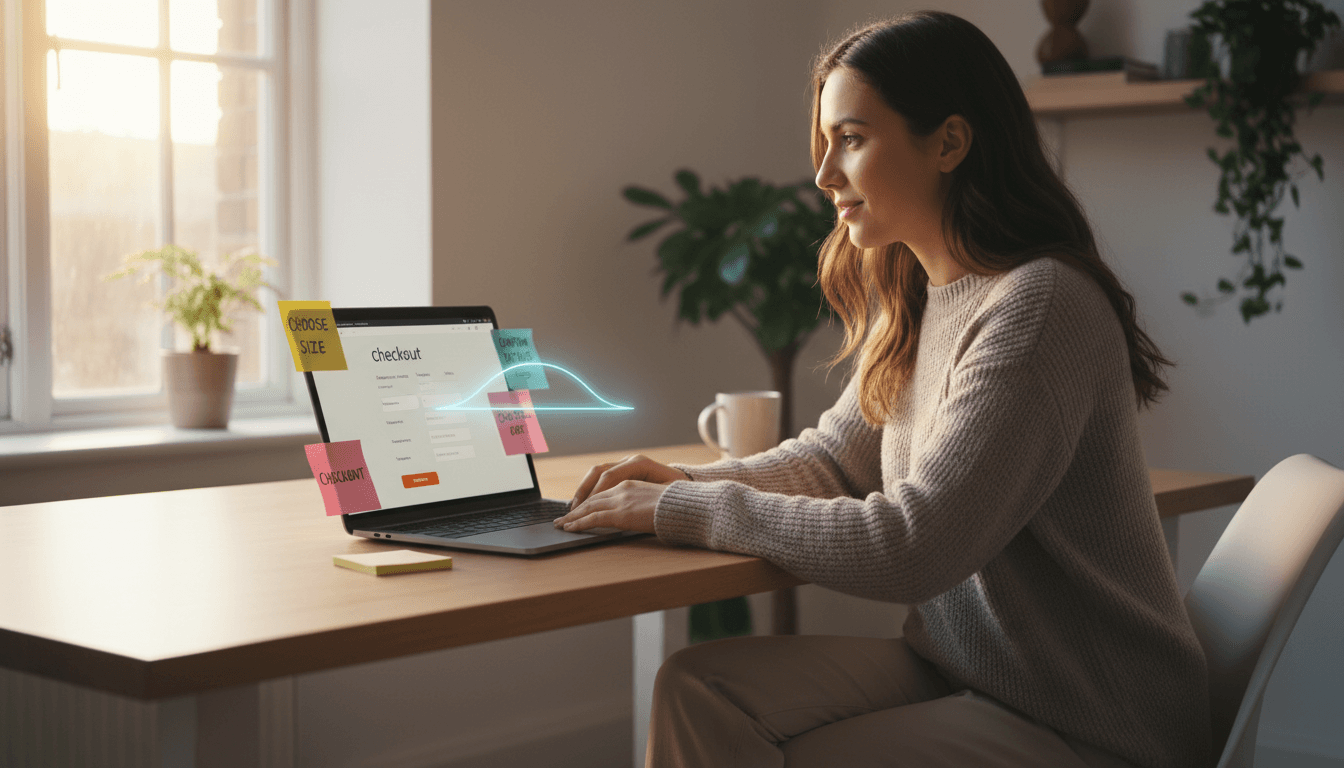
Meaningful Friction: Convert More Without More Clicks
A lot of small businesses obsess over making everything “one-click” and “instant”. I get it—speed sells. But there’s a quieter truth that’s showing up more as agentic AI and hyper-personalised journeys remove every last bump from online buying:
When customers don’t have to choose, they don’t always feel committed to the choice they made.
That’s the real point behind the recent debate on meaningful friction: sometimes a tiny pause, an extra step, or a deliberate prompt improves the outcome for both sides. It can reduce refunds, increase repeat purchases, and create trust—without turning your website into a maze.
This post is part of our Technology, Innovation & Digital Economy series, because this is exactly where UK digital growth is heading: AI makes digital journeys faster than ever, so brands that win will be the ones that know when to add speed—and when to add intention.
Meaningful friction vs bad friction (you need both definitions)
Meaningful friction is a deliberate, helpful “speed bump” that improves decision quality. Bad friction is the accidental stuff—clunky navigation, confusing checkout fields, unclear pricing—that makes people abandon.
Here’s the line I use when auditing small business websites:
Bad friction wastes effort. Meaningful friction creates confidence.
What bad friction looks like
Bad friction is usually unplanned and always expensive:
- A checkout that errors on mobile
- Too many form fields for a simple enquiry
- Hidden delivery costs that appear at the last step
- Vague product info that forces customers to email basic questions
If you’re seeing high bounce rates or abandoned carts, remove these first.
What meaningful friction looks like
Meaningful friction earns its place by doing at least one of these:
- Preventing a wrong purchase
- Helping customers self-select the right option
- Increasing perceived value and commitment
- Reducing downstream costs (returns, support tickets, cancellations)
MarketingWeek’s examples underline the difference: supermarkets move products to trigger impulse buying (questionable, but effective), while Spotify has introduced friction to reduce “doom scrolling” behaviours—friction as a wellbeing nudge.
For small businesses, the best use is simpler: help customers make an active choice they’ll stick with.
Why “active choice” matters more in 2026 (thanks, AI)
As AI removes steps—auto-filling details, predicting preferences, buying on customers’ behalf—the default journey becomes passive. People can end up feeling like the purchase “just happened”. That’s not great for trust, memory, or loyalty.
Behavioural psychology backs this up: when people invest effort, even small effort, they’re more likely to value the outcome. In the source article, The Little Loop’s founder described a version of this: when customers take the step to create an account and organise purchases, they’ve invested energy—so they’re more likely to return. They report 60% of monthly purchases come from returning customers, which is a serious retention signal.
The practical small business takeaway:
- You don’t need more traffic to grow.
- You often need fewer low-quality conversions and more “right-fit” conversions.
Meaningful friction is one of the cheapest ways to do that.
7 meaningful friction tactics UK small businesses can use (low budget)
Each of these is designed to improve conversions or improve conversion quality (which usually improves profit).
1) Add a “confirmation step” where refunds hurt most
If you sell high-return items (fashion, cosmetics, personalised goods), add a short checkpoint:
- “Confirm your size” selector with a link to sizing help
- “Personalisation check” preview before payment
- “Delivery date confirmation” for time-sensitive orders
This is not about adding pointless steps. It’s about reducing avoidable mistakes.
Metric to watch: return rate and “wrong item ordered” support tags.
2) Use comparison tables to slow the decision (in a good way)
If you offer 3–6 options (service tiers, bundles, memberships), a comparison table creates deliberate pause—and clarity.
Make it specific:
- who it’s for
- what you get
- what you don’t get
- typical outcome (time saved, sessions included, turnaround)
This is meaningful friction because it helps customers choose correctly, which reduces churn.
Metric to watch: upgrade/downgrade requests and early cancellations.
3) Replace “Book now” with “Check availability” for premium services
For high-consideration services (private clinics, consultants, photographers, trades), instant booking can increase low-intent reservations.
A better flow is:
- Check availability
- Choose a time
- Answer 2–4 short questions
- Confirm booking
Those 2–4 questions are the friction. They qualify leads and prevent mismatched expectations.
Metric to watch: no-show rate and lead-to-sale close rate.
4) Put the “what happens next” timeline before the enquiry form
Most small business enquiry forms are a dead end: customers hit submit and feel uncertain.
Add a simple timeline above the form:
- “We reply within 1 working day”
- “You’ll get a quote + 2 options”
- “If you want to proceed, we’ll schedule a 10-minute call”
This creates a tiny pause and sets expectations. It reduces ghosting and improves lead quality.
Metric to watch: reply-to-meeting conversion.
5) Add a “are we a fit?” filter page (it’s an SEO and lead-quality win)
This is one of my favourite tactics because it supports SEO for small business and lead quality at the same time.
Create a page titled something like:
- “Is this service right for you?”
- “Who we’re best for”
Include:
- minimum budgets (where relevant)
- industries you specialise in
- timelines you can/can’t meet
- what you need from the client
This is meaningful friction because it helps the wrong prospects self-select out—saving you time.
Metric to watch: fewer unqualified enquiries, higher proposal acceptance rate.
6) Introduce “micro-commitments” that build loyalty
The article’s point about investing energy is real. You can do a lightweight version without forcing account creation.
Examples:
- Save a quote and email it to yourself (one click)
- Create a wishlist (no account required until checkout)
- “Build your bundle” configurator
- Post-purchase “set your preferences” (frequency, style, refill reminders)
These aren’t gimmicks. They’re commitment builders.
Metric to watch: repeat purchase rate within 60–90 days.
7) Add ethical friction to reduce impulse buying (and increase trust)
This is the contrarian one: slowing people down can actually boost your brand.
Good uses:
- A clear “cooling-off” message for subscriptions (“Cancel anytime in your account”)
- A “double-check your address” prompt for urgent deliveries
- Transparent, early shipping and returns info
It sounds basic, but it signals you’re not trying to trick anyone. In 2026, that’s a competitive advantage.
Metric to watch: complaint rate, chargebacks, negative reviews mentioning “hidden” issues.
Where small businesses get friction wrong (and how to avoid it)
The risk is obvious: add too much friction and you tank conversions.
Here are the three most common mistakes I see in UK SME digital marketing:
Mistake 1: Adding friction to protect the business, not the customer
If the only purpose is “stop people contacting us” or “force people to accept terms”, customers feel it.
Fix it by rephrasing:
- “This helps us recommend the right option”
- “This prevents delays”
- “This reduces mistakes”
If you can’t explain the benefit in one sentence, it’s probably bad friction.
Mistake 2: Treating everyone the same
The source article hints at this: customers sometimes want quick transactions, sometimes they want to explore. The best journeys offer both.
A simple pattern:
- Fast lane: “Buy now” / “Quick reorder”
- Guided lane: “Help me choose” / “Talk to an expert”
Let the customer pick their pace.
Mistake 3: Hiding friction inside surprise steps
Surprise friction feels like betrayal.
Examples:
- “Create an account” appears only at checkout
- Delivery costs appear at the final step
If friction is meaningful, it can be upfront. Customers accept it more readily when they understand why it’s there.
A practical way to find your “right amount” of friction
You don’t need a big UX budget. You need a disciplined test.
The 30-minute friction audit
Pick one high-value flow (checkout, booking, enquiry).
- List the top 3 customer mistakes (wrong size, wrong service tier, unclear delivery expectations)
- List the top 3 business pain points (refunds, cancellations, unqualified leads)
- Add one friction element that reduces one mistake (not all at once)
- Run it for 14 days
What to measure (small business friendly)
- Conversion rate (obvious)
- Refund/return rate (profit driver)
- Enquiry quality (how many become sales)
- Time-to-resolution for support tickets
- Repeat purchase rate
If conversions drop slightly but returns drop a lot, you’ve probably improved profit. That’s why friction needs to be evaluated beyond “more sales”.
Meaningful friction is part of the UK’s next digital advantage
As the UK pushes harder on digital services, AI adoption, and innovation-led growth, the temptation is to automate everything into a blur of convenience. The smarter play for many small businesses is balance: automation for speed, friction for trust and intention.
Meaningful friction is not “making it harder to buy”. It’s designing the moment of choice so customers feel confident, informed, and in control.
If you want one place to start this week, start here: choose the single step where a customer mistake costs you the most, and add one helpful pause. Then measure profit impact, not just clicks.
Where could your customer journey benefit from a small “stop and think” moment—without slowing down the people who already know what they want?