Learn how immersive events like the BBC’s UNBOXD Live can inspire UK startups to win Gen Z attention, build trust, and generate leads.
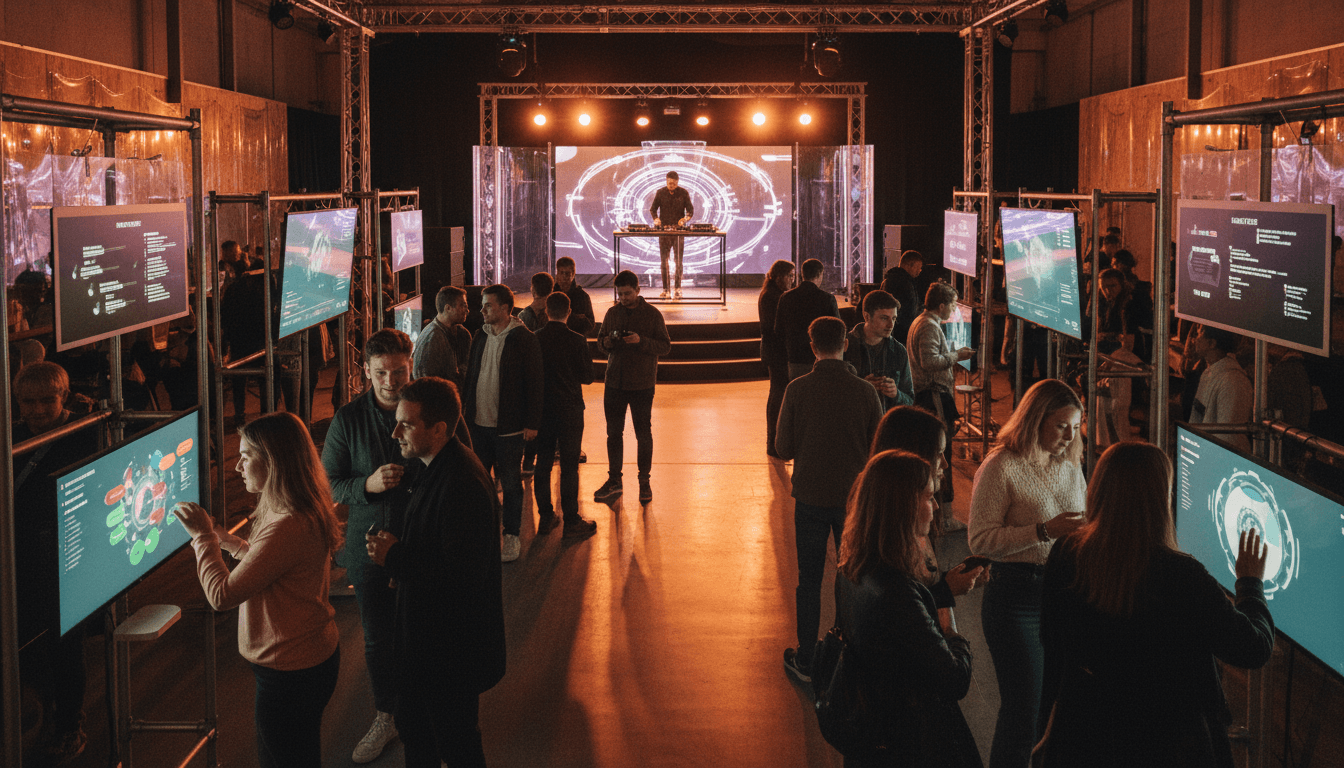
Immersive Events That Win Gen Z Attention in the UK
Most startups treat “Gen Z marketing” like a channel problem: pick TikTok, post often, hope something sticks. The BBC’s UNBOXD Live move is a good reminder that it’s usually an experience problem.
Campaign reporting (9 Jan 2026) described how the BBC is using an immersive live event format—UNBOXD Live—after internal research found gaps in how younger audiences are understood. That’s not a BBC-only issue. For UK startups in the technology, innovation & digital economy, the fight for attention is brutal, and Gen Z has a low tolerance for marketing that feels like marketing.
This post turns UNBOXD Live into a startup-friendly case study: what immersive brand experiences actually do, why they work on young audiences, and how to build your own “UNBOXD moment” without BBC budgets.
Why immersive events are beating “more content” right now
Immersive events win because they create participation, not just impressions. If your audience can influence what happens, share it in real time, and feel like they’re “inside” the story, you get a level of attention that normal posts rarely earn.
There’s also a practical reason this matters in January 2026: performance marketing costs haven’t magically dropped, and attribution is still messy across platforms. Experiences—online, offline, or hybrid—can generate high-intent leads because people opt in deliberately.
For startups, immersive events are especially useful when:
- You need brand awareness fast in a crowded space (fintech, AI tools, consumer apps)
- You’re selling something that needs “getting it” before buying (new workflows, new behaviours)
- You want community-led growth rather than one-off acquisition
A strong immersive concept is a shortcut to meaning: it shows what you stand for without a 12-slide brand deck.
What the BBC is signalling with UNBOXD Live
The signal is that younger audiences aren’t a demographic; they’re a culture with expectations. The BBC’s research-driven approach implies a gap between how brands think young people consume media and how they actually do.
Even if you don’t know the full UNBOXD Live run-of-show, the strategic intent is clear:
- Start from audience insight (what’s misunderstood)
- Build a format designed for interaction
- Make it feel current, social, and shareable
Startups should copy that logic, not the scale.
Gen Z engagement isn’t about platforms—it’s about proof
Gen Z doesn’t reward claims; they reward receipts. If you say you’re “for creators,” “for founders,” or “building the future,” you need to show it through the way you behave.
Immersive events create proof moments because they:
- Put your product or idea in someone’s hands
- Make your values visible (who gets stage time, who’s included, what you celebrate)
- Give people a story they can retell
For UK startups, this links directly to the broader digital economy theme: products are increasingly easy to copy, but trust, community, and narrative aren’t.
“Immersive” doesn’t mean VR
Immersive marketing is any experience where the audience feels embedded in the story. VR can do that, but so can a well-designed live workshop, a choose-your-own-adventure demo, or a participatory pop-up.
Here are three startup-scale formats that work well:
-
Interactive product theatre (60–90 mins)
- Build a live demo where the audience votes on scenarios
- Example: “You’re the ops lead—what would you automate first?”
-
Creator-led lab (half day)
- Invite 10–20 micro-creators/users to co-build in public
- Output: templates, prompts, open-source snippets, or mini-courses
-
Hybrid “watch party + challenge” (90 mins + 7 days)
- Live kickoff stream, then a week-long challenge with check-ins
- Works well for productivity tools, fitness tech, education, and creator tools
The point is not the tech. The point is agency—your audience has a role.
How to create your own “UNBOXD moment” (without BBC budgets)
A good immersive event is designed backwards from one emotional outcome. Not “awareness,” not “engagement.” A feeling.
Pick one:
- “I feel like this brand gets me.”
- “I feel smarter after showing up.”
- “I feel part of something.”
- “I feel confident trying this product.”
Then design the experience to create that feeling repeatedly.
Step 1: Define the one behaviour you want after the event
Lead generation improves when you ask for one next step, not five. Decide what matters:
- Book a demo
- Join a waitlist
- Start a free trial
- Apply to a beta group
- Refer a friend
Tie the whole event to that behaviour with a clear reason.
Step 2: Choose an interaction mechanic (and commit to it)
Immersion comes from interaction mechanics that are visible and frequent. Options that work:
- Live polling that changes the agenda
- “Hot seat” problem-solving with attendees
- Audience-submitted prompts/questions driving the demo
- Team-based missions (“complete these 3 tasks using the tool”)
If interaction only happens once at the end, it’s not immersive. It’s a webinar.
Step 3: Build a run-of-show that engineers shareable moments
Shareable moments don’t happen by accident. Plan 2–3 moments people will want to post:
- A surprising reveal (feature, partnership, or insight)
- A real-time transformation (before/after workflow)
- A status moment (attendee gets spotlighted, wins something, earns a badge)
Practical tip: design a “capture minute” every 20 minutes—something visual happens and you explicitly invite people to record/share.
Step 4: Measure it like a growth experiment
If you can’t measure it, you can’t improve it. Track:
- Registration-to-attendance rate (and by channel)
- Participation rate (poll votes, chat messages, challenge completions)
- Lead conversion rate (trial starts, demo requests, waitlist joins)
- Cost per qualified lead (include staff time, not just ad spend)
If you’re early-stage, pick just three metrics and iterate.
The tech stack for immersive startup events (simple and effective)
The best event stacks reduce friction and increase participation. You don’t need a Frankenstein setup.
A practical baseline stack:
- Landing page + registration: Webflow/Framer + a form tool
- CRM + automation: HubSpot (or a lightweight alternative) for tagging and follow-up
- Live delivery: Zoom / Riverside / YouTube Live depending on audience habits
- Interaction: Slido, native platform polls, or a Discord/Slack backchannel
- Post-event nurture: Email sequence + one strong offer (trial, demo, community)
If you’re building in the UK tech ecosystem, remember accessibility and compliance: clear consent on registrations, and don’t get sloppy with data handling.
Hybrid is often the sweet spot in the UK
Hybrid events win when they treat online attendees as first-class participants. Many startups run “in-person with a livestream.” That usually produces a dead online experience.
Instead:
- Put an online host in charge of online energy
- Run at least one segment designed only for online participation
- Make the “main interaction mechanic” available to both groups
Done well, hybrid turns a local event into a national acquisition channel.
Common mistakes when startups try immersive marketing
Most immersive event failures are design failures, not promotion failures. The biggest issues I see:
Mistake 1: Confusing vibes with value
Cool lighting, a DJ, or a neon sign isn’t immersion. It’s decor. If the audience can’t do anything meaningful, it won’t land.
Mistake 2: Over-indexing on big influencers
One large creator can spike sign-ups and tank conversions if the audience isn’t a fit. Micro-creators (5k–50k followers) often drive higher-quality leads because trust is tighter.
Mistake 3: No clear follow-up path
If people leave excited but don’t know what to do next, you’ve bought attention and wasted it. Your lead capture and nurture should be part of the run-of-show, not an afterthought.
People also ask: quick answers for founders
What counts as an immersive event for a startup?
An immersive event is any live experience where attendees actively shape what happens and leave with a story to tell. It can be a workshop, challenge, live demo theatre, or hybrid pop-up.
Are immersive events only for consumer brands?
No. B2B SaaS can do this extremely well through interactive problem-solving sessions, live teardown clinics, and audience-driven demos.
How do you generate leads from an event without being salesy?
Offer a real outcome (skills, templates, access, a beta seat) and make the next step the natural extension. People hate hard sells; they like momentum.
What UNBOXD Live gets right—and how UK startups should respond
The BBC didn’t create UNBOXD Live because young audiences need louder messaging. They did it because younger audiences want to participate, not just watch.
For UK startups building in the technology and digital economy, immersive marketing is a practical route to differentiation: it converts your product and values into something people can feel, share, and join.
If you were to design your own UNBOXD moment this quarter, what would the audience do—not just watch—and what would they feel proud to share afterward?