Lego’s tech push and X’s decline offer a clear lesson for UK SMEs: protect your core, pick resilient channels, and use AI to drive leads.
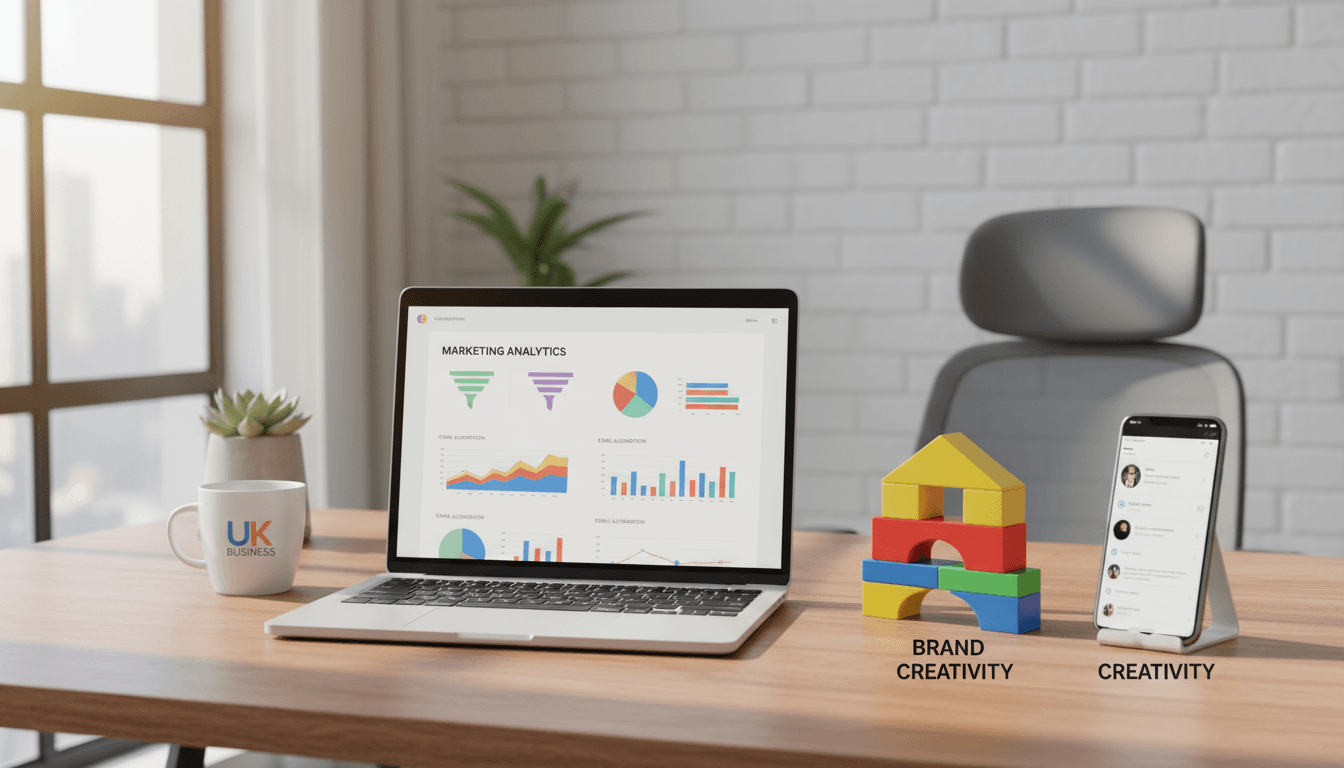
Brand Tech Lessons: Lego’s Move, X’s Decline
Big brands don’t “do tech projects”. They make business decisions that happen to be powered by tech. That sounds obvious, yet it’s where most small businesses go wrong: they buy tools first, then wonder why results don’t follow.
This week’s marketing-tech headlines make the point neatly. Lego is pushing deeper into technology without abandoning what people love about the brand (tactile play). Meanwhile, X continues to slide as a reliable marketing platform, forcing marketers to rethink where attention and trust actually live.
For UK small businesses, this sits right in the middle of the Technology, Innovation & Digital Economy conversation: how you adopt digital tools, protect your brand, and keep customer relationships resilient as platforms and products change.
Lego’s real lesson: tech should protect the core, not replace it
Lego’s advantage has never been “toys”. It’s a system for creativity that parents trust. When a brand like that makes a “bold tech play”, the interesting part isn’t the gadget—it’s the strategy: use technology to extend the experience while keeping the core promise intact.
Here’s the stance I’d take if you run a small business: don’t copy the tech, copy the decision-making. Lego can make films, games and apps because each one ladders back to the same simple outcome: more imaginative play, more time with the brand, more reasons to choose Lego next time.
What this means for your small business digital marketing
A lot of UK SMEs adopt martech like they’re shopping at the duty free: email platform, CRM, chatbot, analytics, social scheduler… then they don’t have the time (or clean data) to use any of it properly.
A better approach is to define your “Lego core” first:
- What do customers trust you for? Speed? Craft? Expertise? Reliability? Taste? Convenience?
- What do you do that competitors don’t? (Be specific, not “better service”.)
- What customer behaviour actually drives profit? Repeat bookings? Bundles? Annual renewals?
Only then do you decide which tech supports it.
A practical framework: the “Extend, Don’t Escape” test
Before you buy or build anything digital, run it through three checks:
- Extend: Does this make the core experience easier, faster, or more valuable?
- Don’t escape: Are you using tech to avoid fixing a basic issue (pricing, positioning, quality, responsiveness)?
- Evidence: What metric will change in 30–60 days if it works?
If you can’t answer #3, it’s a “nice-to-have”, not a marketing priority.
Martech and AI in 2026: the winners are boring (and consistent)
AI isn’t the story anymore. Operationalising AI is the story. The small businesses getting leads in 2026 aren’t the ones posting AI-generated content every day. They’re the ones using AI to do the unglamorous work better: follow-ups, segmentation, landing page testing, and customer service triage.
Here’s a rule that holds up across most sectors: automation beats inspiration when you’re trying to create predictable leads.
Where AI actually helps UK SMEs generate leads
If your campaign goal is leads (not “awareness”), these are the highest-return AI and martech use cases:
- Lead capture that doesn’t waste enquiries: forms that route by service type, budget, and postcode; auto-responses that set expectations and offer next steps.
- Email sequences that feel human: 5–7 email nurture flows that answer common objections, showcase proof, and prompt a call.
- Content repurposing with quality control: turning one strong case study into a blog, three LinkedIn posts, a short video script and an FAQ page—then editing like a professional.
- Call summaries and follow-up prompts: turning meeting notes into next-step emails and CRM updates (this alone saves hours).
What doesn’t work reliably? “AI content at scale” without distribution, differentiation, or conversion paths. You don’t need more posts. You need more qualified actions.
The martech stack most small businesses actually need
Most UK SMEs can run a strong digital marketing strategy with:
- A fast website with clear service pages
- One analytics setup you trust (and actually check)
- Email marketing + basic CRM
- Simple automation (enquiry acknowledgement, nurture, review requests)
- A booking or consultation flow that reduces friction
Add complexity only when you’ve earned it through volume.
Snippet-worthy truth: A “simple stack used daily” outperforms a “perfect stack used monthly”.
X hitting a new low: what to do when a platform becomes unstable
When a platform becomes unpredictable—through policy shifts, brand safety issues, audience volatility, or declining organic reach—small businesses pay twice:
- Your time becomes less valuable (content travels less).
- Your reputation becomes more exposed (association risk rises).
X still has niches where it performs (especially for certain communities and real-time commentary). But for many local and service-based SMEs, it’s no longer a dependable lead engine.
Brand safety isn’t “corporate”—it’s survival
Big brands worry about appearing next to harmful content. Small businesses should worry too, because you don’t have a PR team. One screenshot can become your whole reputation.
If you’re unsure where to focus your social effort in early 2026, I’d take this approach:
- Choose one “relationship platform” where your customers actually spend time (often Instagram, Facebook, LinkedIn, TikTok depending on sector).
- Choose one “search platform” where intent is high (Google Search + Maps, and increasingly YouTube for how-to/service discovery).
- Build an owned channel you control (email list and/or SMS).
The goal is resilience: if one platform tanks, your leads don’t.
A quick 30-day platform risk audit (use this monthly)
Score each channel 1–5 on:
- Reach reliability: Do posts consistently reach the people who follow you?
- Audience fit: Are your buyers actually there, or just other marketers?
- Lead traceability: Can you connect activity to enquiries or sales?
- Reputation risk: Could adjacency or controversy harm your brand?
- Effort-to-return: Does it pay you back for the time?
Anything scoring low on three or more? Reduce investment and redirect to search + email.
What Lego and X together teach about innovation in the digital economy
The UK’s digital economy rewards two kinds of innovation:
- Product innovation that earns attention (Lego extending the play experience in modern formats)
- Distribution innovation that earns trust (moving away from platforms that degrade brand safety and measurement)
For small businesses, innovation doesn’t have to mean building new technology. Often it means:
- Tightening your conversion path (less friction, clearer offers)
- Improving data quality (clean lists, consistent CRM usage)
- Using automation to respond faster than competitors
- Creating proof assets (case studies, reviews, before/after) that reduce buyer risk
Example: how a local service business can “think like Lego”
Say you’re a UK kitchen fitter or accountant.
“Thinking like Lego” could look like:
- A simple interactive quote builder that educates customers on options (and captures lead details)
- A post-enquiry nurture series that shows timelines, common pitfalls, and real client outcomes
- A repeatable content system: one case study per month → repurposed into FAQs, Google Business Profile posts, and a short video
- A review and referral loop triggered 14 days after completion
None of this is flashy. It’s also exactly what creates consistent inbound leads.
The 2026 small business action plan (pick one and start Monday)
If you want leads—not “activity”—commit to one of these for the next four weeks:
- Build one lead magnet that matches buying intent (e.g., pricing guide, checklist, template) and put it behind an email capture.
- Create a 7-email nurture sequence that answers objections and pushes one clear next step.
- Fix your top 3 pages for conversion: homepage, service page, contact/booking page. Improve clarity, proof, speed, and calls-to-action.
- Set up channel resilience: reduce time on unstable platforms, increase focus on Google presence and owned email.
Do one properly. Then add the next.
Another snippet-worthy truth: Tools don’t create demand. Clear offers and consistent follow-up do.
Where this is heading (and what to do next)
The trend line is clear for 2026: brands that stay anchored to what they’re trusted for will use tech to amplify it, and brands that rely too heavily on unstable platforms will keep scrambling.
If you’re running a small business, the opportunity is surprisingly practical. Build an owned audience, tighten your funnel, and use AI where it saves time and improves response speed—not where it pumps out forgettable content.
What would change in your marketing if you treated technology as a way to protect your core promise, rather than chase the next platform?