Compare the best eSIM providers for UK businesses and see how eSIMs support remote teams, travel, security, and smoother marketing operations.
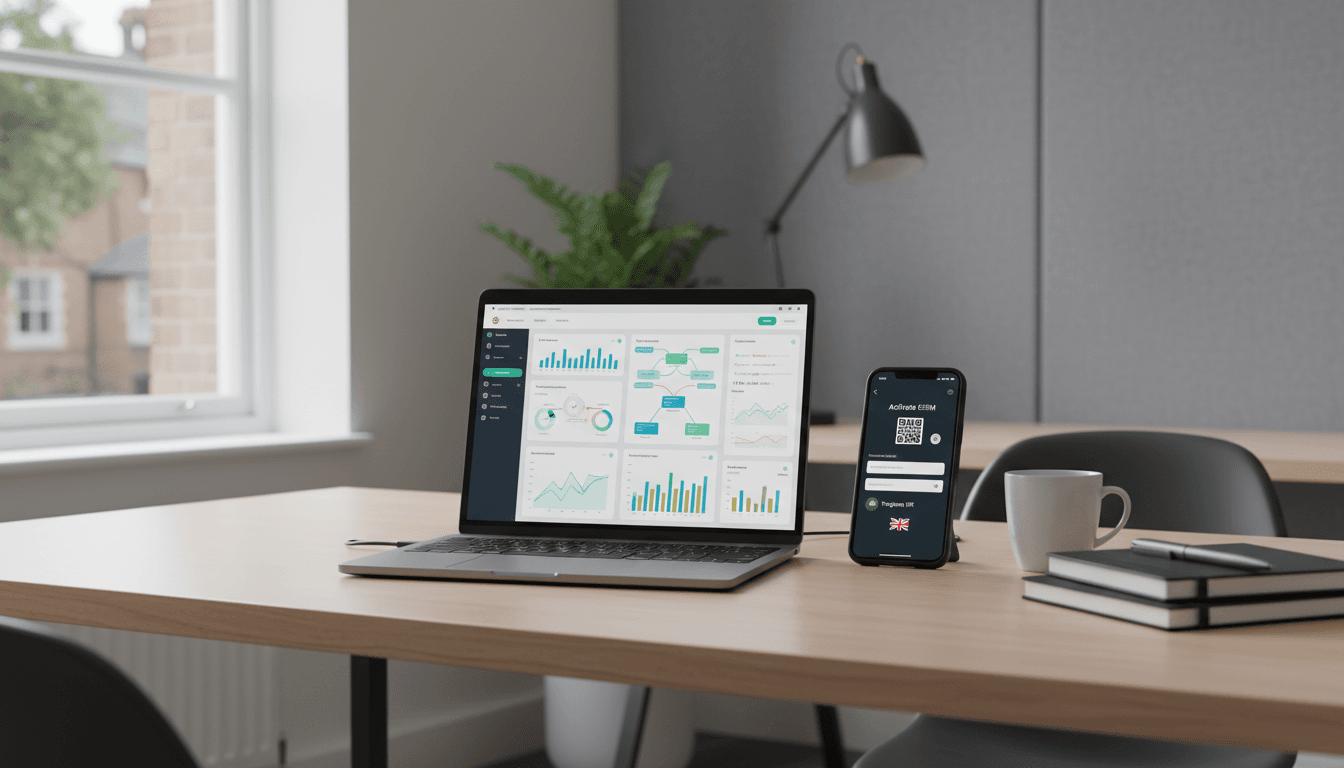
Best eSIM Providers for UK SMEs (2026 Guide)
UK SMEs lose hours every month to tiny operational frictions: a delayed handset swap, a roaming surprise, a new starter waiting days for a SIM to arrive. None of that feels like “strategy” — until it breaks something important, like a sales rep missing a hot lead or your marketing manager losing access to the accounts that publish your scheduled campaigns.
eSIMs fix a big chunk of this. They’re not flashy. They’re practical. And in a year where many small businesses are tightening budgets after the Christmas rush and planning Q1 growth targets, eSIMs are one of those low-effort upgrades that make everything else run smoother.
This post breaks down what an eSIM is, why it matters to UK business communications, and which eSIM providers for UK businesses are worth looking at — with a focus on how better connectivity supports consistent marketing operations and marketing automation.
What an eSIM actually changes for a UK business
An eSIM (embedded SIM) is a digital SIM profile installed on a chip in your phone, tablet, or smartwatch. Instead of waiting for a plastic card, you activate mobile service by scanning a QR code or installing a profile via an app.
Here’s the part that matters for SMEs: eSIMs turn “phone connectivity” into something you can provision and manage quickly. That’s useful whether you’re a 5-person agency, a mobile trades business, or a growing ecommerce team.
The business impact (beyond “no more paperclips”)
Most teams adopt eSIMs for convenience. The bigger win is operational control:
- Faster onboarding: new starters can be connected the same day.
- Cleaner work/personal separation: one device, two numbers (depending on handset/provider setup).
- Less downtime on device upgrades: moving a number can be simpler than waiting for a SIM.
- Better travel economics: use an eSIM for local data abroad while keeping your UK number active.
And yes, it helps marketing too.
If your marketing automation depends on approvals, two-factor logins, or replying fast to inbound enquiries, then reliable mobile connectivity is a revenue-protection tool.
eSIMs and marketing automation: the hidden link
The myth: marketing automation is “just software”.
The reality: it’s software plus all the plumbing that keeps it running — logins, devices, accounts, access, and the ability to respond quickly when something goes wrong.
Here’s how eSIMs support a typical UK SME marketing automation setup.
1) Remote and mobile teams stay reachable
If your team works hybrid (or you rely on contractors), mobile connectivity becomes part of your delivery chain.
- A social post gets flagged and needs quick changes.
- A Meta or Google Ads account triggers a security prompt.
- A CRM workflow sends a high-intent lead alert to a sales rep.
In each case, someone needs to receive a call/text or access mobile data right now, not “when they’re back on Wi‑Fi”. eSIMs make it easier to keep key staff connected, especially when devices change or people travel.
2) Two-factor authentication (2FA) becomes less fragile
Most SMEs now live with constant security prompts — bank logins, ad accounts, email platforms, analytics tools.
If you’ve ever had a number tied to a physical SIM that went missing (or got stuck in an old device), you’ll know the pain: you can lose access to the very systems that run your campaigns.
While eSIMs aren’t a full security strategy on their own, they can reduce failure points:
- No physical SIM to lose or damage
- Ability (with many providers) to disable service quickly
- Easier to maintain a dedicated business number used for 2FA
3) Campaign consistency improves when connectivity is predictable
Marketing automation depends on consistency: scheduled content, follow-up sequences, and quick responses.
When connectivity is patchy (especially for field teams), the knock-on effects show up as:
- slower lead response time
- missed calls from prospects
- delayed approvals on campaigns
- gaps in customer service
If a second SIM/eSIM uses a different network, switching can also help in low coverage areas.
What to check before choosing an eSIM provider
Choosing an eSIM is easy to get wrong because small-print details matter more than brand recognition.
A quick business checklist
Use this to compare providers in minutes.
- Device compatibility: confirm your handsets support eSIM (most recent iPhone and Android models do).
- UK coverage and network partners: especially important for rural work or travel-heavy roles.
- Use case fit:
- UK calls + a professional number?
- Global data for travel?
- Multi-profile management for a team?
- Provisioning speed: QR code by email, dashboard assignment, or app install.
- Admin control: spend caps, central billing, user management.
- Roaming model: bundles vs pay-as-you-go top-ups vs “unlimited data” plans.
- Support expectations: 24/7 support matters if your team travels or works late.
My rule: pick the provider that matches the job. One-size-fits-all usually costs more or creates admin headaches.
Best eSIM providers for UK businesses (and when to use each)
Below are five options commonly recommended for UK SMEs, reframed around real business scenarios.
Virtual Landline — best for a dedicated business number on mobile
Best for: consultants, agencies, trades, and service businesses that want a professional business number without carrying a second handset.
Virtual Landline focuses on giving you a business landline-style number that rings on your mobile via eSIM. The practical win is that you can separate work and personal calls while keeping one device.
Why it’s useful operationally:
- Calls to your business number go to your mobile (and can be distinguished from personal calls)
- Options to use the number on desktop (PC/Mac extension)
- Bundles can include calls back to the UK from parts of the EU and North America (provider-specific)
Indicative price (from the source): £12.95/month (+ £2.45/month for PC/Mac extension)
Cellhire — best for teams that travel or need global coverage
Best for: SMEs with international travel, remote staff, or distributed teams who need reliable connectivity across many countries.
Cellhire positions itself as a global business eSIM specialist with broad country coverage and multi-network partnerships. If you’re issuing eSIMs to staff regularly, the ability to provision quickly (often via QR code) matters.
Why it’s useful operationally:
- Coverage across 191 countries (as stated in the source)
- Access to 40+ mobile networks (as stated in the source)
- Options for voice, data, and multi-profile setups
Pricing: typically bespoke based on usage and destinations.
Holafly — best for predictable travel data (often unlimited)
Best for: SMEs that want simpler budgeting for corporate travel connectivity.
Holafly’s angle is straightforward: in many destinations, they offer unlimited data plans, with centralised management through a business dashboard. If your team relies on heavy data usage (maps, video calls, uploads), predictable spend is the value.
Why it’s useful operationally:
- Business dashboard to manage trips, users, and plans
- Real-time monitoring and budget control
- 24/7 support (noted by the provider)
Pricing: typically customised for business needs.
Saily — best for flexible, contract-free international data
Best for: SMEs that don’t travel constantly but want a reliable option when they do.
Saily focuses on flexible data packages with app-based setup. This suits businesses where travel is occasional and you don’t want long-term contracts.
Why it’s useful operationally:
- App-based install (quick setup for non-technical users)
- Country, regional, or global packages
- Keep your primary SIM active while using the eSIM for data abroad
Pricing: generally depends on destination and data requirements.
Vodafone — best for UK businesses that want a major network
Best for: SMEs that prioritise familiar procurement, UK-based network strength, and standard business contracts.
Vodafone’s eSIM offering is positioned around simpler SIM management and quicker activation. For many SMEs, the comfort factor matters — and major carriers often fit better with existing IT and purchasing policies.
Why it’s useful operationally:
- eSIM activation codes can be issued by email
- Easier device switching without waiting for SIM deliveries (process varies)
- Admin-controlled provisioning for business accounts
Pricing: depends on Vodafone Business plans.
A practical rollout plan for SMEs (no drama, no downtime)
If you’re considering eSIMs for the first time, the rollout matters more than the provider list. Here’s what works in smaller teams.
Step 1: start with two roles
Pick two roles that feel pain most often:
- the person who travels most
- the person who owns key accounts (ads platforms, CRM, email marketing)
Run eSIM on their devices first, document issues, then expand.
Step 2: decide what the “business number” is for
Be explicit. A business number typically ends up serving one (or more) of these:
- inbound sales calls
- customer support line
- WhatsApp Business contact
- 2FA for critical tools
If you mix everything into one number without rules, you’ll recreate the same mess on a digital SIM.
Step 3: connect it to your marketing ops
This is where SMEs get real value. Update your processes so campaigns don’t stall:
- store the business number in your password manager notes
- document who controls 2FA and what happens if they’re off
- set lead alerts to ring the right people (and confirm it works on mobile data)
People also ask (quick answers)
Can I have work and personal numbers on the same phone with an eSIM?
Yes, many phones support dual SIM (one physical SIM + one eSIM, or two eSIMs). You can keep work and personal lines on one device.
Are eSIMs good for small business travel?
Yes. They’re one of the simplest ways to add local or regional data while keeping your UK number active, helping reduce roaming costs and downtime.
Do eSIMs improve security for SMEs?
They reduce certain risks (lost/damaged SIMs) and can be disabled remotely, but you still need strong 2FA practices and device security policies.
Where this fits in the UK’s digital economy push
In the Technology, Innovation & Digital Economy series, I tend to prioritise tools that strengthen the basics: connectivity, security, data flow, and operational resilience.
eSIMs sit right in that lane. They help UK SMEs operate more like modern digital businesses — quick provisioning, better mobility, fewer single points of failure — which is exactly the kind of infrastructure that keeps marketing automation reliable.
If you’re already investing in CRM workflows, email sequences, and scheduled social content, it’s worth asking: is your communications setup strong enough to support it?