Hockerty’s 3D body profile shows how personalisation reduces returns and boosts retention. Practical lessons for UK retail startups building better customer experience.
3D Body Profiles: A Growth Play for Retail Startups
Returns are where plenty of retail growth plans go to die. In UK fashion ecommerce, fit-related returns are a constant tax on margin: extra shipping, restocking, customer support time, and the silent killer—customers who simply don’t come back after one bad experience.
That’s why Hockerty’s newly launched AI-powered 3D Digital Body Profile matters beyond tailoring. It’s a clear signal of where the Technology, Innovation & Digital Economy story is heading: personalisation is shifting from “nice-to-have” marketing to core infrastructure.
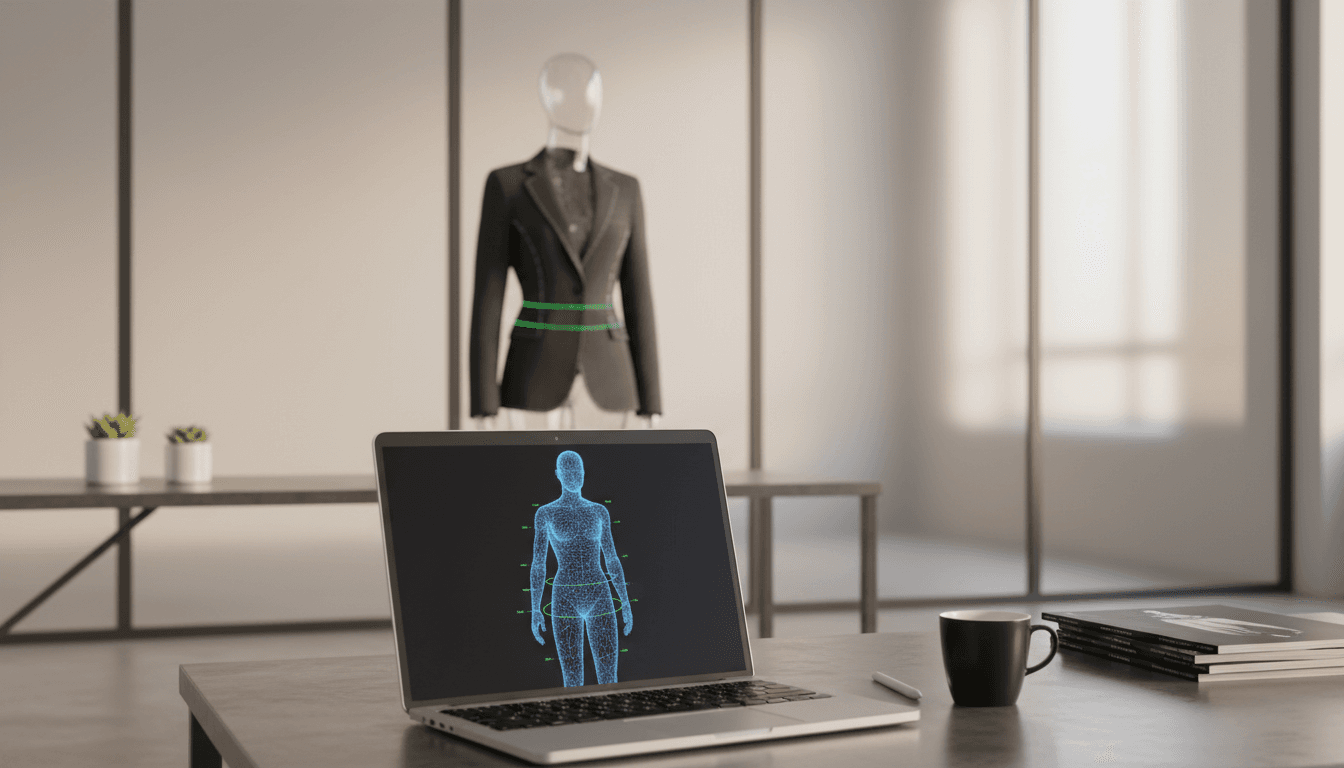
Hockerty’s promise is simple: instead of forcing customers through measuring tapes and confusing guides, it generates a personalised body profile from height, weight, and age, builds a 3D body model, and saves it for future purchases. Less friction. Better fit confidence. Better repeat purchase odds.
What Hockerty’s 3D body profile actually changes
Answer first: Hockerty isn’t just improving sizing—it’s turning “fit” into a reusable digital asset that compounds over time.
Most fashion brands treat sizing as a one-off hurdle in the checkout journey. Hockerty is treating it like a stored customer profile—similar to how fintech stores payment tokens or how travel apps store passport details. That shift is strategic: if a customer’s body profile is saved and trusted, the second order becomes dramatically easier than the first.
In the RSS story, Hockerty describes a system that:
- Creates an estimated set of measurements using height, weight, and age
- Visualises them through a 3D digital body model
- Lets the customer review and adjust
- Saves the profile for repeat orders without starting over
For growth teams, that last line is the headline. Repeat orders are built on “I know this will work.” A reliable fit layer can become the equivalent of a loyalty programme—without discounts.
Why this is a real customer experience upgrade (not a gimmick)
Answer first: It removes the worst moment in made-to-measure ecommerce: the fear of getting measurements wrong.
If you’ve ever tried to buy tailored clothing online, you know the awkward step: measuring yourself is tedious, error-prone, and mildly humiliating if you’re not sure what you’re doing. People abandon. Or they guess. Or they never try again.
Hockerty’s approach reduces that cognitive load. Even if the model isn’t perfect on day one, the experience feels guided and reversible: review, tweak, confirm. That psychological safety is part of the product.
And importantly, the system improves over time through order outcomes and feedback loops (as described in the source). That’s the right design pattern for AI in consumer retail: ship something useful now, then tighten accuracy with data.
Personalised retail is becoming the new default in the UK digital economy
Answer first: In 2026, personalisation wins when it’s operational—not when it’s a clever campaign.
UK startups have been strong at storytelling-led marketing. The next step is stronger: building product-level personalisation that changes unit economics. Hockerty’s move is relevant because it targets a cost centre (returns/remakes) and a growth lever (repeat purchase confidence) at the same time.
This is the broader theme we keep seeing across the Technology, Innovation & Digital Economy series:
- AI is moving from “content generation” to customer experience systems
- The strongest moats are being built around proprietary data loops
- Brands win by making the digital experience feel more human, not more robotic
Hockerty reinforces that point by pairing body profiling with other personalisation tools mentioned in the article:
- A skin tone configurator to preview fabrics more realistically
- SOFIA, an AI-based style assistant that nudges decisions on fit, fabric, and styling
I like this combination because it addresses two different purchase risks:
- Will it fit? (body profile)
- Will it look right on me? (skin tone preview + styling assistant)
That’s not fluff. That’s conversion strategy.
The contrarian truth: “More choices” usually hurts conversion
Answer first: Configurators increase sales only when they also reduce uncertainty.
A common ecommerce myth is that customers want infinite options. They don’t. They want confidence. Tailoring platforms naturally offer many choices—lapels, linings, buttons, fabrics—so if you don’t balance that with guidance, you get decision paralysis.
Hockerty’s tooling is a smart counterweight: it makes the complex feel manageable. For UK founders building in retail tech, the lesson is straightforward:
Personalisation works when it narrows decisions and increases certainty, not when it adds more menus.
What UK startups can copy from Hockerty (without building 3D models)
Answer first: You can steal the strategy: create a persistent customer profile that reduces friction on every repeat purchase.
Not every startup sells suits. Not every team can build 3D body models. But most consumer businesses can build a profile layer that turns first-time effort into future convenience.
Here are practical patterns I’ve seen work, inspired by what Hockerty is doing:
1) Build a “saved profile” that customers actually want
Answer first: Make the profile feel like a benefit, not a form.
If you ask for data, customers assume you’re going to spam them. If you save them time next time, they’ll opt in.
Examples of profile layers:
- Skincare: saved skin concerns + ingredient sensitivities
- Fitness: saved goals + injuries + preferred workout length
- DTC food: saved dietary preferences + household size
- Furniture: saved room dimensions + style preferences
The key is persistence: customers should feel the payoff within 30 days.
2) Create a feedback loop that improves outcomes
Answer first: Treat every order as training data—ethically, transparently, and with customer control.
Hockerty says the system learns from orders and feedback. That’s the flywheel.
A simple version for startups:
- After purchase: “Did this match expectations?”
- Capture a structured answer (size too small/too large, colour off, delivery too slow)
- Feed it into recommendations and FAQs
- Show the customer the benefit (“We’ve updated your preferences”)
Customers don’t mind helping you improve if they can see you’re listening.
3) Market the risk reduction, not the technology
Answer first: Customers buy fewer returns, fewer mistakes, and fewer awkward moments—not “AI”.
Hockerty’s product is AI-based, but the value proposition is emotional and practical: confidence, ease, and a better outcome.
If you’re a UK startup trying to generate leads, frame innovations as:
- “Fewer wrong purchases”
- “Less time choosing”
- “More predictable results”
Tech is the mechanism. Outcomes are the message.
The growth metrics this kind of product shift can improve
Answer first: A fit/personalisation layer can lift conversion, retention, and margin at the same time.
When startups talk about growth, they often jump straight to CAC and channels. But Hockerty’s story is a reminder that product changes can be growth tactics.
If you’re building a personalised retail experience, these are the metrics worth watching:
- Conversion rate (CVR): fit confidence reduces abandonment
- Return rate: fewer sizing errors reduce reverse logistics cost
- Repeat purchase rate: saved profiles reduce friction on order two and three
- Customer support tickets per order: fewer “what size am I?” conversations
- Time to purchase: less decision effort improves checkout velocity
A January launch is also well-timed. In the UK, early-year shopping often includes wardrobe refreshes, new-job starts, and event planning for spring calendars. If the product reduces anxiety, it can catch those seasonal intent spikes.
A caution for founders: accuracy isn’t the only trust factor
Answer first: Even a strong model fails if customers don’t understand or control it.
Body profiling is sensitive. Some people will worry about privacy, judgement, or “being reduced to numbers.” The source emphasises customer control—review and adjust—which is essential.
If you build personalisation systems, borrow these trust builders:
- Clear language (avoid jargon)
- Explicit control (edit, delete, reset)
- Transparent benefits (“This saves you time next order”)
- Minimal data collection (only what’s required)
In regulated and privacy-conscious markets like the UK, trust is a growth channel.
People also ask: practical questions about 3D body profiling
Is a 3D digital body profile the same as body scanning?
Answer first: Not necessarily—Hockerty’s approach, as described, estimates measurements from inputs rather than requiring a phone-based scan.
Body scanning usually implies using cameras or sensors to capture shape directly. Hockerty’s version uses height, weight, and age to generate an estimated model, with user adjustment to refine it.
Will this reduce fashion ecommerce returns?
Answer first: It can, if customers trust it and if the production process consistently matches the profile.
Returns drop when expectation matches reality. Profiling helps, but it must be paired with reliable manufacturing tolerances, clear fit language (slim/regular), and post-purchase feedback loops.
What’s the startup advantage of personalisation tools?
Answer first: Personalisation can create a compounding advantage because the product improves as the customer stays.
That’s retention by design. And it’s harder for competitors to copy than a discount.
Where this goes next for UK retail tech
Hockerty’s launch is a clean case study in how digital-first brands can make personalisation feel practical. A saved 3D body profile isn’t just a feature—it’s a bet that the future of ecommerce is identity-aware: your size, your preferences, your context.
For founders and growth teams, I’d translate the lesson like this: build one thing that makes the second purchase easier than the first. If you do that, you’re not just acquiring customers—you’re stacking the odds of keeping them.
If you’re working on a retail or consumer startup in the UK and you’re thinking about personalisation, ask yourself: what’s your version of a “digital body profile”? What reusable customer asset could you store today that makes every future purchase faster, more confident, and less wasteful?