Learn how creator-led campaigns like Under Armour’s Baselayer launch translate into a practical UK startup playbook for awareness and lead generation.
Creator-Led Launches: A UK Startup Playbook
Most startups treat influencer marketing like a media buy: pick a few creators, ship product, post discount code, hope for the best. Big brands are doing something else entirely.
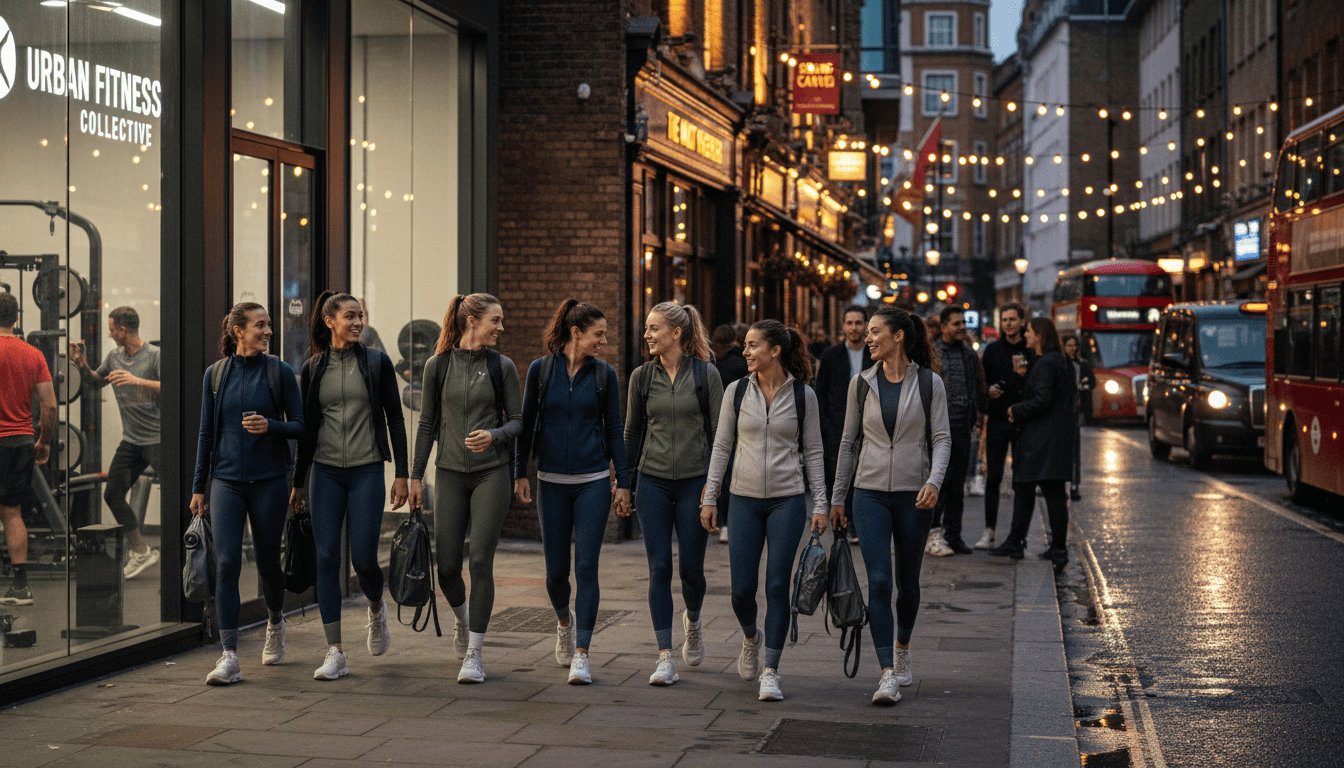
Under Armour’s latest Baselayer push (run across all four corners of London) is a useful case study because it blends creator-led content with real-world moments and a clear narrative arc: sport to party. That’s not just branding fluff. It’s a practical way to widen the addressable audience without changing the product.
This post is part of the Startup Marketing United Kingdom series, so I’m going to translate what’s happening here into a repeatable launch system a UK startup can run—without Under Armour budgets.
Why creator-led campaigns are beating polished brand ads
Creator-led campaigns work because they borrow trust.
People don’t follow creators for product specs. They follow them for taste, identity, routine, and recommendations that feel earned. When you let creators lead the story, you’re not “placing an ad”—you’re entering a context your audience already likes.
A brand-led ad usually answers: “What is it?”
A creator-led story answers: “Where does this fit in my life?”
That difference matters in 2026 because:
- Paid social CPMs remain volatile and competition is brutal, especially in the UK’s consumer categories.
- Audiences are more sensitive to anything that looks like an ad (even if they still buy from ads).
- Content formats keep shifting, but creator distribution is stable: creators keep their audience even when platforms change what they reward.
Snippet-worthy truth: Creators aren’t a channel. They’re a packaged audience plus a production team with a point of view.
For a startup chasing leads (not just likes), the goal isn’t “go viral.” It’s to build a campaign that reliably produces:
- Attention in the right niche
- Credibility you didn’t have yesterday
- A reason to act now
The Under Armour lesson: one product, two identities
The most interesting part of the Under Armour Baselayer activity isn’t the party. It’s the positioning.
Baselayer products are normally framed around performance: training, cold weather, sweating, wicking, compression. Under Armour kept the “sport” foundation but added a lifestyle bridge: from sport to nightlife.
That move does three things startups should copy:
1) Expands the use-case without expanding the SKU
Startups often jump to new products too early. A better move is to broaden who the product is for and when it’s used.
If you sell a functional product—nutrition, skincare, athleisure, wearable tech, even B2B productivity—your fastest growth often comes from new situations, not new features.
Examples of “use-case expansion” you can test:
- A hydration brand: “work desk → gym bag”
- A meal prep startup: “Monday productivity → Friday social plans”
- A finance app: “salary day → holiday planning”
2) Makes the content easier to film
Creators need scenes. “I wore it at the gym” is one scene. “I wore it all day, then out” is a story.
You’re not only selling the product. You’re giving creators a script they can adapt.
3) Builds lifestyle branding without pretending you’re Nike
UK startups regularly overreach on “aspirational brand films” and end up with content that looks expensive and feels empty.
Lifestyle branding works when it’s specific and local. A London-based activation across multiple neighbourhoods is inherently more believable than a vague “global lifestyle” montage.
How to build a creator-led launch (that actually generates leads)
A creator-led campaign only works if you design it backwards from the business outcome.
If the campaign goal is LEADS, your creator plan has to answer: “What happens after someone likes the video?”
Here’s the system I’ve found works for UK startups.
Step 1: Write one campaign sentence you can enforce
If you can’t summarise the story in one sentence, creators will invent their own—and you’ll end up with inconsistent messaging.
Use this format:
“From [context A] to [context B], this product helps me [core benefit].”
Under Armour’s implied version is close to:
“From training to going out, Baselayer keeps the fit sharp and the comfort high.”
Your startup version should be concrete. Not “feel confident.” More like:
- “From commute to client meeting, this bag keeps everything organised and looks clean.”
- “From 9am to last call, these insoles keep my feet from hurting.”
Step 2: Pick creators based on moments, not follower counts
Most companies get creator selection wrong by focusing on audience size.
What you want is moment fit: does this creator naturally film the scenes your product needs?
A practical creator scoring checklist:
- Scene access: Do they regularly film in gyms, studios, offices, events, kitchens, or outdoors?
- Audience intent: Do comments show people asking for recommendations?
- Content cadence: Can they post consistently for 4–6 weeks?
- Brand safety: Do they have a track record of controversy or misleading claims?
- UK relevance: Can they ground the story in UK places, pricing, and norms?
For lead-gen, I’d rather have 8 micro-creators (10k–80k) with consistent posting than one big creator whose audience is there for entertainment only.
Step 3: Design a “creator kit” that doesn’t kill creativity
Creators need structure, not scripts.
Build a kit with:
- Mandatory message (one sentence, above)
- 3 proof points (comfort, durability, speed, results, whatever is real)
- 2 demo actions (show the app screen, show the before/after, show packing it)
- 1 taboo list (claims they can’t make; words you don’t want)
- Lead CTA options (quiz, waitlist, sample, consultation)
This keeps content coherent without turning it into corporate content.
Step 4: Create a lead magnet that matches the story
If your creative story is “sport to party,” your CTA can’t be “book a call” unless you’re selling B2B.
Match the action to the vibe:
- Consumer: limited drop, VIP list, early access, bundle offer, size/fit quiz, starter pack
- B2B: template, calculator, audit, benchmark report, interactive demo
Then make sure the landing page has:
- One primary action (no menu distractions)
- Social proof (creator content snippets, not brand testimonials)
- UK-specific reassurance (delivery times, returns, VAT clarity)
Snippet-worthy truth: A creator-led campaign fails when the content is strong but the next click is boring.
A practical UK launch timeline (4 weeks, low waste)
You don’t need a city-wide activation to borrow the structure.
Here’s a lean timeline for a UK startup.
Week 1: Seed + brief + landing page
- Recruit 6–12 creators
- Finalise the one-sentence campaign line
- Build the lead magnet landing page
- Send product and confirm posting windows
Week 2: “Context A” content
Ask creators to film the first half of the story (training / work / routine). Aim for:
- 1 short-form video each
- 3–5 story frames (behind-the-scenes performs well)
Run light paid amplification on the top 20% performers (don’t boost everything).
Week 3: “Transition” content
This is where the story becomes memorable.
Examples:
- “Get ready with me” that includes the product
- Outfit change / location change / schedule change
- A constraint: “only packed one thing” / “one bag day”
Week 4: “Context B” + offer
Now you cash in attention with a reason to act:
- Early access ends Friday
- Waitlist closes at 5pm
- Consultation spots capped
Creators should post the strongest CTA content in the final 5–7 days.
What to measure (if you care about leads, not vanity metrics)
A creator-led launch needs a measurement stack that doesn’t lie to you.
Track in three layers:
1) Content performance (top-of-funnel)
- 3-second views and average watch time
- Saves and shares (stronger signal than likes)
- Comment intent (“where can I buy?” “link?”)
2) Lead performance (mid-funnel)
- Landing page conversion rate (target: 15–35% for a simple waitlist with strong message match)
- Cost per lead (set a ceiling you can afford)
- Lead quality proxy (email domain quality, quiz completion, booking completion)
3) Sales/activation (downstream)
Even if sales aren’t the primary KPI, don’t ignore them.
- % of leads who activate within 7/14/30 days
- Revenue per lead (cohort-based)
- Repeat purchase or retention where relevant
If you do one thing: tag each creator with a unique UTM and a unique landing page block (even just “as seen with X creator”). It improves conversion because it maintains continuity.
Common mistakes UK startups make with creator-led campaigns
Creator-led doesn’t mean “hands off.” It means “co-authored.”
Here’s what I see go wrong most often:
- No narrative arc: just a product shot and a code.
- Too many creators, too little depth: one post each isn’t a campaign.
- Misaligned CTA: asking for a purchase when the content created curiosity, not intent.
- Over-briefing: creators deliver stiff content that performs like an ad.
- Under-briefing: creators deliver entertaining content that doesn’t mention the benefit clearly.
If you remember nothing else: your job is to design the story and the funnel, then let creators design the scenes.
How to steal the “sports to party” idea for your own brand
You don’t need nightlife. You need a before-and-after identity shift.
Try these proven story bridges:
- Solo → social (work alone, then meet friends)
- Planning → doing (idea, then action)
- First-time → confident (nervous, then capable)
- Messy → organised (chaos, then control)
- Winter → spring reset (very relevant in the UK right now)
Early February is also a smart window for this kind of campaign: New Year motivation is fading, people still want self-improvement, and UK weather makes comfort/function narratives land well.
The reality? It’s simpler than you think. Build one story that matches real life, let creators tell it in their voice, and make the next click feel like a natural continuation.
Where does this leave you for the next launch in your Startup Marketing United Kingdom plan? If your product can live in more than one context, you’ve got a creator-led campaign waiting to happen—without needing a giant budget.
What’s the two-scene story your product could own this quarter: “from ___ to ___”?