UK SMEs are repurposing shipping containers for fast, flexible space. See the key use cases, compliance checklist, and the marketing automation parallel.
Shipping Containers: Fast, Flexible Space for UK SMEs
UK self-storage space grew 7.2% in 2024, and container-based sites now make up a big chunk of the market. That’s not a random property stat—it’s a signal. Space is tight, leases are long, and small firms are doing what they’ve always done: finding workable, affordable alternatives that keep them moving.
Repurposed shipping containers are part of a bigger story in our Housing & Infrastructure Development series: when land, planning, and capital are constrained, the winners are the organisations that build flexible infrastructure—physical and digital. Containers are the physical version. Marketing automation is the digital twin: a way to add capacity without locking yourself into permanent overhead.
This post breaks down how UK SMEs are using containers (with real numbers), what to check before you commit, and how to apply the same “repurpose for growth” mindset to your marketing operations.
Why container space is booming in the UK
Answer first: Container units are growing because they solve three painful SME problems at once—cost, speed, and flexibility.
According to industry reporting referenced in the source article, the UK has around 2,915 self-storage sites, and 1,135 are predominantly container-based—that’s over a third of the sector. Even more telling: 24% of self-storage users say they run a business from their unit.
That shift matters for infrastructure planning and local economic resilience. When SMEs can add storage and workspace without major builds, they can keep trading through:
- industrial land pressure and rising rents
- short-term projects and mobile work
- seasonal peaks (especially relevant in January, when many firms are clearing Christmas stock, resetting suppliers, and planning spring inventory)
The bigger theme: UK businesses are building “modular capacity”. Not just in property—but in staffing, supply chains, and increasingly, systems.
3 practical ways UK SMEs are repurposing shipping containers
Answer first: The most common SME uses are seasonal warehousing, on-site secure storage, and project-based workspaces.
1) Overspill warehousing for seasonal peaks
The logic is simple: don’t sign a long warehouse lease to solve a short spike.
Retailers, e-commerce sellers, wholesalers, and even B2B suppliers see sudden demand swings around:
- Black Friday and Christmas
- spring refresh and home-and-garden season
- back-to-school
A container gives you “just enough” extra capacity, fast. It’s also easier to budget because the unit is a clear line item.
Marketing automation parallel: This is exactly how good automation should feel—extra capacity at peak times.
For example, if your busy season is spring installations or summer events, you can pre-build automated flows that handle the surge:
- quote follow-ups
- appointment reminders
- abandoned enquiry nudges
- post-purchase review requests
You’re not hiring a whole new team for a six-week rush. You’re adding modular support.
2) On-site secure stores for tools, equipment, and stock
Trades, engineering firms, facilities teams, and small manufacturers often have one shared problem: valuable stuff, not enough space, and too many people needing access.
A container on-site becomes:
- a tool room
- a spares store
- a PPE depot
- a controlled stock overflow point
The operational win isn’t just “more space”. It’s less downtime. When the crew can grab what they need immediately, jobs finish faster and you reduce the quiet cost of “someone’s gone to pick something up”.
Marketing automation parallel: In most SMEs, marketing assets are the “tools” people waste time searching for:
- latest brochure
- up-to-date case study
- correct pricing PDF
- the email template that actually works
A well-implemented CRM with automation turns those into standard kit: always available, always current, and triggered at the right moment.
3) Pop-up and project-based workspaces
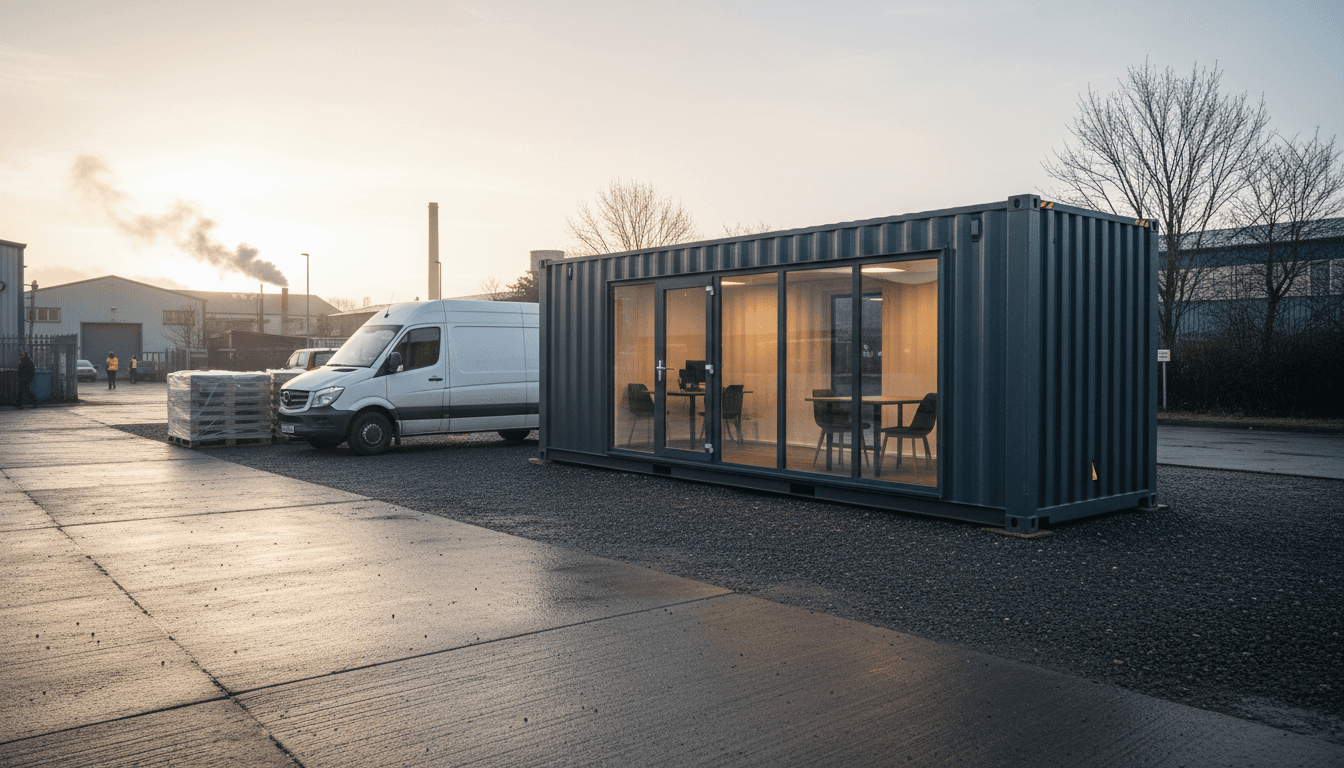
Containers aren’t only storage—they can be adapted as:
- temporary offices
- mobile workshops
- training rooms
- welfare facilities
The key advantage is relocation. If your work moves, the space can move too.
The source article notes that the UK’s mid-sized firms are forecast to contribute £745 billion to UK GVA by 2028 and support 9.9 million jobs. Whether or not you’re “mid-sized,” the point is relevant: growing firms win by staying agile.
Infrastructure point: This is where containers intersect with housing and infrastructure development thinking. As towns expand and regeneration projects accelerate, there’s rising demand for temporary, rapid-deployment spaces during construction phases—site offices, secure storage, and staging areas.
What containers really offer: speed, predictability, and optionality
Answer first: Containers work because they reduce commitments while increasing capability.
Here’s how SMEs typically benefit.
Fast deployment (days, not months)
A conventional build-out takes planning, contractors, and time. A container can often be delivered and positioned quickly.
If you’re scaling, speed matters more than most owners admit. I’ve found the biggest cost isn’t “rent”—it’s delay. Missed sales, missed project deadlines, missed opportunities.
Predictable costs (hire vs buy)
Containers can be purchased or hired.
- Hire suits cashflow-sensitive firms and short-term demand.
- Buy suits longer-term storage needs and businesses that want an asset they control.
The container decision is basically a question of time horizon.
Relocatable infrastructure
If you move premises, expand to a second site, or take on remote contracts, the container remains useful. That “optionality” is hard to price—and very easy to appreciate when your lease ends or your work relocates.
Before you order a container: the SME checklist that avoids expensive mistakes
Answer first: Most container disappointments come from skipping basics—security, condition, siting, and compliance.
Security: don’t stop at “it has a lock”
Containers are robust, but security is a system, not a product.
Common features include:
- welded lock boxes
- anti-tamper padlocks
- solid steel doors
- internal locking
- CCTV integration
Practical tip: If you’re storing high-value tools or stock, budget for proper lighting and sightlines as well as locks. A hidden container is convenient—until it isn’t.
Condition and suitability: “wind and watertight” isn’t a buzzword
Match the container to what you’re storing.
- Wind and watertight: suitable for many general goods.
- Refurbished/new: better for sensitive stock or frequent access.
- Converted units: best for office/welfare uses, especially where insulation and ventilation are critical.
Planning and compliance: ask early, not after delivery
Planning can be straightforward, but it’s not guaranteed.
If your container is:
- installed long-term
- one of multiple units
- used as an office/workspace (not just storage)
…you should speak to your local planning authority early.
Infrastructure lens: This is a micro-version of the planning trade-offs seen across housing and transport infrastructure—speed vs permanence, flexibility vs visual impact, short-term needs vs long-term place-making.
Case study mindset: containers as a platform for innovation
Answer first: The best container use cases aren’t “cheap storage”—they’re new capability.
The source includes a strong example: Allye Energy used a container as the base for AI-powered energy storage units, built from EV battery packs from written-off vehicles.
- Their original 8ft used container cost ~£800.
- They sourced the prototype via Facebook Marketplace.
I like this case because it shows the real value: a container can be a prototype platform. It’s robust, modifiable, and good enough to ship an early version without overbuilding the first iteration.
That approach translates directly to business systems: build the marketing version you need now, prove it works, then improve it.
The “repurpose for growth” mindset (and how to apply it to marketing automation)
Answer first: SMEs adopt containers for one reason: they refuse to let constraints dictate growth. That’s the same reason marketing automation works.
Most SMEs don’t fail at marketing because they lack ideas. They fail because execution is inconsistent:
- leads aren’t followed up fast enough
- enquiries come in through multiple channels and go missing
- quotes are sent but not chased
- customers buy once and never hear from you again
That’s operational waste—just in a different department.
Here’s a simple, container-inspired way to think about automation:
Build “modular marketing units”
Start with small systems that add capacity without a massive rebuild:
- Lead capture + routing: every web form, call, and email ends up in one place.
- Speed-to-lead automation: instant acknowledgement + internal alert.
- Quote follow-up sequence: timed nudges over 7–14 days.
- Post-job review request: automatic 24–72 hours after completion.
- Reorder/reactivation: reminders based on typical purchase cycles.
Just like a container, each module should be:
- fast to deploy
- easy to move/change
- predictable in cost
A useful rule: if a marketing task happens more than twice a week, it deserves a workflow.
Where this goes next: flexible infrastructure is becoming the default
Repurposed shipping containers are showing up across the UK because SMEs need room to grow without betting the business on property commitments. In the context of housing and infrastructure development, they also signal something bigger: the economy is leaning toward modular, temporary, rapidly deployable space alongside traditional builds.
If you’re considering a container for storage or workspace, treat it as an infrastructure decision: define the job it must do, confirm compliance early, and pick the right condition for the contents. If you’re considering marketing automation, use the same discipline—start with the bottleneck that’s costing you time or revenue, then add capacity in modules.
The forward-looking question is simple: when demand spikes in your business, do you have a way to add capacity in days—not months?
Source article: https://smallbusiness.co.uk/the-new-life-of-shipping-containers-how-businesses-across-the-uk-are-repurposing-containers-2600319/