A $3.4M roundabout on NY Route 29 improves safety, cuts delays, and supports growth near Saratoga Springs. See what it teaches modern infrastructure planning.
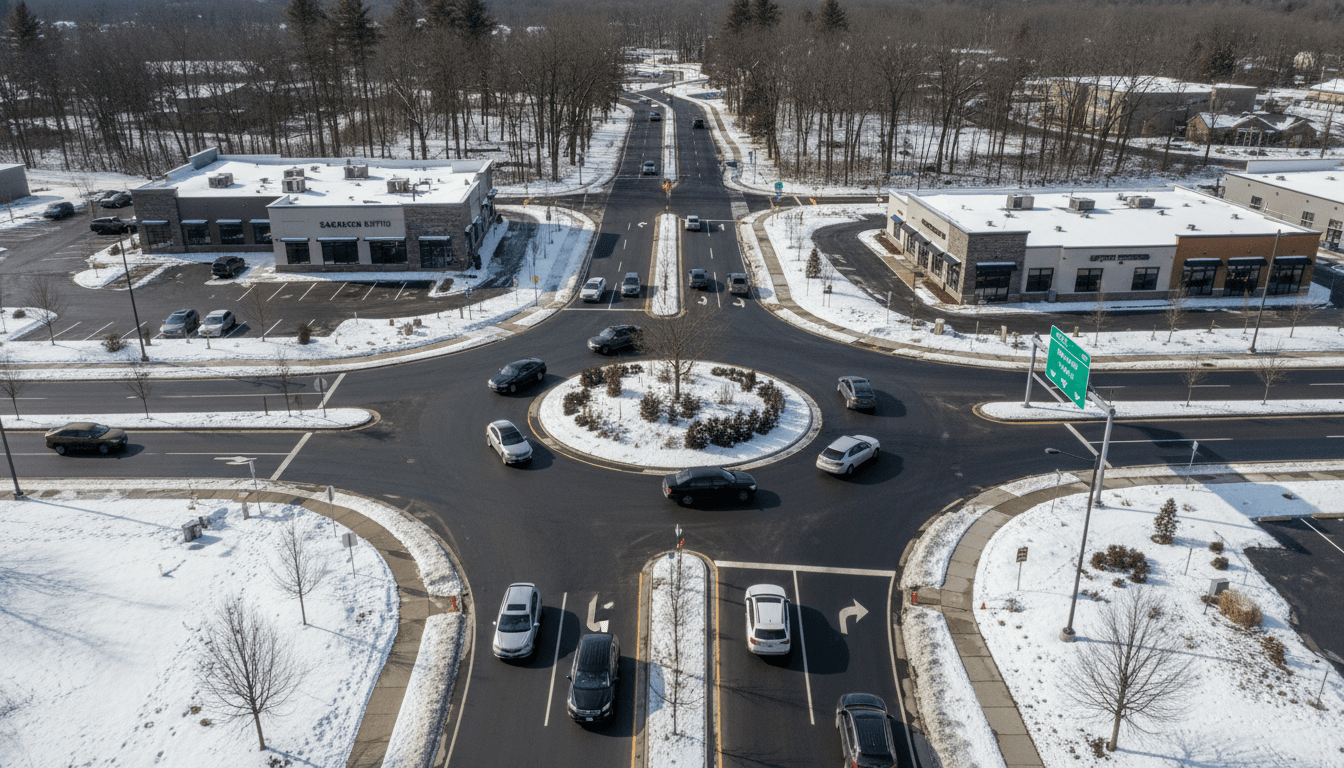
Saratoga’s New Roundabout: Safer, Faster Route 29
A $3.4 million intersection rebuild doesn’t sound like the kind of thing that changes daily life—until you’re the one sitting in a left-turn queue on a busy corridor into Saratoga Springs.
On December 9, 2025, New York State Department of Transportation announced the completion of a single-lane roundabout at a former four-way, signalized intersection along State Route 29 (Washington Street) in the Town of Milton—where Rowland Street and Petrified Sea Gardens Road meet. It’s less than three miles from downtown Saratoga Springs, and it serves traffic headed to major employers, residential neighborhoods, the county airport, and seasonal destinations like the Saratoga Race Course.
For our Housing & Infrastructure Development series, this project is a clean example of what “modernizing transport networks” looks like when it’s done with real-world constraints in mind: keep people moving, reduce crash severity, and support local economic activity—all without turning a growing community into a permanent construction zone.
Why this intersection mattered (and why it was due for change)
This intersection sits on a corridor that does a lot of work. Route 29 is a major east–west artery linking the Town of Milton to Saratoga Springs’ downtown, jobs, and tourism economy. Rowland Street is a north–south connector that serves residential neighborhoods and access toward the Saratoga County Airport.
The practical problem was predictable: growth plus seasonal surges. Milton’s town supervisor put it plainly—traffic volume has surged with a “growth explosion.” When an area adds housing and expands employment, the transportation network either adapts or becomes the bottleneck.
Here’s the stance I’ll take: you can’t build your way out of congestion with lane-widening alone—not in established communities where right-of-way is limited and where bigger roads can make streets harder to cross and neighborhoods noisier. Fixing the intersection geometry is often the smarter move.
A roundabout is an intersection capacity project—without the sprawl
People sometimes talk about roundabouts as a “traffic calming” feature (true), but that undersells them. In many contexts, a modern roundabout is also a throughput tool because it:
- Keeps cars moving via yield control rather than stop-and-go cycles
- Reduces long red-light delays during off-peak times
- Handles directional imbalances better than a fixed signal plan
For a corridor that needs to serve both weekday commuters and summer tourism peaks, that flexibility matters.
What a single-lane roundabout changes—safety, flow, and daily time lost
The simplest way to explain the value: roundabouts trade high-speed conflict for low-speed merging. That’s why they’re widely used in modern roadway design.
At a traditional four-way signalized intersection, the most dangerous crash types are usually right-angle (T-bone) and head-on conflicts. A properly designed roundabout essentially removes those.
Safety: fewer severe crashes by design
The safety win isn’t just “fewer crashes.” It’s less severe crashes.
- Vehicles enter at lower speeds.
- The angle of impact changes—more glancing blows, fewer direct perpendicular hits.
- Pedestrian crossings are typically shorter and staged (depending on design), which can reduce exposure time.
The result is a road environment that’s more forgiving—an important concept in transportation safety. People make mistakes. The infrastructure should be designed so those mistakes aren’t fatal.
Congestion: fewer full stops and less idling
NYSDOT highlighted reduced idling and improved flow. That’s not a small thing during winter, either.
In December—especially in upstate New York—idling at intersections has a hidden cost:
- Cold starts plus extended idle time increase fuel burn
- Stop-and-go driving increases brake and tire wear
- Queue spillback can block driveways and side streets, increasing local frustration and risk
A single-lane roundabout doesn’t eliminate congestion in every scenario, but it often prevents the worst kind: long, static queues caused by signal timing that doesn’t match demand.
Reliability is the real quality-of-life upgrade
Most people don’t care about “average travel time.” They care about whether they’ll be late.
Intersection improvements like this are reliability projects:
- Fewer surprise backups
- Smoother merging behavior
- Less sensitivity to a single driver missing a green light
Reliability is what makes a corridor feel “easy,” which is exactly what fast-growing places need as housing development expands outward.
Why this matters for housing growth and local economic development
The fastest way to stall housing momentum is to ignore the roads that connect new homes to jobs, schools, and services. People will tolerate a longer commute sometimes. They won’t tolerate a commute that’s unpredictable.
This is where transportation and housing stop being separate conversations.
Roundabouts support “more homes, same chaos” becoming “more homes, better flow”
When a town grows (like Milton), the road network sees:
- More peak-hour trips (work/school)
- More mid-day trips (remote workers, errands)
- More weekend surges (events, recreation)
A roundabout can absorb a surprising amount of that variability because it serves traffic continuously rather than batching vehicles into green phases.
That’s one reason communities that want to add housing units without constant road widening often invest in intersection modernization first.
Tourism and seasonal peaks: Saratoga’s stress test
Saratoga Springs isn’t just another downtown. It’s a destination, and destination traffic is spiky.
Commissioner Marie Therese Dominguez pointed to the Saratoga Race Course and Saratoga Performing Arts Center—two demand generators that can put heavy pressure on nearby corridors. When a single intersection becomes the “gate,” it can ripple backups across a whole area.
NYSDOT also noted they minimized disruptions during construction to avoid impacts on summer visitors and the start of race season. That’s an underrated competency in infrastructure delivery: phasing and traffic management that protects local businesses.
The funding and delivery lesson: small projects, big leverage
This project was announced as $3.4 million, including $1 million in federal funding referenced by Senator Charles E. Schumer and tied to the Bipartisan Infrastructure & Jobs Law.
Here’s the takeaway for communities watching from the sidelines: not every meaningful transportation upgrade is a mega-project.
A single intersection can be the constraint that makes a corridor feel broken. Fix the constraint and you often get benefits far beyond the project limits:
- Shorter queues on adjacent approaches
- Fewer “rat runs” through neighborhood streets
- Better access to commercial districts
- Improved emergency response travel time consistency
Roundabouts also reduce ongoing operating costs
Signals aren’t “free” after installation.
A roundabout typically avoids the need for electric-powered traffic signals at that location, which can mean:
- Less equipment to maintain
- Fewer signal outages to manage
- Lower long-run utility and maintenance costs
Over a decade-plus horizon, those savings add up—and they matter when agencies are balancing road maintenance backlogs.
How to judge whether a roundabout is the right tool (and how to use it safely)
Roundabouts aren’t a universal solution. They work best when they match the context and are designed correctly.
When a roundabout tends to make sense
A modern roundabout is often a strong fit when:
- You have recurring delay at a multi-leg intersection
- Crash history shows angle collisions and turning conflicts
- Speed management is needed near neighborhoods
- Peak demand is high but fluctuates (tourist corridors, event traffic)
When a roundabout needs extra care—or a different approach
Roundabouts require careful design (and sometimes alternatives) when:
- Heavy truck volumes demand larger turning radii
- Multiple closely spaced driveways complicate access
- Pedestrian volumes are extremely high and require special crossing treatments
The Milton project uses a single-lane roundabout, which is often the easiest type for drivers to learn and the most predictable operationally.
A practical “drive it right” checklist
If you’re still adjusting to roundabouts, this is what actually works:
- Slow down early—your decision point comes faster than you think.
- Yield to traffic already in the circle (not the other way around).
- Don’t stop in the roundabout unless you must avoid a crash.
- Use your signal when exiting—it helps everyone waiting.
- Pick your gap, commit, and go—hesitation creates confusion.
I’ve found the biggest improvement comes when everyone treats it like a merge, not a four-way stop.
What this project signals for the Capital Region’s next decade
The Milton roundabout is a small but telling sign of where infrastructure is headed: targeted upgrades that improve safety and mobility without rebuilding an entire corridor from scratch. That’s the kind of approach growing regions need—especially where housing demand pushes development outward.
If your community is planning new residential neighborhoods, expanding an airport access route, or trying to keep a tourism economy moving during peak season, the bigger question isn’t “Do we need a roundabout?” It’s this:
Which single bottleneck intersection is quietly taxing every commute, every delivery, and every emergency response run?
For agencies, developers, and local leaders, the next step is straightforward: identify the worst-performing intersections, model realistic solutions, and prioritize the ones that deliver safety plus reliability—not just a slightly faster drive on a good day.
If the Route 29 experience holds, you don’t need a massive project to make a corridor feel new. You need the right fix in the right place.