Trainline’s King’s Cross pop-up shows how startups can turn commuter moments into measurable leads with smart experiential marketing and creator partnerships.
Pop-up Marketing Lessons from Trainline for Startups
Most startups think brand activations are a “big brand” luxury. The reality is simpler: a well-designed pop-up can do more for awareness and lead generation than months of polite social posts—especially in January, when people are back commuting, setting goals, and looking for a fresh start.
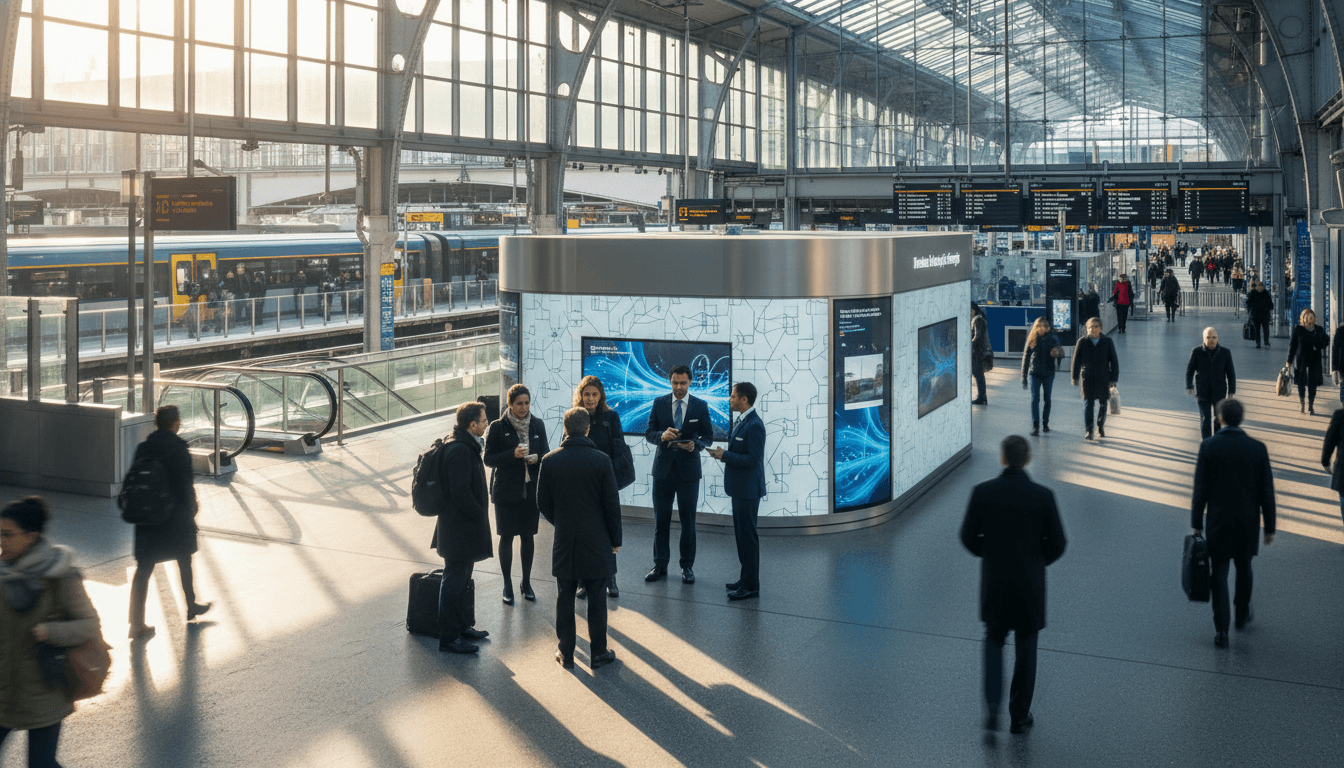
Trainline’s star-studded commuter pop-up at London King’s Cross (9 January) is a neat example of experiential marketing built around a real infrastructure moment: thousands of people moving through a transport hub with somewhere to be. If you’re building in the UK—whether you’re B2C, B2B, or straddling both—there are practical lessons here about how to earn attention in crowded cities, how to attach your brand to everyday routines, and how to turn a public place into a performance channel.
This post sits in our Housing & Infrastructure Development series because transport networks and stations aren’t just “places” — they’re high-intent corridors where people make decisions, feel emotions (stress, anticipation, boredom), and develop habits. That’s marketing gold if you treat it respectfully.
Why Trainline’s commuter pop-up works (and why it matters)
Answer first: Trainline’s pop-up works because it meets commuters at the exact moment motivation is fragile and time is scarce—then offers a memorable interruption that feels relevant to travel.
A commuter station is a unique environment:
- Footfall is concentrated, predictable, and repeatable.
- People have “dead time” (waiting, walking, queuing) but low patience for anything slow.
- The emotional context is intense: delays, rushing, and the small wins of making the train.
Trainline’s idea—keeping commuters “motivated” with a star-led experience—fits January behavior perfectly. It’s peak season for self-improvement messaging, new routines, and “this year I’ll stick to it.” Smart brands don’t just run January ads; they show up in the routines people are trying to rebuild.
For startups, the bigger lesson is this: your activation doesn’t need to be huge; it needs to be well-timed, well-placed, and frictionless.
The real asset: a moment, not a venue
King’s Cross isn’t just a famous station. It’s a moment generator—a place where people:
- make micro-decisions (take an earlier train, buy coffee, walk faster, check routes)
- open apps (tickets, maps, messages)
- talk to others (colleagues, friends, customer support)
If your brand can attach to one of those behaviors, you can create recall that outlasts the day.
The startup playbook: build a pop-up that earns attention
Answer first: The best pop-ups follow a simple rule: reduce effort, increase relevance, and give people a story to repeat.
Startups often overbuild activations. They plan like it’s an exhibition stand: too much messaging, too many features, too many people explaining things. Commuter environments punish that.
Here’s what I’ve found works (especially in UK cities):
1) Design for “walk-by understanding” in 3 seconds
If someone can’t understand what’s happening by the time they’ve walked past, you’ve lost.
A useful checklist:
- One clear visual cue (e.g., “Motivation Booth”, “The 60-Second Reset”, “Your commute, upgraded”).
- One obvious action (step in, pick up, scan, record, try).
- One instant payoff (a photo, a sample, a printout, a surprise).
You can still tell a bigger story online. But the physical experience must be instantly legible.
2) Make the “unit of participation” tiny
Commuters rarely commit to a 5-minute demo. They will commit to:
- a 10-second interaction
- a 30-second scan-and-win
- a 60-second personalised output
If you’re B2B, that output could be something like a “commute cost calculator” printed on a card with a QR code to a longer report. If you’re B2C, it might be a personalised “route playlist” or a free upgrade that’s redeemed later.
3) Create a photo moment without being cringe
People share when it makes them look:
- informed
- funny
- early to something
- part of a moment others missed
A celebrity appearance is one way to do it. But startups can build shareability through:
- a striking set piece
- a data-driven display (“UK commuters waste X hours a year on…”)
- a short challenge (“Your 20-second commute confession”)
The goal is a repeatable story: “You won’t believe what was in King’s Cross today.”
Snippet-worthy stance: A pop-up is not an event. It’s a content engine with a physical front door.
Celebrity and influencer partnerships: what to copy (and what to avoid)
Answer first: The value of “star power” isn’t fame—it’s borrowed trust and instant attention. Startups should use targeted creators, not expensive celebrities.
Trainline’s “star-studded” angle shows a classic attention hack: if you can’t guarantee someone will stop, you attach a face they recognise.
Startups can get similar effects (at a fraction of the cost) by partnering with:
- local creators in the same city as the activation
- niche experts (money, careers, fitness, housing, travel)
- community leaders (founders, organisers, student groups)
A simple collaboration structure that works
For lead generation (not just buzz), I like this structure:
- Creator announces a timed drop (“I’ll be at X station 8–9am”).
- Activation includes a trackable QR sign-up (offer: tool, discount, early access).
- Follow-up content is creator-led (“Here’s what happened + what I learned”).
That last step matters. You’re not buying a cameo—you’re buying distribution and a narrative.
The common mistake: paying for reach you can’t capture
If you can’t attribute results, don’t do it.
At minimum, set up:
- a unique QR code per creator
- a dedicated landing page per city or location
- a short form that asks one qualifying question (so leads aren’t junk)
Turning a station pop-up into measurable leads
Answer first: Treat the activation like a funnel: capture, qualify, and nurture within 24 hours.
A lot of experiential marketing fails because the team celebrates footfall and forgets follow-up. For a UK startup aiming for leads, you want a fast pipeline:
On-site capture that doesn’t annoy people
Keep it simple:
- QR code + one-screen form (name + email + one qualifier)
- Apple/Google wallet pass as the “thank you” (reduces drop-off)
- optional SMS for higher-intent offers
If you can’t offer value immediately, your sign-up will tank.
The 24-hour nurture sequence (useful, not spammy)
A sequence that converts without feeling gross:
- Within 2 hours: “Here’s what you got” (asset, tool, photos, voucher).
- Next morning: “One useful idea related to the pop-up theme” (commute, productivity, cost savings).
- Day 3: “Proof” (a short case study, testimonial, or demo link).
- Day 5: “Ask” (book a call, join a waitlist, request a quote).
This is where your activation becomes a lead machine.
Why this belongs in Housing & Infrastructure Development
Answer first: Transport hubs are where infrastructure meets daily life, and that intersection is where modern brand-building happens.
The UK’s push to modernise transport networks and improve regional connectivity isn’t just policy—it shapes how people move, where they can afford to live, and how talent flows into workplaces. Stations like King’s Cross sit at the centre of that.
For startups in housing, mobility, construction, fintech for renters, or workforce tools, commuter behavior is a proxy for infrastructure pressure:
- When services are unreliable, people seek alternatives and hacks.
- When travel costs rise, they reassess where they live and how often they commute.
- When new routes open, new neighbourhoods become viable.
A sharp activation doesn’t ignore those realities; it responds to them. The brands that win in infrastructure-adjacent markets are the ones that show up in the lived experience—without pretending a pop-up can solve systemic issues.
If you’re not in transport, you can still use the pattern
You don’t need a station to learn from Trainline. You need a high-intent corridor:
- a co-working lobby at 8:30am
- a university campus walkway during enrolment
- a business park shuttle stop
- a Saturday queue outside a popular venue
The principle is the same: meet people where routines happen.
Practical pop-up ideas UK startups can run in Q1 2026
Answer first: January to March is ideal for pop-ups because audiences are resetting habits and brands can win outsized attention with a small, smart activation.
A few ideas that map well to UK seasonal behavior:
- “The 90-second money reset” booth (fintech, budgeting, payroll tools)
- “Commute carbon receipt” printouts (climate tech, mobility)
- “Rent readiness check” scan (proptech, tenant services)
- “Your next role, closer to home” mini clinic (recruitment, upskilling)
- “Delay-proof morning kit” sampling (consumer goods)
Pick one problem. Solve it fast. Then give people a reason to follow up.
What to take from Trainline’s pop-up this week
Trainline’s King’s Cross activation is a reminder that experiential marketing isn’t about spectacle; it’s about precision—right place, right time, right emotional context.
If you’re a startup chasing leads, plan your next pop-up like a product sprint: tight scope, clear success metrics, and a follow-up sequence that turns a quick interaction into a relationship. The brands that build trust in infrastructure-heavy environments—transport, housing, public spaces—are the ones that respect people’s time and still give them a moment worth remembering.
What high-intent corridor could your startup own for one morning in Q1?