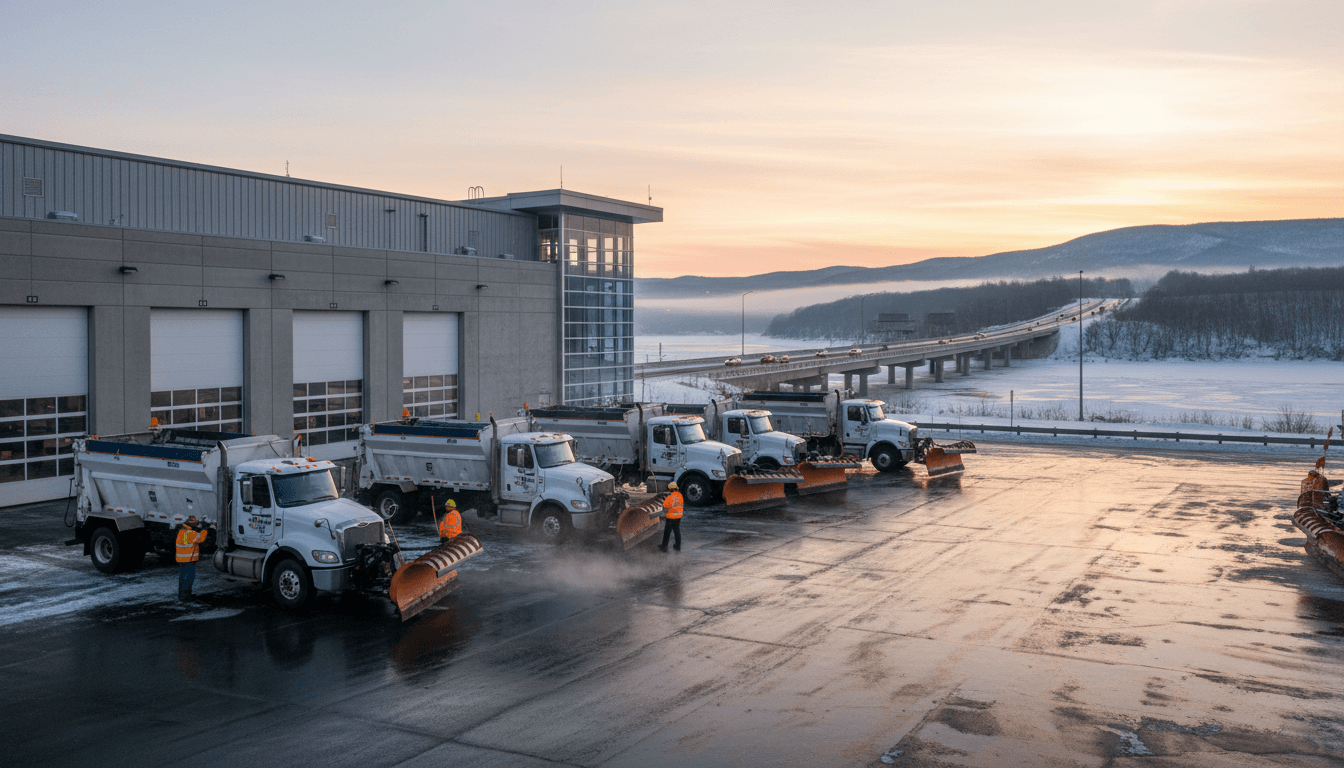
A new NYSDOT maintenance hub in East Fishkill strengthens winter road safety on I-84 and the Taconic—showing how smart infrastructure upgrades boost resilience.
Hudson Valley’s New DOT Hub: Safer Winter Roads
Snow and ice don’t just slow traffic—they expose weak points in our infrastructure. When a plow breaks down on the shoulder of I-84 at 5 a.m., the “problem” isn’t only that one truck is out of service. The real cost shows up as delayed emergency response, longer closures, higher crash risk, and frustrated commuters who can’t get to work on time.
That’s why New York’s newly opened highway maintenance facility at NYSDOT’s Lime Kiln Yard in East Fishkill (Dutchess County) matters beyond the ribbon-cutting. It’s an 18,427-square-foot operations hub designed around a simple idea: the fastest way to clear roads is to keep equipment on the road—reliably, safely, and sustainably. For the Hudson Valley, that means better winter readiness along Interstate 84 and the Taconic State Parkway, plus stronger day-to-day maintenance across key state routes.
This post is part of our Housing & Infrastructure Development series, where the focus is practical: what public infrastructure upgrades mean for daily life, regional growth, and the housing markets that depend on predictable mobility.
A maintenance facility is “infrastructure infrastructure”
A new highway maintenance facility is not flashy. It doesn’t cut travel times the way a new interchange does. But it’s one of the most cost-effective upgrades a state can make because it improves the uptime of every asset that touches the roadway.
Here’s the core point: Road performance in winter is limited by maintenance logistics as much as by weather. When trucks have to travel farther for repairs, fueling, washing, parts, or staging, response time slips. And in snow operations, minutes matter.
At Lime Kiln Yard, the facility is built to reduce bottlenecks:
- Capacity to garage 14 large dump trucks (critical for plow operations and storm staging)
- Faster repairs for plows and emergency response vehicles, keeping them in service longer
- Indoor wash bay to maintain visibility and protect components from corrosive road salt
- Office and crew space that supports round-the-clock operations during storms
That combination turns a “yard” into a modern winter operations center—the kind of behind-the-scenes investment that pays off when weather hits hard.
What’s changing on I-84 and the Taconic—practically
The public headline is “state-of-the-art.” The real story is operational discipline: fewer breakdowns, better staging, and more consistent road conditions.
The Lime Kiln Yard teams cover about 230 lane miles of state roads with 26 workers based at the yard. That’s a meaningful ratio when storms stack up and crews have to rotate safely.
Faster turnaround = faster storm response
A plow that’s down for a hydraulic issue, lighting problem, or spreader malfunction can’t do its job. If repairs happen faster, fleet availability increases—and you don’t need to buy as many extra trucks “just in case.”
This facility is designed to speed:
- Preventive maintenance (catching problems before they cause roadside failures)
- Repair cycles during active storms (so the same truck can return to service)
- Incident response when conditions shift quickly (ice bands, squalls, jackknifed trucks)
Better washing isn’t cosmetic—it’s asset protection
The indoor wash bay is a bigger deal than it sounds. Salt brine is brutal on metal, wiring, and undercarriage components. Regular washing:
- Extends vehicle life and reduces long-term maintenance costs
- Improves headlight/taillight visibility, which is safety-critical in snow
- Helps equipment perform consistently, especially during multi-day events
If you care about infrastructure resilience, you care about corrosion control.
Day-to-day maintenance improves, too
Storm response gets attention, but the same crews are also responsible for:
- Pothole filling
- Guiderail repairs
- Drainage repairs
Drainage is the sleeper issue. When culverts and inlets don’t work, freeze-thaw cycles accelerate pavement damage. A well-supported yard improves routine work scheduling—reducing the “we only fix it when it fails” pattern that costs more over time.
Sustainability that actually fits highway operations
Transportation agencies can’t decarbonize by wishful thinking. Fleet and facility changes have to work in the middle of February, at odd hours, with real operational demands.
The new East Fishkill facility includes several features that point to a practical sustainability approach:
- Exterior and interior LED lighting (lower energy use, better visibility)
- Plug-in stations for electric vehicles (supporting a gradual shift in the fleet)
- High-efficiency heating system (reducing fuel consumption while keeping the facility functional)
Here’s my stance: Facilities are the easiest place to start modernizing because they’re fixed assets with predictable energy needs. If states want cleaner transportation, upgrading maintenance buildings is one of the least disruptive moves with reliable returns.
And there’s a second sustainability angle people overlook: more reliable snow removal reduces secondary emissions caused by prolonged congestion, detours, and stop-and-go traffic during storms.
Why this matters for housing, jobs, and regional growth
Reliable roads are a housing policy issue—even when we don’t label it that way. When transportation networks perform poorly, the ripple effects show up in where people can afford to live, how far they’re willing to commute, and whether employers can count on staffing during bad weather.
In the Hudson Valley, corridors like I-84 and the Taconic aren’t optional. They connect:
- Workers to job centers
- Goods to distribution routes
- Emergency services to communities
- Contractors and trades to housing projects
Predictable mobility supports housing development timelines
If you’ve ever tried to keep a construction schedule through winter, you know delays compound. Materials arrive late, subs reschedule, and projects drift. Better winter operations don’t eliminate weather risk, but they reduce the preventable failures—like slow incident clearance or under-resourced plowing.
Facilities create local, durable workforce demand
NYSDOT also highlighted ongoing hiring for highway maintenance workers, snowplow operators, mechanics, engineers, and office staff. This is a steady category of employment with clear training pathways.
For communities trying to retain workers and keep local economies stable, this kind of public-sector operational footprint matters.
The “Don’t Crowd the Plow” rule is infrastructure, too
You can build the most modern maintenance hub in the region and still have unsafe roads if drivers treat plows like obstacles.
NYSDOT’s reminder is blunt for a reason: Plows travel around 35 mph and shouldn’t be passed. The safest winter roads are a partnership between operators and motorists.
If you want a simple checklist for safer winter driving around highway crews:
- Stay back—give plows room to brake and maneuver.
- Don’t pass—plows often travel in patterns that anticipate lane conditions.
- Slow down early—most winter crashes happen because drivers react late.
- Move over for highway workers—roadside work zones are high-risk.
Public safety messaging isn’t “extra.” It’s part of the system design.
What other regions can copy from the East Fishkill model
Not every county needs a brand-new building. But most regions can borrow the playbook: modernize the operational backbone before chasing headline projects.
A practical checklist for modern highway maintenance hubs
If you’re a municipal leader, planner, or developer looking to understand what “good” looks like, here are features that consistently improve outcomes:
- Central placement near priority corridors (response time is everything)
- Sufficient indoor bay capacity for the actual fleet size (no stacking delays)
- On-site wash capability designed for winter salt conditions
- Energy-efficient systems that lower operating costs without compromising readiness
- EV readiness where it makes sense (starting with light-duty vehicles)
- Crew facilities that support safe shift changes and long-duration events
The point isn’t luxury. It’s reliability.
Measure success with metrics people can feel
If agencies want public trust, they should report performance in ways residents recognize:
- Average time to reach priority routes after storm onset
- Fleet availability rate during storms (how many trucks are operational)
- Incident clearance time for weather-related crashes
- Annual corrosion-related repair costs (before/after wash system upgrades)
When those numbers improve, the public experiences it as fewer white-knuckle commutes and fewer “why is this still unplowed?” mornings.
Where this fits in the bigger infrastructure story
National infrastructure resilience isn’t only bridges and broadband. It’s the quieter investments that keep roads functioning under stress—winter storms, flooding, freeze-thaw cycles, and traffic surges.
The East Fishkill facility is a good example of modernizing transport networks through operations, not just new construction. It supports safety, sustainability, and emergency response in one move, and it helps protect the state’s existing roadway assets—still the most cost-effective form of infrastructure investment.
If you’re working in housing and infrastructure development—whether as a builder, a planner, or an employer—this is the kind of project to watch. It signals a region that’s serious about being accessible year-round.
What would change in your community if winter road reliability improved by even one notch—fewer closures, fewer spin-outs, faster incident response? That’s the real promise of infrastructure that’s built for maintenance, not just for headlines.