Trainline’s King’s Cross pop-up shows how commuter activations drive brand awareness and leads. A practical playbook UK startups can copy.
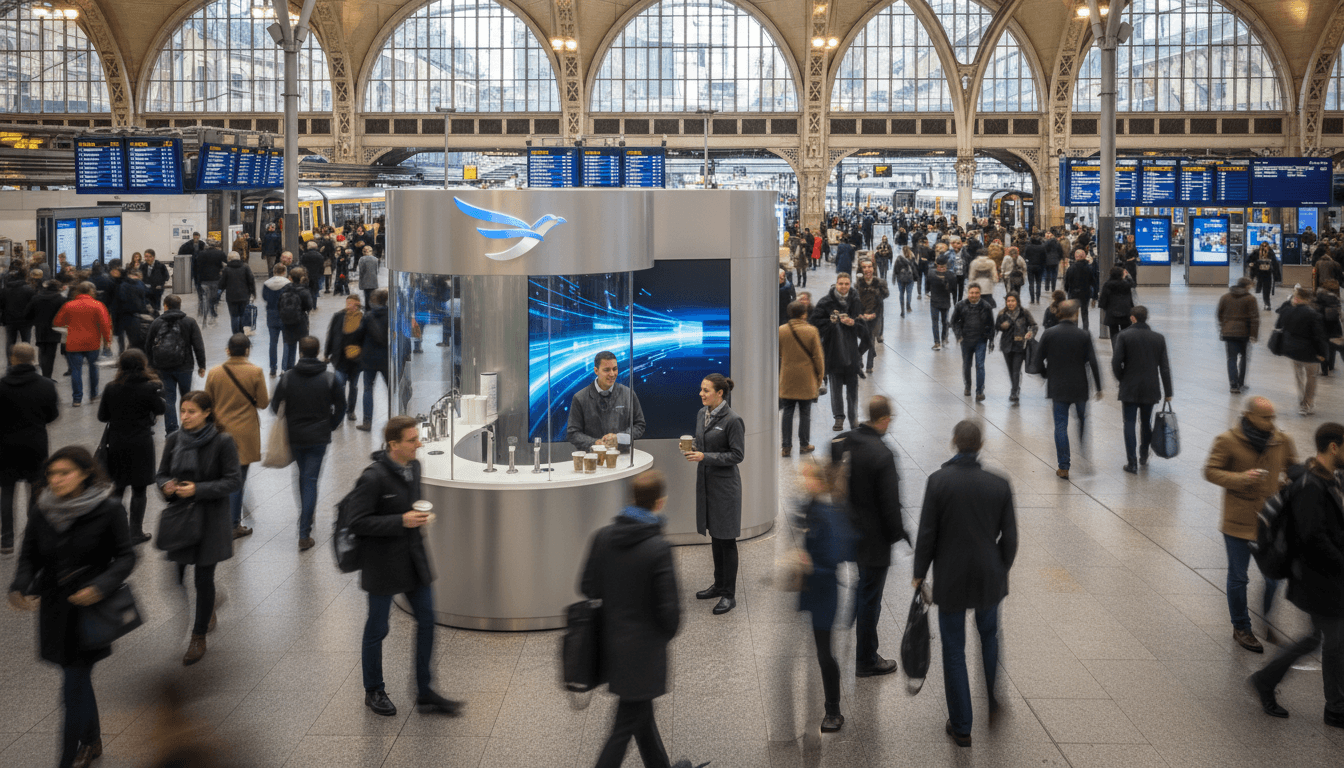
Commuter Pop-Ups: Startup Lessons from Trainline
Most startups obsess over paid social and SEO, then wonder why brand awareness stalls. Trainline’s star-studded commuter pop-up at London King’s Cross (9 January) is a reminder that physical experiences still cut through—especially in dense urban markets where attention is fragmented and routines are predictable.
That’s why this example fits neatly into our Housing & Infrastructure Development series. Transport hubs sit at the intersection of modernising transport networks, shifting commuter patterns, and how people move between where they live (housing) and where they work (jobs). For B2C startups, that intersection is a marketing opportunity: the commuter is a high-frequency audience, concentrated in a few locations, with repeat exposure baked in.
Below, I’ll break down what Trainline’s activation gets right, what I’d change if I were running it for a startup with a tighter budget, and a practical playbook you can use to create your own commuter-focused pop-up.
Why commuter marketing works (especially in UK cities)
Commuter marketing works because it targets a repeated habit, not a one-off interest. A person might scroll past your ads once. A commuter walks through the same station 3–5 days a week.
In the UK, rail is a backbone of urban mobility. The Office of Rail and Road (ORR) has consistently reported billions of passenger journeys annually in pre- and post-pandemic years, and while patterns have shifted toward hybrid work, major interchanges like King’s Cross remain some of the highest-footfall environments in the country. The precise number fluctuates by year and methodology, but the strategic point holds: stations aggregate audiences at scale.
From an infrastructure perspective, transport hubs are also “mini-cities”: retail, services, security, signage, dwell time zones, and predictable flows. As housing affordability pressures push more people into longer commutes, the value of these hubs as attention corridors rises.
The commuter audience is predictable (and that’s a feature)
Digital marketing often targets “interests.” Commuter activations target behaviours:
- Same place, same time windows (morning rush, evening return)
- High repetition (frequency builds memory)
- Contextual relevance (travel, delays, planning, routine)
If your product helps with daily life—food, finance, wellbeing, micro-learning, mobility, entertainment—commuter corridors are not niche. They’re mainstream.
What Trainline’s pop-up signals about experiential marketing in 2026
Trainline’s King’s Cross pop-up is designed to turn routine travel into a moment worth talking about. The “star-studded” angle matters less than people think; the real mechanic is social proof + surprise + shareability.
Here’s what’s going on under the hood:
1) It uses infrastructure as media
A station isn’t just a location; it’s a distribution channel. In experiential terms, you’re borrowing the “audience infrastructure” the city has already built.
For startups, this is a powerful reframing: instead of paying to build your own audience from scratch, place your brand where people already are. That’s why commuter pop-ups consistently outperform generic high-street sampling for certain categories—you’re not guessing where demand is. You’re meeting it mid-routine.
2) It turns “motivation” into a commuter utility
Trainline’s creative premise—helping commuters “stay motivated”—is smart because it’s not an abstract brand value. It’s a felt problem in January.
Early January in the UK is a perfect storm:
- Back-to-work blues after the holidays
- Cold, dark commutes
- “New year” behaviour change attempts
A pop-up that gives people a lift (entertainment, encouragement, micro-reward) is aligned with the mood of the moment. Timing isn’t a detail. Timing is the strategy.
3) Celebrity isn’t the product; it’s the amplifier
If the activation features recognisable talent, that creates instant “I was there” currency. But the deeper lesson is this:
You don’t need famous faces. You need a reason for strangers to film you.
A startup can swap celebrity for:
- A surprising live demo (fast, visual)
- A bold public challenge (opt-in, low friction)
- A high-quality giveaway that signals taste (not volume)
The goal is earned distribution: commuters share, press notices, and the station’s own ambient social energy does the rest.
A startup playbook: How to run a commuter pop-up that actually generates leads
A commuter pop-up should be built like a funnel, not a stunt. Brand buzz is nice. Leads are the goal.
Here’s a practical framework I’ve found works for early-stage teams.
1) Choose the right station by behaviour, not prestige
King’s Cross is iconic, but startups don’t always need iconic. You need the right commuter.
Pick based on:
- Audience fit: Are they students, office workers, tourists, airport travellers?
- Repeat rate: Do people pass through daily or is it mostly occasional travel?
- Dwell time: Are there queues, waiting areas, platform delays?
- Local housing and jobs mix: Stations linking new-build areas to employment centres can be gold.
In the context of housing and infrastructure development, look for hubs near:
- Regeneration zones
- New residential developments
- Business parks and innovation districts
Those commuters are often forming new routines—meaning they’re more open to new brands.
2) Design the experience around a 15-second decision
Commuters don’t “browse.” They decide quickly.
Your pop-up must communicate in seconds:
- What is it?
- Why should I stop?
- What do I get?
- How long will it take?
A strong commuter activation is basically a physical landing page.
Rule I use: if someone can’t explain your pop-up to a friend in one sentence, you’ve overcomplicated it.
3) Build a lead capture that feels like a fair trade
If your campaign goal is LEADS, don’t hide the ask. Just make it worth it.
High-performing lead capture mechanics in stations:
- QR code to a “commuter perk” (e.g., £5 credit, free trial, members-only drop)
- Spin-to-win (but keep the prize ladder realistic)
- Photo moment + auto-send (enter email to receive the photo)
- “2-minute audit” (e.g., money saved, calories saved, time saved)
What doesn’t work: “Sign up for our newsletter” with no immediate payoff.
4) Engineer shareability (without begging for it)
You want organic posts, but commuters won’t post something that makes them look boring.
Create a moment that helps them signal:
- Taste (cool brand)
- Humour (funny prop or line)
- Identity (fitness, productivity, sustainability)
- Local pride (London/Manchester/Glasgow nod)
Trainline’s approach—motivation + star power—does this naturally.
5) Measure what matters the same day
Experiential campaigns fail when measurement is an afterthought.
Set up a simple measurement stack:
- Unique QR codes by time window (AM peak vs PM peak)
- Offer redemption tracking (who actually used the trial/credit)
- On-site conversion rate: stops → scans → sign-ups
- Cost per lead (CPL): all-in cost / qualified leads
- 7-day retention (if you have an app)
If you can’t tie the pop-up to a measurable behaviour within 7 days, it’s probably brand theatre.
Three commuter engagement ideas UK startups can copy this month
You don’t need King’s Cross budget to borrow King’s Cross thinking. Here are three formats that work particularly well in January and February.
1) “Delay-proof your day” micro-service booth
Offer a practical commuter fix in under two minutes:
- Coffee alternative sampling for sleep-focused brands
- Quick phone battery top-up + QR sign-up for a utility app
- “Commute cost check” for fintechs (enter route → see savings plan)
This aligns with transport modernisation themes because you’re meeting people where infrastructure friction is felt: delays, stress, unpredictability.
2) The “new routine” punch card
Hybrid work broke routines; people are rebuilding them.
Run a 2-week challenge:
- Day 1: scan QR for a digital stamp
- Day 3/5/10: collect stamps → unlock rewards
- Final: refer a friend → double reward
Routines create retention. Retention creates LTV. That’s the whole point.
3) The “local commute” collaboration
Pair with a nearby business that already serves commuters:
- Independent coffee shop
- Gym near the station
- Co-working space
- Local housing developer showroom (yes, really)
In the Housing & Infrastructure Development context, these partnerships can also tell a bigger story: how people live, move, and work in a changing city.
People also ask: commuter pop-ups and experiential marketing
Do pop-ups work better than digital ads for startups?
They work better for awareness and trust when your audience is local and repetitive. Digital still wins for scale and targeting. The sweet spot is using the pop-up to generate content and proof, then retargeting attendees and lookalikes.
How much should a startup budget for a pop-up in a station?
Expect a wide range depending on permissions, build, staffing, and timing. A lean activation can be done with a compact set-up and strong concept, while premium spaces and production push costs up fast. The practical answer: start with a one-day pilot, price it like an experiment, and scale only if CPL and retention justify it.
What’s the biggest mistake in commuter experiential marketing?
Making it about the brand instead of the commuter’s moment. If your activation doesn’t give commuters an immediate benefit (a lift, a fix, a reward, a story), it becomes visual noise.
What startups should take from Trainline’s King’s Cross moment
Trainline’s pop-up is a tidy case study in how to use city infrastructure to build brand energy fast. The point isn’t that it happened at a famous station. The point is that it met a high-frequency audience with something timely, emotional, and easy to share.
If you’re building a B2C startup in the UK, commuter activations are one of the most underused tactics for urban brand awareness—especially when housing pressures, regeneration projects, and transport upgrades keep reshaping where people live and how they travel.
If you were to run one commuter pop-up for your startup this quarter, would you optimise it for leads on the day or brand memory over a month? The right answer depends on your funnel—but you should choose deliberately, not accidentally.