Airport revitalization in Rochester and Ogdensburg shows how regional airports can drive jobs, access, and housing demand when planned as a full system.
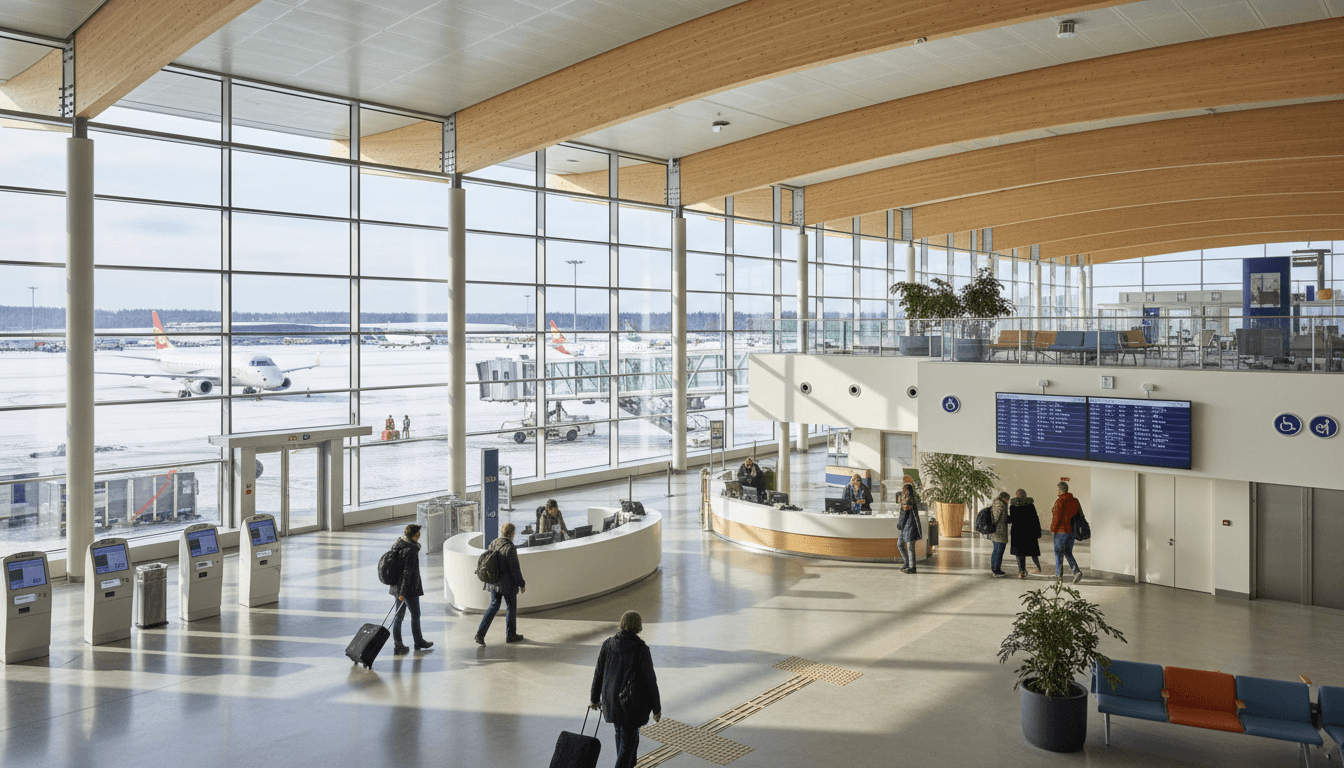
Airport Revitalization That Actually Grows Regions
Airports rarely get credit as housing and infrastructure tools—until you watch a region try to hire, build, and attract investment with a tired terminal and unreliable ground access. New York’s recent completion of major airport revitalization work in Rochester and Ogdensburg is a timely reminder that transportation projects aren’t vanity projects. Done right, they’re economic plumbing.
The real story isn’t just “new facilities.” It’s how modernizing mid-sized and small-market airports can raise a region’s ceiling: better business connectivity, stronger tourism flow, more resilient supply chains, and a clearer case for adjacent development like hotels, mixed-use, and workforce housing. In December 2025—peak winter travel season—this matters even more. When snow, holiday demand, and tight airline schedules collide, the difference between a smooth terminal and a bottleneck is the difference between “we’ll visit again” and “never again.”
This post looks at what airport revitalization signals for regional growth, why Rochester and Ogdensburg are useful models, and what planners, developers, and public-sector leaders should copy if they want infrastructure investment to turn into jobs, housing demand, and long-term tax base.
Why airport upgrades punch above their weight
Airport revitalization has an outsized impact because airports are one of the few pieces of infrastructure that touch nearly every growth lever at once: labor markets, business retention, tourism, and even housing feasibility.
Airports shape “time-to-market” for people and companies
A modern terminal isn’t about shiny finishes. It’s about reducing friction:
- Predictable passenger flow lowers missed connections and helps airlines keep schedules.
- Efficient security and baggage layouts shorten door-to-gate times.
- Clear wayfinding and accessible design makes the airport usable for more travelers, including seniors and people with disabilities.
For employers, this translates into a simple truth: it’s easier to recruit when candidates can fly in and out without a hassle. For growing regions, that matters as much as any tax incentive.
Regional airports support housing demand—indirectly, but powerfully
Here’s the connection many communities miss: airport improvements can increase the frequency and reliability of regional air service, which supports business expansion. Business expansion supports job growth. Job growth increases pressure on the housing market.
If housing supply doesn’t keep up, you get the familiar 2020s pattern: rising rents, longer commutes, and stalled projects because workers can’t find places to live. That’s why the Housing & Infrastructure Development conversation has to include airports: transportation access is a demand catalyst.
A region that invests in transportation but ignores housing is creating demand without capacity.
What Rochester and Ogdensburg show about “right-sized” infrastructure
New York’s announcement of completed airport revitalization projects in Rochester and Ogdensburg underscores an important shift: states are treating regional airports as essential infrastructure, not optional amenities.
Rochester: modern capacity for a larger regional economy
Rochester sits in a diversified economic ecosystem—higher education, health systems, advanced manufacturing, and a growing innovation scene. Airports in markets like this need to function as reliable connectors.
When revitalization focuses on terminal function, passenger circulation, and the overall traveler experience, it does two things:
- Improves competitiveness versus nearby metro airports by reducing friction.
- Strengthens the region’s “first impression” for investors, conference attendees, and new hires.
If you’re a developer or site selector, you know the drill: the airport is often the first stop. A facility that feels outdated sends a message—fair or not—about the area’s momentum.
Ogdensburg: small-market airports are economic resilience tools
Ogdensburg represents a different challenge: maintaining connectivity in smaller markets where demand is thinner and disruptions hit harder.
For communities like this, airport revitalization is less about scale and more about resilience and continuity:
- The airport becomes a backup option during extreme weather.
- It supports medical travel, essential trips, and regional business mobility.
- It anchors tourism access in areas where drive times can be long.
Small airports also affect cross-border and regional movement patterns, which can shape local service businesses—restaurants, lodging, and contractors—especially during seasonal peaks.
The blueprint: what successful airport revitalization includes
Airport modernization succeeds when it’s treated as a system upgrade, not a construction project. The goal isn’t “a new building.” The goal is better throughput, accessibility, and operational performance.
Design for flow, not for photos
The most effective upgrades prioritize:
- Short, intuitive walking paths (parking → ticketing → security → gates)
- Flexible queuing space to handle holiday surges
- Clear signage and line-of-sight navigation
- Passenger amenities placed where people actually wait
If you’ve ever been in an airport where the coffee is after the only seating area, you already know why this matters.
Accessibility isn’t an add-on—it’s core infrastructure
Modern airport revitalization should treat accessibility as a baseline requirement:
- Step-free routes that don’t require detours
- Restrooms that are genuinely usable, not “technically compliant”
- Seating and waiting areas designed for different needs
From an economic development standpoint, accessibility improvements expand who can travel comfortably—including older adults, families, and people with mobility challenges—making the region more welcoming and more competitive.
Plan ground access like you mean it
Airports don’t work if the “last mile” is painful. Regions get the best return when airport upgrades align with:
- Roadway improvements and safer intersections
- Better pickup/drop-off geometry to reduce curbside chaos
- Transit connections where feasible
- Room for rideshare staging and future mobility options
This is where airport revitalization intersects with broader transportation modernization—exactly the point of a serious infrastructure development agenda.
Turning airport investment into local development (and leads)
Public investment is necessary, but it’s not sufficient. The return comes when communities package airport improvements into a development strategy.
The “airport area” is often underdeveloped land with real upside
Around many regional airports, you’ll find:
- Underused parcels
- Aging hotels
- Low-density commercial strips
- Parking lots that could be more productive
A revitalized airport can justify airport-adjacent redevelopment—especially when it’s paired with zoning updates and infrastructure capacity planning.
Practical examples of what tends to pencil out near improved airports:
- Limited-service and extended-stay hotels
- Small business parks for light industrial and services
- Conference and meeting space tied to regional institutions
- Workforce housing in nearby corridors (not on the runway, but connected)
Housing planning should anticipate the “success problem”
When connectivity improves, demand can show up fast—especially in regions already competing for workers.
If you’re a local leader or planner, I’ve found these three moves prevent the “we grew, now we’re stuck” cycle:
- Pre-entitle housing sites in corridors served by reliable road/transit connections to the airport.
- Map utility capacity (water, sewer, power) around likely growth nodes.
- Use mixed-income tools early, before price pressure sets in.
Airport revitalization should trigger a housing conversation within months, not years.
Procurement and delivery: treat construction like economic policy
A lot of the value of infrastructure investment lands during construction through jobs, subcontracting, and local purchasing. Communities that maximize benefit typically:
- Break scopes into packages that local firms can bid on
- Track workforce hours and training opportunities
- Coordinate schedules to avoid peak-season disruption (a big deal in winter travel months)
This isn’t about politics. It’s about making sure the dollars circulate locally.
Common questions people ask about regional airport modernization
Does modernizing an airport actually increase flights?
Sometimes, but not automatically. Airlines add service when they see reliable operations, demand, and a cost structure that works. Modernization helps by improving on-time performance, passenger experience, and operational efficiency.
Is airport spending worth it compared to roads or housing?
It’s not either/or. Airports, roads, and housing form a chain. Roads connect people to jobs. Airports connect regions to markets. Housing keeps the workforce local. If one link is weak, the whole system underperforms.
What’s the fastest way to see economic benefit?
Tie the airport project to a clear regional plan: business attraction, tourism promotion, and shovel-ready sites near key corridors. The regions that win are the ones that make it easy to invest.
What other states can copy from the Rochester–Ogdensburg approach
The most replicable lesson is simple: don’t reserve modernization for the biggest hubs. Regional and small-market airports can be high-return investments when they’re treated as part of a statewide network.
If you’re looking for a practical checklist to apply elsewhere, start here:
- Define the job of the airport (business travel, tourism, essential access, redundancy).
- Modernize for performance (flow, resilience, accessibility), not just aesthetics.
- Bundle ground access improvements so the airport actually feels connected.
- Prepare nearby land use and housing supply to absorb growth.
- Measure outcomes: on-time performance, passenger satisfaction, local job hours, adjacent development activity.
These are the projects that build trust—because people can feel the improvement immediately.
Where this fits in the Housing & Infrastructure Development series
This series is about a blunt reality: infrastructure sets the ceiling for affordable housing and inclusive growth. You can’t plan for attainable home prices, shorter commutes, and strong local economies without modern transportation networks.
Rochester and Ogdensburg are proof that airport revitalization belongs in the same conversation as housing supply, transit modernization, and utility upgrades. When you treat them as one system, you stop playing whack-a-mole with growth.
If you’re working on an infrastructure plan—or trying to turn public investment into real development opportunities—start by asking: What’s the next constraint after the ribbon-cutting? Housing? Utilities? Permitting? Ground access? Solve that next, and the airport investment won’t just look good. It’ll perform.