Companies House fees rose on 1 Feb 2026. Learn what changed and how UK SMEs can offset rising admin costs using practical marketing automation.
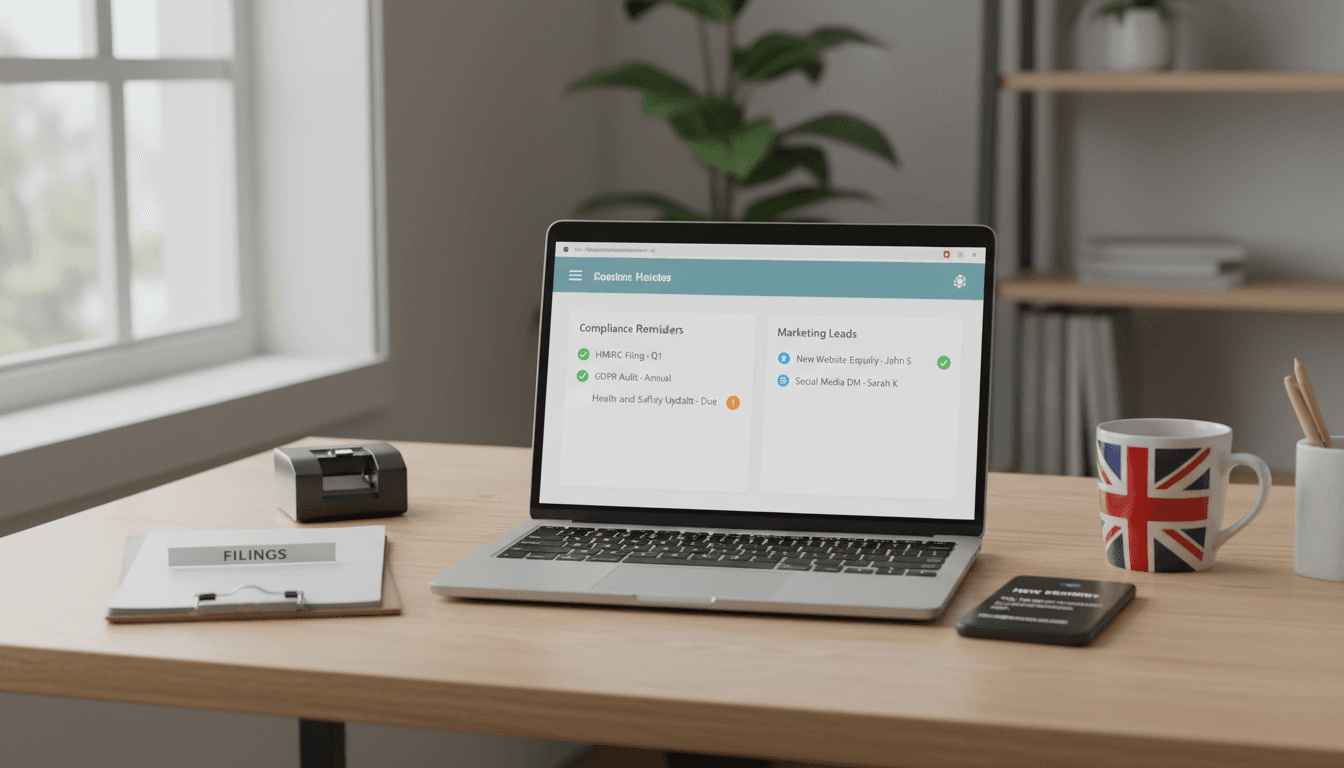
Companies House Fee Rises: Cut SME Admin Costs Fast
Companies House fees went up again on 1 February 2026—and this time the headline number is hard to ignore: digital incorporation doubled from £50 to £100. For many UK SMEs, that’s not a business-ending cost. But it is a signal. The direction of travel is clear: more checks, more verification, more ongoing admin.
This post sits in our Governance, Regulation & Public Trust series, where we look at how regulation changes day-to-day business operations—and how SMEs can respond without piling more work onto already stretched teams. The practical stance I’m taking: you can’t control the fee rises, but you can control the operational drag around compliance and customer growth.
The reality? When fixed costs creep up, the first thing most owners do is freeze “non-essential” spend like marketing. That’s usually the wrong move. A better move is to reduce the manual workload inside marketing so you keep lead flow steady while your cost base rises.
What changed on 1 February 2026 (and why it matters)
Answer first: Companies House increased a set of core filing fees to fund tighter controls under the Economic Crime and Corporate Transparency Act 2023, including identity verification introduced in November 2025.
According to the update, the key changes effective 1 February 2026 include:
- Digital incorporation fee: £100 (up from £50)
- Same-day incorporation: £156 (up from £78)
- Digital confirmation statement: £50 (up from £34)
- Digital voluntary strike-off: £13 (down from £33)
Paper filings are being priced even more aggressively to push digital adoption:
- Paper incorporation: £124 (up from £71)
- Paper confirmation statement: £110 (up from £62)
- Paper strike-off: £18 (down from £44)
This matters for two reasons beyond the immediate cost:
- Regulation is becoming more operational. It’s not just “file once a year and forget it.” Identity verification, data quality checks, and enforcement powers mean your company record and directors’ details are part of a wider trust system.
- Admin time becomes the hidden tax. Fees are visible. The time spent chasing details, fixing errors, coordinating sign-offs, and responding to exceptions is where SMEs quietly lose profit.
If you’re running lean (most SMEs are), it’s the work around compliance that tends to spill into evenings, weekends, and the “we’ll do it later” pile.
The cost squeeze effect: how fee rises spill into sales and marketing
Answer first: When compliance costs rise, many SMEs cut marketing first—then wonder why leads slow down 60–90 days later.
Here’s a pattern I’ve seen repeatedly: a cost increase lands (accountancy, insurance, finance costs, or now Companies House fees), and marketing becomes the balancing item. It feels logical because marketing spend is flexible.
But marketing is also the system that feeds future revenue. When you reduce activity today, you usually feel it later:
- fewer inbound enquiries
- longer sales cycles (because you’re not consistently warming leads)
- lower conversion rates (because follow-up becomes patchy)
And then you’re stuck. You’ve saved a few hundred pounds, but created a cashflow problem that costs far more.
A more useful question than “What can we cut?”
Instead of cutting lead generation, ask:
- What manual tasks can we remove so the same team produces more output?
That’s where marketing automation for UK SMEs is genuinely practical. Not as a shiny tech project—more like admin hygiene for growth.
Three practical ways marketing automation offsets rising admin costs
Answer first: Automation saves money by reducing manual follow-up, preventing lead leakage, and standardising processes so you don’t need extra headcount.
You won’t “automate away” Companies House fees. What you can do is offset them by freeing time and tightening conversion.
1) Stop lead leakage with instant, consistent follow-up
Most SMEs lose leads in boring ways:
- form filled in, reply happens two days later
- someone calls, voicemail, nobody calls back
- enquiry comes via Facebook/Instagram, sits in a messages inbox
A basic automation setup fixes this with:
- instant confirmation (email/SMS) the moment someone enquires
- routing rules so the right person gets notified
- follow-up sequences if the lead doesn’t book/respond
One strong principle: speed beats persuasion in the first hour. If you reply quickly and clearly, you’ll win deals that competitors “meant to reply to.”
2) Reduce admin by standardising repeatable marketing workflows
Compliance is getting tighter because the UK wants higher data integrity and corporate transparency. That same principle applies to your marketing ops: consistent data in, consistent actions out.
Automation can standardise:
- how leads are tagged and segmented
- how GDPR-consent preferences are recorded
- which template emails are used (no more “I’ll just type something quick”)
- which follow-up steps happen after a quote is sent
This matters because process beats heroics. If your sales pipeline relies on one person remembering what to do, you don’t have a pipeline—you have a memory test.
3) Make marketing measurable (so budget decisions aren’t guesswork)
When costs rise, you need to know what’s working.
A sensible automation stack can report:
- source of lead (Google Ads, organic, referrals, socials)
- conversion to booking
- conversion to sale
- average time-to-close
That data changes the budgeting conversation from “marketing is expensive” to “this channel returns £X for every £1.”
Even a modest improvement can cover the fee increases quickly. If your average gross profit per sale is £1,000, you don’t need many extra conversions to neutralise an extra £50–£100 cost here and there.
A simple 30-day plan for UK SMEs: stay compliant, keep leads flowing
Answer first: Use the fee rise as a prompt to tighten your admin and marketing systems in the same month—small changes, quick wins.
Here’s a practical plan you can run in February (or whenever you read this).
Week 1: Get your compliance calendar out of your head
- Put key dates in a shared calendar (confirmation statement, accounts filing, VAT if relevant)
- Set reminders at 30, 14, and 7 days
- Create a single “company details” document (registered office, SIC codes, director info) so you’re not hunting for basics
This is governance in practice: fewer last-minute scrambles means fewer errors.
Week 2: Patch the obvious follow-up gaps
Pick one lead source (your website form is usually the easiest) and implement:
- Instant “Thanks, here’s what happens next” email
- Notification to the owner/salesperson
- A two-step follow-up if they don’t respond (e.g., day 1 and day 3)
If you only automate one thing, automate this.
Week 3: Build one pipeline that reflects reality
Define a small number of stages you’ll actually use, such as:
- New enquiry
- Contacted
- Booked
- Quoted
- Won / Lost
Then automate stage changes where possible (booking link booked → “Booked”). The goal isn’t perfection—it’s visibility.
Week 4: Create one nurture sequence for “not ready yet” leads
Most SMEs ignore this group because they’re busy. That’s exactly why you should automate it.
A basic nurture can be 4–6 emails over 30 days:
- common mistakes buyers make
- a short case study
- pricing guidance or “how we quote”
- FAQs
- a clear invitation to book a call
You’re building trust and public confidence at a micro level: proving you’re credible, consistent, and safe to buy from.
People also ask: Companies House fees and admin efficiency
Are Companies House fees likely to keep rising?
Regulatory work costs money. The UK’s focus on economic crime and register integrity suggests the general direction is more scrutiny and more operational overhead rather than less.
Do I save money by filing digitally?
Yes—Companies House is clearly pricing paper filings higher to encourage digital submissions. If you’re still filing on paper, it’s worth switching for both cost and speed.
What does this have to do with marketing automation?
When overheads rise, you need efficiency elsewhere. Marketing automation is one of the few areas where SMEs can remove repetitive work and improve conversion without hiring.
Governance, transparency, and trust: the bigger picture
Companies House fee increases aren’t random. They’re tied to a broader push for corporate transparency, better data, and reduced economic crime—core themes in public trust and governance.
But SMEs also need something from the system: clarity and predictability. When compliance becomes more complex and expensive, the most resilient businesses respond by tightening internal operations.
That’s why I like using moments like this as a prompt to improve the parts of the business you can control—especially the marketing and sales workflows that keep revenue steady.
Rising Companies House fees are a reminder that admin costs rarely go down. Your best defence is a business that runs with less manual effort.
If you want to protect your marketing budget this year, don’t start by spending more. Start by removing the repetitive work that stops you following up properly.
What would change in your pipeline if every new enquiry got a response in 60 seconds—and every “not yet” lead stayed warm for the next 30 days?