SleepTech in 2026 is a masterclass in personalisation and trust. Here are 8 products to watch—and 3 growth lessons UK startups can copy.
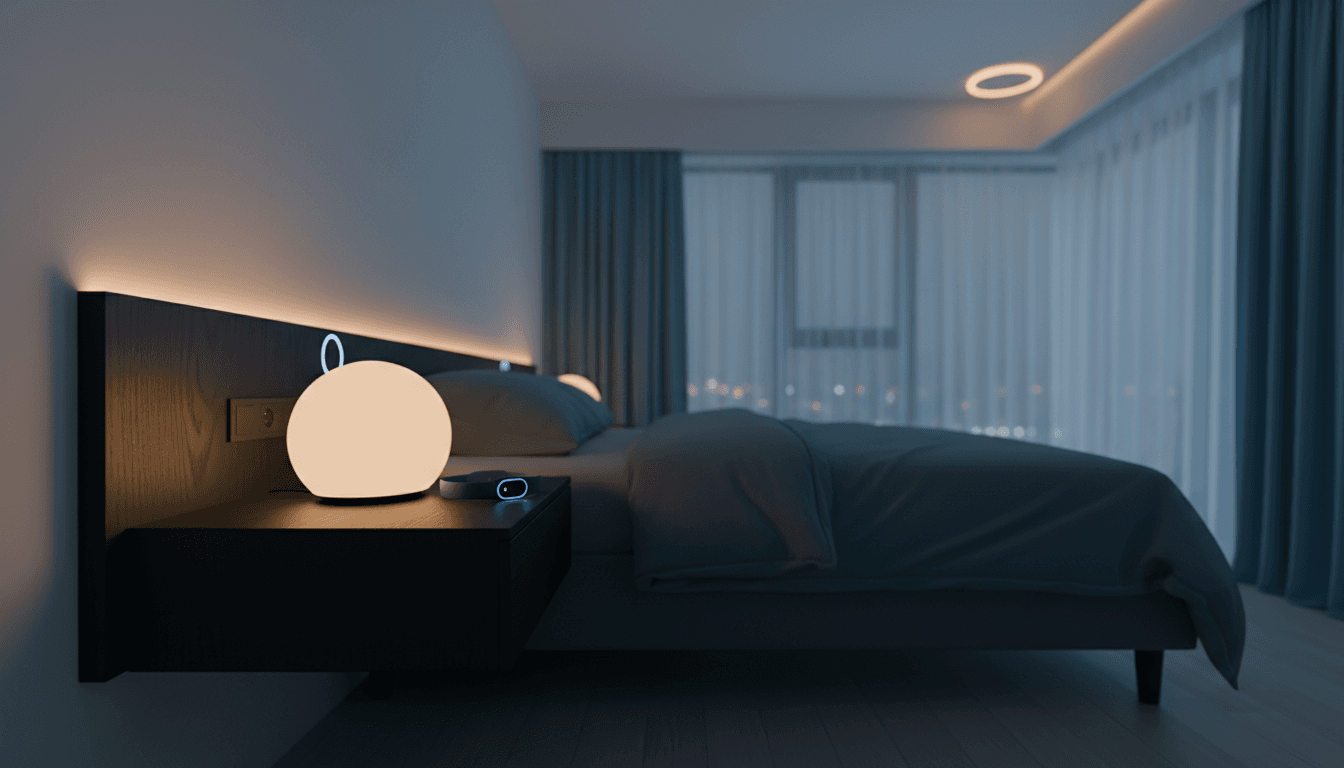
SleepTech in 2026: 8 Products & 3 Growth Lessons
UK startups obsess over CAC, retention, and product-led growth. Yet one of the clearest “how it’s done” playbooks for building trust, habit, and recurring revenue is hiding in an unexpected place: SleepTech.
Sleep sits at the intersection of wellness and hard science—biometrics, sensors, clinical validation, and personalised interventions. That combination isn’t just good for users. It’s a marketing advantage, because it creates daily engagement, strong word-of-mouth, and clear outcomes people will pay for.
This post is part of our Climate Change & Net Zero Transition series, because consumer tech doesn’t exist in a vacuum. The same design choices that make SleepTech sticky—always-on sensing, cloud analytics, premium hardware—also create real questions about energy use, device lifecycles, and sustainable innovation. If you’re building in the UK, learning from SleepTech means learning how to grow and how to do it responsibly.
Why SleepTech is a marketing case study (not just a wellness trend)
SleepTech works as a growth model because it sells an outcome people feel the next morning. When your customer can connect yesterday’s behaviour to today’s energy, you get a rare thing in consumer tech: fast feedback loops.
The category has also matured. What used to be passive tracking is now adaptive intervention: lighting that changes at the right time, audio that responds to stress signals, stimulation that targets snoring mechanics, and smart beds that adjust positioning. That shift matters for go-to-market because it moves the product from “nice dashboard” to “I can’t sleep without this.”
For UK founders, there’s another reason to pay attention: several of the most credible devices are built with or validated by UK institutions (NHS partnerships, King’s College London links). In crowded markets, credible proof is often the difference between a brand people try and a brand people keep.
Does SleepTech actually work?
Yes—when the product combines accurate monitoring with a specific intervention and the user sticks with it. The strongest SleepTech products now pair:
- Sensing (movement, breathing, snoring, heart rate, sometimes brain activity)
- Interpretation (AI models that spot patterns and triggers)
- Action (sound therapy, environmental adjustment, TENS/neurostimulation, posture shifts)
This is where the marketing lesson begins: outcomes beat features. Most people don’t care about “sleep stages” as a concept. They care about waking up without brain fog.
The 8 SleepTech products to watch in 2026 (and what they teach founders)
These eight products show where the market is heading: contactless sensing, neurostimulation, clinically-backed snoring solutions, and smart furniture that behaves like a platform.
1) Sleepal AI Lamp (contact-free sleep companion)
Sleepal’s AI Lamp turns a bedside object into a contactless sleep monitoring and intervention system. It tracks breathing, movement, sleep stages, posture, snoring, and room conditions (like light/noise), and adjusts lighting/sound to support wind-down and waking.
Marketing lesson: the “no wearable” angle reduces friction. If your product can remove setup steps, you’ll often see better retention.
Net zero angle: contactless systems can run all night. Energy-efficient hardware design and low-power processing become part of responsible product storytelling.
2) FRENZ Brainband (biometrics + adaptive audio)
FRENZ is a head-worn device that tracks brain activity, heart rate, and movement, then personalises audio therapy via bone conduction. It also offers sleep scoring, smart alarms, and CBT-inspired content in-app.
Marketing lesson: personalisation is the product. It’s not a “nice-to-have.” When users feel the system adapting to them, they attribute results to your brand—not generic wellness advice.
3) Zeus Sleeps (clinically-developed anti-snoring device)
Zeus targets snoring at its source using gentle TENS-based stimulation under the chin to activate tongue and throat muscles. It’s developed with researchers from King’s College London and Guy’s & St Thomas’ NHS Foundation Trust.
Marketing lesson: this is how you build trust in health-adjacent consumer tech: mechanism + credibility. You don’t need to sound like a pharmaceutical company, but you do need to show why it works.
4) Therabody SmartGoggles (heat + vibration + compression)
Therabody’s second-gen SmartGoggles focus on pre-sleep relaxation: heated eye/temple massage, SmartSense customisation, and app-connected sound therapy. It’s also practical for stress, headaches, and eye strain.
Marketing lesson: position around a moment (wind-down ritual), not a metric. People buy routines.
5) WillSleep Neurostimulation Device (compact, personalised stimulation)
WillSleep uses app-driven, AI-personalised neurostimulation. It’s small (macaron-sized), placed on the neck with a hydrogel patch, and used around 20 minutes a day to support sleep quality and reduce insomnia symptoms.
Marketing lesson: “20 minutes a day” is a clear adoption script. The best onboarding copy is often a simple timetable.
6) TEMPUR-Ergo® Bases (smart adjustable foundations)
These adjustable bases combine comfort features (positions, lumbar support, USB ports, under-bed lighting) with smart capabilities in some models like Sleeptracker-AI-powered snore detection/response, coaching, and app control.
Marketing lesson: platform pricing works when you combine hardware with ongoing software value. But you must earn it with continuous improvements and clear insights.
Net zero angle: large home products raise bigger lifecycle questions—materials, durability, repairability, and end-of-life handling.
7) Neuro Wellness Youth Bed (AI Health Concierge for adolescents)
Ceragem’s Youth Bed targets adolescents with adaptive light/aroma/sound therapy, thermal control, a spinal thermal massage designed to reduce fatigue, and routines personalised over time using biometric signals.
Marketing lesson: niche focus can be an advantage. “For teens” is a tighter story than “for everyone who sleeps.”
8) Tedream Sleep Tracker (at-home sleep diagnostics)
Tedream uses wireless sensor patches to capture rich biosignals (brainwaves, heart rate, respiration, movement) and applies AI scoring and sleep disorder detection, with dashboards and physician-ready reports.
Marketing lesson: “hospital-level” is a powerful claim—if you support it with evidence and clear explanations. In health-adjacent markets, ambiguity kills conversion.
3 growth lessons UK startups can steal from SleepTech in 2026
SleepTech’s real innovation isn’t just sensors—it’s how the category builds habits, trust, and monetisation without feeling pushy. Here are three lessons worth copying.
1) Personalisation isn’t a feature. It’s a retention engine.
The best SleepTech brands don’t simply report data; they turn data into specific next actions. That creates a loop:
- User does something (goes to bed late, drinks alcohol, changes room temperature)
- Product measures it
- Product reacts (alarm timing, sound therapy, positioning, stimulation)
- User feels the outcome
If you’re marketing any subscription product, ask: what’s the daily loop? If your product can’t create one, you’ll pay for growth forever.
2) Clinical credibility is a go-to-market channel
Sleep is intimate and high-stakes. So people look for reassurance: NHS links, university research, clear explanations of mechanisms, and transparency about what’s measured.
For UK consumer tech, credibility can come from:
- Pilot studies with universities
- Partnerships with clinicians (even advisory-level)
- Publishing validation methods (what you measured, how often, with what limitations)
- Strong privacy statements (what you store, what you don’t)
Trust is acquisition. It’s also lower churn.
3) Hardware wins when you market outcomes—and own the lifecycle
SleepTech often involves physical devices, which forces a higher bar: manufacturing, returns, repairs, compliance, and support. The brands that scale do two things well:
- They sell a simple outcome (less snoring, faster sleep onset, calmer wind-down)
- They treat operations and sustainability as part of the brand promise
In the context of the net zero transition, that second point becomes strategic. UK consumers and regulators are moving toward expectations around durability, repairability, and reduced waste. If you can say “this product is built to last, built to be repaired, and designed to use minimal standby power,” you’re not just being virtuous—you’re reducing support costs and improving brand perception.
Practical marketing ideas: how to apply SleepTech thinking to your startup
You don’t need to build a brainband to copy the playbook. You need the structure behind it.
Create “morning-after” proof in your onboarding
SleepTech succeeds because the payoff is immediate. For other products, manufacture the same clarity:
- Show a result within 24 hours (even if it’s a small one)
- Use a single “north star” metric users understand
- Add one personalised recommendation based on behaviour, not a generic checklist
Snippet-worthy rule: If users can’t explain your value in one sentence tomorrow morning, your onboarding is too complex.
Build content that matches user intent (not your roadmap)
People don’t search for “biometric analysis.” They search for “why do I wake up at 3am?” SleepTech content wins by meeting specific pain points.
Try building an intent-led content cluster:
- Problem posts: symptoms and triggers
- Comparison posts: options and trade-offs
- Setup posts: how to use the product consistently
- Proof posts: validation, methodology, and FAQs
This is also where climate and sustainability content can fit naturally: “How much power does it use?”, “How long will it last?”, “Can it be repaired?” Answering these questions reduces purchase anxiety.
Design for privacy and sustainability as conversion drivers
Sleep products sit in bedrooms. That raises privacy concerns fast. It also raises questions about always-on devices and waste.
Concrete trust builders you can ship (and market):
- Clear “no camera” / “local processing” / “data retention” statements
- Repair and replacement policies that are easy to understand
- Low-power modes and transparent power consumption estimates
- Packaging reduction and responsible materials where feasible
In 2026, responsible innovation is no longer a footer link. It’s part of brand.
Where SleepTech meets the net zero transition
SleepTech might not look like climate tech, but it’s a preview of where consumer tech is heading: more sensors, more compute, more devices in homes. That makes energy efficiency and product lifecycle decisions unavoidable.
If you’re a UK startup building connected products, treat this as your checklist:
- Energy use: can you reduce overnight power draw?
- Lifecycle: how will you handle repairs, returns, and end-of-life?
- Supply chain: can you make fewer, better devices rather than many disposable ones?
The companies that get this right won’t just meet expectations—they’ll stand out as the market tightens.
What to do next
SleepTech in 2026 shows a simple truth: personalisation + credible proof + habit loops is a repeatable growth formula. The smart move for UK founders is to borrow the structure, not the category.
If you want more leads, build marketing around outcomes people can feel, validate the mechanism, and make the product easy to adopt daily. Then tell the sustainability story like you mean it—because customers (and policy) will increasingly demand it.
What would change in your growth plan if you had to prove value to a user every morning—and do it in a way that supports the net zero transition rather than adding to the waste pile?