Learn what ITV’s Six Nations ad trial signals for 2026—and how UK startups can use event-based formats and credible net zero messaging to drive leads.
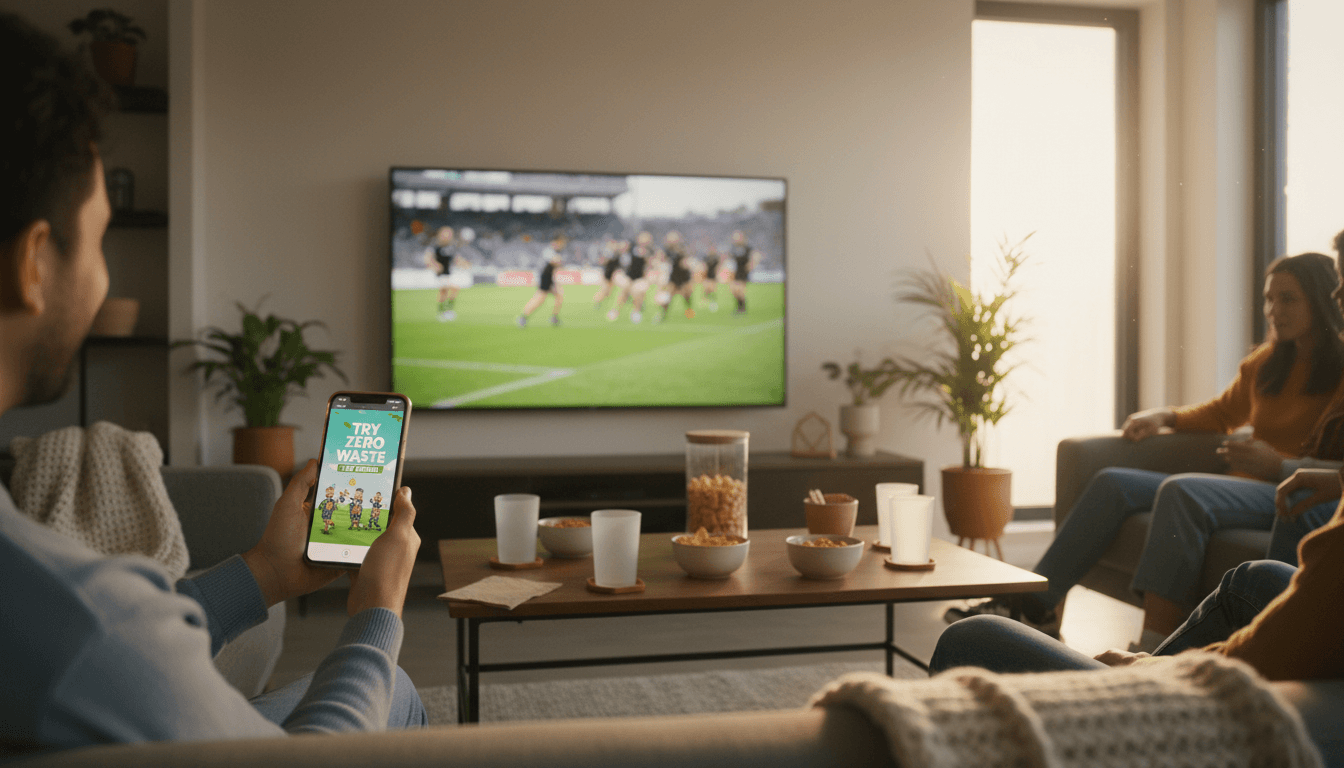
Six Nations Ad Formats: A Startup Playbook for 2026
A single live sports broadcast can concentrate years of attention into 80 minutes: ritual viewing, group chats, second screens, and the kind of cultural momentum brands normally pay a fortune to borrow.
That’s why ITV trialling a new advertising format during the Six Nations—tested by heavyweight brands like Samsung and Virgin Atlantic—matters far beyond the rugby. Even if you’re a UK startup with a fraction of their budget, the logic is worth copying: use attention-rich moments, pair strong creative with smart distribution, and make the experience feel native to the event.
This post sits in our Climate Change & Net Zero Transition series because the next era of marketing in the UK will reward brands that connect growth with responsible choices—cleaner tech, sustainable transport, lower-carbon operations—and know how to communicate that credibly at scale.
Memorable rule: If your product reduces emissions but your marketing is forgettable, you’re still losing to louder, dirtier competitors.
What ITV’s Six Nations ad trial signals for 2026
Answer first: ITV experimenting with new formats is a signal that broadcasters are searching for ads that feel less like interruptions and more like part of the live experience—because that’s what viewers now tolerate.
The source article is behind a security wall, but the headline tells us enough to work with: Samsung and Virgin Atlantic trialled ITV’s new advertising format around the Six Nations. When two major brands are first movers on a broadcaster format, it usually means three things:
- Inventory is scarce and premium. Broadcasters don’t trial formats in low-stakes slots.
- Measurement is the point. Trials exist to prove lift (brand recall, consideration, site visits, app opens) and justify future pricing.
- Attention design is changing. Live sport is one of the last strongholds of real-time attention in a fragmented media landscape.
For UK startups, the opportunity isn’t “buy a Six Nations package” (most can’t). The opportunity is to borrow the same mechanics—format innovation, event adjacency, and partnership storytelling—at a scale you can afford.
Why live sport is still valuable (even post-pandemic)
Answer first: Live sport delivers what most digital placements can’t: shared attention at the same moment.
Post-pandemic behaviour didn’t reduce people’s appetite for communal viewing; it diversified it. Many fans now watch with a second device, browse stats, message friends, and react on social in real time. If a broadcaster format is designed properly—shorter, more integrated, more context-aware—it can catch people before they scroll away.
For climate and net zero messaging, this is critical: sustainability claims often require a bit of explanation. Better formats can create the breathing room for clarity without boring people.
The startup lesson: formats beat budgets
Answer first: Startups don’t win by outspending; they win by choosing channels and formats where attention is underpriced.
Most early-stage marketing fails for a boring reason: teams buy “standard” placements and expect “non-standard” results. The Samsung/Virgin/ITV story is a reminder that distribution itself is a product. If a new ad format increases attention, it can outperform a bigger spend in a tired format.
Here’s how to apply that mindset without broadcaster-level money.
1) Recreate the “new format” advantage in your own channels
Answer first: If you can’t access ITV’s experimental inventory, create novelty elsewhere—same principle, different venue.
Practical options for UK startups:
- Short-form series ads on LinkedIn or YouTube that drop weekly during a tournament (“Matchday Carbon Fact Check”, “Travel Smarter for Game Day”).
- Sponsor a live recap from a creator or community newsletter (sports + sustainability angle works surprisingly well).
- Contextual placements in podcasts that publish match reaction episodes (host-read, story-led beats pre-roll).
- Interactive landing pages timed to fixtures (simple predictors, quizzes, “calculate your travel emissions to the stadium”).
The point is not gimmicks. The point is format fit: your ad should feel like it belongs in the moment.
2) Build creative that survives scrutiny
Answer first: In 2026, sustainability messaging gets audited by the public—your creative needs receipts.
If your startup operates in the net-zero economy—EV charging, heat pumps, low-carbon logistics, circular retail, climate fintech—your claims need to be specific. I’ve found that the safest creative framework is:
- Claim: what changes (e.g., “cuts delivery emissions by 32%”).
- Mechanism: how it changes (route optimisation, modal shift, renewable sourcing).
- Boundary: where it applies (region, product line, timeframe).
One-liner you can steal:
“Good climate marketing isn’t louder—it’s clearer.”
Event-based marketing that doesn’t bankrupt you
Answer first: Event-based marketing becomes affordable when you stop trying to “own” the event and instead own a small, valuable slice of it.
Six Nations is a cultural tentpole. Your startup can’t buy the tent, but you can rent a table near the entrance.
Pick the right event layer
Instead of “Six Nations sponsorship,” think in layers:
- The match moment (live viewing) – expensive, but high attention.
- The commute (getting to pubs/stadiums, trains) – perfect for sustainable transport products.
- The social ritual (watch parties, group chats) – great for shareable mechanics.
- The Monday debrief (workplace chatter, newsletters) – great for B2B climate products.
If you’re a sustainable transport startup, layer #2 is gold. If you’re selling carbon accounting to SMEs, layer #4 is where the buying intent lives.
A simple “fixture calendar” plan
Answer first: Tie your marketing calendar to fixtures, not random posting schedules.
A lightweight plan:
- T-7 days: publish one strong explainer (problem + your solution) with a relevant hook: travel, energy use, waste.
- T-1 day: ship a short piece of creative built for sharing (30–45 seconds video or a single graphic).
- Match day: run a live activation (poll, calculator, limited-time offer that’s actually relevant).
- T+1 day: post results and proof (numbers, customer story, what happened).
The goal is momentum. Events do the hard work of getting people to care today.
Partnership marketing: why Samsung + Virgin Atlantic matters
Answer first: Big brands trial formats together because partnerships reduce risk and increase narrative power—startups should copy this.
Samsung and Virgin Atlantic aren’t just buying attention; they’re buying association. When two credible brands appear in a new environment, the format feels legitimised.
For UK startups, partnerships are often the fastest path to reach and trust—especially in the climate change and net zero transition space where buyers fear greenwashing and tech risk.
What a “smart partnership” looks like for a startup
A good partnership has three properties:
- Shared audience: not just “similar vibes”—the same decision-makers or the same weekly rituals.
- Complementary proof: your partner provides trust you don’t have yet (and you provide novelty they’ve lost).
- A measurable action: sign-ups, scans, demos, trials, not just “awareness.”
Examples that map to the sustainable economy:
- Heat pump installer network + home energy monitoring app
- Rail operator commuter newsletter + sustainable mobility startup
- Circular fashion marketplace + returns/logistics partner (lower-carbon delivery)
You’re not trying to look big. You’re trying to look real.
How to measure a new ad format (without pretending you have a TV attribution stack)
Answer first: Measure incrementality with a few clean signals, not a messy spreadsheet of vanity metrics.
If you’re experimenting with new formats—broadcast adjacent, creator-led, event-driven—use a simple measurement ladder.
The measurement ladder
- Attention proxy (fast): video completion rate, average watch time, landing page scroll depth.
- Intent (stronger): email capture rate, demo requests, app installs.
- Economic signal (best): cost per qualified lead, payback period on the campaign.
Practical tips that work for small teams:
- Use a single campaign landing page per event (don’t scatter traffic).
- Offer one event-relevant CTA (e.g., “Get the low-carbon commute checklist”).
- Run a matched-week test: compare a fixture week with a similar non-fixture week.
If you can’t show a lift, the format isn’t “innovative.” It’s just different.
“People also ask” (quick answers startups need)
Can a startup benefit from major sports events without sponsoring them?
Yes. The most cost-effective route is adjacent inventory: creator recaps, community newsletters, commuter touchpoints, and social content timed to fixtures.
How do you avoid greenwashing when marketing during big events?
Use precise claims with boundaries, and publish the mechanism. If you can’t explain how emissions reduce, don’t run the claim.
What’s the fastest event-based campaign a two-person team can ship?
A fixture-timed landing page + one shareable creative asset + one partner distribution channel (newsletter or creator) + a follow-up case post with numbers.
Where this goes next for net zero marketing in the UK
Broadcasters and platforms are going to keep testing formats that feel more native, more interactive, and more measurable. That’s not a trend to watch from the sidelines. It’s a prompt to tighten your own approach.
If you’re building in climate tech, sustainable transport, or any net-zero transition niche, your marketing has two jobs: make the benefit obvious and make the proof easy to trust. Event-based moments—like the Six Nations—can do the first part for you by concentrating attention. Your format and your facts have to do the rest.
What would happen if, for the next major UK moment on your calendar, you stopped buying “standard ads” and designed a format people actually want to engage with?