How Proba makes Scope 3 fertiliser emissions measurable—and what UK startups can learn about marketing trust, verification, and net zero delivery.
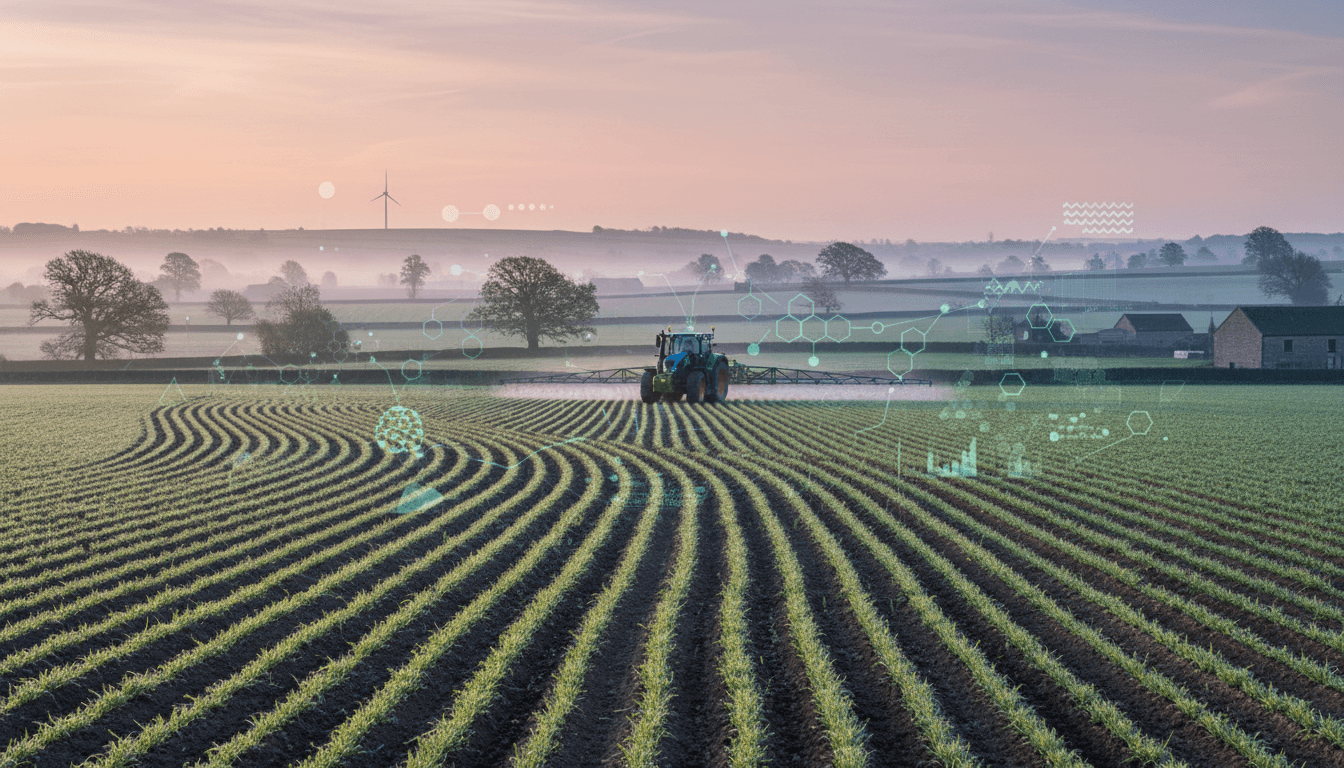
Scope 3 Farming Emissions: Marketing Lessons From Proba
Food and agriculture sit at the centre of the UK’s net zero transition—and not in a feel-good way. Fertiliser use alone is responsible for roughly 5% of global greenhouse gas emissions, according to Proba’s founder, because it drives both upstream emissions (making fertiliser) and on-farm emissions (what happens after it’s applied).
Most startups hear that and think: “Great mission.” What Proba shows is more useful: mission only scales when the market can measure outcomes, trust the numbers, and pay for them. That’s a marketing problem as much as it is a climate problem.
Proba (founded 2022) is a UK-focused agri-tech business building a system to measure, verify, and certify fertiliser-related emission reductions so food companies and traders can report credible Scope 3 reductions—and farmers can actually get paid for the changes they’re being asked to make.
“If you can’t measure it credibly, you can’t sell it repeatedly.”
This post is part of our Climate Change & Net Zero Transition series, where we look at what it takes to deliver net-zero commitments in the real economy. Here, Proba is a case study in a trend that’s accelerating in 2026: net zero claims are moving from storytelling to accounting—and the companies who market with proof will win.
Proba’s wedge: turn fertiliser emissions into something tradable
Proba’s core move is simple to explain: create credible units of “reduced emissions” from fertiliser changes, then help supply chain buyers use those units in sustainability reporting.
That’s a big deal because Scope 3 emissions (the indirect emissions across your value chain) are often the largest share for food businesses—and the hardest to reduce. Fertiliser is a classic Scope 3 headache: big impact, dispersed across thousands of farms, and easy to over-claim.
Why fertiliser reductions are hard to fund
Here’s what usually happens:
- A food brand sets a net zero target.
- Procurement puts pressure on suppliers.
- Farmers are told to change inputs and practices.
- Farmers absorb the cost and risk.
That dynamic fails because it’s economically backwards. Farmers are asked to invest so downstream brands can report progress.
Proba reframes the market: if the reduction can be measured and verified, it becomes an asset—something a buyer can fund because they can record it in their own carbon accounting (aligned with frameworks like SBTi and the GHG Protocol, as the TechRound profile notes).
What Proba actually sells (and why that matters for marketing)
Proba isn’t “selling sustainability.” It’s selling:
- Measurement (how much emissions changed)
- Verification (independent credibility)
- Certification (a unit a buyer can report/claim, and potentially trade)
That packaging is marketing gold because it’s concrete. Climate buyers don’t buy vibes; they buy risk reduction.
The market pull: why Scope 3 pressure is a growth engine in 2026
The fastest-growing B2B climate categories tend to have one thing in common: regulatory, customer, or investor pressure forces a budget line to exist. In agri-food, Scope 3 reporting is increasingly that forcing function.
Food companies and traders have three practical problems right now:
- They need Scope 3 reductions that stand up to scrutiny (auditors, stakeholders, NGOs, procurement challenges).
- They need to pay for reductions efficiently (not bespoke consulting every time).
- They need a narrative that won’t backfire (greenwashing accusations are reputationally expensive).
Proba’s proposition meets all three by making reductions measurable and independently verified.
Here’s the stance I’d take if I were advising a UK startup in this space: credible accounting is the new brand. You can have the slickest site in the world, but if your methodology can’t be explained in one slide to a sceptical sustainability lead, you’ll stall.
The marketing lesson: Proba isn’t “climate tech”—it’s trust tech
Most companies get positioning wrong in net zero transition markets. They lead with the mission (“helping farmers go green”) and leave buyers to guess how it works, whether it’s real, and what risk it introduces.
Proba’s differentiation—per TechRound—is the methodology and platform that can accurately measure and verify fertiliser-related emission reductions.
That matters because in carbon markets and carbon accounting, the product is not just data. The product is trust.
A simple positioning framework you can copy
If you’re a UK startup selling into sustainability budgets, borrow this structure:
- Enemy: “Unverifiable Scope 3 claims.”
- Cost of enemy: “Budgets get frozen; reporting gets challenged; procurement gets stuck.”
- Mechanism: “We measure X using Y methodology; verification is independent.”
- Outcome: “A certified unit that can be reported, claimed, or traded.”
Proba’s story fits this perfectly. It’s not abstract. It’s operational.
Why independent verification is the best marketing channel
Paid ads don’t fix credibility gaps. Independent verification does.
In climate change & net zero transition markets, credibility compounds:
- It shortens sales cycles because procurement teams trust the basis of claim.
- It improves partner conversations (fertiliser companies, co-ops, traders).
- It creates defensible differentiation when competitors offer “estimates.”
Put bluntly: methodology is content. Your whitepaper, audit approach, and verification partners are doing as much marketing as your brand design.
How Proba’s model helps the net zero transition actually happen
The net zero transition isn’t blocked by a lack of good intentions. It’s blocked by capital allocation. Money doesn’t flow to “impact” unless the impact is measurable, comparable, and contractable.
Proba’s certification concept is powerful because it turns a messy real-world change (switching fertilisers, adjusting application, changing practices) into something that can move through corporate systems:
- a verified reduction
- tied to a project
- that can be booked against Scope 3
Example: how a buyer could fund reductions (without guesswork)
A practical scenario (similar to the one in the source article):
- A food company funds a farmer cooperative to adopt lower-emission fertilisers.
- Proba measures the change in fertiliser-related emissions.
- An independent verifier validates the result.
- Proba certifies the reduction.
- The buyer reports the verified Scope 3 reduction; the cooperative uses the funding to cover costs.
This is how you get from “net zero ambition” to “net zero delivery” in supply chains: make the unit of progress legible to finance and reporting.
3 growth takeaways for UK startups marketing climate solutions
If you’re building in climate tech, agri-tech, or sustainability SaaS in the UK, Proba offers three repeatable lessons.
1) Sell the unit, not the intention
Proba effectively sells a certified reduction—a unit that a buyer can use.
If your offer is still phrased as “helping companies be greener,” tighten it. What is the unit?
- tonnes CO₂e reduced (verified)
- kWh saved (metered)
- waste diverted (auditable)
- compliance risk reduced (documented)
A good unit turns marketing from persuasion into procurement.
2) Make the buyer the hero, but pay the doer
Proba’s founder highlights an uncomfortable truth: farmers pay for changes while others benefit.
Your marketing should reflect the economics:
- Who does the work?
- Who captures the value?
- How does money move so the doer isn’t subsidising the whole system?
Buyers respond to this because it’s fair—and because it’s stable. Supply chains don’t decarbonise when the lowest-margin actor carries all the cost.
3) Treat frameworks as distribution
Proba aligns to recognised accounting frameworks like SBTi and the GHG Protocol.
That’s not box-ticking. That’s distribution.
When you align with how sustainability teams already report, you:
- reduce switching costs
- reduce internal friction
- increase the chance your project survives annual budgeting
If you’re early-stage, choose one reporting use case and nail it. Broad “platform” messaging comes later.
Quick FAQs people ask about Scope 3 fertiliser emissions
What are Scope 3 emissions in agriculture?
Scope 3 emissions are indirect emissions across a company’s value chain—for food brands that includes purchased goods (crops, ingredients), fertiliser impacts, transport, waste, and more.
Why are fertilisers such a big piece of the footprint?
Fertiliser drives emissions in two places:
- Production emissions: energy-intensive manufacturing.
- Field emissions: nitrogen-related emissions after application.
That combination makes fertiliser one of the highest-leverage points in the agri-food net zero transition.
What makes an emissions reduction “credible” for reporting?
A credible reduction is measured with a defensible methodology, independently verified, and documented so it can be audited and consistently reported.
Where Proba fits in the bigger net zero transition story
Net zero transition progress in the UK (and globally) depends on translating messy physical-world changes into outcomes companies can book, buy, and defend. Proba is part of a broader shift: climate action is becoming operational infrastructure.
If you’re a founder, the bigger lesson is marketing discipline. Climate buyers are tired. They’ve heard every promise. The companies that grow in 2026 are the ones who can say: “Here’s the mechanism, here’s the verification, here’s the unit you can report.”
If you want to see how Proba presents its approach, start with their site: https://proba.earth/
The next question for the sector is straightforward: when verified reductions become easier to buy than to argue about, how quickly will capital finally move into the farm-level changes we already know work?