OFFF Barcelona 2026 highlights creativity, community and digital craft. Here’s how UK solopreneurs can use those ideas to market and grow in net zero work.
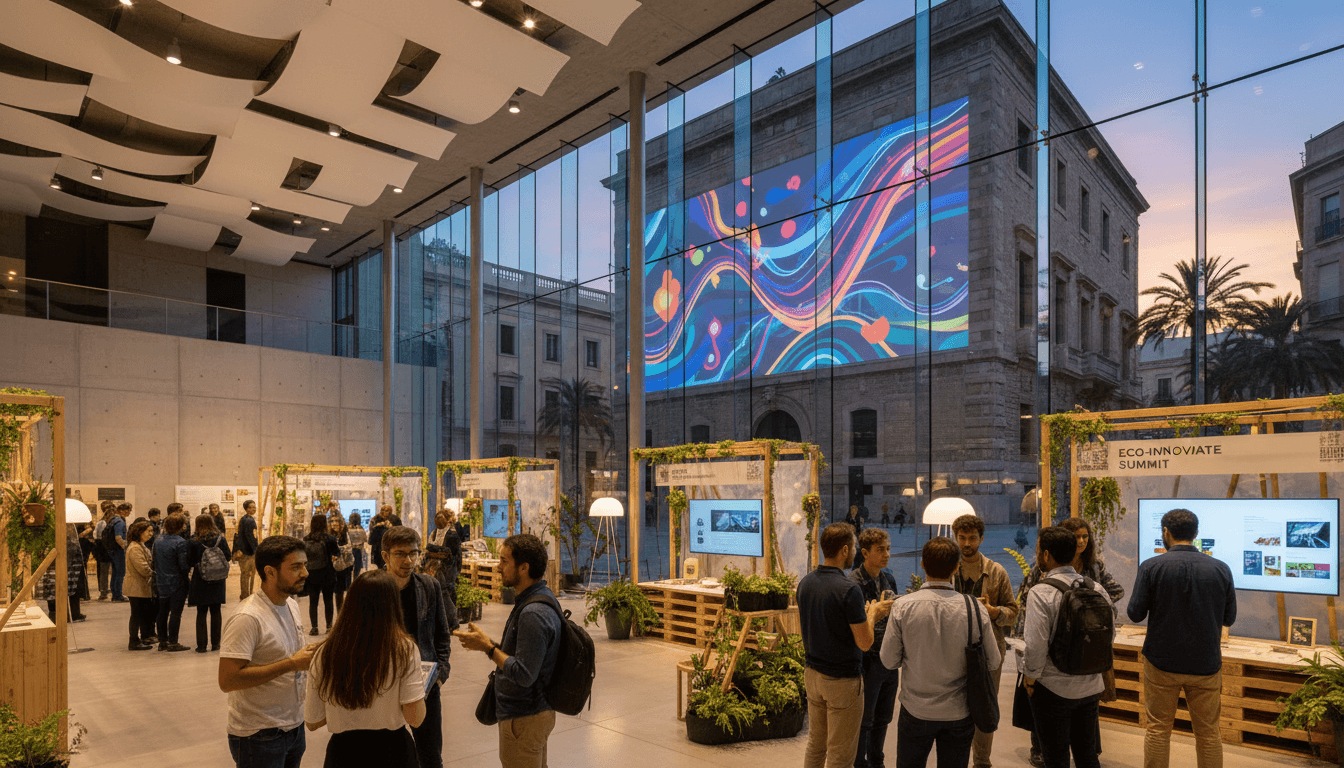
OFFF Barcelona 2026: Ideas UK Solopreneurs Can Use
Barcelona’s OFFF festival is back for its 26th year (16–18 April 2026), and the line-up is a reminder of something most solo business owners forget: your growth isn’t only about better tactics—it’s about better inputs. Better references. Better peers. Better creative constraints.
For UK solopreneurs, OFFF Barcelona can be more than “a nice trip for designers”. It’s a live snapshot of where branding, digital craft, motion, photography, and experience design are heading next—and that matters directly to how you market, sell, and communicate.
This post sits in our Climate Change & Net Zero Transition series for a reason. The net zero transition isn’t just policy and infrastructure; it’s also communication. The businesses that win in a low-carbon economy will explain their value clearly, prove their claims, and build trust fast. Good design isn’t decoration. It’s how credibility travels.
What OFFF Barcelona 2026 tells us about design (and why that matters for net zero)
OFFF 2026 is positioned as a global meeting point for creativity and digital culture, hosted again at Disseny Hub Barcelona. This year’s programme spans branding, motion, photography, architecture, art direction and experiential work—with speakers including Seth Epstein (LOS YORK), Nils Leonard (Uncommon Creative Studio), Reuben Wu, Maggie West, Valtteri, Björn Kusoffsky (Stockholm Design Lab), and Noah Dillon.
Here’s the business takeaway: creative disciplines are blending into one buyer experience. Your website, proposal PDF, pitch deck, social content, and onboarding emails are no longer separate “bits”. They’re one system. OFFF’s range reflects that reality.
For solopreneurs working in climate, sustainability, built environment, transport, circular economy, or green jobs, this is even more pronounced:
- Buyers are sceptical of vague sustainability claims (and regulators are tightening rules on greenwashing).
- Trust is built through clarity: sources, proof, specificity, and consistent messaging.
- Your “brand” is what people remember when they’re comparing you to three similar options.
Net zero marketing is trust design. OFFF is essentially a three-day masterclass in trust design.
Collaboration beats the lone-genius myth (and that’s your growth plan)
OFFF’s 2026 campaign—created with Uncommon Creative Studio and framed around the idea What We Make It—puts a big flag in the ground: creativity is collective. Not in a fluffy way, but in a practical one.
Solopreneurs often treat collaboration as a cost (“I can’t afford a designer / copywriter / editor”), when it’s often the fastest route to revenue:
A simple collaboration stack for a solo business
You don’t need a full agency. You need a repeatable way to bring in skills when they create commercial lift.
- Strategy buddy (peer, not mentor): someone at your level to pressure-test offers and pricing.
- Brand/design partner on retainer-lite: 4–8 hours/month to keep your visuals consistent.
- Specialist “proof” support: e.g., an LCA consultant, retrofit assessor, or data analyst who strengthens claims.
If you’re selling into sustainability or net zero work, that third piece is a cheat code. A crisp claim with evidence (“reduced scope 2 emissions by 18% in 12 months, verified via supplier invoices and REGO certificates”) beats a beautifully written but unprovable promise every time.
A good brand makes the right thing easy to choose. A great brand makes it easy to believe.
Your 30-day action: build a small “reference board” network
OFFF is full of strong references—styles, systems, and decisions. You can replicate the benefit without being in the room:
- Save 20 examples of work you admire (websites, motion, posters, photography).
- Label each with why it works (not “nice colours”).
- Share it with one collaborator and agree 3 rules for your brand (e.g., “one hero message per page”).
That’s collaboration in a format you can sustain.
Design trends you can borrow without copying (especially for green offers)
OFFF’s line-up leans heavily into modern image-making and digital storytelling—especially through artists like Reuben Wu (tech-driven landscapes) and Noah Dillon (music/editorial imagery). Translation: expect bolder imagery, cleaner narratives, and more deliberate use of motion.
Here’s what I’d actually implement if I were running a UK solopreneur business in 2026.
1) “Proof-first” pages
Most sustainability websites still lead with mission statements. That’s backwards.
A proof-first layout leads with:
- Outcome (what changed)
- Method (how you did it)
- Evidence (what you measured)
- Next step (what the buyer does)
Example hero structure:
- Headline: “Cut fleet fuel spend by 12–20% in 90 days.”
- Subhead: “Route optimisation + driver coaching, measured against baseline telematics.”
- Proof bar: “3 case studies • Typical payback < 6 months • SME-friendly.”
2) Visual consistency as a climate trust signal
In sustainability and net zero transition work, inconsistency reads as risk: mismatched slides, random fonts, uneven imagery. Buyers interpret that as “if they can’t manage brand basics, can they manage compliance?”
Pick a simple system:
- 2 typefaces (or even 1)
- 2–3 core colours
- 1 photography style (people, sites, products—choose one primary)
- A repeatable chart style for data
Then apply it everywhere: proposals, LinkedIn carousels, your invoice template. It’s boring. It works.
3) Motion for explanation, not decoration
OFFF’s emphasis on motion and “Main Titles” reminds us that motion is at its best when it clarifies.
For solopreneurs, the highest-ROI motion assets are:
- A 20–30 second “how it works” animation (ideal for pinned social + landing page)
- A 3-step process loop for services (turn confusion into momentum)
- A short clip showing “before/after” in the built environment (retrofit, insulation, heat pump installs)
If you work in sustainable transport or energy, motion helps you show systems—flows, loops, dependencies—fast.
Architecture takes the spotlight: a cue for built-environment solopreneurs
OFFF 2026 highlights architecture in response to Barcelona being designated UNESCO World Capital of Architecture. With talks from major studios like Foster+Partners and CODA, the festival is pointing at a broader reality: the built environment is where net zero becomes visible.
If you sell any service connected to buildings—retrofit coordination, ESG reporting, building performance, low-carbon materials, planning, workplace strategy—here’s the opportunity:
Stop selling “services”. Start selling decisions.
Clients don’t wake up wanting “a retrofit assessment”. They want to make a decision without regretting it.
So position your work around decision moments:
- “Choose between retrofit options A/B/C with payback, disruption, and carbon impact.”
- “Prepare evidence for funding, grants, or internal capex approval.”
- “Avoid performance gaps by setting measurable specs and handover checks.”
That framing also protects you from being commoditised.
A quick example: the proposal upgrade
Instead of a 12-page wall of text, try a one-page proposal summary:
- Objective: what you’re optimising (cost, comfort, compliance, carbon)
- Scope: what’s included/excluded
- Deliverables: exactly what the client receives
- Measurement: baseline + how success is tracked
- Timeline: phases with dates
- Price: fixed, with options
Good design here doesn’t just look nice—it reduces sales friction.
OFFF’s “Tips & Tricks” format is the real lesson: small groups scale faster
OFFF 2026 introduces Tips & Tricks—25-minute small-group sessions with short talks and Q&A, focused on career development, leadership, reinvention, and resilience.
For solopreneurs trying to grow in 2026, this format is pure signal: small, practical exchanges are replacing big, vague inspiration.
You can copy this model to generate leads:
Run your own “Tips & Tricks” as a lead engine
Pick one narrow problem tied to net zero transition outcomes, for example:
- “How SMEs can avoid greenwashing on their website in 30 minutes”
- “What to measure first for a credible net zero plan (and what to ignore)”
- “Retrofit comms: how to get occupants on side before work starts”
Structure:
- 10 minutes: your framework (3–5 steps)
- 10 minutes: one case example with numbers
- 10 minutes: Q&A
- 5 minutes: clear invitation to a paid audit/strategy session
Keep it small (8–15 people). Make it interactive. Record it and turn it into:
- 3 LinkedIn posts
- 1 email newsletter
- 1 landing page
- 1 sales asset
This is how you turn “community” into pipeline without feeling salesy.
People also ask: is it worth attending OFFF Barcelona as a solopreneur?
Yes, if you treat it as a business development sprint, not a holiday. OFFF is useful when you go in with three outcomes: references, relationships, and a plan.
A practical OFFF plan (even if you don’t attend)
If you attend:
- Set one objective: e.g., “improve my brand system” or “find a motion partner”.
- Pre-book 6 short meetups (20 minutes) with peers or potential collaborators.
- Capture 30 notes: 10 ideas, 10 references, 10 actions.
If you don’t attend:
- Follow speakers/studios afterwards and study the work.
- Rebuild one asset (your homepage, deck, or proposal) using the proof-first structure.
- Host your own small-group session using the OFFF Tips & Tricks model.
The point isn’t Barcelona. The point is upgrading your inputs.
A better way to grow: use creativity to make net zero simple to buy
OFFF Barcelona 2026 is a strong reminder that creative work is moving outward—into cities, into communities, into shared culture (their outdoor Screen programme is a literal example of that). For solopreneurs, the equivalent move is simple: take your ideas out of private client docs and into public, helpful assets.
In the net zero transition, the market rewards people who can explain complex change without dumbing it down. If your brand and content do that—clearly, consistently, with evidence—you’ll stand out fast.
So here’s the next step I’d take this week: choose one thing you sell, and rewrite it as a decision your client is struggling to make. Then design one page that proves you can help them make it.
What would happen if your marketing made the low-carbon choice feel obvious?