OFFF Barcelona 2026 isn’t just inspiration. Here’s what UK solopreneurs can copy to grow leads and build credible brands in the net zero transition.
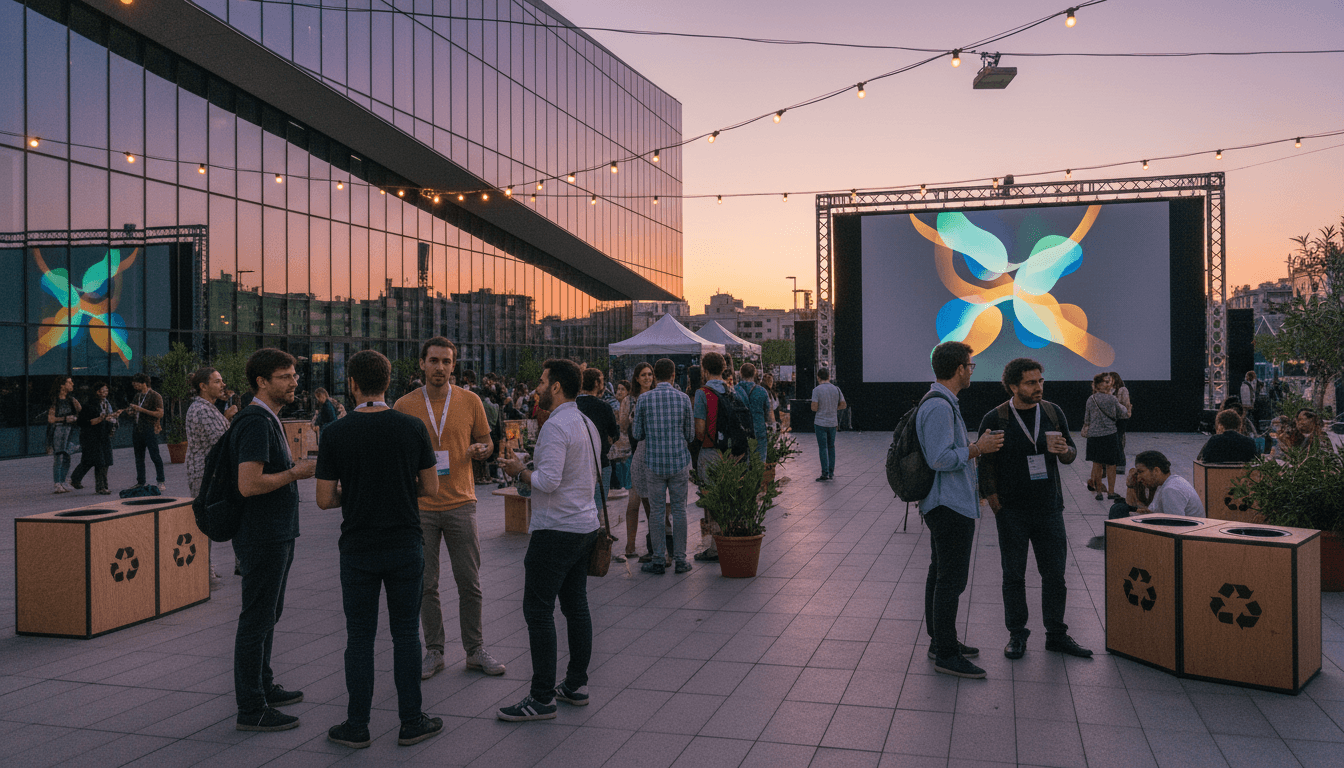
OFFF Barcelona: Creative Networking for Greener Growth
A three-day design festival might not sound like a net zero transition story. But it is—because the ideas that shape what people buy, trust, share, and support are made by creatives. And in 2026, the fastest-growing opportunities for UK solopreneurs sit right at the intersection of brand, digital culture, and sustainability.
OFFF Barcelona returns 16–18 April 2026 at Disseny Hub Barcelona for its 26th edition, with a line-up spanning branding, motion, photography, architecture, and experiential design. The headline names (LOS YORK’s Seth Epstein, Uncommon Creative Studio’s Nils Leonard, Reuben Wu, Stockholm Design Lab’s Björn Kusoffsky, Maggie West, Noah Dillon, and more) make it easy to file this under “inspiration”. Most people stop there.
I don’t think you should. For a UK solopreneur trying to grow leads, improve positioning, and future-proof your offer in a low-carbon economy, OFFF is a useful lens on what’s changing—and what to do about it.
OFFF Barcelona 2026 shows where creative demand is heading
Answer first: OFFF’s programme points to three demand shifts that will directly affect how you market and sell in 2026: collective creativity, public-facing digital work, and practical skill exchange.
OFFF has always been a global meeting point, but this year’s theme and formats are especially telling. The 2026 visual campaign—developed with Uncommon Creative Studio and titled “What We Make It”—puts the emphasis on creativity as a collective act rather than a lone-genius story. That’s not festival fluff; it’s reflecting how clients increasingly buy.
For solopreneurs, the implications are immediate:
- Buyers want outcomes that feel co-created with their audience and stakeholders.
- Brands are under pressure to prove values (including climate commitments) through actions, not slogans.
- Creative work is moving out of private client decks and into public spaces, community screens, and participatory formats.
This matters in the Climate Change & Net Zero Transition context because net zero isn’t only an engineering problem. It’s a behaviour-change problem—adoption, trust, motivation, and clarity. That’s the creative brief.
The UNESCO architecture moment is a reminder: systems beat aesthetics
Answer first: Barcelona’s UNESCO World Capital of Architecture designation (highlighted in OFFF’s architecture-heavy programme) is a cue that the market is shifting from “pretty design” to systems design—including low-carbon systems.
OFFF 2026 includes architecture voices such as Foster+Partners and CODA, tying the festival directly to the built environment conversation. The built environment is one of the biggest pieces of the climate puzzle; in the UK, buildings and construction remain central to decarbonisation plans, from heat pumps and retrofits to low-carbon materials and planning.
So why should a marketing consultant, designer, copywriter, or automation specialist care?
Because more of your prospective clients will be:
- retrofit firms,
- clean-tech startups,
- sustainable product brands,
- local authorities and public-sector suppliers,
- and professional services supporting ESG reporting and compliance.
These buyers don’t just need a logo or a landing page. They need clarity across a complex customer journey.
A practical move: sell “clarity packages” for net zero offers
Here’s what I’ve seen work well for solo operators serving sustainability-adjacent clients: productise the messy bit.
A simple “clarity package” can include:
- A one-page value proposition (what you do, who it’s for, what changes after)
- A proof stack (case studies, metrics, certifications, standards, procurement-ready info)
- A content system (3–5 core topics mapped to awareness → consideration → decision)
- A light brand system (type, colour, templates) designed for fast production
That’s growth work. It also reduces waste: fewer throwaway assets, fewer rebrands, less content churn.
OFFF’s “What We Make It” theme is your playbook for community-led marketing
Answer first: If you want more leads in 2026, stop trying to sound “premium” and start building shared references your audience recognises.
The OFFF campaign frames creativity as something that emerges from collaboration, openness, experimentation, and intentional growth. It also nods to real tensions: authorship, homogenisation, and community.
Solopreneurs feel those tensions every day:
- You want to stand out, but trends compress everyone into the same look.
- You want to be visible, but platforms reward volume over depth.
- You want sustainable growth, but short-term tactics tempt you into frantic posting.
A community-led approach is the antidote.
A simple method: build a “reference library” your audience can borrow
Do this for the next 30 days:
- Collect 20 examples your audience already cares about (campaigns, tools, design patterns, public sector comms, product pages, climate explainers).
- Post 2 a week with a short, opinionated breakdown: what works, what fails, what you’d copy, what you’d avoid.
- End each post with a line that invites response (“If you’re selling X, steal this structure.”)
You’re not just sharing inspiration. You’re training the market to associate you with good taste and good judgement—two things AI can’t convincingly fake when stakes are high.
The Screen programme is a lesson in public trust (and climate comms)
Answer first: OFFF projecting work onto the façade of Disseny Hub Barcelona is more than spectacle—it’s a reminder that trust is built in public, and sustainability claims are now scrutinised in public.
OFFF’s The Screen programme runs across all three nights and includes an open call plus curated site-specific work by invited studios and artists (including Burton Rast, Somnia Lab, and OnionLab). That blend of community + curated quality is exactly how modern brands earn attention.
For UK solopreneurs in the sustainability and net zero space, this connects directly to a painful reality: green claims are under pressure. Audiences and regulators are less tolerant of vague language.
What to copy: make your proof visible, not buried
If you sell anything adjacent to the net zero transition—advisory, services, products—build a “proof in public” habit:
- Put numbers on the page (even if they’re small). Example: “Reduced onboarding steps from 12 to 6” or “Cut proposal turnaround from 10 days to 72 hours.”
- Publish your decision logic. Example: “We don’t use ‘carbon neutral’ language unless we can show reductions first, offsets second.”
- Show your process artifacts: checklists, templates, pre-mortems, content briefs.
A strong stance is memorable. A documented stance is bankable.
Tips & Tricks sessions are exactly what solopreneurs should demand
Answer first: OFFF’s new Tips & Tricks format—25-minute small-group sessions with Q&A—signals that the market is moving toward practical skill transfer, not just inspiration.
OFFF is introducing shorter, more intimate sessions on career development, leadership, reinvention, and resilience. That’s not a side note; it’s an admission that creative work has changed. Teams are leaner, budgets are tighter, and the expectation is that one person can do strategy + content + design + distribution.
If you’re a UK solopreneur, you don’t need another “big ideas” conference talk. You need things you can apply on Monday.
Use OFFF as a model for your own lead generation
Run your own “Tips & Tricks” series as a lead engine:
- Format: 20–30 minutes live on Zoom, tight topic, 10 minutes Q&A.
- Topic examples (net zero-adjacent):
- “How to write a sustainability case study that doesn’t sound like PR”
- “A 5-step website audit for clean-tech conversion”
- “Content you can publish without making emissions claims you can’t prove”
- CTA: invite people to a short diagnostic call or paid audit.
This works because it matches buyer behaviour: people want to sample your thinking before they buy your time.
Should you attend OFFF Barcelona as a UK solopreneur?
Answer first: Attend if your growth plan depends on better positioning, better partnerships, or a move into higher-value sustainability-focused work.
Let’s make it concrete. OFFF is worth it when you’re trying to:
- refresh your creative direction without copying trends,
- meet collaborators (motion, photography, brand, dev) to form micro-teams,
- sense-check where client expectations are going,
- build a pipeline in climate and net zero transition sectors that value craft and credibility.
If you go, don’t “network”. Build a small plan.
A 3-day OFFF networking plan that doesn’t feel cringe
- Before you fly: pick one offer you want to sell in Q2 (e.g., “Sustainability landing page rebuild” or “B2B climate comms content system”). Write a 2-sentence description.
- During the festival: have 5 short conversations per day. Ask the same question: “What are clients asking for right now that wasn’t a priority last year?” Track patterns.
- After you return: send 10 follow-ups within 72 hours—each with one specific observation from a talk + one resource you promised.
Your goal isn’t collecting contacts. It’s collecting signals.
Creativity is infrastructure for the net zero transition
The net zero transition will be won and lost on implementation: adoption of heat pumps, EV charging behaviours, retrofit decisions, reporting confidence, procurement clarity, and public trust. None of that happens through policy PDFs alone.
OFFF Barcelona 2026 is a reminder that creative work is not decoration. It’s infrastructure for understanding—and for action.
If you’re a UK solopreneur, treat events like OFFF as part of your growth system: not as a break from work, but as a way to sharpen your offer, raise your standards, and build relationships that make bigger projects possible.
Where does this leave you? Choose one thing to make more public in the next month—your process, your proof, or your point of view—and see what it does to your pipeline.