Fortnum & Mason’s chocolate-to-music campaign shows how multi-sensory branding drives growth. Use these ideas to market net zero services more memorably.
Multi-Sensory Branding Lessons for Net Zero Brands
Fortnum & Mason didn’t just redesign a chocolate wrapper. It attached 16 original piano compositions to a chocolate range—and reportedly saw a 62% sales increase versus the previous design, with new flavours up 146% compared to de-listed ones.
That’s not a “nice creative idea”. That’s a reminder that experience is a growth strategy, even in categories that feel saturated.
And yes—this belongs in a Climate Change & Net Zero Transition series. Because the net zero transition isn’t only about technology and regulation. It’s about behaviour change at scale: getting people to switch, stick, and advocate. If your offer helps businesses decarbonise, reduce waste, electrify fleets, retrofit buildings, or build greener supply chains, you’re selling a future people can’t yet touch. Multi-sensory storytelling helps make that future feel real.
What Fortnum & Mason actually did (and why it worked)
Answer first: They turned a product into a performance by designing for more than sight.
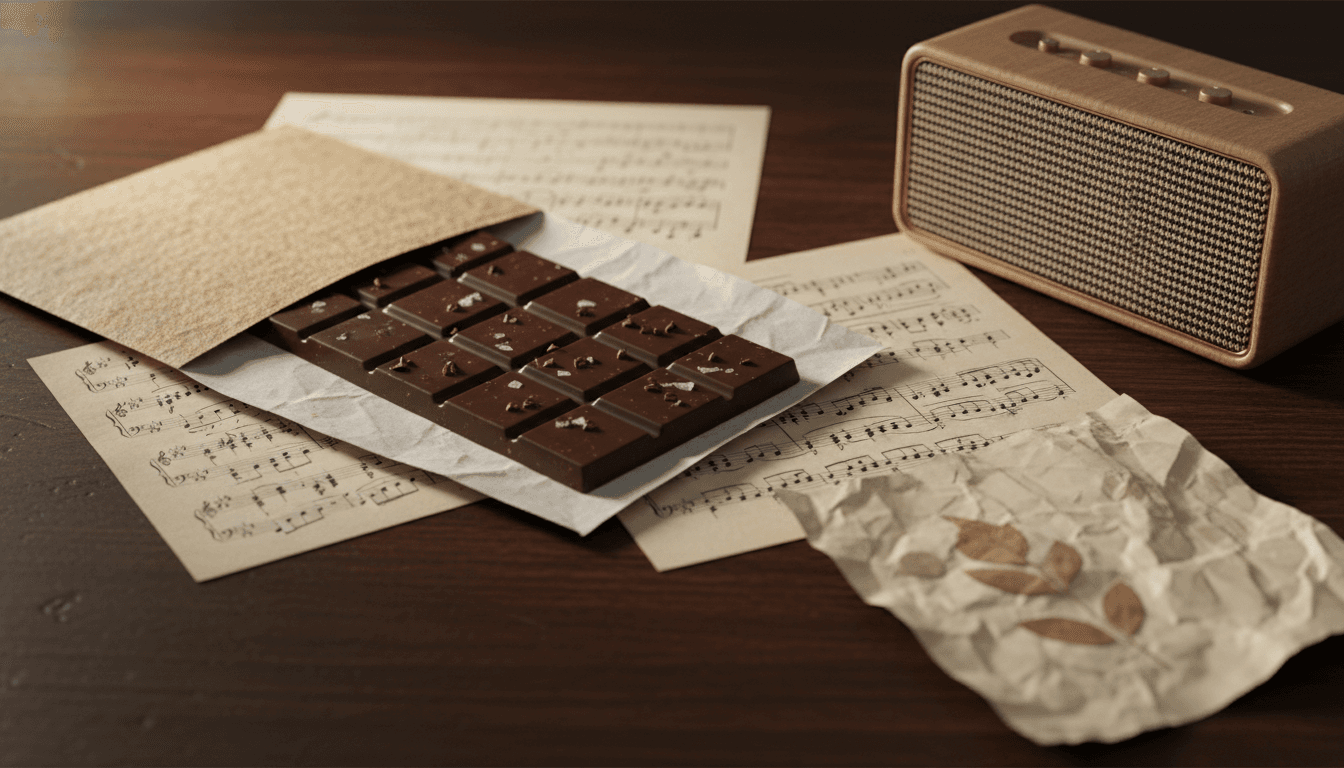
Fortnum & Mason partnered with design studio Otherway to create “Bars of Chocolate”—a collection where each bar is paired with an original piano piece designed to mirror the tasting experience. The packaging uses musical notation on the front, and the full score is revealed inside. Customers can play it, listen along, or simply enjoy the idea that flavour has a soundtrack.
Three decisions make this more than a gimmick:
1) They used a real behavioural insight: sound changes taste
Answer first: Sound influences perception, so they treated it like an ingredient.
The work draws on neurogastronomy—how our senses shape taste. In practice, that means what we hear can shift how we experience sweetness, bitterness, richness, and even texture. Most packaging ignores this and fights only on shelf impact.
Fortnum’s move: build the missing sense into the product story.
2) They made the concept culturally “native” to the brand
Answer first: The pun (“bars”) worked because Fortnum already has musical DNA.
“Bars” refers to chocolate bars and bars of music. Cute wordplay, but also a strategic anchor. Fortnum’s long-standing relationship with music (including the piano at the Diamond Jubilee Tea Salon) makes the idea feel inevitable rather than try-hard.
A lot of small businesses copy surface-level tactics. What scales is copying the mechanism: pick an idea that’s already true about you, then amplify it.
3) They made customers participants, not spectators
Answer first: The packaging invites action—play the score, collect the set, gift the story.
Otherway and music producers Mcasso worked with composers Nathan Britton and Jasmine Meaden to create 16 piano pieces. The piano choice matters: it’s accessible, self-sufficient as a solo instrument, and playable by many.
The result is collectable, giftable, and shareable, all without needing a huge media budget. It bakes in content creation.
The solopreneur takeaway: differentiation is usually sensory, not cerebral
Answer first: People don’t remember your features; they remember how your brand made them feel.
Most solopreneurs try to differentiate with claims:
- “We’re more sustainable.”
- “We’re high-quality.”
- “We’re bespoke.”
Buyers hear this all day. In crowded markets, those statements blur together.
A better approach is to build a distinctive experience layer around what you sell—something that makes your offer easier to understand, easier to recall, and easier to talk about.
Here’s the stance I’ll defend: if you work in climate, sustainability, or net zero, you can’t rely on logic alone. The transition requires trust, identity, and habit—not just spreadsheets.
Multi-sensory branding is one of the simplest ways to make “the invisible” (carbon, energy, waste, long-term risk) feel concrete.
How multi-sensory marketing supports the net zero transition
Answer first: Sensory cues reduce friction and increase follow-through—exactly what climate action needs.
Net zero decisions are often delayed because benefits are future-based and costs are immediate. Sensory storytelling helps by:
Making the benefit immediate
If your service reduces emissions, the payoff might be months away. But you can create a now payoff through the experience:
- onboarding that feels premium and calm
- progress updates that are satisfying to open
- physical artifacts that signal momentum
Making the complex feel simple
Carbon accounting, retrofit pathways, renewable tariffs, fleet electrification—none of this is naturally “felt”. Sensory anchors make it easier to grasp:
- a visual scorecard that looks like a dashboard, not a compliance report
- audio cues in a demo that signal “risk reduced” or “savings achieved”
- tactile print materials for workshops (yes, print still works when it’s intentional)
Making sustainable choices socially transmissible
The Fortnum example is built for sharing: you can show the score, play a few bars, gift a set.
For net zero brands, social transmissibility is gold because it turns your customers into distribution.
Five practical ways a one-person business can do this (without blowing the budget)
Answer first: You don’t need five senses; you need one strong sensory hook that’s repeatable.
Below are ideas that map well to UK solopreneurs—consultants, coaches, product makers, and service providers—especially those in sustainability, green jobs, and decarbonisation.
1) Create a “signature sound” for your content series
If Fortnum has piano scores, you can have a consistent audio identity.
- Use a short, recognisable intro/outro motif for your podcast, reels, or webinar openings.
- Tie the motif to your promise (e.g., calm clarity for compliance; energetic pace for growth).
Keep it simple. The win is recognisability, not production complexity.
2) Turn your framework into a collectable format
Fortnum turned each bar into a collectible.
You can do this with:
- a set of printable “cards” for a net zero roadmap
- a 3-part email sequence with a consistent visual language and a “completion” moment
- a client toolkit that arrives as a physical pack (recycled paper stock, thoughtful design)
If you want leads, make the first “card” a free download and gate the rest.
3) Use “progress theatre” in client delivery
Net zero work can feel slow. Make progress feel tangible.
- weekly checkpoints with a simple red/amber/green status
- a monthly “energy savings receipt” style summary
- before/after snapshots (time saved, emissions reduced, waste diverted)
A sentence worth stealing: “People renew when progress is visible.”
4) Build one ritual customers can repeat
Rituals create retention.
Examples:
- A Friday “Carbon Minutes” habit: 10 minutes to review one metric.
- A monthly “supplier switch sprint” checklist.
- A quarterly “retrofit readiness” walk-through.
Design the ritual so it fits real life. If it needs 90 minutes and a perfect mood, it won’t happen.
5) Make your packaging / proposal physically satisfying
If you sell products: texture, unboxing, and materials are part of sustainability marketing. If you sell services: your proposal is your packaging.
Quick upgrades:
- clearer hierarchy and fewer pages
- one-page summary that a CFO can understand in 30 seconds
- a confident “recommended option” (stop making clients do your job)
Sustainability buyers are often overwhelmed. A proposal that feels calm and decisive stands out.
A simple multi-sensory campaign template you can run this month
Answer first: Pick one sense, one story, one shareable asset.
Try this three-step template:
- Choose one sensory cue that fits your brand (sound, texture, movement, even a consistent colour system).
- Map it to your promise (calm = risk reduction, rhythm = operational efficiency, brightness = innovation).
- Ship one “shareable artifact” that proves the story.
Examples for a sustainability solopreneur:
- A “Net Zero in Notes” playlist where each track maps to a project phase (audit → quick wins → capex planning → implementation).
- A printable wall tracker for SMEs doing energy efficiency upgrades.
- A short audio briefing clients can listen to while commuting—“3 minutes on what changed in UK reporting this week.”
The point isn’t the playlist. The point is you’ve created a distinctive container for your expertise.
People Also Ask: does multi-sensory branding really increase sales?
Answer first: It can, when it’s tied to the product’s meaning and makes sharing easier.
Fortnum & Mason’s reported uplift—62% sales increase after the redesign—suggests the experience layer influenced buying behaviour. But the key isn’t “add music and win.”
Multi-sensory branding works when it:
- fits the brand’s existing story (authenticity)
- reduces uncertainty (clarity)
- adds a “reason to talk” (word of mouth)
- creates a repeatable experience (habit)
If any of those are missing, you get novelty, not growth.
What to copy (and what to ignore) from Fortnum & Mason
Answer first: Copy the strategy—don’t copy the surface.
Copy this:
- One bold insight (sound is a flavour sense)
- One coherent execution (scores on packaging, playable music)
- One participation mechanic (people can perform it)
- One measurable outcome (sales uplift)
Ignore this:
- expensive production values you don’t need
- complexity that makes it hard to repeat
- “clever” ideas that aren’t rooted in your brand
A good rule: if your idea can’t be explained in one sentence, it’s too complicated for marketing.
The net zero transition needs brands that are felt
The climate change and net zero transition will be delivered through policy, investment, and engineering—but adoption happens through humans. Humans buy what they remember, trust, and enjoy repeating.
Fortnum & Mason turned chocolate into music and got paid for it. The lesson for UK solopreneurs is straightforward: design your marketing as an experience, not an explanation. That’s how you stand out in crowded markets—and it’s how you make sustainable choices easier to adopt.
If you had to make your offer felt in one sensory way—sound, touch, rhythm, ritual—what would you choose?