Learn how UK startups can use immersive event marketing to win Gen Z—taking cues from the BBC—and turn net-zero stories into real leads.
Immersive Events That Win Gen Z (UK Startup Playbook)
Most companies get “young audiences” wrong because they treat them like a media plan, not a community.
That’s why the BBC’s new UNBOXD Live event is worth paying attention to. It wasn’t built as a one-off stunt—it was built as a response to BBC research that found gaps in how well the organisation understands younger viewers. When a brand as established as the BBC admits it has blind spots and then invests in an immersive experience to close them, startups should take notes.
This post is part of our Climate Change & Net Zero Transition series, because the same challenge keeps showing up in green innovation: you can’t hit net-zero goals if you can’t earn attention and trust from the next generation. If you’re a UK startup building in climate, energy, mobility, or sustainable consumer categories, immersive experiences can be a direct route to brand awareness, trial, and long-term loyalty.
Why UNBOXD Live matters for startups (not just broadcasters)
Answer first: UNBOXD Live matters because it treats audience understanding as a product problem—then fixes it with an experience, not just content.
The BBC’s move signals a broader reality in UK marketing: Gen Z and younger millennials are harder to reach through traditional channels, and even when you reach them, it’s harder to build meaning. They’ve grown up with infinite options, hyper-personalised feeds, and low patience for generic brand talk.
For startups, this is actually good news. Big organisations often need months to align teams, sign off budgets, and manage risk. Startups can move faster and build experiences that feel more culturally “native”—especially in climate and net zero, where people want transparency and proof, not slogans.
Here’s the stance I’ll take: If your startup is serious about growth, you should treat immersive marketing as a customer discovery tool, not a branding vanity project.
Immersion is a shortcut to trust
Immersive experiences work because they compress what would normally take weeks of content exposure into a single moment:
- Hands-on proof (people can see, touch, or test what you do)
- Social proof (people attend with friends, share, and compare)
- Identity fit (they decide whether your brand “belongs” in their world)
In net-zero categories, this is even more powerful. A claim like “we reduce emissions” is abstract. A demo that shows how you cut waste, energy use, or carbon output becomes real.
The Gen Z attention rule: make it participatory or lose
Answer first: To engage young audiences, your marketing has to be participatory—something they can do, not just watch.
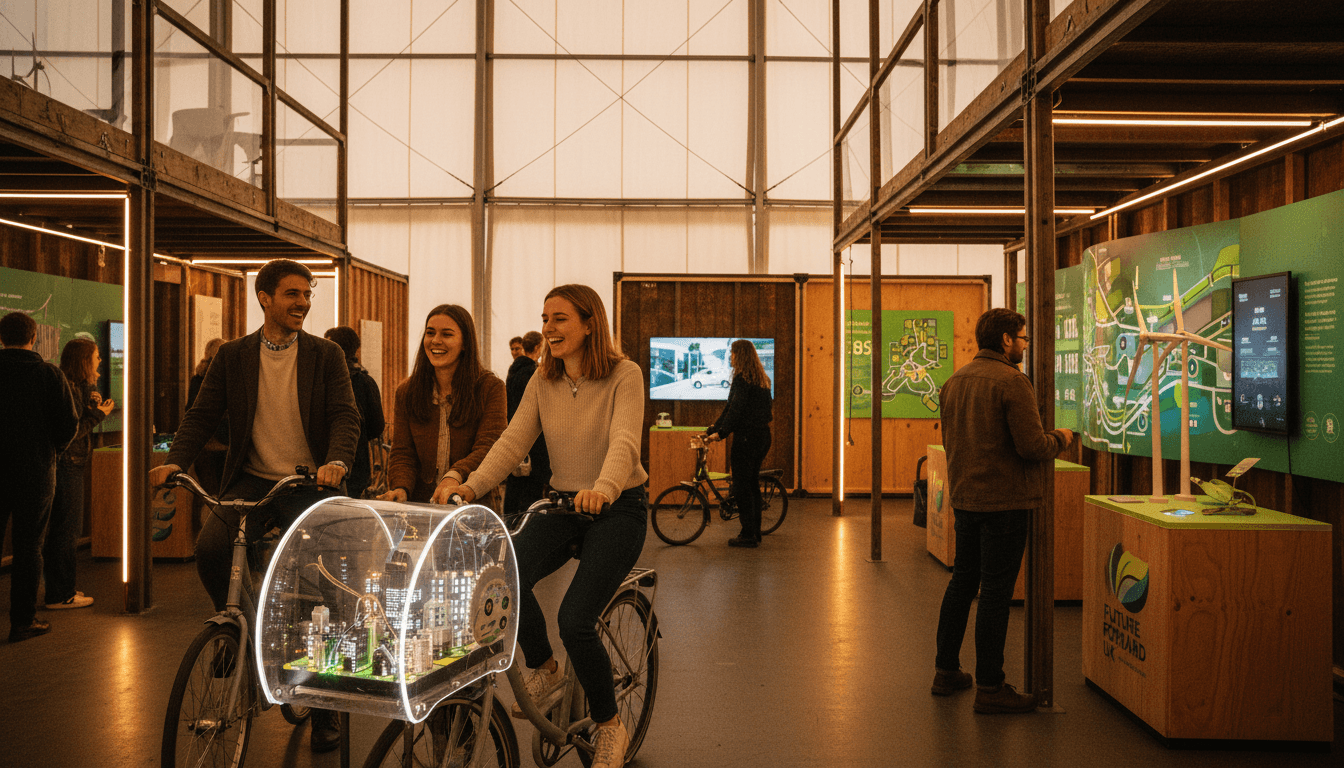
UNBOXD Live is described as immersive, and that word is doing the heavy lifting here. “Immersive” doesn’t mean expensive projection mapping. It means the audience isn’t passive.
For UK startups, especially climate startups, participatory design solves two problems at once:
- Education without lectures. Sustainability topics can feel preachy. Participation replaces preaching.
- Credibility without long copy. If people can test it, they don’t need a manifesto.
What “participatory” looks like in a net-zero startup
You don’t need a BBC-sized budget. You need a tight interaction loop:
- A simple action (scan, vote, build, test, compare)
- Immediate feedback (a result, a score, a reveal, a before/after)
- A shareable artifact (a photo, a clip, a personalised output)
Examples that work well in climate and sustainability:
- A “home energy leak” mini-demo using thermal visuals (even simulated) plus practical fixes
- A “food waste challenge” where people assemble a meal plan and see estimated waste savings
- A “commute swap” station that estimates CO₂ saved by switching one weekly trip to bike/train
- A “repair bar” pop-up that fixes small items and tracks landfill diversion
The point isn’t perfection. The point is giving someone a moment where they think: “This is for people like me.”
Building an immersive event like a startup: a 6-part blueprint
Answer first: The best immersive events are built like MVPs—one clear promise, one core interaction, measurable outcomes.
If you’re trying to generate leads (not just vibes), you need a build plan that ties experience design to growth. Here’s a practical blueprint I’ve seen work for early-stage teams.
1) Pick one audience job-to-be-done
Don’t start with “we want awareness.” Start with one job:
- “Help me save money on energy without hassle.”
- “Help me feel less guilty about my purchases.”
- “Help me choose greener travel that still feels convenient.”
If you can’t describe the job in one sentence, your experience will sprawl.
2) Make one bold, testable promise
A promise should be specific enough that it can be proven in the room.
Good:
- “Leave with a 3-step plan to cut your home energy bill this winter.”
- “Test our product and see your waste reduced by X in a week.”
Weak:
- “Learn about sustainability.”
3) Design a single “hero interaction”
Your event needs one moment that people will queue for.
A hero interaction has three traits:
- It takes under 3 minutes
- It produces a personalised result
- It creates a photo/video moment
If you try to build five hero moments, you’ll build none.
4) Capture leads without killing the vibe
This is where startups mess up: a clunky form at the end.
Better options:
- QR code to get their result emailed (the email is the value exchange)
- NFC tap to save a personalised plan to Apple/Google Wallet
- “Reserve your kit / trial / consult” slot via a calendar link on-site
Rule: Lead capture should feel like completing the experience, not being sold to.
5) Build the follow-up before the event happens
If you’re running lead-gen, your follow-up sequence must be ready first.
A simple structure:
- Within 1 hour: send their result + one next step
- Next day: proof story (case study, short demo video, testimonial)
- Day 3: offer (trial, audit, consultation, waitlist)
- Day 7: reminder + social proof + deadline if relevant
6) Measure what matters (3 numbers only)
Answer first: Use three metrics—attendance-to-lead rate, lead-to-meeting rate, and cost per qualified conversation.
Track:
- Attendance → lead capture (%)
- Leads → qualified conversations (%)
- Cost per qualified conversation (£)
If you can’t define “qualified,” define it now (e.g., postcode served, budget, household type, business size, decision-maker present).
How immersive events support net-zero goals (and why that’s strategic)
Answer first: Immersive events help net-zero brands translate abstract impact into personal benefit—driving adoption, not just awareness.
A lot of climate marketing fails because it talks in system outcomes (carbon, grids, policy) while people live in daily outcomes (cost, comfort, convenience, status).
Immersive experiences bridge that gap:
- Renewable energy becomes “I can see what solar + storage would do for my bill.”
- Sustainable transport becomes “I can test the route and timing, not just read about it.”
- Green jobs become “I can meet real people doing the work and understand the pathway.”
- Environmental protection becomes “I can contribute to something tangible and local.”
This matters in January 2026 because winter is when households feel energy cost anxiety most sharply. If your climate startup can offer practical help right now, you’re not just marketing—you’re being useful.
A strong stance for climate startups
Here’s what works: sell the near-term benefit, prove the long-term impact.
If your message starts with sacrifice, you’ll lose most people. If your experience starts with a win (save money, save time, reduce hassle), you earn the right to talk about emissions reductions.
“People also ask” (the short, direct answers)
What is immersive event marketing?
Immersive event marketing is an experience designed around participation—attendees interact with a brand through activities, environments, or live moments rather than passive messaging.
Why do immersive events work for Gen Z?
They work because they’re social, participatory, and provide immediate value. Gen Z responds better to experiences that create identity signals and shareable moments.
Can a small startup afford an immersive event?
Yes—if it’s built like an MVP. A small space, one hero interaction, and tight lead capture can outperform a large, unfocused activation.
How do you measure ROI for experiential marketing?
Use a funnel: attendance-to-lead capture, lead-to-qualified conversation, and cost per qualified conversation. Tie outcomes to meetings, trials, or pilots.
The practical takeaway: treat immersion as research + growth
UNBOXD Live exists because the BBC identified a gap in understanding younger audiences—and chose an immersive experience to close it. That’s the lesson: your marketing can be an engine for insight, not just exposure.
If you’re building in the Climate Change & Net Zero Transition space, the bar is higher. People want proof, clarity, and usefulness. Immersive experiences give you all three—fast.
If you’re planning a 2026 growth push, take one step this month: design a single, testable, participatory moment that earns you 50–200 real conversations with the audience you need. Then iterate like it’s product.
What would your startup’s “hero interaction” be if it had to prove value in under three minutes?