A startup-friendly playbook for immersive Gen Z events—using the BBC UNBOXD Live approach, with net zero-ready, low-waste tactics that drive leads.
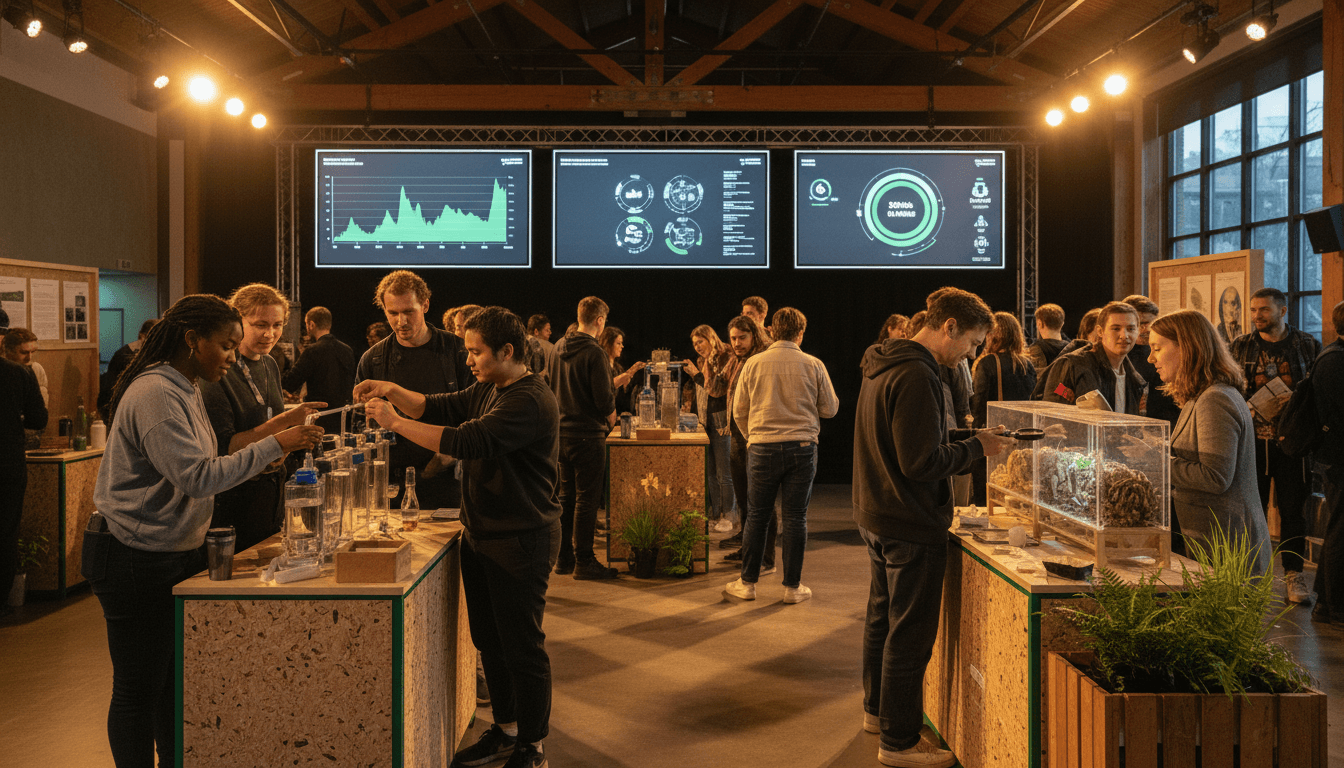
Immersive Events for Gen Z: A Startup Playbook
A polished website and a few paid social ads won’t fix a basic problem: you can’t build trust with young audiences if you don’t understand how they actually spend attention.
That’s why the BBC’s new immersive event, UNBOXD Live, is worth paying attention to—even if you’re a UK startup with a fraction of the budget. The BBC commissioned research that surfaced gaps in how the organisation understands younger viewers, then responded with an experience-led format designed to meet them where they are. That sequence matters: research → creative format → measurable engagement.
This post unpacks what startups can take from the BBC’s approach and how to recreate the same mechanics on a smaller scale—while keeping one more pressure in mind: as part of the Climate Change & Net Zero Transition series, we’ll also cover how to design experiential marketing that’s compatible with net zero commitments, lower-carbon production, and credible sustainability messaging.
What the BBC’s UNBOXD Live signals (and why it’s not “just an event”)
UNBOXD Live is a content strategy disguised as an event. The BBC isn’t simply putting on a show; it’s building a format that generates repeatable stories, social clips, community moments, and insight.
The key signal for marketers is this: big brands are using immersive experiences to close understanding gaps with younger audiences. When an organisation as data-rich as the BBC says it has blind spots with younger viewers, that should be a wake-up call for any startup assuming “Gen Z will get it once they see our product.”
Here’s what’s going on under the hood:
- Immersion replaces interruption. You’re not fighting for attention in-feed; you’re designing a space where attention is the point.
- Participation beats passive viewing. Young audiences respond when they can do something—vote, remix, explore, co-create.
- The experience becomes the media. The event itself produces the assets (short video, UGC, behind-the-scenes, creator collabs).
From a lead-generation perspective (especially for UK startups), immersive events work when they’re treated like a full-funnel system: awareness at the door, intent inside the experience, and conversion through follow-up.
The startup version: how to build an immersive event without BBC budgets
You don’t need a warehouse, holograms, or celebrity talent to create immersion. You need a strong point of view, a tight narrative, and a format that makes people feel involved.
Start with one problem, not a theme
Most early-stage events fail because they’re built around a vague topic (“the future of…”), not a specific tension. The BBC’s move implies a real problem: younger audiences don’t feel fully understood. That’s a concrete brief.
A good startup event brief sounds like:
- “People want to decarbonise delivery fleets, but they don’t trust the total cost numbers.”
- “Sustainability leads can’t get buy-in because carbon reporting feels abstract.”
- “Students care about climate action, but think green jobs are inaccessible.”
If you’re in climate, energy, mobility, or circular economy, that specificity also helps you avoid greenwashing. Clarity is credibility.
Build “rooms” instead of a stage
Immersion is often structural. A simple way to recreate it is to design three ‘rooms’ (physical or digital) that people move through.
Example for a net zero startup event:
- Reality Room (the baseline): What emissions look like today, what costs are hidden, what regulations are tightening.
- Prototype Room (the change): A live demo, interactive model, teardown of assumptions.
- Action Room (the next step): A guided plan, calculator, consultation booking, partner intro.
Even on Zoom, you can mirror this with breakout sessions, interactive tools, and a clear journey.
Make it participatory in the first 5 minutes
The reality with Gen Z marketing is blunt: if participation doesn’t happen early, it often won’t happen at all.
Fast participation ideas that don’t feel gimmicky:
- A one-question live poll that changes what you show next
- A “choose your path” agenda (attendees pick which demo they want)
- A hands-on micro-task: calculate something, vote on trade-offs, rank priorities
Participation is also a sustainability win: it reduces the need for heavy set builds because the engagement comes from interaction.
Gen Z engagement: what actually works (and what founders get wrong)
Gen Z doesn’t hate marketing. They hate being talked at. Immersive events work because they shift the relationship from broadcast to collaboration.
What founders often get wrong
- Over-explaining the product. Young audiences want outcomes and proof, not a 12-slide architecture tour.
- Avoiding opinions. If you’re in climate and net zero transition, neutrality often reads as insecurity. Take a stance.
- Confusing “youth” with trends. Chasing memes is not a strategy. Designing agency (choice, contribution, access) is.
What works reliably
- Creator-led segments: not “influencer endorsements,” but creators hosting, moderating, or challenging claims.
- Behind-the-scenes transparency: show constraints, trade-offs, even what’s not solved yet.
- Concrete proof: measured outcomes, third-party verification, pilots with numbers.
A snippet-worthy rule I use: “If you can’t show it, don’t headline it.”
How to make immersive marketing compatible with net zero goals
Experiential marketing can be wasteful, but it doesn’t have to be. If your startup sits anywhere near sustainability, you’ll be judged on how you show up—not just what you say.
Design for low-carbon production
You can reduce event footprint without killing the experience:
- Venue: pick central locations near public transport; encourage rail over flights; publish travel guidance.
- Build: rent modular assets; avoid single-use materials; reuse signage and structures.
- Energy: use venues with renewable tariffs where possible; right-size lighting and AV.
- Merch: skip it or make it purposeful (e.g., repair kits, refillables) and minimal.
If you’re making claims, keep them tight. “Lower-impact event design” is safer than vague “carbon neutral” messaging unless you can substantiate it.
Tie the experience to real climate action
For the Climate Change & Net Zero Transition series, the bar is higher than generic brand awareness. Connect the event to measurable climate outcomes:
- “Attendees collectively identified 120 tonnes CO₂e of avoidable emissions in their operations using our calculator.”
- “We booked 35 decarbonisation audits with SMEs in manufacturing.”
- “We matched 20 candidates with green jobs apprenticeships.”
Those statements read as real because they are specific.
A practical blueprint: 30-day plan for a startup immersive event
You can plan a high-impact immersive event in 30 days if you keep the scope tight. Here’s a founder-friendly structure.
Week 1: Decide the story and success metrics
Pick one primary goal (lead gen) and two supporting metrics.
- Primary: qualified leads (e.g., booked calls, demo requests)
- Supporting: attendance rate, average session time, UGC posts, NPS
Define qualified in writing. Example: “Company size 20–500 employees, UK-based, has sustainability owner, wants net zero plan within 12 months.”
Week 2: Build the “rooms” and the conversion path
Map the journey:
- Hook (participation)
- Proof (demo + numbers)
- Commitment (book, apply, trial)
Then create one signature asset that attendees want:
- a carbon reduction calculator
- a policy readiness checklist (UK-relevant)
- a “green jobs pathway” guide for students
That asset becomes your email capture without feeling like a bait-and-switch.
Week 3: Recruit partners and creators (small, credible, aligned)
You don’t need big names. You need trust.
- A local university society or careers service
- A sustainability community (Slack/Discord)
- A customer willing to speak with numbers
- A creator who can host and challenge your claims
A strong partnership line is simple: “Help your audience take one concrete step toward net zero. We’ll provide the tool and the follow-up support.”
Week 4: Promote, run, and follow up like you mean it
Promotion basics that still work in 2026:
- 3–5 short vertical videos explaining the problem, not your features
- A single landing page with one clear CTA
- A calendar link embedded everywhere
Follow-up is where leads happen:
- Email 1 (same day): recap + signature asset + booking link
- Email 2 (48 hours): one case study metric + “what I’d do next” plan
- Email 3 (5–7 days): invite to a smaller roundtable (more intimate conversion)
If you only do one thing: run a post-event “Action Clinic” (30 minutes, limited seats). It converts far better than a generic “book a demo.”
FAQs founders ask about immersive events (answer-first)
Do immersive events work for B2B startups?
Yes—when the immersion is about decision-making, not spectacle. Interactive ROI models, live teardowns, and hands-on audits outperform flash.
Should we do physical, digital, or hybrid?
Choose based on your sales motion. If your product needs trust and multiple stakeholders, small physical + strong digital capture is the sweet spot. If you’re early and iterating, digital-first keeps costs low and learning fast.
How do we avoid greenwashing when our brand is sustainability-adjacent?
Be precise. Use numbers, boundaries, and plain language about trade-offs. Don’t claim “carbon neutral” unless you can back it with transparent methodology.
Where this goes next for UK startups
The BBC’s UNBOXD Live is a reminder that audience understanding is a moving target, especially with younger demographics. If you’re building in climate, energy, mobility, or green jobs, you’re competing not just against other startups—but against entertainment-grade experiences that set the expectation for what “engaging” feels like.
The opportunity is real: experiential marketing can be one of the most effective ways to create trust in the net zero transition because it turns abstract targets into something people can see, touch, and act on.
If you were to run one immersive moment this quarter—built around a single problem your audience is stuck on—what would you make them do in the first five minutes?