Practical pop-up marketing ideas UK startups can run fast—plus how to measure ROI and turn real-world activations into leads.
Pop-Up Marketing Ideas UK Startups Can Copy Fast
January is when motivation drops and routines get renegotiated. Brands that show up in real life—right where people are already spending time—have an unfair advantage.
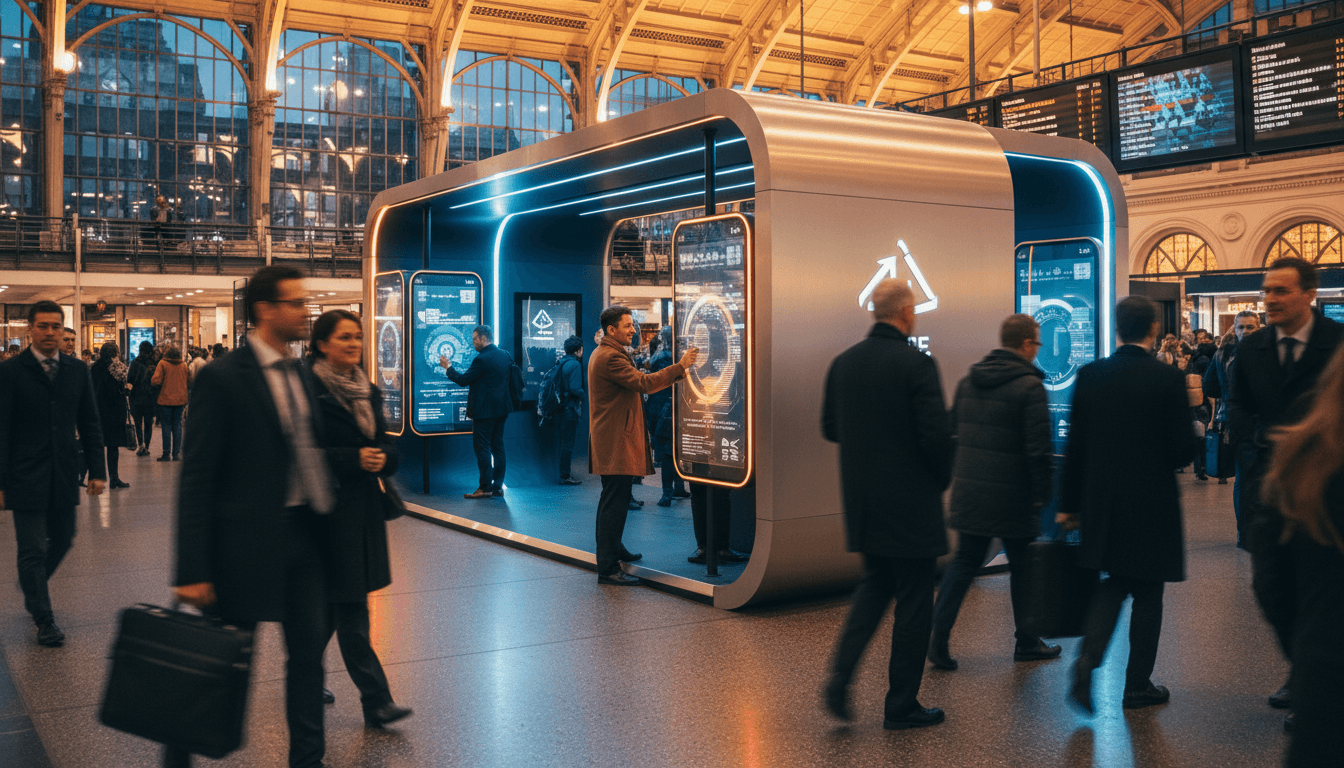
That’s why Trainline’s star-studded commuter pop-up at London King’s Cross (9 January 2026) is more than a fun PR moment. It’s a clean example of experience-led marketing done with intent: pick a high-traffic micro-audience (commuters), tap into a seasonal mindset (new-year motivation), and create a shareable moment that people want to talk about.
For UK startups and small businesses working with tight budgets, this matters because pop-ups don’t have to be expensive or massive. They just have to be specific, measurable, and built for distribution—online and offline.
Why pop-up marketing works (especially in January)
Pop-up marketing works because it compresses attention. A good pop-up creates three things fast: relevance, emotion, and proof.
January is also an ideal testing ground. People are back into commuting patterns, trying to build habits, and consuming “fresh start” content across social media. When your activation matches what’s already on someone’s mind, you don’t need to fight for attention—you’re simply there at the right moment.
A practical lens for startups: treat pop-ups like a physical version of a high-performing landing page.
- Clear promise in 3 seconds (what is this?)
- Low-friction action (try it, claim it, scan it)
- Built-in share triggers (photo moment, reward, surprise)
- Follow-up mechanism (email/SMS, app install, booking)
Trainline’s King’s Cross moment leans into a very human tension: commuting can be draining, but people still want to feel like they’re making progress. “Motivation for commuters” is niche, but it’s also daily. That’s a smart audience choice.
The myth: pop-ups are only for big brands
Most companies get this wrong. They assume pop-ups are for brands with celebrity budgets and agency teams.
The reality? Startups can run effective pop-ups at a fraction of the cost if they:
- Choose a single, high-density location (stations, coworking spaces, gyms, markets)
- Offer a single hero experience (not a menu of activities)
- Connect the event to a digital conversion path (QR → landing page → lead)
What Trainline’s commuter pop-up gets right
We don’t need every detail of Trainline’s execution to learn from the strategy. The concept alone shows a pattern that converts.
1) It targets a defined “micro-audience”
King’s Cross commuters aren’t “everyone in London.” They’re a specific group with shared constraints:
- Time-poor
- Often stressed
- Repeating the same journey routes
- Primed for utility and quick wins
This is the same logic behind great UK small business digital marketing: narrower targeting often produces stronger results.
If you’re a startup, define your version of a commuter:
- People waiting (queues, receptions, lobbies)
- People commuting (stations, bus hubs)
- People recovering (gyms, physio clinics)
- People deciding (property viewings, car dealerships)
A pop-up works when it meets people during a natural pause.
2) It uses “star power” as attention engineering
Celebrity involvement is basically rented attention. It’s not the only route, but it’s a proven one.
For startups, the translation isn’t “hire a celebrity.” It’s borrow trust from someone your audience already listens to:
- A local creator who owns the niche (London commuting TikTok, running clubs, finance creators)
- A respected operator (ex-founder, investor, community leader)
- A credible partner brand (coffee chain, gym studio, coworking space)
Here’s the stance I take: if your pop-up doesn’t have a built-in distribution engine, you’re running an expensive party.
3) It matches the season and the mood
January 2026 is peak “new habit” season. Brands that frame themselves as helping people stick to goals get attention without shouting.
Startups can use seasonal relevance without becoming cheesy:
- January: motivation, routines, budgets, health, productivity
- Spring: fresh starts, outdoors, events
- Summer: travel, festivals, tourism
- September: back-to-work, learning, organisation
- November/December: gifting, stress relief, convenience
Trainline picked a moment where commuters are open to small boosts.
How UK startups can build a pop-up that generates leads
A pop-up can absolutely drive leads—if you design it like a funnel.
Start with a single measurable goal
Pick one primary conversion event:
- Email capture
- App install
- Demo booking
- Free trial signup
- Deposit / pre-order
Then decide the exchange: what does someone get instantly for taking that action?
Good exchanges for commuter-style audiences:
- A useful tool (route planner, discount code, checklist)
- A real reward (coffee voucher, free upgrade, sample)
- A status moment (photo + personalised takeaway)
The “3-30-300” rule for pop-ups
I use this mental model when planning physical activations:
- 3 seconds: Can they understand it while walking past?
- 30 seconds: Can they participate without losing their day?
- 300 seconds (5 minutes): Is there an optional deeper layer for the curious?
If your experience requires explaining, it’s too complicated for a station, market, or lobby.
Build the QR journey like a proper landing page
Your QR code is not the strategy. The page it goes to is.
Minimum requirements:
- Fast load on mobile
- One headline that repeats the pop-up promise
- One form field if possible (email only, then progressive profiling)
- A thank-you screen with the reward delivered immediately
- A clear next step (book a call, download app, join waitlist)
If you’re serious about British small business digital marketing, this is where you win. Pop-ups are top-of-funnel attention; the mobile landing experience is what turns attention into pipeline.
Budget-friendly pop-up formats that still feel premium
You don’t need a multi-day build. You need a tight concept.
“Single-prop” pop-ups
One physical object that becomes the moment:
- A “speed audit” desk (website audit, CV review, energy bill check)
- A product try-on/try-out stand
- A sampling cart with a strong visual hook
Partnered pop-ups
Split cost and double distribution:
- Coffee shop + B2B SaaS “commuter productivity” offer
- Gym studio + wellness app
- Retailer + local service brand
Mobile pop-ups
Bring the activation to where your customers already are:
- University campuses
- Business parks
- Weekend markets
- Train station approaches (where permitted)
A pop-up is a media channel. Treat it with the same discipline you’d treat paid social: targeting, creative, conversion, measurement.
Measuring pop-up ROI: what to track (and what to ignore)
If you can’t measure it, you can’t improve it. But don’t overcomplicate measurement either.
Track these five numbers
- Footfall: approximate counts per hour (manual clicker is fine)
- Engagement rate: engaged / footfall
- Conversion rate: leads / engaged
- Cost per lead (CPL): total cost / leads
- Down-funnel quality: % that book a call, activate, or pay
Don’t obsess over vanity metrics
Social impressions are nice. They’re not the KPI.
Better to know:
- How many leads came from the QR page UTM?
- Which time slot produced the cheapest CPL?
- Which pitch line increased conversions?
If you run pop-ups like experiments, your second one is usually 30–50% more efficient than your first because you’ve removed the fluff.
“People also ask”: quick answers for startup founders
How long should a pop-up run?
For lead generation, 2–6 hours is often enough for a first test. Pick a high-density window (commute, lunch, post-work) and learn fast.
Do pop-ups work for B2B startups?
Yes—if you place them where your buyers physically are (industry events, coworking spaces, business districts) and offer something useful in under 60 seconds (benchmark, audit, diagnostic).
Should you use influencers instead of celebrities?
Most startups should. A niche creator with a trusted audience can outperform broad fame, and you can structure payment around deliverables (posts, stories, on-site time).
A simple pop-up plan you can run in 14 days
If you want a practical path from idea to execution:
- Day 1–2: Choose one audience + one location + one goal
- Day 3–4: Write the offer and build the landing page
- Day 5–6: Design the physical moment (single prop, signage, staff script)
- Day 7–9: Partner outreach (venue, local creator, adjacent brand)
- Day 10–12: Promote lightly (creator posts, community groups, email)
- Day 13: Dry run (QR test, timing, FAQs)
- Day 14: Run it, track numbers hourly, adjust on-site
Most startups wait for perfect conditions. Don’t. Pop-ups reward action.
Where this fits in British small business digital marketing
Digital marketing isn’t only digital anymore. The strongest UK small business growth strategies combine:
- Real-world moments that earn attention
- SEO and content that capture intent over time
- Paid social/search that amplifies what’s already working
- Conversion-focused landing pages that turn interest into leads
Trainline’s commuter activation is a reminder that physical experiences can be your top-of-funnel creative—while your website does the heavy lifting of conversion.
If you’re planning your next campaign, think about your audience’s “King’s Cross.” Where do they reliably show up? What do they need in that moment? And what’s the smallest experience you can build that they’ll actually remember?