Pop-up experiential marketing can drive UK startup leads fast. Learn how to plan a budget pop-up that fuels SEO, social content, and signups.
Pop-Up Experiential Marketing for UK Startups on a Budget
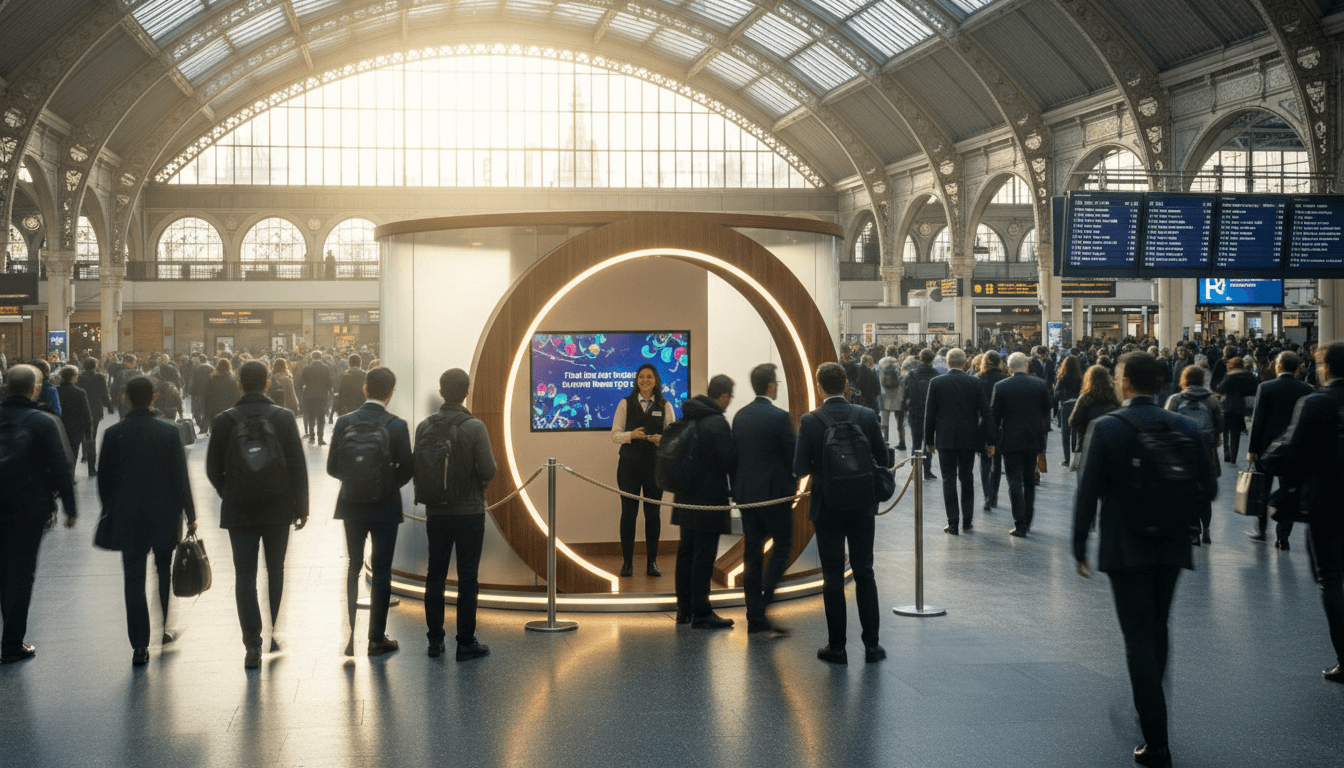
January is when motivation dips and routines reset. That’s exactly why Trainline chose 9 January for a commuter-focused pop-up at London King’s Cross—a moment when people are tired, time-poor, and unusually open to anything that makes the daily grind feel lighter.
Most startups hear “experiential marketing” and assume it’s for brands with celebrity budgets and big agencies. I disagree. The real advantage of pop-ups isn’t scale—it’s specificity. A well-timed, well-placed experience can earn attention faster than weeks of paid social, especially when your target customers physically move through one predictable location.
This post is part of our British Small Business Digital Marketing series, so we’ll connect the offline world to online growth: how pop-ups create content, drive search demand, build retargeting audiences, and generate leads—without burning cash.
What Trainline’s pop-up gets right (and why it matters)
Trainline’s commuter pop-up is a useful case study because it’s built around a simple insight: people don’t want more ads during a commute—they want relief. That’s the core of good experiential marketing. It trades interruption for utility (or at least a positive emotion).
Even with limited public details from the source article, the strategic shape is clear:
- Audience clarity: commuters at a major transport hub.
- Context alignment: January motivation slump + back-to-work routines.
- High footfall location: King’s Cross concentrates attention.
- Cultural pull: “star-studded” implies influencer/celebrity energy, even if passers-by only get a glimpse.
For UK startups, the lesson isn’t “book celebrities.” It’s: engineer a moment people want to talk about. If you do, digital marketing becomes cheaper because you’re not paying to manufacture interest—your audience helps distribute it.
A pop-up works when it creates a story someone can retell in one sentence.
Experiential marketing isn’t a brand stunt. It’s a distribution strategy.
If your startup is fighting for awareness, you’re competing with established brands that can outspend you on Meta, Google, and out-of-home. Experiential marketing changes the playing field because it rewards relevance and creativity more than budget.
The budget myth that holds startups back
Founders often frame pop-ups as “PR nice-to-have.” The better framing is: a pop-up is a concentrated, real-world channel—like running high-intent ads, except the “click” is someone stopping, scanning a QR code, or posting a photo.
In 2026, this matters more, not less:
- Paid social targeting is tougher and noisier.
- People trust content from peers more than brand claims.
- Local communities (and local press) still respond to real events.
The real ROI: compounding digital assets
A pop-up can generate:
- Short-form video for TikTok/Instagram Reels
- Founder-led content (behind-the-scenes, lessons learned)
- Email signups (lead magnet tied to the experience)
- Retargeting audiences (QR traffic, landing page visits)
- Branded search lift (people Googling you after seeing it)
For small business digital marketing, that’s gold: you’re creating content and demand at the same time.
3 experiential marketing lessons every UK startup can steal
Trainline’s activation points to three principles that consistently work for early-stage brands.
1) Pick a moment when your customer’s brain is already primed
The best pop-ups don’t “create” demand from nothing. They attach to an existing emotional moment.
Trainline chose a time when commuters feel the pain of routine. Your startup needs an equivalent trigger.
Examples for British startups:
- A productivity SaaS: run a “Back-to-Work Reset” booth during early January near co-working spaces.
- A wellness brand: a “2-minute calm” experience during peak shopping weekends.
- A fintech: “salary stretch clinic” timed around the last week of the month.
Rule: If you can describe the pop-up as helping rather than promoting, you’re on the right track.
2) Location beats reach
King’s Cross isn’t just busy—it’s the right kind of busy. It collects your audience in one place and gives you repeated exposure.
For startups, don’t chase prestige. Chase density.
Good UK locations (often cheaper than you think):
- commuter corridors near major stations (secondary entrances, not prime concourse)
- university routes at term start
- weekend markets where your buyer already shops
- industry events outside the venue (where competition is lower)
Rule: If you can get 500 relevant people to walk past in 2 hours, you don’t need 50,000 impressions online.
3) Partnerships are your “star power” substitute
Trainline’s “star-studded” angle signals a classic attention tactic: borrow equity from recognisable faces.
Startups can do the same without celebrities by partnering with:
- local creators (5k–50k followers, strong community trust)
- complementary startups (bundle audiences)
- venues (coffee shops, gyms, co-working spaces)
- community groups (founder meetups, local charities)
Here’s what works in practice: offer partners a content opportunity, not just a logo placement. Make it easy for them to post, tag, and show up.
The best partnerships aren’t “brand collaborations.” They’re shared distribution.
How to run a pop-up that generates leads (not just footfall)
A pop-up without a digital capture plan is like running ads without a landing page. Fun, but wasteful.
Design the pop-up around one measurable action
Pick one primary conversion, and make everything point to it:
- email signup for a specific offer
- waitlist join
- demo booking
- “claim your free sample” form
- scan a QR for a local deal
If you try to do five things, you’ll do none well.
Use a QR code, but don’t make it boring
A naked “Scan to learn more” QR code underperforms. Give people a reason in plain language.
Better:
- “Scan to get the 7-day commuter reset plan”
- “Scan to claim £10 off your first order (today only)”
- “Scan to enter the 2-minute prize draw”
Keep the landing page fast, mobile-first, and short. One screen. One form. One outcome.
Make the experience photogenic by design
This doesn’t require neon signs. It requires one clear “photo moment”:
- a simple backdrop
- a prop people hold
- a visible timer or challenge
- a “before/after” setup
Then prompt sharing without begging:
- “If you post it, tag us—today’s favourites get a free bundle.”
Capture intent for your SEO and content strategy
If you’re serious about UK small business digital marketing, your pop-up should feed your content calendar.
Do this on-site:
- Ask one question at the booth: “What’s your biggest struggle with X?”
- Collect answers (with consent) as tally marks.
- Turn the top three into blog posts, FAQs, and ad angles.
Those answers become:
- SEO pages that match real language people use
- social posts that feel specific (because they are)
- sales scripts that reflect actual objections
A practical “lean pop-up” plan for a UK startup (under £1,500)
You don’t need a huge build. You need a tight plan and a confident team member who can talk to strangers.
What you can do with £1,500
A realistic starter budget might look like:
- £250–£600: small space fee / market pitch / venue partnership fee
- £150–£300: simple printed backdrop + signage
- £200–£400: product samples / giveaways / refreshments
- £150–£300: freelance photographer for 60–90 minutes
- £100–£200: QR landing page + email tool setup (if not already)
What to measure (so you can justify doing it again)
Set targets that match your funnel:
- Footfall engaged: how many meaningful conversations (not just passers-by)
- QR scans: unique visitors to your landing page
- Lead conversion rate: scans → signups
- Cost per lead (CPL): total spend / leads
- Content yield: number of usable clips + photos
If your pop-up yields 150 leads at £1,500, that’s £10 CPL plus content you can reuse for months. Many UK startups pay more than that on cold paid social—without the brand memory.
People also ask: do pop-ups work for B2B startups?
Yes—if you stop thinking “street marketing” and start thinking “micro-events.” B2B experiential marketing works best when it’s positioned as:
- a live demo in a co-working space
- a breakfast clinic for a specific role (Ops, Finance, HR)
- a pop-up “help desk” solving one painful task
The mechanism is the same: create a useful moment, capture intent, then follow up.
Where this fits in your digital marketing mix in 2026
Pop-ups aren’t a replacement for SEO, paid search, or social. They’re an accelerant.
Here’s the clean sequence I’ve found works:
- Before: publish one landing page + one blog post supporting the offer
- During: collect leads + record content + gather customer language
- After (48 hours): email follow-up + retargeting ads to visitors
- After (2–4 weeks): release a content series using your footage + FAQs from real questions
That’s how an offline moment becomes an online growth engine.
Your next step: build a pop-up that earns attention
Trainline’s King’s Cross pop-up is a reminder that experiential marketing works when it respects the audience’s context. It’s not about shouting louder. It’s about showing up in the right place with something that makes people feel seen.
If you’re running a UK startup, a lean pop-up can be one of the fastest ways to build local awareness, capture leads, and create content your small business digital marketing programme can reuse across SEO and social.
What’s one location where your customers reliably gather—without you having to fight the whole internet to reach them?