Wero’s launch shows how wallets win through merchant use cases. Learn how AI can strengthen Tanzania’s mobile payments, fraud control, and support.
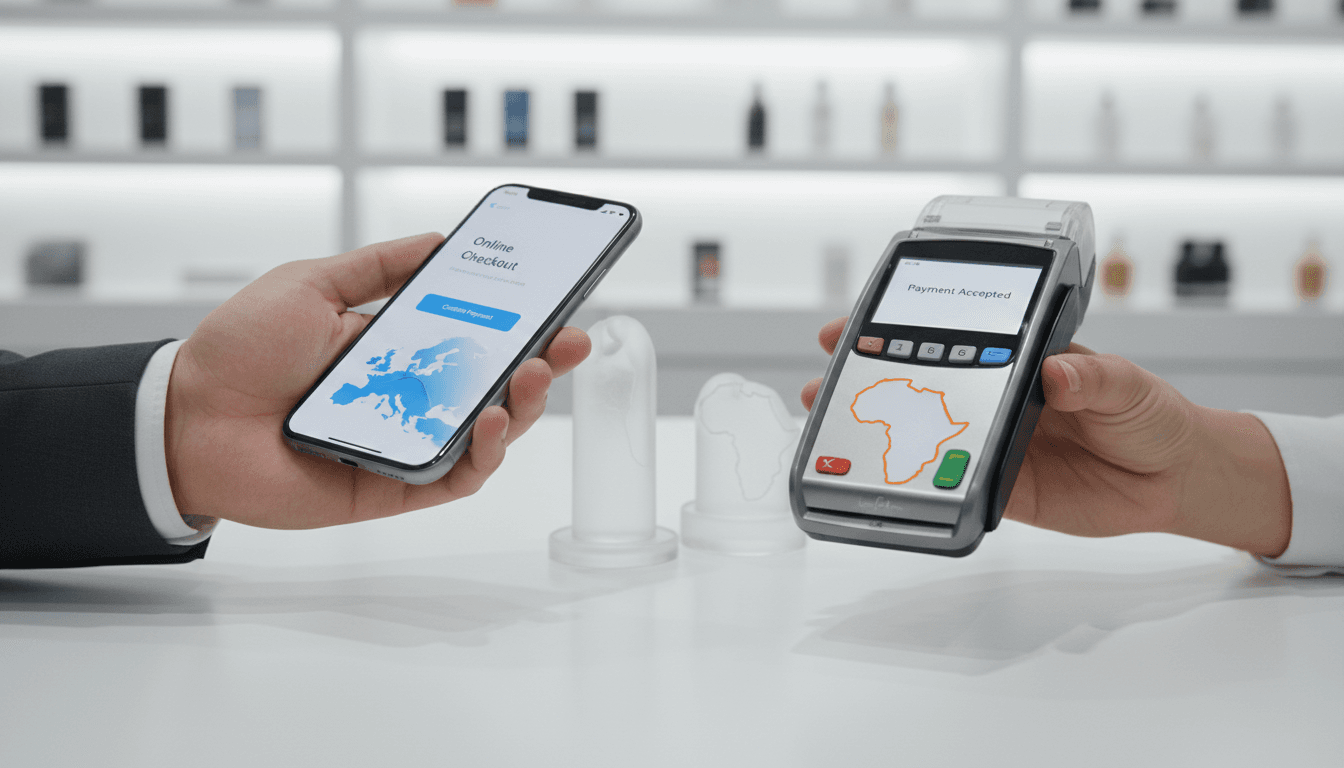
Wero Wallet Lessons for Tanzania’s AI-Driven Payments
Deutsche Bank didn’t launch a flashy new “wallet” in Germany just to follow a trend. It rolled out Wero to millions of Deutsche Bank and Postbank customers because payments have become infrastructure—and whoever controls everyday payments controls data, customer relationships, and long-term relevance.
That’s not a Europe-only story. Tanzania’s mobile money ecosystem is already part of daily life, and fintech competition is intense. The next battleground isn’t “can we send money?”—it’s who owns the checkout experience, who reduces fraud fastest, and who uses AI to make support, marketing, and product decisions smarter.
This post uses Wero’s mainstream push in Germany as a case study, then brings it home: what Tanzanian banks, mobile network operators (MNOs), fintechs, and merchants can copy—especially where AI in fintech and malipo ya simu can create a measurable edge in 2026.
What Wero’s rollout really signals (and why it matters)
Wero’s expansion is a signal that large banks are tired of being “dumb pipes” underneath card networks and global wallets. When a bank-backed wallet runs on account-to-account rails (like instant payments), it can:
- Lower transaction costs vs. card-heavy models
- Keep customers inside the bank/MNO ecosystem
- Create a foundation for value-added services (subscriptions, instalments, loyalty)
Germany is Wero’s biggest banking market test: Deutsche Bank and Postbank customers can now send/receive money in real time and pay at participating online merchants, not just do P2P transfers.
Here’s the key point: P2P gets adoption, but merchant acceptance creates habit. Habit creates retention. Retention creates data. And data is what makes AI useful.
For Tanzania, this mirrors what we see in mobile money: sending money is mature. The growth comes from merchant payments, recurring payments (LUKU, TV, subscriptions), and embedded finance in apps people already use.
P2P is easy. Merchant payments are where systems win.
A lot of payment products look successful because they show impressive signup numbers. But the systems that become “default” are the ones people use when they’re in a hurry—at checkout, with poor network quality, or under pressure.
Why Wero moved beyond P2P (and why you should care)
Wero’s shift into e-commerce payments is the part Tanzanian product teams should stare at. It’s a decision to fight for:
- Checkout placement (being one of the buttons customers trust)
- Merchant integration (APIs, plugins, reconciliation)
- Repeat use cases (subscriptions, shared expenses)
Tanzania has an advantage: QR payments, USSD flows, and agent networks already trained users. But many merchant journeys still break on:
- Failed confirmations and slow reversals
- Weak dispute handling
- Messy reconciliation for SMEs
- Fraud spikes around peak seasons
December is a perfect example. Holiday spending increases transaction volume, and fraud attempts usually rise with volume. This is exactly where AI in fintech becomes practical, not theoretical.
AI that improves merchant payments (not presentations)
If you’re building or operating a mobile payment product in Tanzania, the most valuable AI work is often unglamorous:
-
Real-time fraud scoring
- Spot abnormal device patterns, velocity spikes, unusual merchant/customer pairings
- Trigger step-up verification only when risk is high (so good customers aren’t punished)
-
Smart reversals and exception routing
- Classify failed transactions (timeout vs. insufficient funds vs. network)
- Auto-route to the right queue and send proactive customer messages
-
Reconciliation automation for SMEs
- Match payments to invoices using NLP (names, references, phone numbers)
- Produce daily summaries in plain language (WhatsApp-ready)
A strong stance: If your merchant support team is still manually reading screenshots to resolve payment issues, you’re burning money and trust. AI can’t fix weak rails, but it can fix weak operations.
“Sovereign payments” in Europe vs. “interoperability” in Tanzania
Europe talks about sovereign payments—reducing dependency on non-European card schemes and global platforms. Tanzania’s version is less political and more practical: interoperability and local resilience.
The question Tanzanian leaders should ask isn’t “Do we need a European-style consortium?” It’s:
Can customers pay anyone, anywhere, with predictable cost and fast dispute resolution—without being forced into one walled garden?
What Tanzania can learn from Wero’s positioning
Wero is being positioned as infrastructure. That’s a useful framing for Tanzania too:
- Payments aren’t a feature. They’re a trust product.
- Trust is created by reliability, transparency, and speed of problem resolution.
AI supports that trust when used to:
- Detect incidents early (network or platform degradation)
- Reduce false declines
- Provide accurate, consistent customer communication
In this topic series—Jinsi AI Inavyo Badilisha Sekta ya Fintech na Malipo ya Simu Nchini Tanzania—the recurring theme is that AI isn’t only for “big models.” It’s for better decisions at scale: marketing, service, risk, and operations.
Distribution is the hidden battle: banks + merchants + fintechs
One of the smartest details in the Wero story is Deutsche Bank positioning itself as a distribution partner to merchants and fintechs. That’s where adoption becomes mainstream.
The Tanzania parallel: who owns distribution in mobile money?
In Tanzania, distribution isn’t only app installs. It’s:
- Merchant onboarding speed
- Agent training quality
- Integration partnerships (e-commerce platforms, POS providers)
- Visibility inside popular consumer journeys (ride-hailing, retail chains, billers)
If you want leads (and revenue), don’t start with “we have an API.” Start with a merchant problem that costs money every week.
Practical lead-gen offer ideas (that actually convert)
If your goal is LEADS, here are offers that fit fintech and mobile payments in Tanzania without sounding like generic marketing:
- “Fraud & chargeback health check” for merchants: review last 90 days of incidents and propose a rules + AI scoring plan
- “Reconciliation cleanup sprint” for SMEs: set up automated daily settlement reports and anomaly flags
- “Checkout conversion audit” for e-commerce: identify where payment failures happen and fix the top 3 causes
AI supports all three by accelerating analysis and generating clear, customer-ready recommendations.
What Wero’s roadmap suggests: recurring payments, POS, and value-added services
Wero’s roadmap includes recurring payments, point-of-sale functionality, instalments, loyalty, and shared-expense tools.
That roadmap is basically a map of where mobile payments go after the basics are solved: payments become a platform.
What to prioritize in Tanzania in 2026
If you’re choosing where to invest next (product, partnerships, AI), prioritize in this order:
-
Recurring payments that don’t fail silently
- Proactive reminders, smart retries, and clear failure reasons
- AI-generated customer messages in Kiswahili/English that match tone and context
-
Merchant loyalty tied to real spend
- Not punch cards. Real-time offers based on categories and frequency
- AI helps segment customers and prevent offer abuse
-
Instalments with disciplined risk controls
- If you can’t score affordability and repayment probability reliably, don’t ship instalments at scale
- Start with narrow merchant categories and expand
-
Shared expenses for households and groups
- Tanzania already has strong social payment behavior (harambee-style contributions, group support)
- AI can automate reminders, reconcile contributions, and reduce disputes
A blunt truth: “More features” doesn’t win. Fewer flows that never break wins.
People also ask: “How does AI improve mobile money customer experience?”
AI improves mobile money customer experience when it reduces confusion and waiting time. That means faster answers, fewer reversals, and clearer next steps.
Concrete examples that work well in Tanzania:
- AI customer support triage: classify issues (failed push, wrong number, delayed confirmation) and route instantly
- Agent-assist scripts: generate step-by-step resolution guidance for call center and agent networks
- Personalized education: micro-tips for safer usage (PIN hygiene, scam patterns) based on behavior
If your support KPIs are “average handling time” only, you’ll miss what matters. Track:
- First contact resolution rate
- Time to reversal completion
- Repeat complaints per customer per month
What to do next (for banks, fintechs, and merchants)
Wero’s mainstream push in Germany is a reminder that the next phase of digital payments isn’t about convincing people to try mobile money—it’s about earning the right to be default at checkout and trusted when something goes wrong.
For Tanzania’s fintech and mobile payments leaders, the fastest path is to combine strong rails with practical AI:
- Put AI on fraud, reconciliation, and customer communication first
- Build merchant distribution like a product, not a sales afterthought
- Treat recurring payments and POS reliability as top-tier priorities
If you’re working on AI in fintech or malipo ya simu and you want a concrete plan, start by picking one painful workflow (reversals, disputes, onboarding, reconciliation) and measure it for 30 days. Then apply AI to reduce time, errors, and cost—without adding friction for good users.
Where do you see the biggest friction in Tanzania right now: merchant onboarding, failed transactions, fraud/scams, or customer support?