Nashville’s oil discovery shows why AI-led exploration matters. See how Trinidad and Tobago can use AI to cut uncertainty, NPT, and downtime.
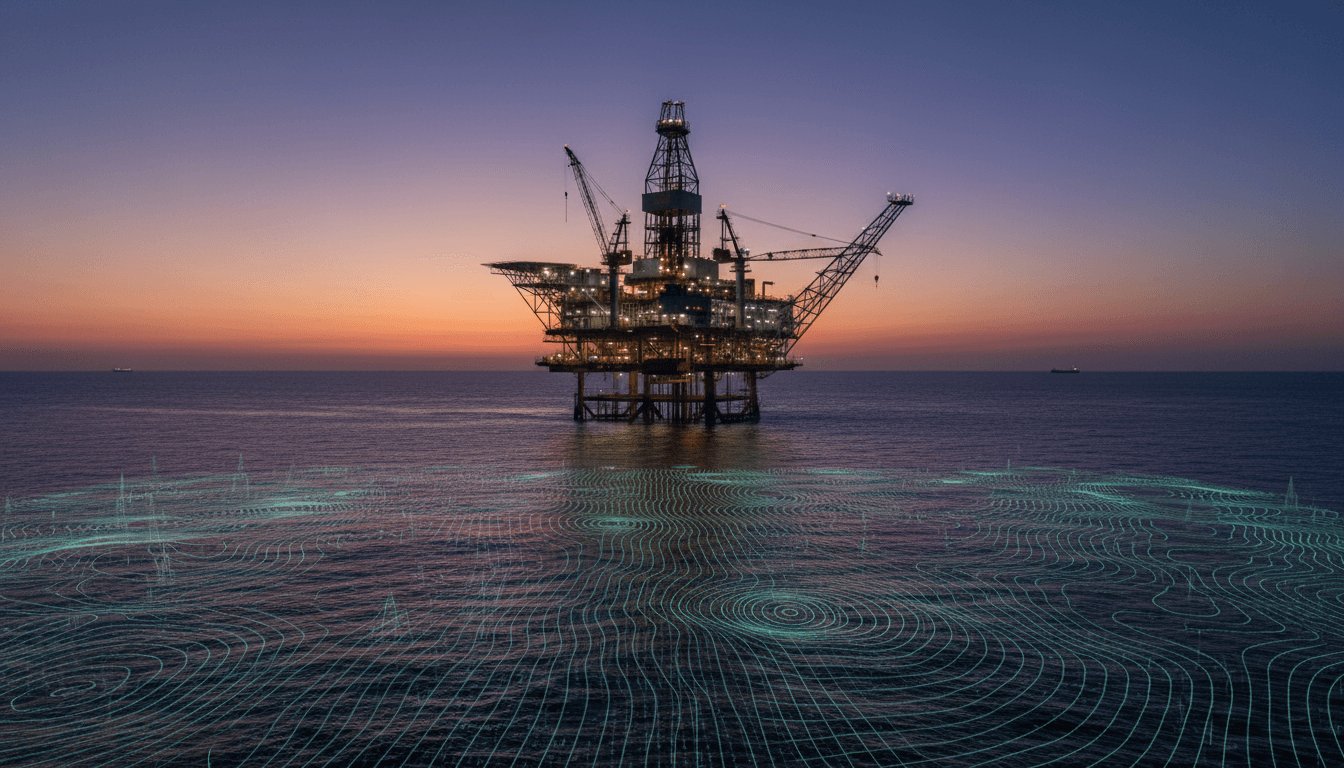
AI-Driven Exploration Lessons for T&T After Nashville
On December 23, Shell and INEOS announced an oil discovery at the Nashville exploration well in the Gulf of America. The well was drilled more than 8km beneath the seabed, hit hydrocarbons in the Norphlet formation, and may be tied back to the nearby Appomattox production platform.
Here’s why that matters in Trinidad and Tobago right now: Nashville is a reminder that frontier exploration is still alive, but it’s also a reminder of the price of being wrong. Deepwater wells cost serious money, and a single decision—where to drill, how to steer, when to stop—can swing from “strategic win” to “expensive lesson.” That’s exactly where AI in oil and gas is starting to earn its keep.
This post is part of our series on How AI Is Transforming the Energy and Oil & Gas Sector in Trinidad and Tobago. I’m using the Nashville story as a practical lens: what AI actually does in exploration, how it reduces uncertainty, and what operators and service companies in T&T can implement in 2026 without waiting on a massive digital overhaul.
Nashville is a signal: exploration is alive, but mistakes are costlier
Exploration hasn’t “gone away” just because the energy transition is real. The truth is both things are happening at once: companies are decarbonising and pursuing advantaged barrels and molecules. A deepwater discovery like Nashville reinforces three realities that T&T energy leaders should take seriously.
First, prospectivity still exists in mature basins and adjacent plays—but it’s harder to find the next economic pocket. Second, the technical bar is higher: Nashville was drilled using an advanced rig and targeted a formation known for promise but also complexity. Third, capital discipline has tightened; investors want fewer surprises.
For Trinidad and Tobago, this is familiar territory. The basin is mature, subsurface data is plentiful but fragmented, and project economics are sensitive to downtime, drilling performance, and facility constraints. The Nashville-style lesson isn’t “go drill deepwater.” It’s “if you’re going to take exploration and development bets, your decision system has to be sharper than it was five years ago.”
The real cost driver is uncertainty, not effort
Most teams already work hard. They interpret seismic, evaluate logs, build models, run peer reviews, and manage risk. The problem isn’t effort—it’s uncertainty compounding across the workflow:
- A small seismic interpretation bias becomes a wrong depth prognosis
- A wrong prognosis becomes non-productive time
- NPT becomes cost overruns and schedule slips
- Schedule slips become lost production opportunity
AI doesn’t eliminate uncertainty. It reduces and measures it faster, earlier, and more consistently.
Where AI fits in exploration (and what it replaces)
AI is most useful when you stop treating it as a “tool” and start treating it as an operating layer across data, interpretation, and decisions.
In exploration, AI typically supports five high-value jobs:
- Seismic pattern recognition and fault/fracture detection
- Automated horizon picking and interpretation acceleration
- Well log classification and lithofacies prediction
- Prospect ranking using probabilistic models
- Drilling decision support in near real-time
The best results show up when AI is paired with domain expertise. Geoscientists still own the model. Engineers still own the well plan. What changes is the speed and consistency of analysis—plus a clearer audit trail of why a prospect ranked higher.
Seismic interpretation: faster cycles, fewer missed cues
Seismic interpretation is a prime candidate for machine learning because it’s image-like data at scale. AI can flag subtle features—faults, channels, salt boundaries—then interpreters validate and refine.
In practical terms, that means:
- Fewer weeks spent on repetitive picking
- More time spent on uncertainty analysis and scenario testing
- Better cross-team alignment because the “first pass” is consistent
For T&T operators, this matters because many subsurface teams are lean. AI can act like a multiplier: not replacing experience, but removing the grind that blocks deeper thinking.
Prospect risking: make probabilities explicit (and comparable)
One of the most underrated benefits of AI is forcing clarity. When you move from qualitative risking (“this feels like a 0.6”) to a model that learns from prior wells, geologic analogs, and outcomes, you get:
- More consistent risking across assets
- A clearer view of which assumptions drive chance of success
- Better capital allocation (including what not to drill)
That last point is the quiet win. The best exploration teams don’t just find prospects—they avoid bad bets early.
AI + rig operations: what “advanced” looks like in 2026
The Nashville well used a highly advanced deepwater rig. But “advanced” isn’t only hardware. It’s also the intelligence layer that turns rig sensor data into decisions.
In drilling, AI helps in three places where money leaks fast: dysfunction detection, parameter optimisation, and non-productive time reduction.
Real-time dysfunction detection (before it becomes NPT)
Modern rigs and downhole tools generate torrents of data: torque, drag, pump pressure, ROP, vibrations, standpipe pressure, mud properties. AI models can learn what “normal” looks like, then flag drift.
Examples of what AI can detect earlier than humans scanning charts:
- Stick-slip trends leading to BHA damage
- Early signs of pack-off and hole cleaning issues
- Connection anomalies that suggest wellbore instability
This is where I’ve found AI gets adopted fastest: it doesn’t ask teams to change the entire workflow on day one. It simply warns sooner—and reduces the “we saw it too late” moments.
Drilling parameter recommendations (with guardrails)
Good AI in drilling doesn’t “take over.” It recommends parameter windows—WOB, RPM, flow rate—based on formations, offset wells, and current downhole response.
The guardrail concept matters for safety and trust:
- AI suggests a parameter range
- Drilling engineers approve or reject
- The system learns from the decision and outcome
In T&T, where offshore logistics and downtime are expensive, these incremental improvements add up quickly.
Tie-backs, platforms, and AI: the overlooked value is coordination
Nashville may be linked back to Shell’s nearby Appomattox host platform. That’s a familiar pattern: find something, then use existing infrastructure to reduce capex and speed first oil.
This is exactly where AI-driven analytics can create real business value for Trinidad and Tobago—because the constraint often isn’t “can we find hydrocarbons?” It’s “can we move from discovery to cash flow efficiently?”
Production forecasting that respects facility constraints
AI improves production forecasting when it’s trained on:
- Historical well performance
- Pressure and rate transient patterns
- Choke settings and operational changes
- Facility constraints (compression, dehydration, water handling)
Traditional models can be accurate in a lab sense but brittle in the field. AI helps because it learns the messy reality: trips, interventions, changing sand production, facility upsets.
Maintenance planning: fewer surprise shutdowns
Unplanned downtime can erase the value of a good subsurface decision. AI-enabled predictive maintenance uses vibration, temperature, and process data to detect early degradation in rotating equipment and critical systems.
For offshore and nearshore assets, that means:
- Better planning for spares and marine logistics
- Maintenance windows aligned with production strategy
- Fewer cascading failures that turn a small issue into a shutdown
This isn’t abstract. It’s the difference between stable delivery and a month of “we’re troubleshooting.”
A practical AI roadmap for Trinidad and Tobago (90 days to 12 months)
Most energy teams in T&T don’t need a giant “AI transformation program” to see results. They need a sequence that builds trust, cleans data, and delivers quick wins.
0–90 days: pick one workflow and prove value
Start with a bounded use case tied to cost and time. Good candidates:
- Seismic fault detection for a defined area
- Automated well log facies classification for a single asset
- Drilling dysfunction alerts on one rig or campaign
- Maintenance anomaly detection for one compressor train
Define success metrics up front:
- Reduce interpretation cycle time by X%
- Cut NPT by Y hours per well
- Reduce unplanned downtime events by Z per quarter
3–6 months: fix the data plumbing (lightly, not perfectly)
AI fails more from data chaos than from model quality. The goal isn’t perfect data—it’s usable, governed data.
Minimum viable foundations:
- A shared data catalog (what exists, where it lives, who owns it)
- Consistent naming for wells, sensors, and equipment tags
- Clear access rules and audit logs
- Basic ETL pipelines for high-frequency operational data
6–12 months: scale the “AI operating layer”
Once one or two use cases work, scale by reusing the same patterns:
- Common feature store (reusable variables)
- Model monitoring (drift, false alarms, accuracy)
- Human-in-the-loop approvals
- Cybersecurity controls for OT/IT boundaries
At this stage, AI becomes part of how the business runs—not a side project.
People also ask: what leaders in T&T usually want to know
Does AI in oil and gas require replacing existing software?
No. The fastest wins come from integrating AI with current tools and databases, then adding a thin layer for model deployment and monitoring.
Will AI reduce jobs in subsurface and operations?
It reduces repetitive work first. Teams that adopt it well redeploy talent to higher-value tasks: uncertainty management, scenario planning, optimization, and stakeholder communication.
What’s the biggest risk when adopting AI?
Bad governance. If nobody owns data quality, model permissions, and decision boundaries, AI becomes a source of conflict instead of clarity.
What Nashville should prompt in Trinidad and Tobago
Nashville is a story about hydrocarbons, yes—but it’s also a story about modern exploration requiring modern decision-making. Deep wells, complex formations, tie-back economics, and tighter capital expectations all point in one direction: you need better analytics to compete.
If you’re leading exploration, drilling, production, maintenance, or planning in Trinidad and Tobago, the best next move isn’t to copy a Gulf of America well. It’s to build a workflow where seismic, well, and operations data become faster decisions with measurable confidence.
If you’re serious about AI adoption in the T&T energy sector, start small, measure ruthlessly, and scale what works. And if you’re not sure where to start, the right question isn’t “what model should we use?” It’s: which decision is costing us the most when we get it wrong?