See how the Buckskin South subsea contract shows where AI improves offshore execution—and how Trinidad & Tobago operators can apply it in 2026.
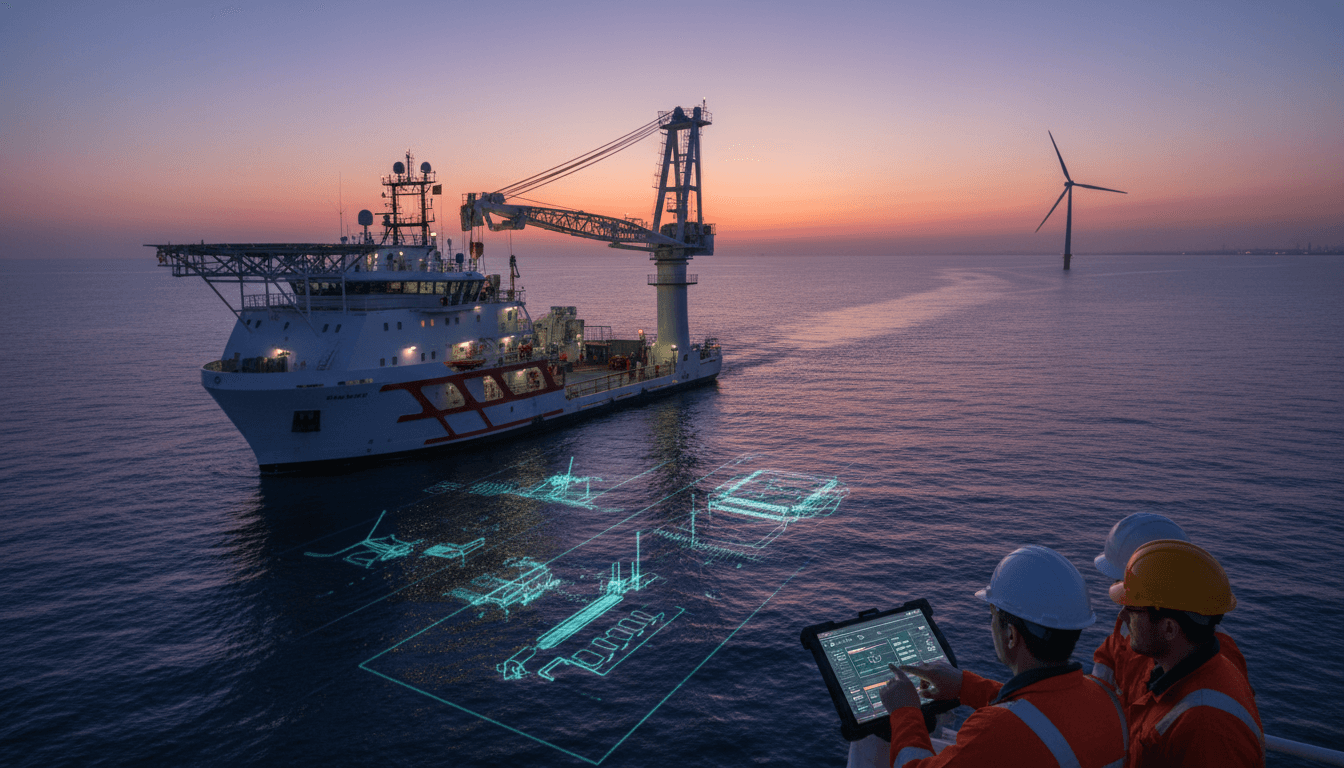
AI for Offshore Expansion: Lessons for Trinidad & Tobago
A “sizeable” subsea contract worth $50m–$150m isn’t won on steel and vessels alone. It’s won on planning certainty—how quickly a team can engineer the subsea scope, predict installation risk at depth, and keep schedule slip from turning into cost blowouts.
That’s why the recent award to Subsea7 by LLOG for the Buckskin South Expansion in the US Gulf of Mexico is a useful case study for our series on how AI is transforming the energy and oil & gas sector in Trinidad and Tobago. The contract’s scope—installing a subsea umbilical and a rigid flowline at water depths reaching 2,100 metres, with offshore operations slated for 2026–2027—is exactly the kind of high-consequence work where AI moves from “nice to have” to “how serious operators stay competitive.”
Trinidad and Tobago’s offshore environment is different from the Gulf of Mexico, but the operating math is familiar: subsea complexity, long lead items, vessel constraints, HSE exposure, and a constant push to deliver more value from existing developments. AI doesn’t replace engineering judgement. It reduces the number of surprises your engineers have to deal with.
What the Buckskin South award really signals
This award signals a clear priority: operators are paying for execution certainty. Deepwater subsea projects concentrate risk in a few places—design maturity, installation windows, interface management, and integrity over life of field.
The Buckskin South scope (umbilical + rigid flowline at 2,100 m) highlights three operational realities:
- Small mistakes scale fast. At deepwater depths, remediation is expensive and slow.
- Engineering starts immediately, long before offshore work. Subsea7 noted project management and engineering would begin right away from Houston.
- Schedule is the project. Offshore operations planned across 2026 and 2027 means multiple seasons, multiple campaigns, and more exposure to constraints.
For Trinidad and Tobago, the lesson is practical: when you’re planning offshore expansions, tie your digital strategy directly to these risk concentrations. If your AI initiatives don’t reduce rework, non-productive time, or integrity risk, they’re just demos.
Where AI creates real value in subsea expansion projects
AI adds value when it’s applied to decisions that repeat across every offshore project: what to inspect, when to intervene, how to sequence work, and how to keep interfaces from breaking.
Predictive maintenance for subsea and topside constraints
Answer first: Predictive maintenance cuts downtime by forecasting failure before it stops production or delays installation.
In subsea expansions, the “maintenance” problem isn’t only subsea trees and flowlines. It’s also the enabling equipment that makes campaigns possible—hydraulic power units, winches, lay equipment, cranes, ROV systems, subsea connectors, and critical topside utilities.
A practical AI approach combines:
- Condition monitoring data (vibration, temperature, pressure, motor current)
- Maintenance history (work orders, parts replaced, failure modes)
- Operational context (duty cycles, load profiles, weather/sea state)
In Trinidad and Tobago, this matters because offshore resources are finite. If a vessel day is lost to an avoidable equipment issue, you don’t just lose time—you lose the next best weather window.
AI-assisted engineering: faster, cleaner design cycles
Answer first: AI speeds up engineering iterations by catching clashes, missing requirements, and interface risks early.
Subsea expansions depend on getting engineering right across multiple parties: operator, EPCI contractor, OEMs, fabricators, and installation teams. AI isn’t replacing detailed design. It’s improving the “handoffs” that create rework.
Examples that translate well to Trinidad and Tobago projects:
- Document intelligence to auto-check vendor datasheets against specs and flag mismatches
- Requirements tracing to ensure design changes propagate to drawings, procedures, and test packs
- Interface risk prediction using patterns from historical NCRs (non-conformance reports) and RFIs
One stance I’ll take: most subsea projects lose money through slow feedback loops, not bad engineers. AI shortens those loops.
Installation planning: using AI to reduce non-productive time
Answer first: AI-driven planning reduces non-productive time by optimizing sequences around constraints.
Deepwater installation is constraint-heavy: vessel availability, metocean, port logistics, subsea access, ROV ops, and simultaneous operations (SIMOPS). AI can support planners by recommending sequences that reduce:
- Mobilization changes
- Waiting on weather
- “Stop-start” handovers between spreads
- Repeated tooling changes
For Buckskin South, the work spans 2026–2027—prime territory for schedule risk. For Trinidad and Tobago, the same risk shows up when campaigns stretch across quarters and procurement lead times collide with offshore windows.
AI for subsea integrity: from inspection to intervention
Answer first: AI improves subsea integrity by turning inspection data into prioritized, defensible decisions.
Flowlines and umbilicals aren’t “install and forget.” Integrity management needs a clear line from data to action—especially when budgets tighten.
Here’s a simple integrity workflow where AI earns its keep:
- Collect data: ROV video, sonar, CP readings, pressure/temperature trends, pigging and chemical injection records
- Detect anomalies: computer vision flags coating damage, free spans, debris interaction, or unexpected seabed changes
- Rank risk: models score likelihood and consequence (leak, restriction, loss of control)
- Plan intervention: recommend inspection intervals and remediation options
The value isn’t only fewer failures. It’s better decisions under scrutiny. When leadership asks why you’re intervening on Line A and not Line B, AI-supported ranking makes the decision easier to defend.
What Trinidad & Tobago operators can copy immediately (without a massive program)
You don’t need a “big bang” transformation to get value. Start with a focused set of use cases tied to offshore execution and integrity.
A 90-day starter plan for AI in offshore operations
Answer first: Pick one execution pain point, one integrity pain point, and one data foundation task.
-
Execution pain point (schedule/cost):
- Build an AI classifier that mines daily reports and flags repeat delay causes (weather standby, tooling, SIMOPS conflicts, permits)
- Output: a weekly “top 5 delay drivers” dashboard with recommended countermeasures
-
Integrity pain point (risk):
- Pilot computer vision on ROV footage for one asset (flowline route or riser base)
- Output: anomaly register with timestamps, severity, and re-inspection recommendation
-
Data foundation (make it stick):
- Standardize asset tags and event taxonomy across CMMS, historian, and inspection systems
- Output: one joined dataset that engineers actually trust
If you can’t join datasets reliably, your AI project will stall—every time.
The “people” part: who owns the model?
Answer first: AI succeeds when engineers own the outcome and IT owns the reliability.
A workable operating model I’ve seen succeed in energy teams looks like this:
- Operations/Integrity owns the decision and the KPI (uptime, leak prevention, inspection efficiency)
- Data/IT owns the pipeline, security, and uptime of the platform
- Contractors contribute domain data and execution feedback (but don’t become the only ones who can run it)
For Trinidad and Tobago, this is especially important because contractor ecosystems are central to offshore delivery. You want knowledge transfer built into the AI workflow, not bolted on at the end.
Common questions decision-makers ask (and straight answers)
“Will AI reduce offshore costs, or just add software spend?”
AI reduces offshore costs when it targets high-cost events: vessel standby, rework, equipment downtime, and unplanned integrity interventions. If your use case can’t be tied to one of those, don’t fund it yet.
“Do we need perfect data first?”
No. You need usable data and a narrow scope. Start with one asset, one campaign, or one failure mode—then expand.
“Is this only for deepwater like Buckskin?”
No. Shallow water still has the same fundamental drivers: maintenance timing, logistics constraints, inspection prioritization, and HSE exposure. AI helps wherever decisions repeat.
What the Buckskin South story means for 2026 planning in Trinidad & Tobago
Buckskin South is a reminder that offshore growth projects are being judged on execution confidence. The industry is heading into 2026 with tighter scrutiny on capital discipline and operational reliability. AI is increasingly the quiet advantage behind both.
If you’re planning offshore expansion or subsea tie-backs in Trinidad and Tobago, the practical question isn’t “Should we adopt AI?” It’s: Which part of our offshore workflow is too slow, too manual, or too uncertain—and how fast can we reduce that uncertainty?
If you want a starting point, map your last 12 months of offshore delays and integrity findings. Pick the top two drivers. Build AI around those. You’ll feel the difference in the next campaign, not the next decade.