A Mar 3 total lunar eclipse is a masterclass in public engagement. Here’s how Singapore SMEs can use AI tools to run timely campaigns and capture leads.
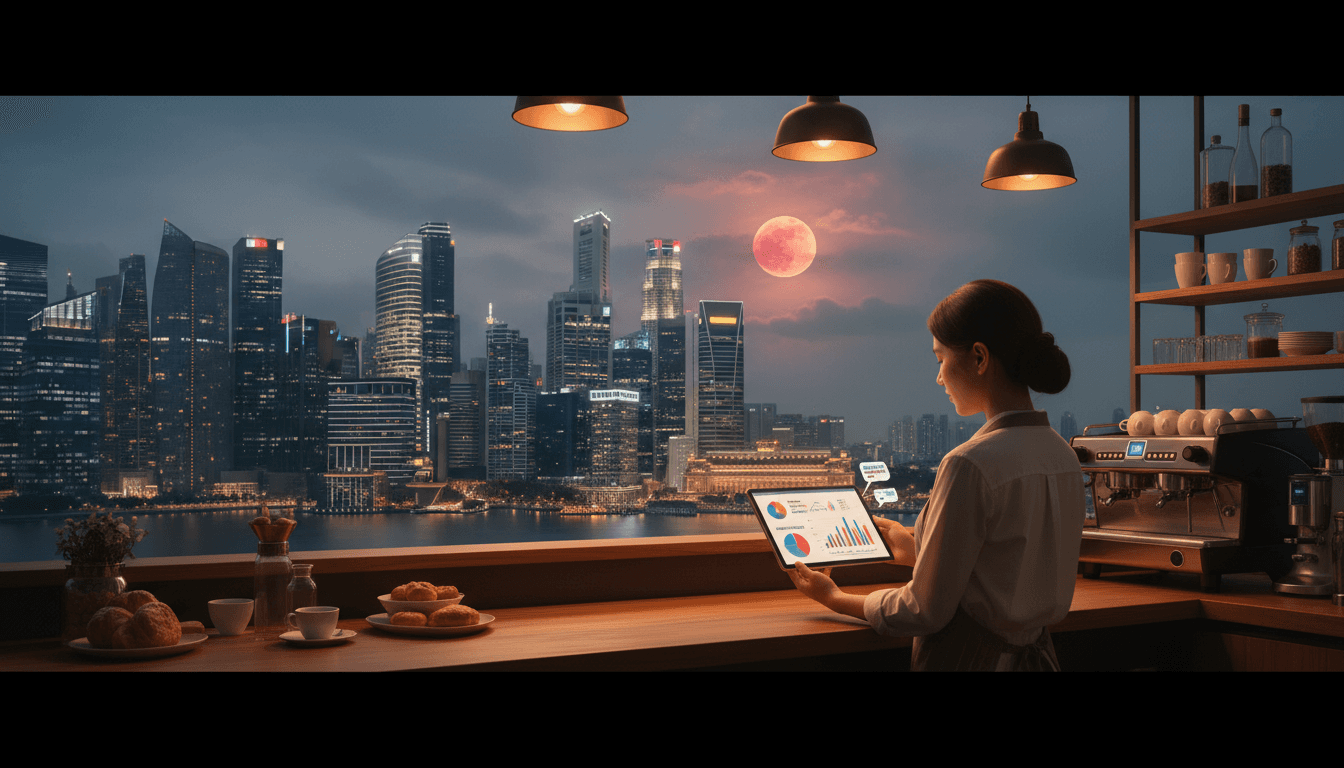
Total Lunar Eclipse: A Smarter Marketing Playbook
A total lunar eclipse will be visible from Singapore on 3 March 2026, and Science Centre Singapore is turning it into a full public-engagement moment: expert-led telescope viewing, planetarium shows, queues managed with live screens, and even a livestream for people who can’t make it down.
Here’s what most SMEs miss: high-interest public events aren’t just “nice-to-post-about” moments. They’re predictable spikes in attention. And attention—handled well—turns into footfall, leads, and repeat customers.
This is part of our Singapore SME Digital Marketing series, and the lesson from the eclipse is simple: the businesses that prepare for attention win it. The easiest way to prepare in 2026 is with AI business tools that help you plan faster, personalise outreach, and run tighter campaigns without burning out your team.
(Source event details: https://www.channelnewsasia.com/singapore/total-lunar-eclipse-mar-3-science-centre-viewing-5912261)
What the Mar 3 eclipse teaches about customer attention
Answer first: Science Centre’s eclipse programme works because it reduces friction and increases delight at every step—from discovery to attendance to sharing.
Look at the mechanics:
- It names the moment clearly (a total lunar eclipse; “red moon”).
- It gives a tight timeline (moonrise 7.15pm, maximum eclipse 7.33pm, best viewing from 7.47pm, partial phase ends 9.17pm).
- It creates guided experiences (educators, telescopes, planetarium shows).
- It manages constraints transparently (first-come-first-served; no personal telescopes; 15 telescopes at 30x magnification).
- It offers access alternatives (onsite registration and a YouTube livestream).
That’s not astronomy strategy. That’s customer experience strategy.
For SMEs, the equivalent is:
- Make the “what/when/where” instantly understandable.
- Reduce decision fatigue (clear options, simple pricing, limited choices).
- Offer a guided path (recommendations, bundles, reminders).
- Provide a fallback (online ordering, WhatsApp booking, livestream/demo, delivery slots).
Why this matters in Singapore specifically
Answer first: Singapore’s attention cycles are fast, and weather + commuting realities punish vague plans.
For the eclipse, even Science Centre flags cloud cover as a risk. For your business, the “clouds” might be:
- busy customers who won’t read long captions
- last-minute schedule changes
- competitors boosting ads during the same moment
- staff shortages during peak hours
AI doesn’t fix all of that. But it does help you execute the basics consistently: better targeting, clearer messaging, faster content production, and more timely follow-ups.
A practical AI campaign plan SMEs can run in 10 days
Answer first: Treat the eclipse like a mini seasonal campaign—build one core offer, then let AI help you segment, schedule, and follow up.
Even if your business has nothing to do with astronomy, you can still ride the attention wave respectfully. The key is relevance.
Step 1: Pick an “eclipse-adjacent” offer that fits your brand
Good examples (Singapore SME-friendly):
- F&B: “Moonrise Supper Set” available 7–10pm; limited quantities.
- Retail: “Night Market Hours” with a small gift for receipts after 7.30pm.
- Fitness/wellness: “After-dark stretch class” + recovery drink.
- Education/tuition: “Science Week” trial lesson using the eclipse as a hook.
- Hospitality: “Sky-view staycation add-on” (late checkout + rooftop mocktail).
What doesn’t work: random discounts with a moon emoji. Customers can smell that.
Step 2: Use AI to produce one content kit, then adapt it
Answer first: You want one message, many formats—because every channel behaves differently.
A simple content kit:
- 1 hero post (Instagram + Facebook)
- 3 short reels/TikToks (10–15 seconds each)
- 1 WhatsApp broadcast message (tight and specific)
- 1 email (for existing customers)
- 5 story frames (countdown + offer + directions)
Where AI helps:
- draft variations by audience (families, couples, students, office crowd)
- generate captions that fit each platform’s style
- produce quick visual concepts and shot lists
- translate/adjust tone (English-first, but you can localise phrasing)
The non-negotiable: keep the operational details consistent (timings, redemption rules, limited slots). That consistency is why Science Centre’s programme feels reliable.
Step 3: Segment your audience like an event organiser
Answer first: Personalisation isn’t creepy when it’s based on behaviour (what people do), not guesses (who people are).
Create 3 segments you can actually act on:
- Regulars: past purchasers in the last 90 days
- Lapsed: no purchase in 6–12 months
- New: engaged with your socials but never bought
Then adjust the message:
- Regulars get early access (“Reply ‘MOON’ to reserve”)
- Lapsed get a re-entry reason (“We’re doing late hours on Mar 3—come by after dinner”)
- New get clarity (“Here’s what you get, when to come, how to redeem”)
AI-driven CRM or marketing automation tools can do this with tags and simple rules—without you manually sorting spreadsheets at midnight.
How to run “Science Centre-style” engagement with AI tools
Answer first: The winning formula is guided experience + low friction + shareable moment. AI helps you scale it.
Science Centre isn’t just letting people look at the sky. It’s creating a hosted journey. SMEs can copy the structure.
Guided experience: make customers feel looked after
In-store or online, build a simple guide:
- “If you have 10 minutes, do this.”
- “If you’re here with kids, start here.”
- “If you’re shopping for a gift under S$50, pick from these 3.”
AI can support this with:
- product recommendation quizzes
- chat widgets that answer FAQs instantly (opening hours, availability, booking)
- staff prompts (“If customer asks X, suggest Y”)
A strong stance: Most SMEs don’t need a complex chatbot. They need a tight FAQ + a clear handoff to a human.
Low friction: reduce waiting, reduce confusion
Science Centre manages queues with live screens and sets expectations.
SME equivalents:
- auto-replies that include price range, location pin, and booking link
- appointment slots instead of open-ended “DM us”
- inventory visibility (“Only 20 sets left”) updated daily
AI can help by:
- routing enquiries by intent (booking vs pricing vs directions)
- summarising DMs so staff can respond faster
- drafting consistent replies that don’t sound robotic
Shareable moment: give customers a reason to post
The eclipse itself is shareable. Your offer needs a small share trigger:
- a photogenic item (limited edition packaging)
- a simple “stamp card” challenge for that week
- a short in-store photo corner (no heavy setup)
If you’re running paid ads, use AI to test multiple creatives quickly—then keep the winners.
A simple measurement framework (so it’s not just “likes”)
Answer first: Track three numbers: reach, response, and revenue—then tie them back to one campaign timeline.
For a Mar 3 campaign, measure across Feb 20 to Mar 5 (Science Centre opens pre-registration Feb 20, which is a nice reference point for your own campaign lead time).
Here’s a lightweight scorecard:
- Reach: total video views + post reach (by platform)
- Response: WhatsApp replies, link clicks, booking form completions
- Revenue: number of redemptions, average order value (AOV), repeat visits within 14 days
If you want one KPI that forces clarity:
Cost per qualified conversation (a DM/WhatsApp where the customer asks about price, timing, availability, or booking).
AI ad platforms already optimise for events like clicks or leads. Your job is to define what a real lead looks like for your SME.
Common questions SMEs ask (and straight answers)
Should I post even if my business isn’t related to the eclipse? Yes, but connect it to a real customer behaviour (late-night hours, group bookings, themed set, education tie-in). Otherwise, skip it.
Do I need paid ads for this? Not always. If you have an engaged base, a WhatsApp broadcast + stories + one reel can be enough. Use paid ads when you can handle extra demand.
What if it’s cloudy and nobody cares? That’s why you build a campaign that doesn’t depend on perfect visibility. Science Centre offers a livestream; you can offer an “after-8pm deal” regardless.
Use the eclipse moment to build a long-term funnel
Answer first: The real win isn’t Mar 3 sales—it’s capturing contacts and preferences so your next campaign is cheaper and faster.
If you do one thing, do this: turn event traffic into owned audience.
Practical ways:
- “Reply ‘MOON’ to reserve” (WhatsApp list growth)
- QR code at checkout to join a members list
- simple giveaway with a clear prize and a clear end date
Then, follow up within 48 hours:
- thank-you message
- a photo recap (user-generated content if possible)
- a bounce-back offer valid for 7–14 days
I’ve found that SMEs who consistently run this follow-up loop cut their reliance on “one big post” marketing. It becomes a system.
The lunar eclipse on Mar 3, 2026 is a reminder that attention comes in waves. Science Centre is ready for the wave—telescopes, educators, timelines, and a backup plan.
If your business wants more predictable leads, adopt the same mindset: plan for attention, personalise the experience, and automate the follow-up. When the next high-interest moment hits Singapore—school holidays, festive peaks, major concerts, or the next big sky event—you won’t be scrambling. You’ll be building demand on purpose.