Seasonal SMEs can’t rely on festive spikes alone. Learn how bak kwa brands use channels, retention, and automation to drive year-round sales.
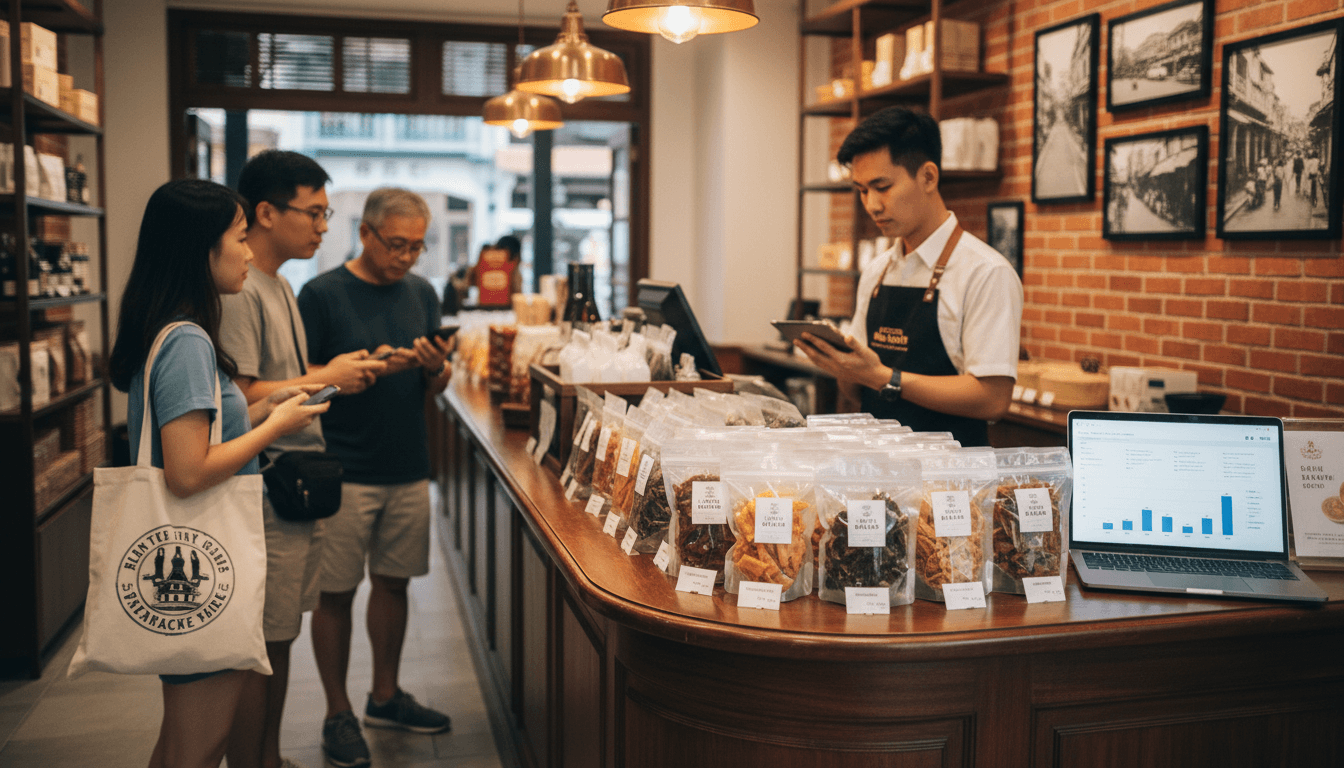
Seasonal SMEs: Turn CNY Spikes Into Year-Round Sales
A lot of Singapore SMEs secretly run on one big month.
For bak kwa brands, it’s Chinese New Year (CNY): queues, price increases, overtime shifts, and a flood of orders that can bankroll operations for months. The uncomfortable truth is that a peak season can hide weak year-round demand—until the peak ends and cash flow tightens.
This isn’t just an F&B story. If you’re in gifting, beauty, tuition, renovation, events, travel, or even B2B services with annual budget cycles, you’ve felt the same pattern. The businesses that last aren’t the ones that “sell hard” during CNY. They’re the ones that design a year-round marketing and operations system that makes the next peak easier—and the off-peak profitable.
Why seasonal spikes shouldn’t be your business model
Answer first: CNY revenue is a boost, but relying on it alone creates fragile cash flow, unpredictable staffing, and marketing that starts too late.
Bak kwa is a clean case study because demand is so visibly seasonal. Leading up to CNY, prices commonly rise (in recent years, some brands increased prices by up to S$18 per kg, with premium products hitting around S$80 per kg during the rush). Customers still buy. That surge can cover major costs—rent, salaries, utilities—and sometimes keep the lights on for the next few months.
But the spike creates three problems that apply to almost every seasonal SME:
- You train yourself to market only when it’s “obvious” (festive month, school holidays, year-end budgets). That means you’re invisible for long stretches.
- You over-hire and over-produce because you can’t forecast accurately, then pay for wastage later.
- You miss the retention window—the weeks after a purchase when people are most likely to buy again, refer friends, or switch to a subscription/regular habit.
A peak season should be treated as customer acquisition plus data collection—not just a sales bonanza.
The SME takeaway: plan backwards from your peak
If CNY is your peak, the planning starts earlier than you think. One major bak kwa brand is known to plan production a year in advance. You may not need a year, but you do need a calendar.
Here’s a practical structure I’ve found works for Singapore SME digital marketing:
- Peak (0–4 weeks): revenue capture + list growth (email/WhatsApp/loyalty)
- Post-peak (2–8 weeks): retention offers + bundles + reviews + referrals
- Off-peak (3–9 months): new use-cases + content engine + always-on ads
- Pre-peak (6–10 weeks): warm-up campaigns + pre-orders + corporate outreach
If your only “big push” is during peak, you’re basically starting from zero every year.
Diversify channels first, products second
Answer first: The fastest way to smooth revenue isn’t a new product—it’s reaching customers in more places, with fewer friction points.
Bak kwa brands survive the other eleven months by expanding where and how people can buy:
- Tourist-heavy locations (e.g., Orchard, Chinatown, airports) where souvenir demand stays steady
- Vacuum-sealed packaging that travels well and extends shelf life
- E-commerce via their own websites and marketplaces (Shopee/Lazada)
- Experiments like vending machines in malls to create “impulse convenience”
One striking data point from the sector: a bak kwa business reported 70% of its festive-season sales came from online orders in 2024—an indicator of how permanent customer behaviour changes have become since the pandemic.
What this means for Singapore SMEs
Your channel mix is your risk management.
If you’re still dependent on a single channel (walk-in foot traffic, one marketplace, one platform), you’re exposed. A stronger approach is building a channel ladder:
- Owned channels (highest control): website, SEO content, email, WhatsApp broadcasts, CRM/loyalty
- Rented channels (highest reach): Meta/TikTok ads, marketplaces, influencers, media
- Partner channels (borrowed trust): affiliates, corporate perks platforms, resellers, collaborations
The goal isn’t to be everywhere. It’s to ensure that when one channel weakens (algorithm changes, mall renovation, ad costs spike), revenue doesn’t collapse.
A simple “off-peak channel” playbook
If your peak is CNY, your off-peak should be built around easy repeat purchasing:
- WhatsApp reorder reminders (opt-in only): “Low-stock drop”, “members-only bundle”, “weekend delivery slots”
- Google Search coverage for intent queries (“bak kwa delivery Singapore”, “corporate CNY gifts supplier”)—then expand to evergreen (“snack gift box Singapore”, “office pantry snacks”)
- Always-on retargeting ads at low budgets: show ads only to site visitors and past buyers
- Corporate and events pipeline: weddings, door gifts, seminars, client gifting
Seasonal businesses tend to ignore corporate because it feels slow. That’s exactly why it’s valuable.
Turn a seasonal product into multiple year-round reasons to buy
Answer first: Product innovation works when it creates new occasions, not just new flavours.
Bak kwa makers have expanded beyond the classic sliced meat by:
- Creating higher-margin variations (premium meats, trendy flavours)
- Making more convenient formats (e.g., bite-size or coin-shaped pieces)
- Extending the brand into adjacent products and experiences (desserts using pork floss; even a themed dining concept)
This isn’t random experimentation. It’s a strategy: use the same supply chain and production strengths to create products that sell outside the festive window.
Apply the “occasion expansion” framework
Most SMEs brainstorm new products. Better: brainstorm new occasions.
Ask:
- When else would someone need this?
- Who else would buy it?
- What format makes it easier to consume/share?
- What bundle turns it into a gift?
For a seasonal gifting SME, that could look like:
- CNY → corporate onboarding gifts (new hires, welcome packs)
- Festive hampers → meeting-room pantry packs (monthly recurring)
- Premium limited editions → member drops (small batches, higher margins)
For bak kwa specifically, the year-round occasions aren’t “replace CNY.” They’re “add reasons”: travel snacks, office sharing, birthdays, housewarmings, wedding favours, corporate appreciation.
Marketing execution: build a content engine around occasions
This is where Singapore SME digital marketing becomes a compounding asset.
Create evergreen content that ranks and converts:
- “How to choose a snack gift for clients (Singapore guide)”
- “How to store vacuum-sealed snacks for travel”
- “Door gift ideas for weddings under S$X”
- “Office pantry snacks: what actually gets eaten”
Each piece should lead to a relevant bundle, not a generic product page.
Use data and automation to survive the quiet months
Answer first: Operational efficiency is marketing. If you fulfil faster, waste less, and personalise offers, you win off-peak.
One heritage bak kwa brand reportedly built an in-house team and adopted a digital-first model that unified online and offline customer experience. With AI-driven demand forecasting and tools that analyse patterns across outlets and seasons, it improved planning and reduced waste. Reported outcomes included:
- Online order values quadrupled
- Revenue and profitability improved by 5%
- Membership grew by 900%
Those numbers matter because they reveal the mechanism: when your data is unified, you can run loyalty, personalisation, and forecasting properly.
What to copy (even if you don’t have an AI team)
Most SMEs don’t need advanced AI. You need the basics done consistently:
- One customer database (even a simple CRM) so you can segment buyers
- Automated post-purchase flows (email/WhatsApp): care tips, reorder prompts, review requests
- Demand forecasting light: track weekly sales by channel, campaign, and SKU; set reorder thresholds
- Unified offers: the same promo code works online and offline; staff can look up membership status
If your loyalty programme only works in one outlet or only online, you’re leaving money on the table.
Quick segmentation that improves ROI fast
Start with three segments (don’t overcomplicate it):
- CNY-only buyers: nurture with new occasions + small bundles
- Gift buyers: push corporate packs, custom notes, delivery scheduling
- Repeat snackers: subscriptions, monthly drops, “buy more save more”
Most SMEs blast one message to everyone. Segmentation is how you stop discounting unnecessarily.
A practical 90-day plan for seasonal SMEs (Singapore)
Answer first: You can stabilise off-peak revenue in 90 days by focusing on retention, search intent, and repeatable campaigns.
Here’s a realistic sprint plan that doesn’t require massive headcount.
Days 1–30: Capture and keep your peak buyers
- Add WhatsApp/email opt-in at checkout (online and in-store QR)
- Launch review collection within 7 days of delivery
- Create 2–3 bundles tied to non-festive occasions (office sharing, travel pack, gift pack)
Days 31–60: Build always-on demand
- Set up Google Search ads for high-intent queries (tight keywords, exact match, clear landing pages)
- Run retargeting on Meta/TikTok with a small daily budget
- Publish 4 evergreen SEO articles targeting gifting + delivery + storage/use-cases
Days 61–90: Add predictability
- Start a corporate enquiry page with minimum order quantities and lead time
- Build a monthly campaign template (one offer, one audience, one landing page)
- Track 5 metrics weekly: traffic, conversion rate, repeat purchase rate, CAC, fulfilment time
If you do only one thing: stop treating off-peak as downtime. Treat it as the period where systems are built.
What bak kwa teaches about year-round digital marketing
CNY doesn’t just create revenue. It creates attention.
The smarter move is to turn that attention into owned audiences, then use those audiences to sell in quieter months with better margins and less stress. That’s the core of Singapore SME digital marketing: build assets (lists, content, data) that keep working when foot traffic slows.
If your business has a peak season, you already have a head start—people are primed to buy. The question is what you do with the buyers after they’ve paid.
What would change in your cash flow if 20% of your peak customers bought from you one more time before the next festive rush?